FOREIGN AFFAIRS MAGAZINE (February 6, 2025): In the months since Donald Trump won the U.S. presidential election in November, policymakers in Beijing have been looking to the next four years of U.S.-Chinese relations with trepidation. Beijing has been expecting the Trump administration to pursue tough policies toward China, potentially escalating the two countries’ trade war, tech war, and confrontation over Taiwan. The prevailing wisdom is that China must prepare for storms ahead in its dealings with the United States.
Trump’s imposition of ten percent tariffs on all Chinese goods this week seemed to justify those worries. China retaliated swiftly, announcing its own tariffs on certain U.S. goods, as well as restrictions on exports of critical minerals and an antimonopoly investigation into the U.S.-based company Google. But even though Beijing has such tools at its disposal, its ability to outmaneuver Washington in a tit-for-tat exchange is limited by the United States’ relative power and large trade deficit with China. Chinese policymakers, aware of the problem, have been planning more than trade war tactics. Since Trump’s first term, they have been adapting their approach to the United States, and they have spent the past three months further developing their strategy to anticipate, counter, and minimize the damage of Trump’s volatile policymaking. As a result of that planning, a broad effort to shore up China’s domestic economy and foreign relations has been quietly underway.
Greenland: Meet the communities working to preserve Inuit culture for future generations Portugal: Roman relics and pagan festivities on a road trip through the untamed north Kerala: A photographer’s journey among the tranquil backwaters and perfumed spice farms of Kochi Southern Mexico: A guide to the region’s immense jungles, ancient settlements and distinct cuisine Hong Kong: Beyond the urban sprawl, adventures abound in the form of kayaking and intrepid hikes Glasgow: Warm yourself in the Scottish city’s art galleries and era-defining music venues Essaouira: Myriad cultures have made this Moroccan port city a hub for art and music Cognac: A change is under way in the French region’s restaurants and distilleries Salzburg: Fairytale stays for every taste, from lovers of old-school luxury to fans of TheSound of Music
Plus, new travel routes for spring; fresh hiking opportunities on Australia’s Whitsunday Islands; Bradford’s year as the UK City of Culture; a taste of Amorgos, Greece; a lighthouse retreat on Italy’s Tuscan coast; an insider’s guide to Ibiza Town; island adventures in Brač, Croatia; globetrotting books about love and obsession, running essentials to put a spring in your step; and a historical getaway in the Welsh Marches.
MONOCLE RADIO (February 6, 2025): Jordan and Egypt lead reactions to a seismic shift in US foreign policy in the Middle East. Then: why Taiwan is sending marines to its airport, why Austria can’t form a government and why Nissan and Honda won’t be doing business together. Plus: arts news with Ben Luke.
President Trump’s proposal to transfer millions of people out of Gaza was hailed by the Israeli right and condemned by Palestinians. Some experts say it may be a negotiating tactic.
Although the president had been talking about the idea for weeks, there had been no meetings on the subject, and senior members of his government were taken by surprise.
One of Jupiter’s biggest moons has the potential to harbour life in a subsurface sea. The nature of its core will provide information about that ocean.
FOREIGN AFFAIRS MAGAZINE (February 5, 2025): Today, about 20 percent of southeastern Ukraine is under Russian occupation, including Crimea and large parts of the Donetsk, Luhansk, Kherson, and Zaporizhzhia regions. Russian President Vladimir Putin has painted the war in Ukraine as a nationalist campaign to repel Western advances and reclaim territory that, in his view, rightfully belongs to Russia. But conquest has another motivation: economic gain. If Russia maintains military control over these regions, it may be hoping to reap that benefit. At this stage, however, it is hardly clear that they would become economic assets for Moscow; supporting the war-torn territories could just as easily become a drain on its coffers.
The human costs of this war are enormous. Russian forces are ruling occupied Ukraine with an iron fist, engaging in a ruthless campaign of torture, kidnapping, violence, and arbitrary killing. Any assessment of the war’s economic consequences should not minimize its awful depravity or the immense suffering it has inflicted. But its economic outcome will affect future judgments of Putin’s decision to invade in February 2022. If Russia benefits economically from the occupation of Ukraine, the war may be remembered as a strategic success, albeit a coldblooded one. If Russia instead suffers economically, the invasion will be seen as a self-defeating, barbaric blunder.
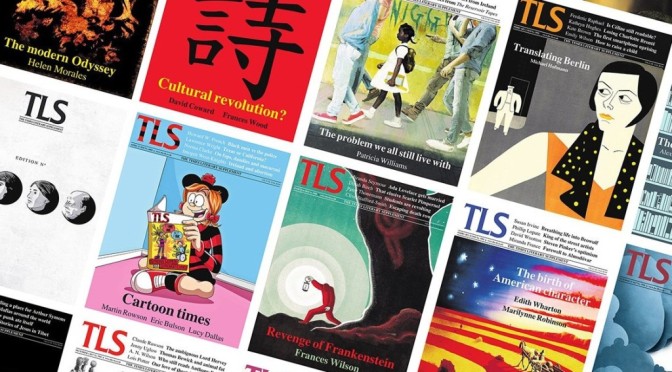
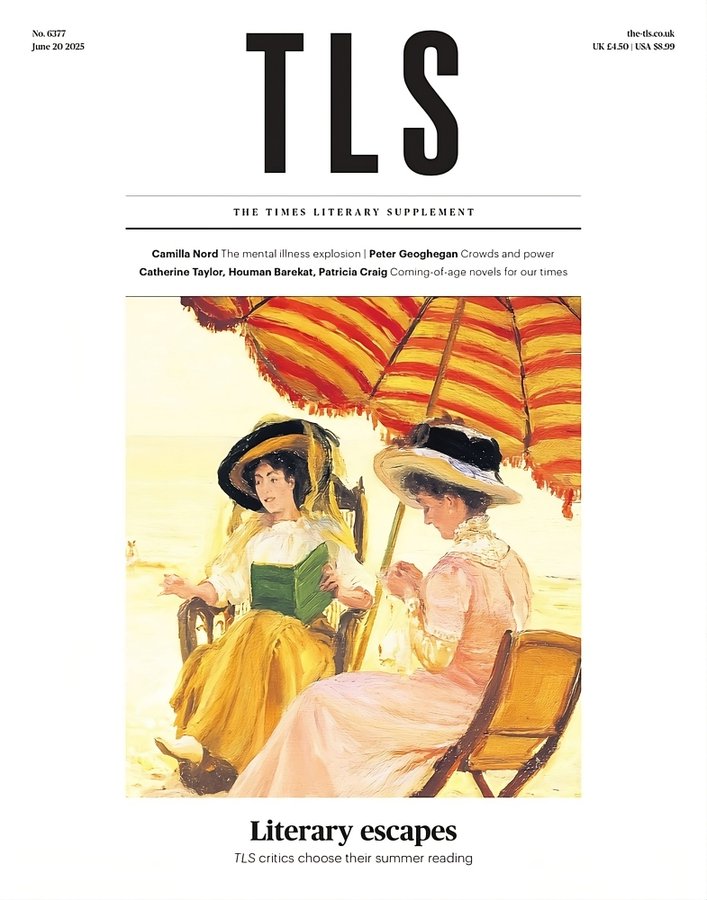
TIMES LITERARY SUPPLEMENT (February 5, 2025): The latest issue features ‘Turbulent Priest’ – Pope Francis’s autobiography; Richard Flanagan in the atomic age; Poetry from Gaza; Richard Ayoade’sdoppelganger and Eimear McBride on repeat…
This week’s @TheTLS, featuring A. N. Wilson on Pope Francis; @funesdamemorius on Richard Ayoade; @lindseyhilsum on writing from Gaza; Adam Mars-Jones on The Brutalist; Damon Galgut on Eimear McBride; Beejay Silcox on Richard Flanagan – and more pic.twitter.com/Ks0liMNF0k