Views: What 3°C Of Global Warming Will Look Like

If global temperatures rise three degrees Celsius above pre-industrial levels, the results would be catastrophic. It’s an entirely plausible scenario, and this film shows you what it would look like.

Video timeline: 00:00 – What will a 3°C world look like? 00:57 – Climate change is already having devastating effects 02:58 – How climate modelling works 04:06 – Nowhere is safe from global warming 05:20 – The impact of prolonged droughts 08:24 – Rising sea levels, storm surges and flooding 10:27 – Extreme heat and wet-bulb temperatures 12:51 – Increased migration and conflict 14:26 – Adaptation and mitigation are crucial
Gardens & Estates: ‘Villa Margaret’ – Umbria, Italy


In the heart of Umbria, on the hills surrounding the Etruscan city of Perugia, this wonderful 650 sqm villa with 9 bedrooms and Renaissance tower is perfect for anyone looking for a luxury property to use as a private residence or as a base for a hosting business. The icing on this beautiful cake is the beautiful garden designed by the landscape architect Pietro Porcinai and made up of a park and a winter garden with swimming pool. The property is then completed by a tennis court.

Saturday Morning: News And Stories From London

Georgina Godwin covers the weekend’s biggest discussion topics. Vincent McAviney will leaf through the day’s papers, Monocle’s editor in chief Andrew Tucks shares his thoughts in his weekend column, and we check in on the Helsinki Book Fair.

Art History: Auguste Renoir’s ‘Jeune Fille’

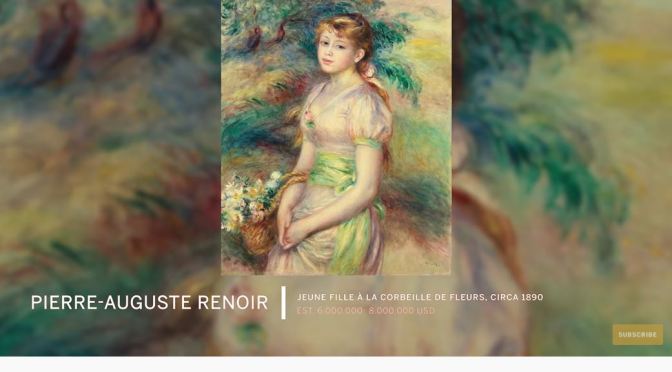
In this video, join Thomas Boyd-Bowman in an exploration of Pierre-Auguste Renoir’s Jeune fille à la corbeille de fleurs, a highlight of Sotheby’s Modern Art Evening Auction in November. Painted at one of the finest moments in Renoir’s career, Jeune fille à la corbeille de fleurs radiates with color and embodies the masterful portraiture for which he is best remembered. It was first acquired by the legendary art dealer Paul Durand-Ruel and later purchased by Dr. Albert Barnes of the esteemed Barnes Foundation, only to be returned to Durand-Ruel a few years later. With this extraordinary provenance, this painting exemplifies the triumph of impressionism from the perspective of artist, dealer and collector.

Analysis: $131 Trillion To Reduce Global Warming

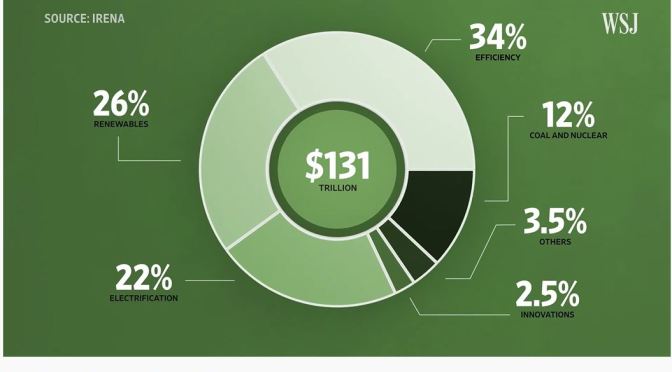
Money is a sticking point in climate-change negotiations around the world. As economists warn that limiting global warming to 1.5 degrees Celsius will cost many more trillions than anticipated, WSJ looks at how the funds could be spent, and who would pay. Illustration: Preston Jessee/WSJ

Village Walks: Pitigliano In Tuscany, Italy (4K)

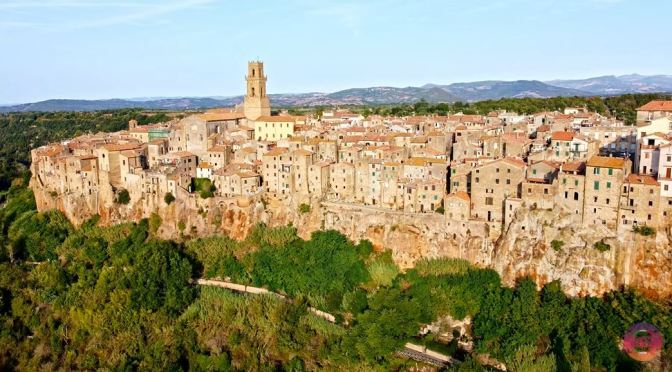
Carved from volcanic stone, the town of Pitigliano is ocated south of Montepulciano, and not too far from the thermal mineral waters of Bagno San Filippo. 

The cliffs of Pitigliano, Sovana and Sorano protected the remains of the many peoples who called the Fiora Valley, and its protective peaks, their homes since 2300 BC.

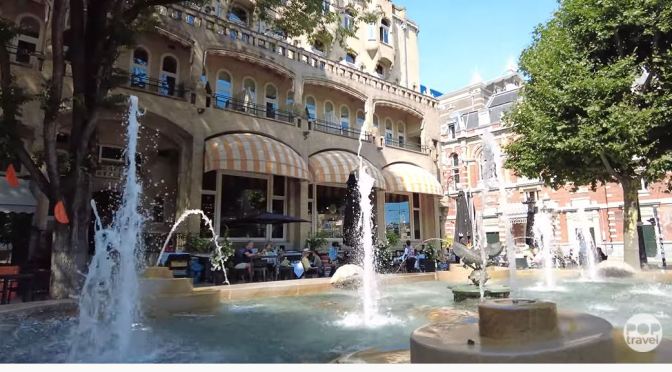
Walking Tour: Amsterdam – The Netherlands (4K)

Amsterdam is the Netherlands’ capital, known for its artistic heritage, elaborate canal system and narrow houses with gabled facades, legacies of the city’s 17th-century Golden Age. Its Museum District houses the Van Gogh Museum, works by Rembrandt and Vermeer at the Rijksmuseum, and modern art at the Stedelijk. Cycling is key to the city’s character, and there are numerous bike paths. 

Science: Sleeping Without A Brain, Insect Invasions, Racist Search Algorithms

Simple animals like jellyfish and hydra, even roundworms, sleep. Without brains. Why do they sleep? How can we tell a jellyfish is sleeping? 

Staff Writer Liz Pennisi joins host Sarah Crespi to talk about what can be learned about sleep from these simple sleepers. The feature is part of a special issue on sleep this week in Science.

Next is a look at centuries of alien invasions—or rather, invasive insects moving from place to place as humans trade across continents. Sarah talks with Matthew MacLachlan, a research economist at the U.S. Department of Agriculture’s Economic Research Service, about his Science Advances paper on why insect invasions don’t always increase when trade does.

Finally, a book on racism and the search algorithms. Books host Angela Saini for our series of interviews on race and science talks with Safiya Umoja Noble, a professor in the African American Studies and Information Studies departments at the University of California, Los Angeles, about her book: Algorithms of Oppression: How Search Engines Reinforce Racism.