Science: Flood Risks In High Population Areas, Selfishness, Democracy

Satellite imaging has shown population increases are 10x higher in flood prone areas than previously thought, and a new way to introduce fairness into a democratic process.

In this episode:

00:47 Calculating how many people are at risk of floods.

Researchers have used satellite imagery to estimate the number of people living in flood-prone regions. They suggest that the percentage of people exposed to floods has increased 10 times more than previously thought, and with climate change that number is only set to climb.

Research Article: Tellman et al.

News and Views: The fraction of the global population at risk of floods is growing

09:41 Research Highlights

People are happy to be selfish towards a crowd, but generous to an individual; and how wildfire smoke affects clouds’ brightness.

Research Highlight: ‘Robber’ experiment tests generosity — with sobering results

Research Highlight: Wildfire smoke creates brighter clouds — and weather changes

12:01 Making democracy fairer

Citizens’ assemblies are small groups of people invited to come together to help inform and affect policy decisions. But deciding who is in these groups is a mathematical challenge — the process needs to be random, but still reflect social demographics. This week, researchers describe a new algorithm that could offer a solution.

Research article: Flanigan et al.

News and Views: A bridge across the democracy–expertise divide

20:04 Briefing Chat

We discuss some highlights from the Nature Briefing. This time, how ships could spread a deadly coral disease, and research shows that female scientists are less likely to be cited in elite medical journals.

The Guardian: Deadly coral disease sweeping Caribbean linked to water from ships

Nature News: Fewer citations for female authors of medical research

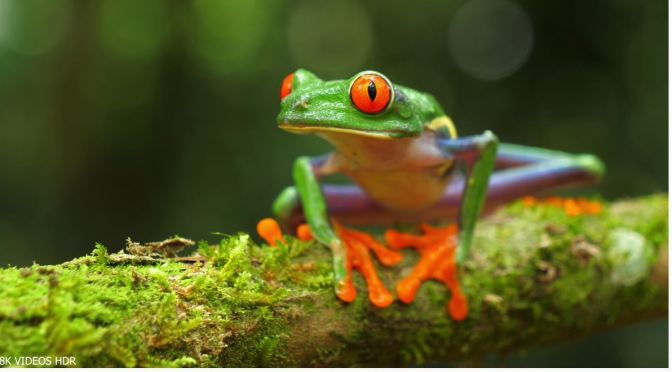
8K Views: Colors Of The World’s Rainforests

In this video you can see rainforest butterflies, lizards, blue jeans poison dart frog, treefrogs, glass frogs, squirrel monkey, capuchin monkey, red colobus monkey, silvery gibbon, peccary, lemur, chameleon, jaguar, three toed sloth and beautiful colored birds as jacobin, toucan, maccaw, parrot, hummingbirds, tanager, motmot, quetzal, from different rainforest areas as Caribbean, Costa Rica, Brazil, Madagagascar.

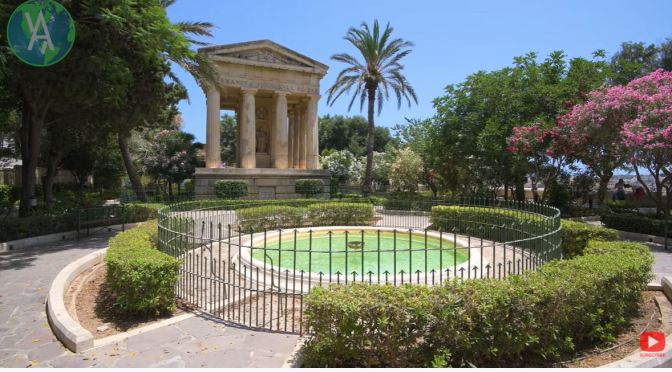
Travel Views: Valletta – Capital of Malta (4K)

Valletta (or Il-Belt) is the tiny capital of the Mediterranean island nation of Malta. The walled city was established in the 1500s on a peninsula by the Knights of St. John, a Roman Catholic order. It’s known for museums, palaces and grand churches. Baroque landmarks include St. John’s Co-Cathedral, whose opulent interior is home to the Caravaggio masterpiece “The Beheading of Saint John.”

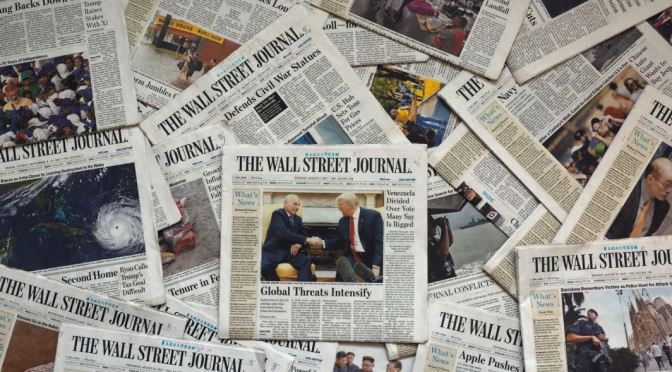
Morning News: Delta Variant Challenges Asia, Eviction Delays & Jobs

A.M. Edition for Aug. 4. WSJ’s Jon Emont discusses what’s behind the economic challenges facing some parts of Asia amid a rise in the highly transmissible Delta variant of Covid-19. 

The Biden administration implements a new federal moratorium on evictions. Spirit Airlines cancels more flights as it grapples with a dayslong operational meltdown. And, things to consider before quitting your job. 

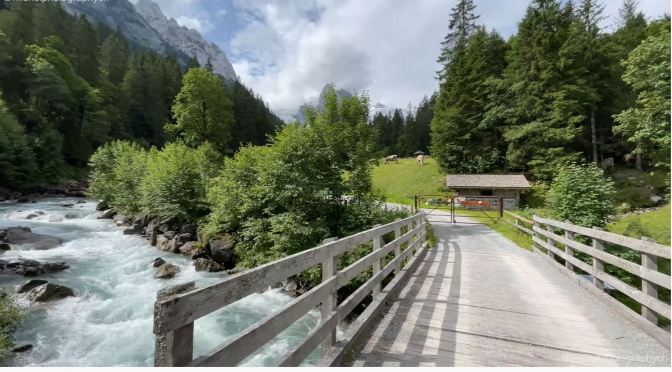
Swiss Drives: The Valley Of Dreams – Lauterbrunnen

Lauterbrunnen is a municipality in the Swiss Alps. It encompasses the village of Lauterbrunnen, set in a valley featuring rocky cliffs and the roaring, 300m-­high Staubbach Falls. Nearby, the glacial waters of Trümmelbach Falls gush through mountain crevices past viewing platforms. A cable car runs from Stechelberg village to Schilthorn mountain, for views over the Bernese Alps.

Analysis: Why Vacation Costs Are Rising (WSJ)

An economy in recovery means finding some rest and relaxation could make a bigger dent in your wallet Experts say price increases reflect an economy on the upswing from pandemic lows, but higher demand has made some vacation essentials harder to come by. We explain why, plus share some strategies to help avoid the sticker shock. Photo illustration: Jacob Reynolds/WSJ