

 Most historical accounts of slavery were written by colonists and planters. Researchers are now using the tools of archaeology to learn more about the day-to-day lives of enslaved Africans—how they survived the conditions of slavery, how they participated in local economies, and how they maintained their own agency. Host Sarah Crespi talks with Contributing Correspondent Lizzie Wade about a Caribbean archaeology project based on St. Croix in the U.S. Virgin Islands and launched by the founders of the Society for Black Archaeologists that aims to unearth these details. Watch a related video here.
Sarah also talks with Jonathan Schulz, a professor in the Department of Economics at George Mason University in Fairfax, Virginia, about a role for the medieval Roman Catholic Church in so-called WEIRD psychology—western, educated, industrialized, rich, democratic. The bulk of psychology experiments have used participants that could be described as WEIRD, and according to many psychological measures, WEIRD subjects tend to have some extreme traits, like a stronger tendency toward individuality and more friendliness with strangers. Schulz and colleagues used historical maps and measures of kinship structure to tie these traits to strict marriage rules enforced by the medieval Catholic Church in Western Europe. Read related commentary.

 “This study identifies a new molecular connection between exercise and inflammation that takes place in the bone marrow and highlights a previously unappreciated role of leptin in exercise-mediated cardiovascular protection,” said Michelle Olive, program officer at the National Heart, Lung, and Blood Institute Division of Cardiovascular Sciences. “This work adds a new piece to the puzzle of how sedentary lifestyles affect cardiovascular health and underscores the importance of following physical-activity guidelines.”
 This week our correspondent joined Emmanuel Macron on his visit to China. The French president is stretching his diplomatic wings, and has some striking views about Europe’s place in the world. The state of Texas has been reliably Republican for decades, but its demographics are changing; could it at last turn blue? And how Japan is dealing with its epidemic of public-transport groping.





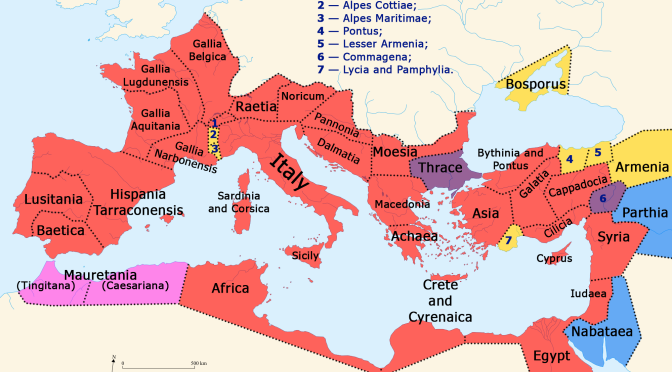
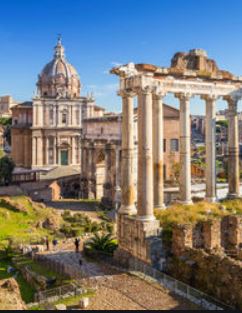 There was a massive shift in Roman residents’ ancestry, the researchers found, but that ancestry came primarily from the Eastern Mediterranean and Near East, possibly because of denser populations there relative to the Roman Empire’s western reaches in Europe and Africa.
 Recent polls in early voting states show Pete Buttigieg’s popularity surging among Democratic voters. The mayor of South Bend, Indiana, is now in the top tier of candidates vying for the chance to challenge President Trump in the 2020 presidential election. But with that growing support comes rising scrutiny. Judy Woodruff talks to Buttigieg about health care, taxes and uniting a divided country.
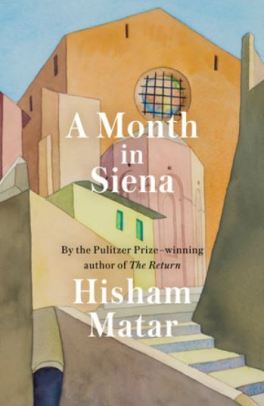 Including beautiful full-color reproductions of the artworks, A Month in Siena is about what occurred between Matar, those paintings, and the city. That month would be an extraordinary period in the writer’s life: an exploration of how art can console and disturb in equal measure, as well as an intimate encounter with a city and its inhabitants. This is a gorgeous meditation on how centuries-old art can illuminate our own inner landscape—current relationships, long-lasting love, grief, intimacy, and solitude—and shed further light on the present world around us.
 Dr David Adesnik, Director of Research at the Foundation for the Defense of Democracies, talks to Jonathan Kay about ISIS, Syria and the Kurds.


 Boomers Daily