Tag Archives: Water

Science: Water Flow And Quantum Friction, Super Soap Bubbles, Hippos

How quantum friction explains water’s strange flows in carbon nanotubes, and the latest from the Nature Briefing.

In this episode:

00:53 A theory for water’s baffling behaviour in carbon nanotubes

At large scales, water flows faster through a wider pipe than a narrower one. However, in tiny carbon nanotubes flow-rate is flipped, with water moving faster through the narrowest channels. This week, researchers have come up with a new explanation for this phenomenon: quantum friction. If validated, it could allow material designers to fine-tune flows through tiny channels, which could be useful in processes such as water purification.

Research Article: Kavokine et al.

06:43 Research Highlights

Creating soap bubbles that last 200,000 times longer, and hippos’ habit of aggressively spraying dung when they hear a stranger.

Research Highlight: No bursting for these record-breaking bubbles

Research Highlight: Hippos know strangers’ voices — and make a filthy reply

09:08 Briefing Chat

We discuss some highlights from the Nature Briefing. This time, a global study reveals how antibiotic-resistant infections have led to millions of deaths, and a genetic mutation that plays a big role in a dog’s size.

Nature News: The staggering death toll of drug-resistant bacteria

Nature News: Big dog, little dog: mutation explains range of canine sizes

Nature Video: 
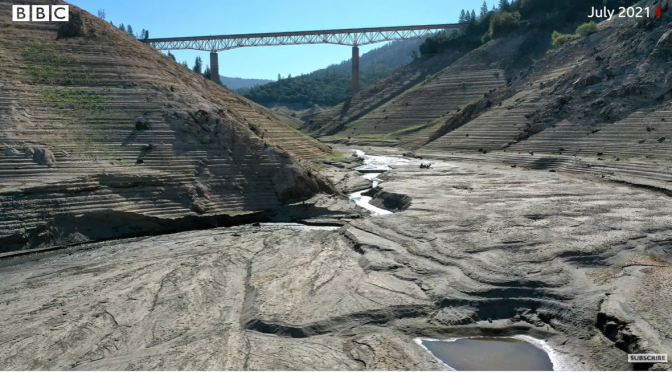
California Drought: Lake Oroville’s Stunning Water Loss In Photos (2014 – 2021)

Getty Images photojournalist Justin Sullivan has been following California’s second-largest reservoir’s declining water levels since 2014. Seeing first-hand the climate’s impact through his lens, he’s shocked at how fast the water is gone in one of California’s most important water sources.

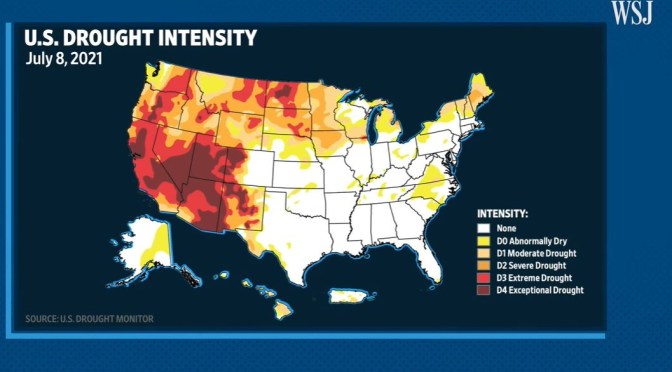
Analysis: The Western U.S. Drought’s Major Impacts

Watering the Country’s Food Basket Is Becoming a Challenge

Droughts are part of a natural cycle of water. But the drought currently gripping the Western U.S. has climate scientists concerned that the cycle may be shifting. This has major implications for those who rely on the water the most: farmers and the communities they surround. Photo Illustration: Carter McCall/WSJ

Climate Views: Rising High Water Levels In Kenya’s Great Rift Valley (Video)

In Kenya’s Rift Valley, climate change has brought an unprecedented increase in annual rainfall over the past several years, drowning pastureland, farms, homes, schools, churches, clinics and businesses.

The Great Rift Valley is part of an intra-continental ridge system that runs through Kenya from north to south. It is part of the Gregory Rift, the eastern branch of the East African Rift, which starts in Tanzania to the south and continues northward into Ethiopia.[1] It was formed on the “Kenyan Dome” a geographical upwelling created by the interactions of three major tectonics: the Arabian, Nubian, and Somalian plates.[2] In the past, it was seen as part of a “Great Rift Valley” that ran from Madagascar to Syria. Most of the valley falls within the former Rift Valley Province.

Space Travel: NASA Seeks Water On The Moon To Fuel Missions (WSJ Video)

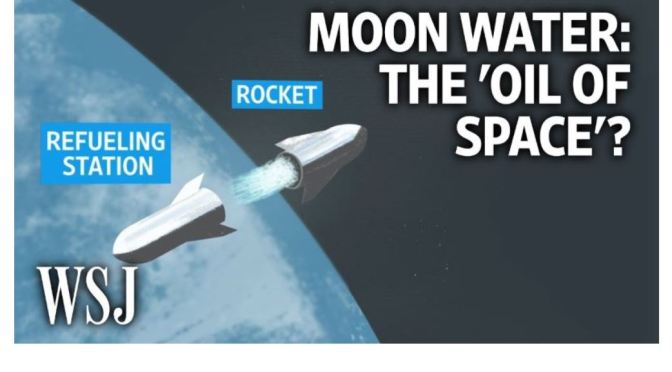
NASA is partnering with SpaceX, Blue Origin and others to search for water on the moon. Water is the foundation for rocket propellant, which could supply refueling stations in the cosmos and make Mars trips cheaper. Photo illustration: Crystal Tai

Analysis: Global Battles For ‘Water’ – A Necessity Or Commodity? (Video)

Water is fundamental to life, yet it’s also a scarce commodity. In many cases, greed and mismanagement are causing this life-giving essential to run dry. What happens when water is monetized? From Australia to California, from New York to London and Brussels, this investigative documentary tells the story of the global struggle over water.

Following rushes to secure gold and oil, the age of the water rush is now here. As well as growing populations and expanding agriculture, there are the problems of environmental degradation and climate change. Global demand for water is skyrocketing. By 2050, at least one in four people will live in a country with a chronic water shortage. The situation has awakened the greed of giant financial institutions, which are going on the offensive, investing billions in the sector. Goldman Sachs, HSBC, UBS, Allianz, Deutsche Bank and BNP are among those pouncing on the commodity known as “blue gold.”

But can fresh water really be considered a commodity on par with oil, coal or wheat? Should the players in these markets – banks and investment funds – be allowed to bet on the value of water? Will concern for profits undermine water’s essential function? Or should this precious resource be declared off-limits to financial speculators? A battle has broken out between those who advocate the monetization of water, and those who defend it as a human right. It’s a battle being fought on many fronts: ideological, political, environmental and, of course, economic. And the fate of the nearly ten billion inhabitants of our planet hinges on its outcome.

Travel & History: Source Of Water For ‘Kakigori’ Shaved Ice In Japan (Video)

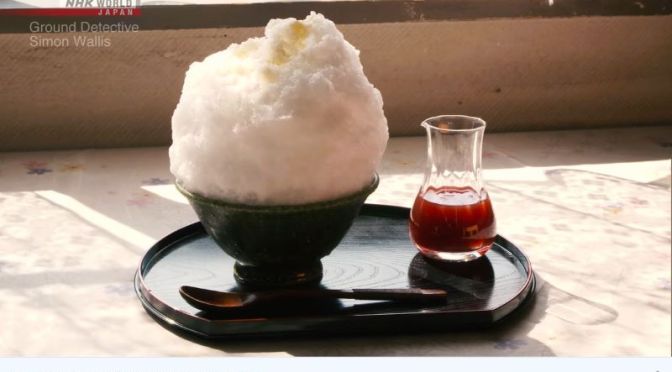
A geologist travels deep into Saitama Prefecture to investigate why whale fossils are being found so far from the nearest ocean and why the shaved ice there is so delicious.

The dessert is kakigori, a traditional Japanese shaved-ice specialty that has quickly become the dessert of choice at some of America’s most high-profile restaurants, and continues to grow in popularity. In its home country, however, kakigori has been popular for literal centuries: The idea dates back to the 11th century, when frozen blocks of ice from lakes would be preserved in the winter, only to be finely shaved and served with sweet syrup to Japan’s elite class in the summers. In the 19th century, when ice became more widely available, the public was able to try it, and now — thanks to electric refrigeration — kakigori is ubiquitous during warmer months.