
From a Wall Street Journal article (May 16, 2020):
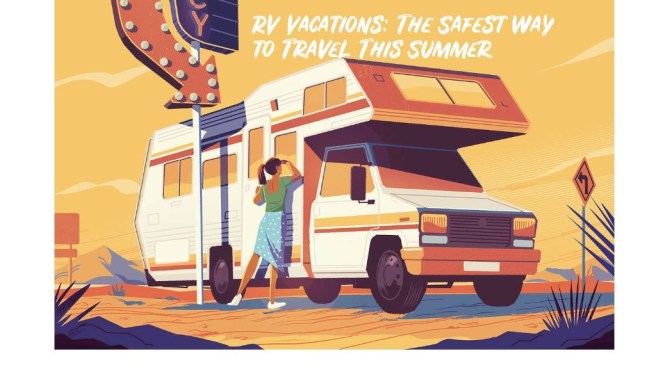
 “Originally, we were going to make it a six-day trip,” said Mr. Goble, “but we were honestly having such a good time we extended it four times into an 11-day trip.” Normally, rental companies’ full calendars preclude such spontaneity. Thanks to the motorhome’s self-sustainable features, they stayed overnight at a campground just twice on the trip. Most of the time they’d “boondock”—that is, stop at places without water or electrical hookups, or nightly fees. Say, creekside clearings off fire roads deep in the forest.
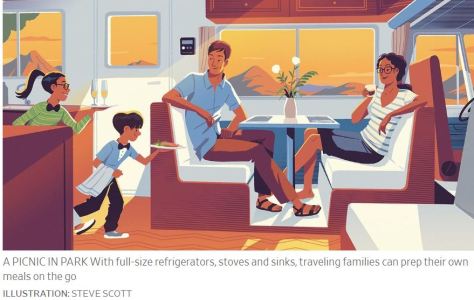
“We have been flooded with new inquiries, and an unusually high number of longer rentals (lasting from one to three months in duration),” said Mr. Ward. “I think this is going to be the trend for the remainder of 2020 and 2021, at a minimum.” One couple, he said, just booked their RV for a three-month loop around the deep South on short notice. “Neither have work to do right now due to the virus, so they’re like, ‘There’s no better time. We’ve always wanted to travel in an Airstream. This works for us now.’”
In a season when the urge to escape home will only be matched by the need to be flexible, getting lost in America in an RV works for a lot of people right now. Mr. Rybak and Ms. O’Hara are still hoping to tick at least one national park off their list in the next few months. They even have a campsite reserved. If you see them, say “Hi.” From a safe distance.

 The federal government is spending big to combat the economic damage of the coronavirus crisis, and federal debt has climbed to record levels.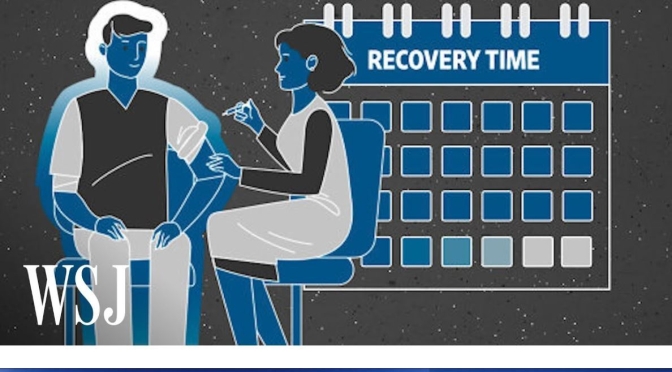

 A person who is one of the great mentors of my career and my time in the entertainment industry was Kirk Douglas. He said to me many decades ago the words that became the most important, most valuable in my lifetime, and the ones that right now mean more today than they ever meant before. He said, “Jeffrey, you haven’t learned to live until you’ve learned how to give.” The wisdom of that and the importance of that has never meant more to me than now.
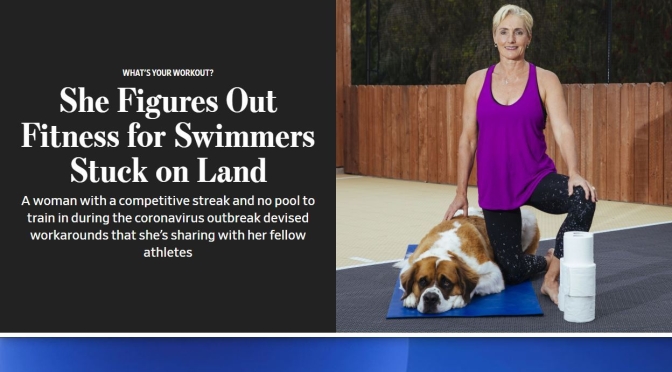
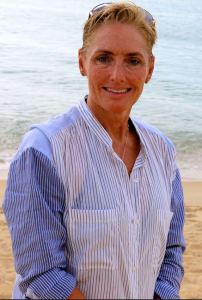 A physical therapist based in Santa Barbara, Calif., Ms. Godges is used to seeing injuries that result when swimmers start training on land. “We are great at cardio, but we aren’t used to pounding our joints. Gravity is not forgiving. We need to give our bodies time to adapt.”



 Boomers Daily