Tag Archives: Travel

The Silvered City with a Fevered Heart

In 1590, the Spanish port of Seville was the epicenter of the first global economy—a city drowning in silver, haunted by plagues, and inventing the anxieties we now know all too well. Its story is a warning.

By Michael Cummins, Editor, Intellicurean, August 20, 2025

Before there was Wall Street, London, or Shanghai, there was Seville. We live today in a world defined by intricate global supply chains, where fortunes are made on the abstract flow of capital and data, and where a single ship stuck in a canal can trigger worldwide anxiety. We know the feeling of living in a hyper-connected age, with all its dizzying wealth and its profound fragility. We talk of unicorn companies, bubbles, and systemic risk, sensing that the towering edifice of our prosperity rests on foundations we don’t fully understand. But what did the very first version of that world feel like, before the risks were modeled and the consequences were known?

To understand the unnerving vertigo of our own time, you have to go back to a muddy river in southern Spain, four centuries ago, when the modern world was being born in a flash of silver and blood. You have to imagine a spring morning in 1590.

At first light, the galleon Nuestra Señora de la Merced drifts slowly up the Guadalquivir River. Its sails, slack after the long Atlantic crossing from Panama, are stained with salt and sea-spray. Its sturdy Iberian oak hull, scarred by shipworms and storms, creaks under the registered weight of 500 tons. On the bustling Arenal waterfront, a dockworker named Mateo shields his eyes against the rising sun. He sees not a symbol of imperial glory, but the promise of a day’s wage, the chance to buy bread for his family at a price that seems to climb higher every month. His ropes are coiled in calloused hands, the air thick around him with the smell of pitch, citrus, and the river’s brackish breath.

Further back, shielded from the morning sun in the arcaded loggias of the Calle de las Gradas, men of a different class watch the same ship with a far more specific terror. A Genoese banker in sober black silk mentally calculates the interest on the massive loan he extended to King Philip II, a loan secured against this very shipment. Beside him, a Castilian merchant, having mortgaged his ancestral lands to finance a speculative cargo of wine and olive oil on the outgoing voyage, feels a tremor of hope and fear. Was the voyage profitable? Did pirates strike? Did the storms claim his fortune?

In a dusty office nearby, a scribe from the Casa de la Contratación—the formidable House of Trade—readies his quills and ledgers. He will spend the day recording every ingot, every barrel, every notarized claim, his neat columns tracking the quinto real, the “royal fifth,” the 20% tax on all precious metals that funds Spain’s sprawling wars in Flanders and the Mediterranean. In this moment, a city of nearly 150,000 souls—the largest and most important in Castile—holds its breath. The Guadalquivir carries not only treasure but the very lifeblood of an empire. And with it, a new kind of global pulse.

For nearly a century, Seville held the absolute monopoly on all trade with the Americas. Granted by the crown in 1503, this privilege meant every ounce of silver from the great mountain-mine of Potosí, every barrel of cochineal dye, every crate of indigo, and every human being—whether a returning colonist, a hopeful migrant, or an enslaved African—was funneled through its port. It was not merely a metropolis; it was a complex, living organism. Its artery was the river; its brain was the bureaucracy of the Casa; its beating heart was the Plaza de San Francisco, where coin, credit, and rumor changed hands with dizzying speed.

The brain of this operation, the Casa de la Contratación, was an institution without precedent. It was a combination of a shipping board, a research institute, and a supreme court for all maritime affairs. Within its walls, master cartographers secretly updated the Padrón Real, the master map of the New World, a document of such immense geopolitical value that its theft would be a blow to the entire empire. Its school for pilots trained men to navigate by the stars to a world that was, to most Europeans, still a realm of myth. The Casa licensed every ship, certified every sailor, and processed every manifest. It was the centralized, bureaucratic engine of the world’s first truly global enterprise.

The lifeblood of the system was the annual treasure fleet, the Flota de Indias. This convoy system, a necessity born from the existential threat of French and English privateers, was a marvel of logistics. Sailing in two main branches—one to Mexico, the other to Panama to collect the silver of Peru—the fleets were floating cities, military and commercial operations of immense scale. Their return, usually in late spring, was the moment the imperial heart beat loudest. The sheer volume of wealth was staggering. According to the foundational economic data compiled by Earl J. Hamilton, in the two decades from 1581 to 1600, over 52 million pesos in silver and gold were officially registered passing through Seville. The clang of heavy presses striking that silver into the iconic reales de a ocho, or pieces of eight—the world’s first global currency—echoed from the Royal Mint near the river.

This deluge of wealth transformed the city. To manage the booming trade, construction had begun in 1584 on a grand new merchant exchange, the Casa Lonja de Mercaderes. Designed by Juan de Herrera, the architect of the king’s austere Escorial palace, its monumental Renaissance style was a physical manifestation of Seville’s self-image: ordered, powerful, and the nerve center of a global Christian empire. The great Gothic Cathedral, already one of the largest in Christendom, glittered with new silver candlesticks and gold-leafed altarpieces forged from American bullion. The city attracted a complex web of foreign merchants and bankers who operated in a state of symbiotic tension with the Spanish crown. As historian Eberhard Crailsheim explains, foreign merchants were “indispensable for the functioning of the Spanish monopoly system, while at the same time they were its greatest threat.” They provided the credit and financial instruments the empire desperately needed, ensuring that American silver circulated rapidly into the European economy to pay the crown’s debts, often before it had even been unloaded at the Arenal.


But this firehose of silver was never pure. The same river that delivered the bullion also carried plague, contraband, and devastating floodwaters. That river of wealth was also a river of poison.

The most visceral fear was disease. Each arriving fleet was a potential vector for an epidemic. Ships from the Caribbean, their crews weakened by months at sea and ravaged by scurvy, disgorged sailors carrying typhus, smallpox, and what was then called vómito negro (yellow fever) into the densely packed, unsanitary tenements of the Triana neighborhood across the river. An outbreak meant sudden, terrifying death. It meant closed gates, armed guards preventing travel, and the dreaded chalk mark on the door of an infected house. While the truly catastrophic Great Castilian Plague of 1596–1601, which would kill a quarter of the city’s population, was still a few years away, smaller outbreaks kept the city in a perpetual state of anxiety.

Economic contagion was just as insidious. The endless flood of American silver triggered a century-long inflationary crisis known as the Price Revolution. As the money supply swelled, the value of each coin fell, and the price of everything—from bread and wine to cloth and rent—skyrocketed. A blacksmith or farmer in the Castilian countryside found himself poorer each year, his labor worth less and less. The very treasure that enriched the king and a small class of merchants was simultaneously impoverishing the kingdom. This paradox revealed the empire’s core fragility: it was living on credit, perpetually on the verge of bankruptcy (which it would declare again in 1596), its vast military and political ambitions financed by treasure it had not yet received.

Illicit trade pulsed through the artery with the same rhythm as legal commerce. Silver was smuggled to avoid the quinto real, often with the collusion of the very officials meant to prevent it. Forbidden books—Protestant tracts from Northern Europe or scientific texts deemed heretical—were hidden in barrels and circulated in the city’s more than one hundred taverns. And in the shadows of the Cathedral, a teeming underworld flourished. This was the world Miguel de Cervantes knew intimately. In the late 1580s, he served in Seville as a naval commissary, requisitioning wheat and olive oil for the navy—a frustrating job that landed him in jail and exposed him to the city’s seedy underbelly. His experience shaped his picaresque tale Rinconete y Cortadillo, a brilliant portrait of a city of hustlers, thieves, and corrupt officials who had created a perfect, parasitic society in the shadow of imperial wealth.

The Guadalquivir itself, the source of all this prosperity, was turning against the city. Centuries of deforestation and agricultural runoff were causing the river channel to silt up, creating treacherous sandbars near its mouth. As modern hydrological studies confirm, the late sixteenth century was a period of extreme environmental change in the estuary. At the time, the city’s frequent, devastating floods were interpreted as divine punishment for its sins of greed and luxury. In reality, it was a slow, man-made thrombosis. The great artery was hardening.


In a city defined by such spectacular contradictions—unimaginable wealth and desperate poverty, global connection and epidemic disease, rigid piety and rampant crime—life was lived on a knife’s edge. To manage these profound anxieties, Seville transformed itself into a grand stage, and the river became the backdrop for its most important dramas of power, faith, and identity.

The sensory experience of the port was an unforgettable piece of theater. Chroniclers describe the overwhelming smells of spices and sewage, the cacophony of ships’ bells and construction cranes, and the shouts of sailors in a dozen languages. Enslaved West Africans loaded and unloaded cargo in the grueling sun, their forced labor the invisible foundation of the entire enterprise. Moorish artisans crafted vibrant ceramics in Triana, while Flemish merchants in lace collars inspected textiles near the Casa Lonja. It was a microcosm of a new, globalized world, assembled by force and commerce on the banks of a single river.

To contain the social and spiritual anxieties this world produced, the city deployed the power of art and ritual. Painters of the emerging Seville School, like Francisco Pacheco, experimented with dramatic chiaroscuro, their canvases echoing the city’s tension between divine order and worldly excess. The church, enriched beyond measure by the tithes on American silver, became the primary patron of this art. As historian Amanda Wunder argues in her book Baroque Seville, these spectacular displays were essential civic mechanisms. The city, she writes, sought to “transmute the New World’s silver into a spiritual treasure that could be stored up in heaven” as a defense against the very instability that wealth created.

Nowhere was this clearer than during the feast of Corpus Christi, the city’s most important celebration. The streets were covered in flowers. The great guilds marched with their banners. And at the heart of the procession was the custodia, an immense, fortress-like monstrance of solid silver, paraded through the city as a tangible symbol of God’s presence. This was not mere decoration; it was a carefully choreographed piece of public therapy. It took the source of the city’s anxiety—silver—and transformed it into an object of sacred devotion, reassuring the populace that their chaotic world was still under divine control. In this baroque theater, as the eminent historian Antonio Domínguez Ortiz noted, Seville’s greatness was inseparable from its “spectacular fragility.”

Overseeing this entire performance was the Holy Office of the Inquisition, its headquarters looming in the castle of Triana. The Inquisition was not just hunting heretics; it was policing the boundaries of thought and expression in a dangerously cosmopolitan city. Its public trials, the autos-da-fé, were another, darker form of theater, designed to root out dissent and reinforce social order. Its presence created a climate of suspicion that simmered beneath the city’s vibrant surface.


The year 1590 was, in retrospect, a historical precipice. To a contemporary observer standing on the Triana bridge, watching the forest of masts on the river, Seville must have seemed invincible, the permanent heart of a permanent empire. The monumental walls of the Casa Lonja were rising, the mint’s hammers clanged incessantly, and the Cathedral shone with American treasure.

Yet within its very triumph lay the seeds of its decay. The shocking defeat of the Spanish Armada just two years prior had been a blow to both the treasury and the national psyche. The bankruptcy of 1596 loomed. The river’s sedimentation was worsening, a physical reality that would, over the next few decades, slowly choke the port and eventually divert the monopoly of trade to Cádiz. The great artery was silting, even as its pulse quickened.

Still, to walk the riverbank in 1590 was to witness the apex. Children stared at ships vanishing over the horizon toward a nearly mythical world; merchants prayed over contracts sealed with a handshake; artisans fashioned silver into monstrances of breathtaking complexity. The Guadalquivir carried all these flows—material, sensory, and symbolic. Its pulse was not merely economic; it was emotional, theological, and aesthetic. A popular epithet of the time called Seville “the city where the world’s heart beats.” In 1590, that heartbeat was fevered, irregular, and already trembling with overexertion—but it was magnificent.

At dusk, as the river darkened to ink, the silver locked away in the city’s coffers seemed to gleam like a heart beating too fast, too bright, and far too fragile to last. In that shimmer lay the paradox of Seville: a city at once glorious and doomed, sustained and threatened by the very waters that had forged its destiny. It’s a paradox baked into the very nature of globalization—a fevered heartbeat we can still hear in the rhythm of our own world.

THIS ESSAY WAS WRITTEN AND EDITED UTILIZING AI

The Enduring Power of Place: Step Into Historian David McCullough’s Work

By Michael Cummins, Editor, August 12, 2025

A vast stone arch, a suspension of steel, a ribbon of concrete stretching across a chasm—these are not merely feats of engineering or infrastructure. They are, in the words of the great historian David McCullough, monuments to the human spirit, physical places that embody the stories of ingenuity, perseverance, and sacrifice that created them. While the written word provides the essential narrative framework for understanding the past, McCullough’s work, from his celebrated biographies to his upcoming collection of essays, History Matters (2025), consistently champions the idea that visiting and comprehending these physical settings offers a uniquely powerful and visceral connection to history.

These places are not just backdrops; they are tangible testaments, silent witnesses to the struggles and triumphs that have shaped our world, offering a depth of understanding that written accounts alone cannot fully provide. In History Matters, McCullough writes, “History is a guide to navigation in perilous times. History is who we are and why we are the way we are.” This philosophy is the essay’s core, as we explore how the places he chronicled are integral to this understanding.

In his extensive body of work, McCullough frequently returned to this theme, demonstrating how the physical presence of a historical site grounds the abstract facts of the past in the authentic, palpable reality of the present. He believed that the stories of our past are a “user’s manual for life,” and that the places where these stories unfolded are the most direct way to access that manual. By examining four of his most iconic subjects—the Brooklyn Bridge, the “White City” of the 1893 World’s Fair, the Panama Canal, and Kitty Hawk—we can see this philosophy in action.

Each of these monumental endeavors was an audacious, against-all-odds project that faced incredible technical and personal challenges, including political opposition, financial struggles, and tragic loss of life. Yet, McCullough uses them as a lens to explore the character of the people who built them, the society of the time, and the very idea of American progress and ingenuity. These structures, built against overwhelming odds, stand as powerful reminders that history is an active, ongoing force, waiting to be discovered not just in books, but in the very soil and stone of the world around us.

The Brooklyn Bridge

The Brooklyn Bridge stands as a primary example of a physical place as tangible testimony to human ingenuity. In his landmark book The Great Bridge (1972), McCullough details the seemingly insurmountable challenges faced by the Roebling family in their quest to connect Manhattan and Brooklyn. In the mid-19th century, the idea of spanning the East River, with its powerful currents and constant ship traffic, was seen as an engineering impossibility. The technology for building such a massive structure simply did not exist. The bridge, therefore, was not merely constructed; it was invented. The vision of John Roebling, who conceived the revolutionary design of a steel-wire suspension bridge, was cut short by a tragic accident. His son, Washington, took over the project, only to be struck down by the debilitating effects of “the bends,” a crippling decompression sickness contracted while working in the underwater caissons. These massive timber and iron chambers, filled with compressed air, allowed workers to lay the foundations for the bridge’s monumental stone towers deep below the riverbed. The work was brutal, dangerous, and physically taxing. Washington himself spent countless hours in the caissons, developing the condition that would leave him partially paralyzed. As McCullough writes, “The bridge was a monument to faith and to the force of a single will.” This quote captures the essence of the Roeblings’ spirit, and the enduring structure itself embodies this unwavering faith.

Paralyzed and often bedridden, Washington continued to direct the project from his window, observing the progress through a telescope while his wife, Emily Warren Roebling, acted as his liaison and de facto chief engineer, mastering advanced mathematics and engineering to communicate her husband’s instructions to the men on site. The Roeblings’ story is a personal drama of vision and perseverance, and the physical bridge is a direct reflection of it. The monumental stone towers, with their Gothic arches, are a direct result of the design choices made to withstand immense pressure. The intricate web of steel cables, which Roebling so meticulously calculated, hangs as a monument to his genius. The wooden promenade, a feature initially ridiculed by critics, stands as a testament to the Roeblings’ foresight, offering a space for the public to walk and experience the grandeur of the structure.

A person can read McCullough’s narrative of the Roeblings’ saga and feel inspired by their resilience. However, standing on the promenade today, feeling the subtle vibrations of the traffic below, seeing the cables stretch into the distance, and touching the cold, ancient stone of the towers provides a profound, non-verbal understanding of the sheer audacity of the project. The physical object makes the story of vision, sacrifice, and perseverance feel not like a distant myth, but like a concrete reality, etched into the very materials that compose it. The bridge becomes a silent orator, telling its story without a single word, through its breathtaking scale and enduring presence. It connects us not only to a piece of engineering but to the very human story of a family that poured its life’s work into a single, magnificent idea.

The White City

The “White City” of the 1893 World’s Columbian Exposition, as chronicled in The Devil in the White City (2003), serves as a different but equally powerful example of a place as a testament to human will and ambition. Unlike the permanent structures of the Brooklyn Bridge and Panama Canal, the White City was a temporary, almost mythical creation. Built from scratch on swampy land in Chicago, it was a colossal feat of city planning and architectural design that captured the imagination of the world and showcased America’s coming of age. The place itself—with its majestic, neoclassical buildings, grand boulevards, and sprawling lagoons—was a physical manifestation of a nation’s collective vision. The narrative is driven by figures like architect Daniel Burnham, who, much like Washington Roebling, faced immense pressure, logistical nightmares, and constant political infighting. The physical challenges were immense: transforming a marsh into a breathtaking cityscape in just a few short years, all while coordinating the work of an entire generation of architectural titans like Frederick Law Olmsted and Louis Sullivan.

McCullough uses the White City to show how an ambitious idea can be willed into existence through relentless determination. The physical city, for its brief, glorious existence, was the living embodiment of American progress, ingenuity, and the Gilded Age’s opulent grandeur. It was a place where millions came to witness the future, to marvel at electric lights, and to see new technologies like the Ferris wheel. As McCullough writes, “The fair, a world of its own, had a power to transform those who visited it.” This quote highlights the profound, almost magical impact of this temporary place. However, McCullough masterfully contrasts the gleaming promise of the White City with the dark underbelly of the era, epitomized by the psychopathic serial killer H.H. Holmes and his “Murder Castle,” located just a few miles away. The physical contrast between these two places—the temporary, luminous dream and the permanent, sinister reality—is central to the book’s power. Even though the structures of the White City no longer stand, the historical record of this magnificent place—its photographs, its architectural plans, and McCullough’s vivid descriptions—serves as a tangible window into that moment in time, reminding us of the powerful, transformative potential of a shared human vision and the complex, often contradictory, nature of the society that produced it.

The Panama Canal

Finally, the Panama Canal serves as a powerful testament to the theme of human sacrifice and endurance. The canal was not just a feat of engineering; it was a grueling, decades-long battle against nature, disease, and bureaucratic inertia. As chronicled in McCullough’s Pulitzer Prize-winning book, The Path Between the Seas (1977), the French attempt to build a sea-level canal failed catastrophically under the direction of Ferdinand de Lesseps, the engineer of the Suez Canal. They grossly underestimated the challenges of the tropical climate, the unstable geology, and the devastating diseases, costing thousands of lives and ultimately leading to financial ruin. The subsequent American effort, led by figures like Dr. William Gorgas, who tirelessly fought the mosquito-borne diseases, and engineer John Frank Stevens, who abandoned the sea-level plan for a lock-and-lake system, was equally defined by a titanic human cost. The physical canal itself—the vast, deep Culebra Cut that slices through the continental divide, the enormous locks that lift ships over a mountain range, the sprawling Gatun Lake—serves as a permanent memorial to this immense struggle.

The sheer physical scale of the canal is an emotional and intellectual experience that far surpasses any numerical data. One can read that “25,000 workers died” during the French and American construction periods, a statistic that, while tragic, can be difficult to fully comprehend. But to stand at the edge of the Culebra Cut, staring down at the colossal gorge carved out of rock and earth, is to feel the weight of those lives. The physical presence of the cut makes the abstract struggle of “moving a mountain” feel real. The immense size of the locks and the power of the water filling them evokes a sense of awe not just for the engineering, but for the human will that made it happen. The canal is not just a shortcut for global trade; it is a monument to the thousands of unnamed laborers who toiled in oppressive conditions and to the few visionaries who refused to give up. As McCullough wrote, the canal was a testament to the fact that “nothing is more common than the wish to move mountains, but a mountain-moving event requires uncommon determination.” The physical place makes the concept of perseverance tangible, demonstrating in steel, concrete, and water that impossible tasks can be conquered through sheer, relentless human effort. The canal also represents a pivot point in American history, marking the nation’s emergence as a global power and its willingness to take on monumental challenges on the world stage.

Kitty Hawk

In The Wright Brothers, McCullough presents a different kind of historical place: one that is not a monumental structure, but a desolate, windswept beach. The story of Wilbur and Orville Wright’s quest to achieve controlled, powered flight is inextricably linked to this specific location on the Outer Banks of North Carolina. Kitty Hawk was not a place of grandeur, but one of raw, challenging nature. Its consistent, stiff winds and soft, sandy dunes made it an ideal testing ground for their gliders. This place was a crucial collaborator in their scientific process, a physical laboratory where they could test, fail, and re-evaluate their ideas in relative isolation. As McCullough writes of their success, “It was a glorious, almost unbelievable feat of human will, ingenuity and determination.” This triumph was born not on a grand stage, but on a patch of ground that was, at the time, little more than a remote stretch of sand.

McCullough’s narrative emphasizes how the physical conditions of Kitty Hawk—the powerful gales, the endless expanse of sand, and the isolation from the public eye—were essential to the Wrights’ success. They didn’t build a monument to their achievement in a city; they built it in the middle of nowhere. It was a place of quiet, methodical work, of relentless trial and error. The physical space itself was a character in their story, a partner in their success. The first flight did not happen on a grand stage, but on a patch of ground that was, at the time, little more than a remote stretch of sand. Today, when one visits the Wright Brothers National Memorial, the monument is not just the stone pylon marking the first flight, but the entire landscape—the dunes, the wind, and the expansive sky—that made their achievement possible. This place reminds us that some of history’s greatest triumphs begin not with a bang, but in the quiet, isolated spaces where innovation is allowed to thrive.

Conclusion

Beyond these specific examples, McCullough’s philosophy, as expected to be reiterated in History Matters, argues that this direct, experiential connection to place is vital for a vibrant and engaged citizenry. It is the authenticity of standing on the same ground as our forebears that makes history feel relevant to our own lives. A book can tell us about courage, but a place—the Brooklyn Bridge, the Panama Canal, the White City, or a humble battlefield—can make us feel it. These places are the physical embodiment of the narratives that have defined us, and by seeking them out, we are not simply looking at the past; we are a part of a continuous story. They remind us that the qualities of human ingenuity, sacrifice, and perseverance are not merely historical attributes, but enduring elements of the human condition, available to us still today.

Ultimately, McCullough’s legacy is not only in the stories he told but also in his fervent plea for us to recognize the importance of the places where those stories occurred. His work stands as a powerful argument that history is not abstract but is profoundly and permanently embedded in the physical world around us. By preserving and engaging with these historical places, we are not just honoring the past; we are keeping its most powerful lessons alive for our present and for our future. They are the tangible proof that great things are possible, and that the struggles and triumphs of those who came before us are forever etched into the landscape we inhabit today. His writings on these three monumental locations—one that stands forever as a testament to the Roeblings’ vision, another that vanished but whose story remains vivid, and a third that forever altered global commerce—each demonstrate the unique and irreplaceable power of place in history. As he so often reminded us, “We have to know who we are, and where we have come from, to be able to know where we are going.”

THIS ESSAY WAS WRITTEN AND EDITED UTILIZING AI

A Deep-Dish Dive Into The U.S. Obsession With Pizza

By Michael Cummins, Editor, Intellicurean

We argue over thin crust versus deep-dish, debate the merits of a New York slice versus a Detroit square, and even defend our favorite topping combinations. Pizza is more than just a meal; it’s a cultural cornerstone of American life. Yet, behind this simple, beloved food lies a vast and powerful economic engine—an industry generating tens of billions of dollars annually. This essay explores the dual nature of America’s pizza landscape, a world where tech-driven corporate giants and passionate independent artisans coexist. We will dive into the macroeconomic trends that fuel its growth, the fine-grained struggles of small business owners, and the cultural diversity that makes pizza a definitive pillar of the American culinary experience.

Craft, Community, and the Independent Spirit

The true heart of the pizza industry lies in the human element, particularly within the world of independent pizzerias. While national chains like Domino’s and Pizza Hut rely on standardized processes and massive marketing budgets, local shops thrive on the passion of their owners, the skill of their pizzaiolos, and their deep connection to the community. This dedication to craft is a defining characteristic. For many, like the co-founders of New York City’s Zeno’s Pizza, making pizza is not just a business; it’s a craft rooted in family tradition and personal expertise. This meticulous attention to detail, from sourcing high-quality ingredients to the 48-hour fermentation of their dough, translates directly into a superior and unique product that fosters a fiercely loyal local following.

Running an independent pizzeria is an exercise in juggling passion with the practicalities of business. Owners must navigate the complexities of staffing, operations, and the ever-present pressure of online reviews. One successful owner shared his philosophy on building a strong team: instead of hiring many part-time employees, he created a smaller, dedicated crew with more hours and responsibility. This approach made employees feel more “vested” in the company, leading to higher morale, a greater sense of ownership, and significantly lower turnover in an industry notorious for its transient workforce. Another owner emphasized efficiency through cross-training, teaching every staff member to perform multiple roles from the kitchen to the front counter. This not only ensured smooth operations during peak hours but also empowered employees with new skills, making them more valuable assets to the business.

Customer relationships are equally crucial for independent shops. Instead of fearing negative online feedback, many owners see it as a direct line of communication with their customer base. A common practice is for an owner to insist that customers with a bad experience contact him directly, offering to “make it right” with a new order or a refund. This personal touch builds trust and often turns a negative situation into a positive one, demonstrating how successful independent pizzerias become true community hubs, built on a foundation of trust and personal connection. These businesses are more than just restaurants; they are local institutions that sponsor Little League teams, host fundraisers, and serve as gathering places that strengthen the fabric of their neighborhoods.

Macroeconomic Trends and Profitability

The macroeconomic picture of the pizza industry tells a story of immense scale and consistent growth. The U.S. pizza market alone generates over $46.9 billion in annual sales and is supported by a vast network of more than 75,000 pizzerias. To put that into perspective, the American pizza market is larger than the entire GDP of some small countries. This financial robustness isn’t just impressive on its own; it gains perspective when you realize that pizza holds its own against other major food categories like burgers and sandwiches, often dominating the quick-service restaurant sector. This success is underpinned by a powerful and reliable engine: constant consumer demand.

The U.S. pizza market alone generates over $46.9 billion in annual sales and is supported by a vast network of more than 75,000 pizzerias. — PMQ Pizza Magazine, “Pizza Power Report 2024”

A staggering 13% of Americans eat pizza on any given day, and a significant portion of the population enjoys it at least once a week. This high-frequency demand is driven by a broad and loyal consumer base that spans all demographics, but is particularly strong among younger consumers. For Gen Z and Millennials, pizza’s customizability, shareability, and convenience make it a perfect choice for nearly any occasion, from a quick solo lunch to a communal dinner with friends. The rise of digital ordering platforms and the optimization of delivery logistics have only amplified this demand, making it easier than ever for consumers to satisfy their craving.

The economic viability of a pizzeria is built on a simple yet powerful formula: inherent profitability. The cost of goods sold (COGS) for a pizza is remarkably low compared to many other dishes. The core ingredients—flour, tomatoes, and cheese—are relatively inexpensive commodities. While the quality of these ingredients can vary, the basic ratio of cost to sale price remains highly favorable. This low cost allows operators to achieve high profit margins, even at competitive price points. This profitability is further enhanced by pizza’s versatility. Operators can easily create a vast menu of specialty and premium pies by adding a variety of toppings, from artisanal meats and cheeses to fresh vegetables, all of which can be sold at a higher margin. This flexibility is a key reason why pizzerias are often cited as one of the most profitable types of restaurants to operate, providing a solid foundation for both national chains and independent startups.

Chains vs. Independents and Regional Identity

The enduring appeal of pizza in America is largely due to its remarkable diversity. The concept of “pizza” is not monolithic; it encompasses a wide array of regional styles, each with its own loyal following and distinct characteristics. The great pizza debate often revolves around the choice between thick and thin crusts, from the foldable, iconic New York-style slice to the hearty, inverted layers of a Chicago deep-dish. Other popular styles include the cracker-thin St. Louis-style, known for its Provel cheese blend, and the thick, crispy-edged Detroit-style, which has seen a recent surge in popularity. Each style represents a unique chapter in American food history and reflects the local culture from which it was born.

This diversity is reflected in the market dynamics, characterized by a fascinating duality: the coexistence of powerful national chains and a dense network of independent pizzerias. Dominant chains like Domino’s, with over 7,000 U.S. locations and $9 billion in annual sales, and Pizza Hut, with more than 6,700 locations and $5.6 billion in sales, leverage economies of scale and sophisticated technology to dominate the market. Their success is built on brand recognition, supply chain efficiency, and a focus on seamless digital innovation and rapid delivery.

In contrast, independents thrive by leaning into their unique identity, focusing on high-quality ingredients, traditional techniques, and a strong connection to their local communities. This dynamic is particularly evident in cities with rich pizza histories. In New York, the independent scene is a constellation of legendary establishments, from the historical Lombardi’s in Little Italy—often credited as America’s first pizzeria—to modern classics like Joe’s Pizza in Greenwich Village and L&B Spumoni Gardens in Brooklyn. These shops are not just restaurants; they are destinations. Chicago’s famous deep-dish culture is built on a foundation of iconic independent pizzerias like Lou Malnati’s and Giordano’s, which have since grown into regional chains but maintain a local identity forged by decades of tradition. Similarly, Detroit’s burgeoning pizza scene is defined by beloved institutions such as Buddy’s Pizza and Loui’s Pizza, which were instrumental in popularizing the city’s unique rectangular, thick-crust style. These places represent the soul of their cities, each telling a unique story through their distinctive pies.

The Fine-Grained Economics of a New York Slice

While the national picture is one of robust growth, the hyper-local reality, especially in a city like New York, is a constant battle for survival. As the owners of Zeno’s Pizza shared on the Bloomberg “Odd Lots” podcast, they saw an opportunity to open their new shop in a “pizza desert” in Midtown East after the pandemic forced many established places to close. They recognized that while the East Village is a “knife fight” of competition with pizzerias on every block, their location was a green space for a new business. This kind of strategic thinking is essential for anyone trying to enter the market.

The initial capital investment for a new pizzeria is a daunting obstacle. As discussed on the podcast, the Zeno’s team noted that a 1,000-square-foot quick-serve restaurant requires a minimum of $400,000, and more likely $500,000 to $600,000, in working capital before the doors can even open. Much of this goes to costly, specialized equipment: a single pizza oven can cost anywhere from $32,000 and is now up to $45,000, and a commercial cheese shredder can run $5,000. Beyond the equipment, the build-out costs are substantial, including commercial-grade plumbing, electrical work, specialized ventilation systems, and a multitude of city permits. These expenses, along with supply chain issues that led to back-ordered equipment and construction delays, mean the payback period for a restaurant has stretched from a pre-COVID average of 18 months to a new normal of three years.

The historic rule of thumb for a pizzeria’s cost structure was a balanced 30/30/30/10 split—30% for fixed costs (rent, utilities), 30% for labor, 30% for food costs, and a 10% profit margin. Today, that model has been shattered. — Bloomberg’s ‘Odd Lots’ podcast

Pizza’s profitability, while historically strong, is also under immense pressure. The historic rule of thumb for a pizzeria’s cost structure was a balanced 30/30/30/10 split—30% for fixed costs (rent, utilities), 30% for labor, 30% for food costs, and a 10% profit margin. Today, that model has been shattered. Labor costs, for example, have ballooned to 45% of a restaurant’s budget due to rising minimum wages and a tight labor market, while insurance premiums have climbed by 20-30%. This leaves very little room for a profit margin, forcing owners to find creative solutions to survive.

To counter these rising costs, pizzerias are being forced to innovate their business models. The Zeno’s co-founders noted that they are now pushing their prices higher to a premium product segment, relying on fresh, high-quality ingredients and a meticulous process like a 48-hour dough fermentation that makes the pizza healthier and less heavy. This strategy allows them to justify a higher price point to a discerning customer base. They also actively seek new sales by cold-calling companies for catering orders, a crucial part of their business that offers a higher ticket price and a predictable revenue stream.

The increasing use of third-party delivery services adds another layer of complexity to the financial landscape. While these platforms offer a wider reach, they take a significant cut, often charging up to 20%, plus additional fees for delivery. To make this work, pizzerias are forced to list prices on these platforms that are 15% higher than their in-house menu. The owners noted that the post-pandemic cap on these fees is expiring, which will place even more pressure on an already-tight profit margin. The decision to partner with these services becomes a difficult trade-off between increased exposure and reduced profitability.

Conclusion: A Lasting Legacy for America’s Favorite Food

The story of pizza in America is a compelling narrative of resilience, innovation, and cultural integration. It is a tale of a massive, multi-billion-dollar industry that thrives on both the hyper-efficient, tech-driven operations of its largest chains and the passion-fueled, community-centric efforts of its independent artisans.

Will this obsession last? All evidence points to a resounding yes. Pizza is not a fleeting trend; it is a fundamental part of the American diet and cultural landscape. Its unique ability to be a family meal, a late-night snack, a celebratory dish, and an affordable comfort food ensures its enduring relevance. The industry’s financial robustness, driven by constant consumer demand and inherent profitability, provides a sturdy foundation for its future.

So, how will the pizza category keep reinvigorating itself? By continually adapting and reflecting the evolving tastes of the public. This reinvigoration will come from multiple fronts:

  • Regional Innovation: The discovery and popularization of new regional styles, like the recent surge in Detroit-style pizza, will continue to capture the public’s imagination.
  • Creative Toppings: As palates become more sophisticated, chefs will experiment with bolder, more diverse ingredients, pushing the boundaries of what a “pizza” can be.
  • Technological Integration: The adoption of cutting-edge technology will continue to streamline operations, enhance delivery logistics, and provide new, seamless ordering experiences.
  • The Artisanal Revival: The push for high-quality, artisanal products and a return to traditional techniques by independent pizzerias will offer a crucial counterpoint to the efficiency of the national chains, ensuring that pizza remains a craft as well as a commodity.

The challenges of rising costs and competitive pressures are real, but the industry has proven its ability to adapt and thrive. The story of pizza in America reminds us that a business can still thrive on a foundation of passion and community. It’s a timeless testament to the power of a simple, delicious idea—one that will continue to unite and divide us, slice by delicious slice.

This essay was written and edited utilizing AI

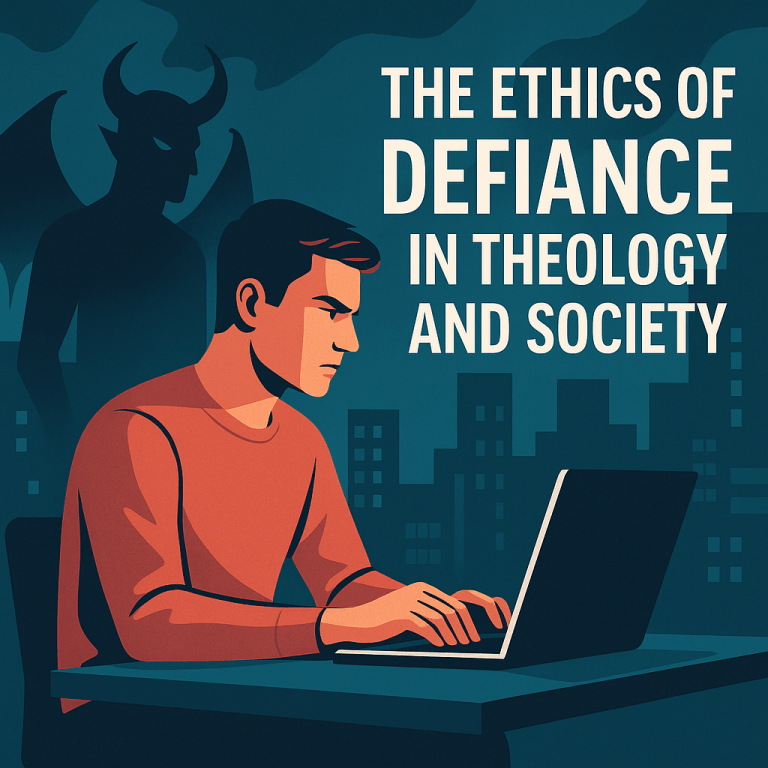
The Ethics of Defiance in Theology and Society

This essay was written and edited by Intellicurean utilizing AI:

Before Satan became the personification of evil, he was something far more unsettling: a dissenter with conviction. In the hands of Joost van den Vondel and John Milton, rebellion is not born from malice, but from moral protest—a rebellion that echoes through every courtroom, newsroom, and protest line today.

Seventeenth-century Europe, still reeling from the Protestant Reformation, was a world in flux. Authority—both sacred and secular—was under siege. Amid this upheaval, a new literary preoccupation emerged: rebellion not as blasphemy or chaos, but as a solemn confrontation with power. At the heart of this reimagining stood the devil—not as a grotesque villain, but as a tragic figure struggling between duty and conscience.

“As old certainties fractured, a new literary fascination emerged with rebellion, not merely as sin, but as moral drama.”

In Vondel’s Lucifer (1654) and Milton’s Paradise Lost (1667), Satan is no longer merely the adversary of God; he becomes a symbol of conscience in collision with authority. These works do not justify evil—they dramatize the terrifying complexity of moral defiance. Their protagonists, shaped by dignity and doubt, speak to an enduring question: when must we obey, and when must we resist?

Vondel’s Lucifer: Dignity, Doubt, and Divine Disobedience

In Vondel’s hands, Lucifer is not a grotesque demon but a noble figure, deeply shaken by God’s decree that angels must serve humankind. This new order, in Lucifer’s eyes, violates the harmony of divine justice. His poignant declaration, “To be the first prince in some lower court” (Act I, Line 291), is less a lust for domination than a refusal to surrender his sense of dignity.

Vondel crafts Lucifer in the tradition of Greek tragedy. The choral interludes frame Lucifer’s turmoil not as hubris, but as solemn introspection. He is a being torn by conscience, not corrupted by pride. The result is a rebellion driven by perceived injustice rather than innate evil.

The playwright’s own religious journey deepens the text. Raised a Mennonite, Vondel converted to Catholicism in a fiercely Calvinist Amsterdam. Lucifer becomes a veiled critique of predestination and theological rigidity. His angels ask: if obedience is compelled, where is moral agency? If one cannot dissent, can one truly be free?

Authorities saw the danger. The play was banned after two performances. In a city ruled by Reformed orthodoxy, the idea that angels could question God threatened more than doctrine—it threatened social order. And yet, Lucifer endured, carving out a space where rebellion could be dignified, tragic, even righteous.

The tragedy’s impact would echo beyond the stage. Vondel’s portrayal of divine disobedience challenged audiences to reconsider the theological justification for absolute obedience—whether to church, monarch, or moral dogma. In doing so, he planted seeds of spiritual and political skepticism that would continue to grow.

Milton’s Satan: Pride, Conscience, and the Fall from Grace

Milton’s Paradise Lost offers a cosmic canvas, but his Satan is deeply human. Once Heaven’s brightest, he falls not from chaos but conviction. His famed credo—“Better to reign in Hell than serve in Heaven” (Book I, Line 263)—isn’t evil incarnate. It is a cry of autonomy, however misguided.

Early in the epic, Satan is a revolutionary: eloquent, commanding, even admirable. Milton allows us to feel his magnetism. But this is not the end of the arc—it is the beginning of a descent. As the story unfolds, Satan’s rhetoric calcifies into self-justification. His pride distorts his cause. The rebel becomes the tyrant he once defied.

This descent mirrors Milton’s own disillusionment. A Puritan and supporter of the English Commonwealth, he witnessed Cromwell’s republic devolve into authoritarianism and the Restoration of the monarchy. As Orlando Reade writes in Paradise Lost: Mourned, A Revolution Betrayed (2024), Satan becomes Milton’s warning: even noble rebellion, untethered from humility, can collapse into tyranny.

“He speaks the language of liberty while sowing the seeds of despotism.”

Milton’s Satan reminds us that rebellion, while necessary, is fraught. Without self-awareness, the conscience that fuels it becomes its first casualty. The epic thus dramatizes the peril not only of blind obedience, but of unchecked moral certainty.

What begins as protest transforms into obsession. Satan’s journey reflects not merely theological defiance but psychological unraveling—a descent into solipsism where he can no longer distinguish principle from pride. In this, Milton reveals rebellion as both ethically urgent and personally perilous.

Earthly Echoes: Milgram, Nuremberg, and the Cost of Obedience

Centuries later, the drama of obedience and conscience reemerged in psychological experiments and legal tribunals.

In 1961, psychologist Stanley Milgram explored why ordinary people committed atrocities under Nazi regimes. Participants were asked to deliver what they believed were painful electric shocks to others, under the instruction of an authority figure. Disturbingly, 65% of subjects administered the maximum voltage.

Milgram’s chilling conclusion: cruelty isn’t always driven by hatred. Often, it requires only obedience.

“The most fundamental lesson of the Milgram experiment is that ordinary people… can become agents in a terrible destructive process.” — Stanley Milgram, Obedience to Authority (1974)

At Nuremberg, after World War II, Nazi defendants echoed the same plea: we were just following orders. But the tribunal rejected this. The Nuremberg Principles declared that moral responsibility is inalienable.

As the Leuven Transitional Justice Blog notes, the court affirmed: “Crimes are committed by individuals and not by abstract entities.” It was a modern echo of Vondel and Milton: blind obedience, even in lawful structures, cannot absolve the conscience.

The legal implications were far-reaching. Nuremberg reshaped international norms by asserting that conscience can override command, that legality must answer to morality. The echoes of this principle still resonate in debates over drone warfare, police brutality, and institutional accountability.

The Vietnam War: Protest as Moral Conscience

The 1960s anti-war movement was not simply a reaction to policy—it was a moral rebellion. As the U.S. escalated involvement in Vietnam, activists invoked not just pacifism, but ethical duty.

Martin Luther King Jr., in his 1967 speech “Beyond Vietnam: A Time to Break Silence,” denounced the war as a betrayal of justice:

“A time comes when silence is betrayal.”

Draft resistance intensified. Muhammad Ali, who refused military service, famously declared:

“I ain’t got no quarrel with them Viet Cong.”

His resistance cost him his title, nearly his freedom. But it transformed him into a global symbol of conscience. Groups like Vietnam Veterans Against the War made defiance visceral: returning soldiers hurled medals onto Capitol steps. Their message: moral clarity sometimes demands civil disobedience.

The protests revealed a generational rift in moral interpretation: patriotism was no longer obedience to state policy, but fidelity to justice. And in this redefinition, conscience took center stage.

Feminism and the Rebellion Against Patriarchy

While bombs fell abroad, another rebellion reshaped the domestic sphere: feminism. The second wave of the movement exposed the quiet tyranny of patriarchy—not imposed by decree, but by expectation.

In The Feminine Mystique (1963), Betty Friedan named the “problem that has no name”—the malaise of women trapped in suburban domesticity. Feminists challenged laws, institutions, and social norms that demanded obedience without voice.

“The first problem for all of us, men and women, is not to learn, but to unlearn.” — Gloria Steinem, Revolution from Within (1992)

The 1968 protest at the Miss America pageant symbolized this revolt. Women discarded bras, girdles, and false eyelashes into a “freedom trash can.” It was not just performance, but a declaration: dignity begins with defiance.

Feminism insisted that the personal was political. Like Vondel’s angels or Milton’s Satan, women rebelled against a hierarchy they did not choose. Their cause was not vengeance, but liberation—for all.

Their defiance inspired legal changes—Title IX, Roe v. Wade, the Equal Pay Act—but its deeper legacy was ethical: asserting that justice begins in the private sphere. In this sense, feminism was not merely a social movement; it was a philosophical revolution.

Digital Conscience: Whistleblowers and the Age of Exposure

Today, rebellion occurs not just in literature or streets, but in data streams. Whistleblowers like Edward Snowden, Chelsea Manning, and Frances Haugen exposed hidden harms—from surveillance to algorithmic manipulation.

Their revelations cost them jobs, homes, and freedom. But they insisted on a higher allegiance: to truth.

“When governments or corporations violate rights, there is a moral imperative to speak out.” — Paraphrased from Snowden

These figures are not villains. They are modern Lucifers—flawed, exiled, but driven by conscience. They remind us: the battle between obedience and dissent now unfolds in code, policy, and metadata.

The stakes are high. In an era of artificial intelligence and digital surveillance, ethical responsibility has shifted from hierarchical commands to decentralized platforms. The architecture of control is invisible—yet rebellion remains deeply human.

Public Health and the Politics of Autonomy

The COVID-19 pandemic reframed the question anew: what does moral responsibility look like when authority demands compliance for the common good?

Mask mandates, vaccines, and quarantines triggered fierce debates. For some, compliance was compassion. For others, it was capitulation. The virus became a mirror, reflecting our deepest fears about trust, power, and autonomy.

What the pandemic exposed is not simply political fracture, but ethical ambiguity. It reminded us that even when science guides policy, conscience remains a personal crucible. To obey is not always to submit; to question is not always to defy.

The challenge is not rebellion versus obedience—but how to discern the line between solidarity and submission, between reasoned skepticism and reckless defiance.

Conclusion: The Sacred Threshold of Conscience

Lucifer and Paradise Lost are not relics of theological imagination. They are maps of the moral terrain we walk daily.

Lucifer falls not from wickedness, but from protest. Satan descends through pride, not evil. Both embody our longing to resist what feels unjust—and our peril when conscience becomes corrupted.

“Authority demands compliance, but conscience insists on discernment.”

From Milgram to Nuremberg, from Vietnam to feminism, from whistleblowers to lockdowns, the line between duty and defiance defines who we are.

To rebel wisely is harder than to obey blindly. But it is also nobler, more human. In an age of mutating power—divine, digital, political—conscience must not retreat. It must adapt, speak, endure.

The final lesson of Vondel and Milton may be this: that conscience, flawed and fallible though it may be, remains the last and most sacred threshold of freedom. To guard it is not to glorify rebellion for its own sake, but to defend the fragile, luminous space where justice and humanity endure.

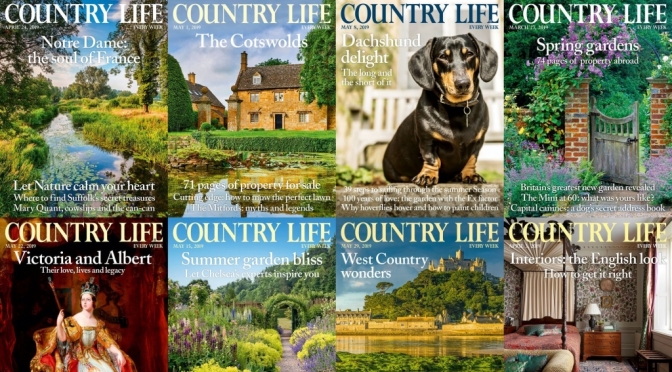
COUNTRY LIFE MAGAZINE – JULY 16, 2025 PREVIEW

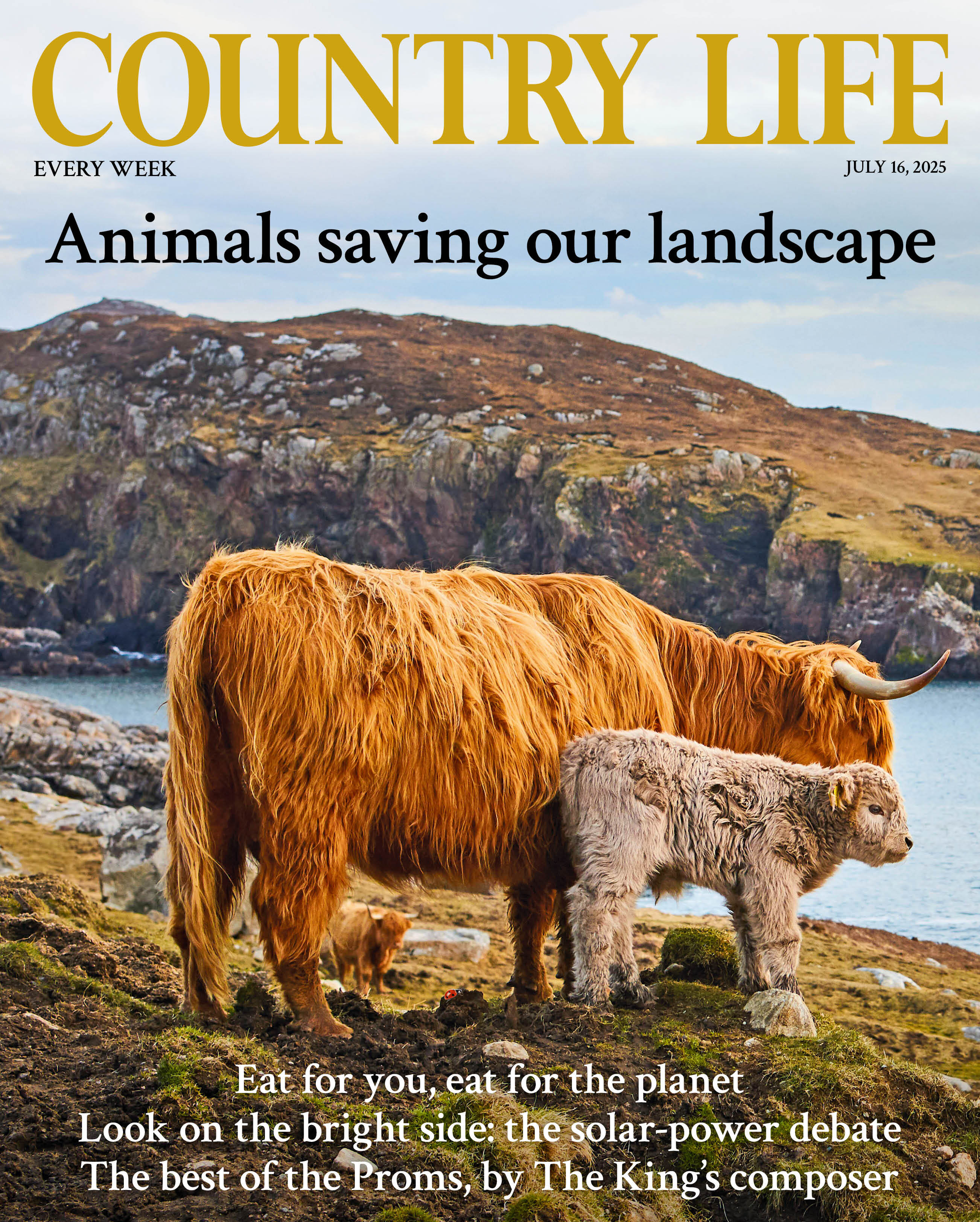
Cover of Country Life 16 July 2025

COUNTRY LIFE MAGAZINE: The latest issue features the sustainability special, looking at the animals who are saving our landscape, solar power, and the best of the Proms.

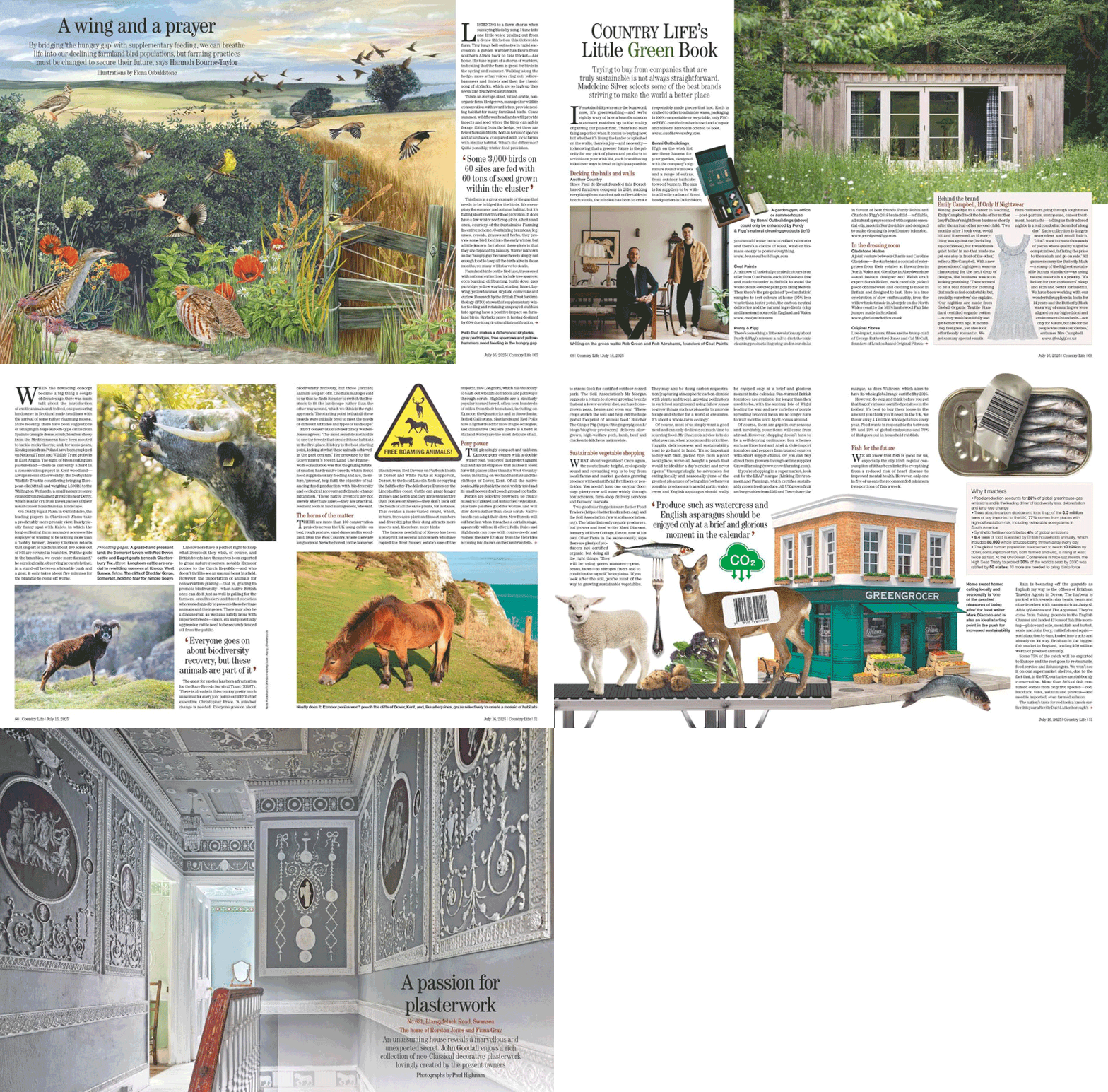
Spreads from Country Life 16 July 2025

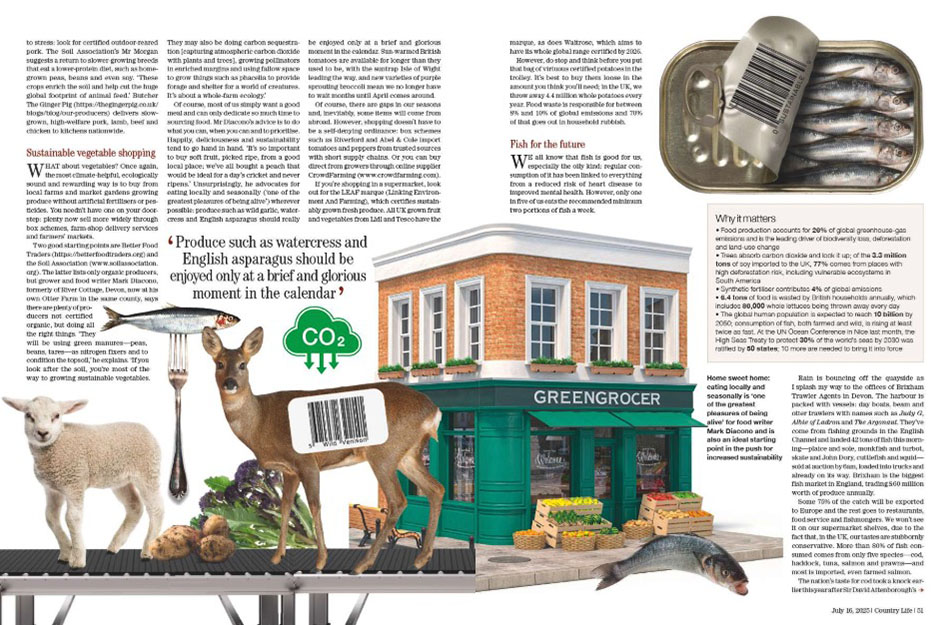
Give us, this day, our sustainable daily bread

From eating better-quality meat to buying seasonal and local produce, Jane Wheatley suggests how we can shop smart to aid the environment

Solar, so good

Banks of solar panels covering farmland have sparked much opposition, but, with local input, could they be a force for good, wonders William Kendall

No job too big

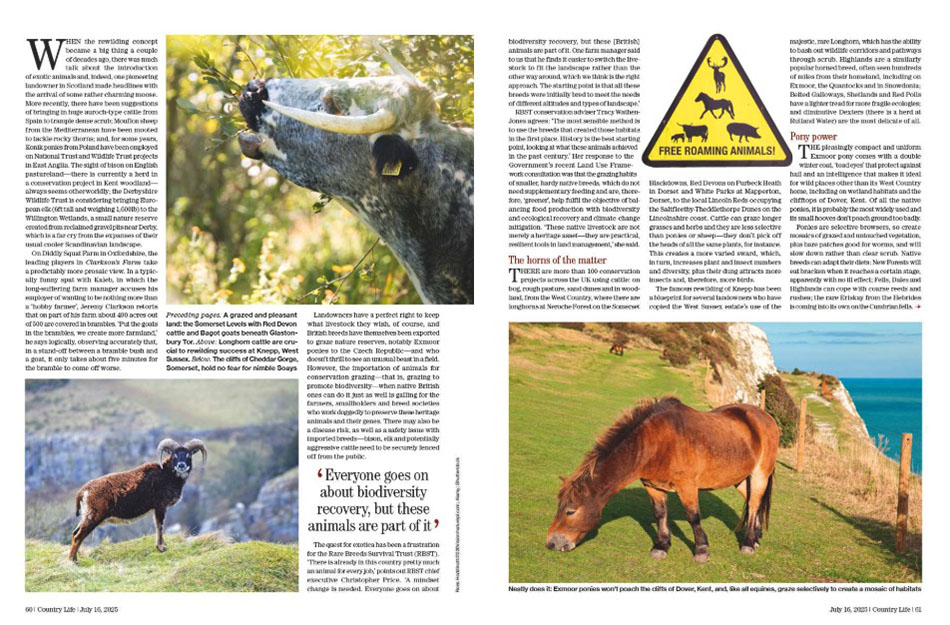
Kate Green trumpets the native breeds best suited to grazing Britain’s green and pleasant land, as our farmers walk a fine line balancing food production and biodiversity recovery

Spreads from Country Life 16 July 2025

‘It’s terrifying, but also an absolute dream’

Henrietta Bredin talks to Errollyn Wallen, Master of the King’s Music, about composing in a lighthouse and going on stage

Liz Fenwick’s favourite painting

The novelist picks a trailblazing nude by the first female RA

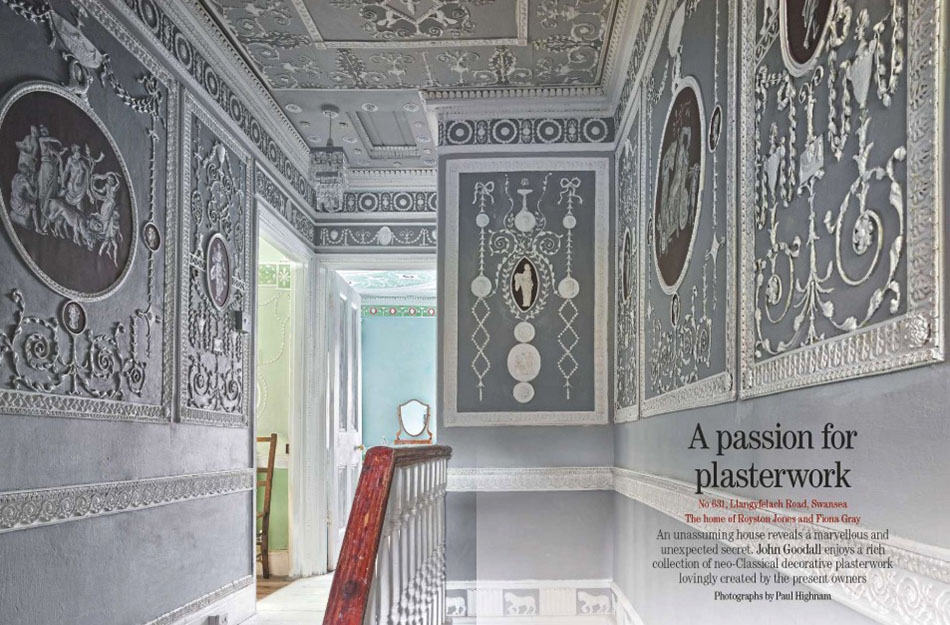
A passion for plasterwork

John Goodall discovers a neo-Classical delight when he takes a peek behind the unassuming frontage of a Swansea terrace

Spreads from Country Life 16 July 2025

The legacy

Kate Green admires Rachel Carson’s seminal Silent Spring

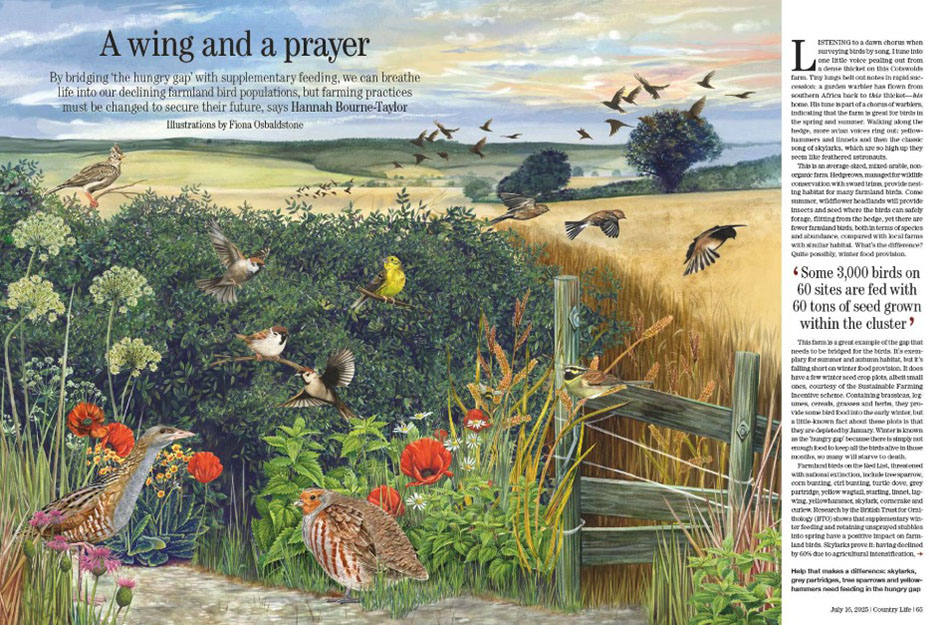
A wing and a prayer

Hannah Bourne-Taylor extols the importance of feeding over the ‘hungry gap’ to help our beleaguered farmland birds

Spreads from Country Life 16 July 2025

Country Life’s Little Green Book

We all want to shop well, but how to decipher the marketing? Madeleine Silver picks a handful of brands that do what they say

Spreads from Country Life 16 July 2025

The good stuff

Let those bangles jangle, urges Hetty Lintell, with her bracelet pick

Interiors

Arabella Youens admires the rich refurbishment of a Scottish fishing lodge and laments the scarcity of trusty English oak

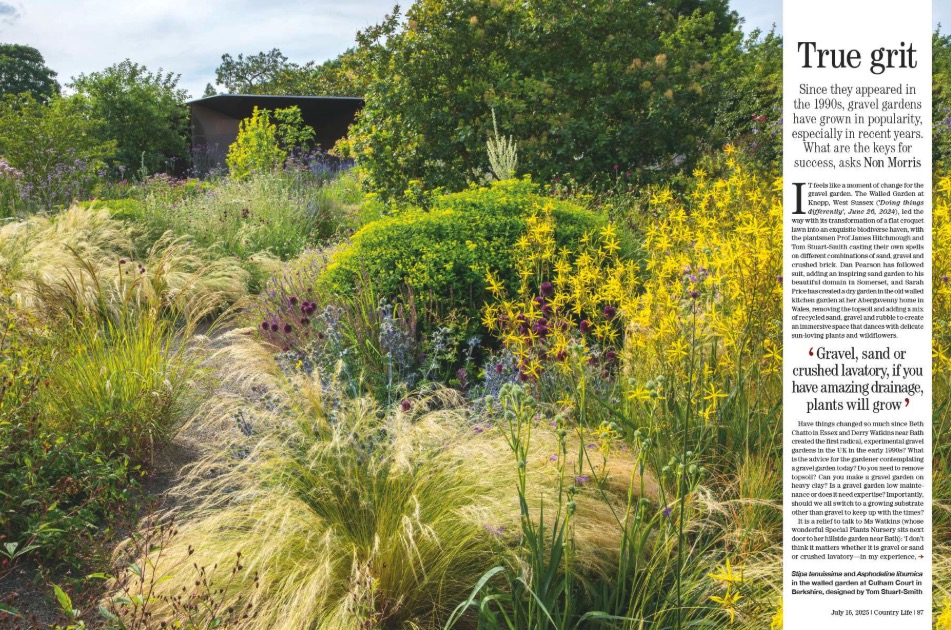
True grit

Gravel gardens are becoming ever more popular, but what are the secrets to making them a success, wonders Non Morris

Spreads from Country Life 16 July 2025

Winging it

The ‘flying barn door’ that is the magnificent white-tailed eagle is returning to our shores. Mark Cocker, for one, is very glad

Arts & antiques

A lost technique is being revived by a Swiss sculptor, as pioneer-ing women of science are celebrated, reveals Carla Passino

War and peace

Tom Young’s intricate, powerful paintings capture the beauty and the heartbreak of Lebanon. Octavia Pollock meets him

All the world on one stage

Michael Billington finds Ralph Fiennes at his brooding best as Sir David Hare’s engrossing new play premieres in Bath

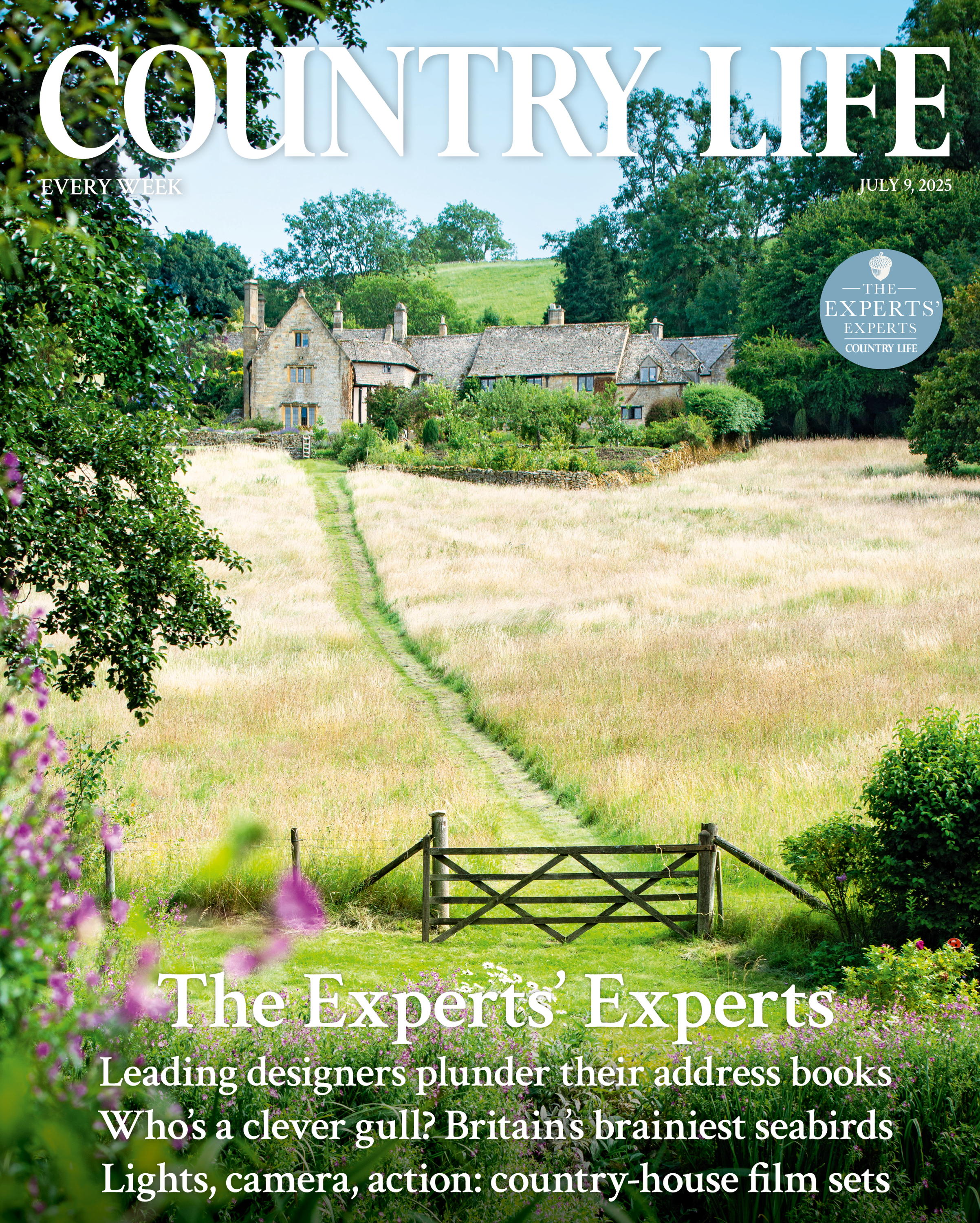
COUNTRY LIFE MAGAZINE – JULY 9, 2025 PREVIEW

Cover of Country Life 9 July 2025

COUNTRY LIFE MAGAZINE: The latest issue features ‘The Expert’s Experts’…

9 July 2025 GIF image
Some of the highlights of this week’s Country Life.

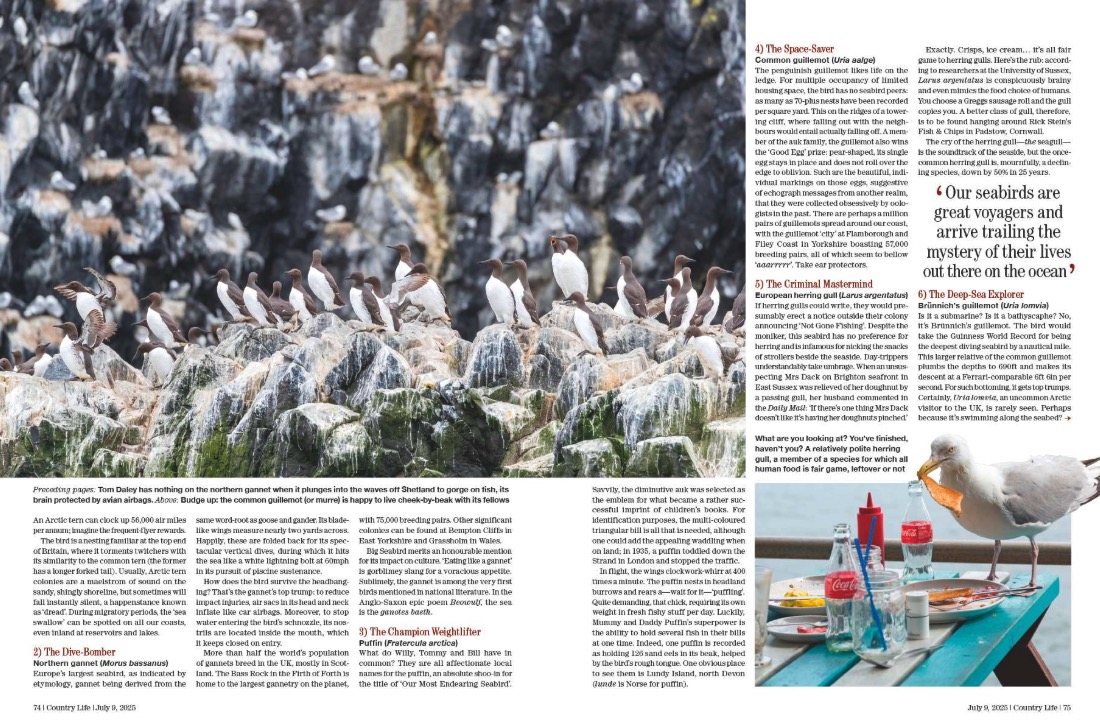
Meet the coastal superheroes

John Lewis-Stempel celebrates the depth and breadth of sea-birds spotted over British waters, from the dive-bombing gannet to the pick-pocket herring gull

Magazine spread from Country Life 9 July 2025

Heavy petal

Catriona Gray meets artist Rachel Dein, whose botanical bas-reliefs really stand out from the crowd

I’ve got chills, they’re multiplying

Tom Parker Bowles savours the ultimate thirst quencher — a fruity and refreshing sorbet

Arts & antiques

Kenilworth Castle is reliving its central role in the 19-day wooing of Elizabeth I exactly 450 years on, as Carla Passino discovers

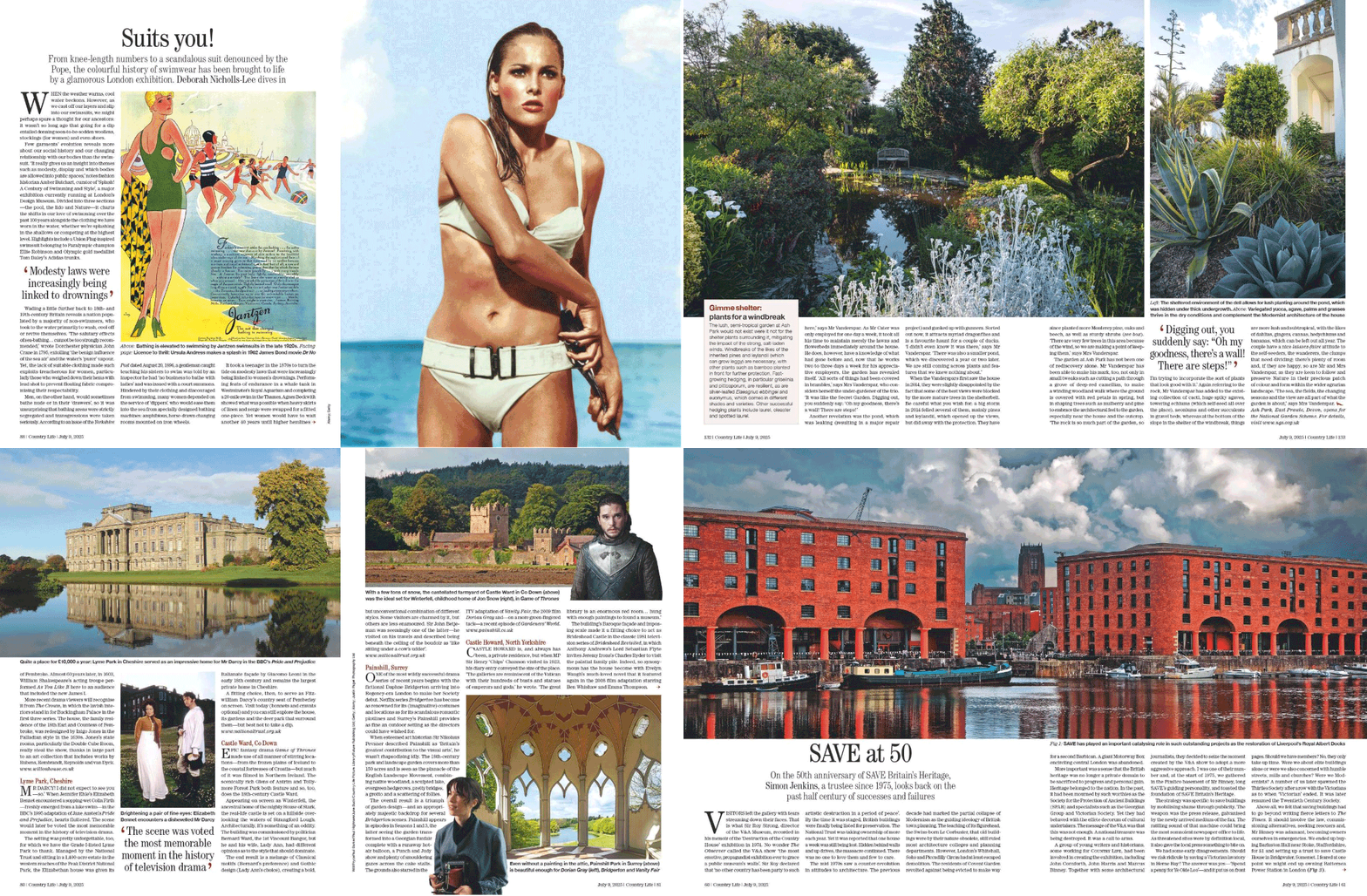
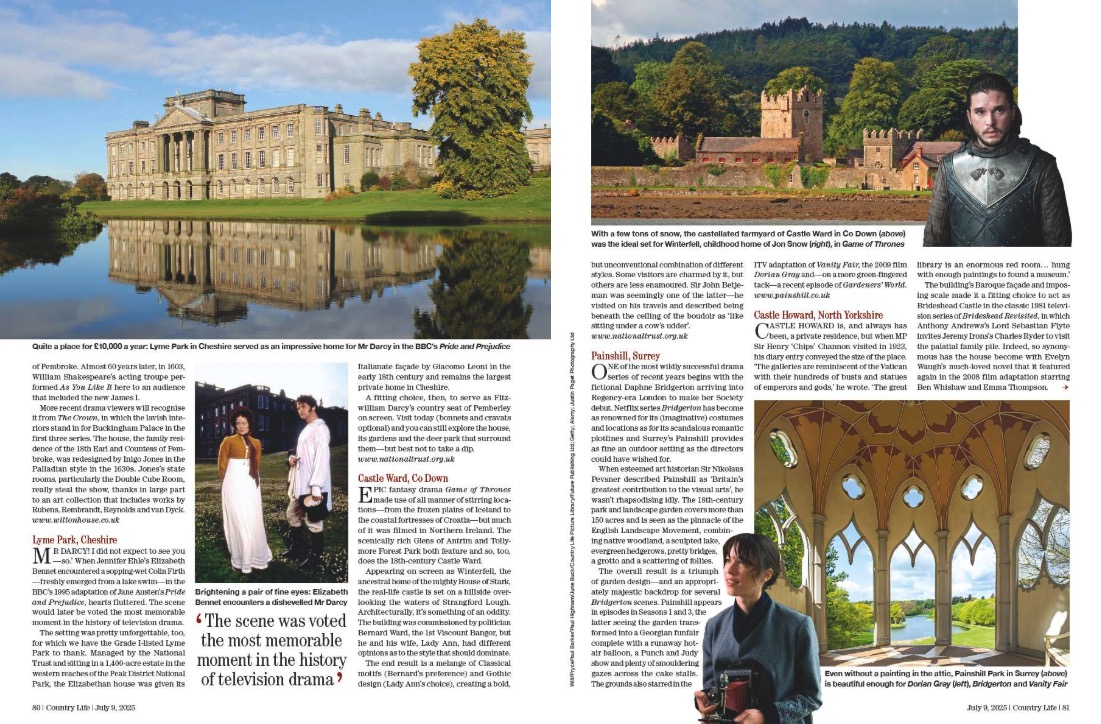
Back to Brideshead

Britain’s historic country houses are the much-loved stars of a host of films and television dramas, often leaving big-name actors in the shade, finds Ben Lerwill

Magazine spread from Country Life 9 July 2025

The Experts’ Experts

Designers and architects from Country Life’s Top 100 throw open their contacts books to reveal the specialists they turn to when seeking inspiration for a country-house project

Peter Jones’s favourite painting

The chair of the British-Italian Society chooses a compelling and mysterious portrait of Christ

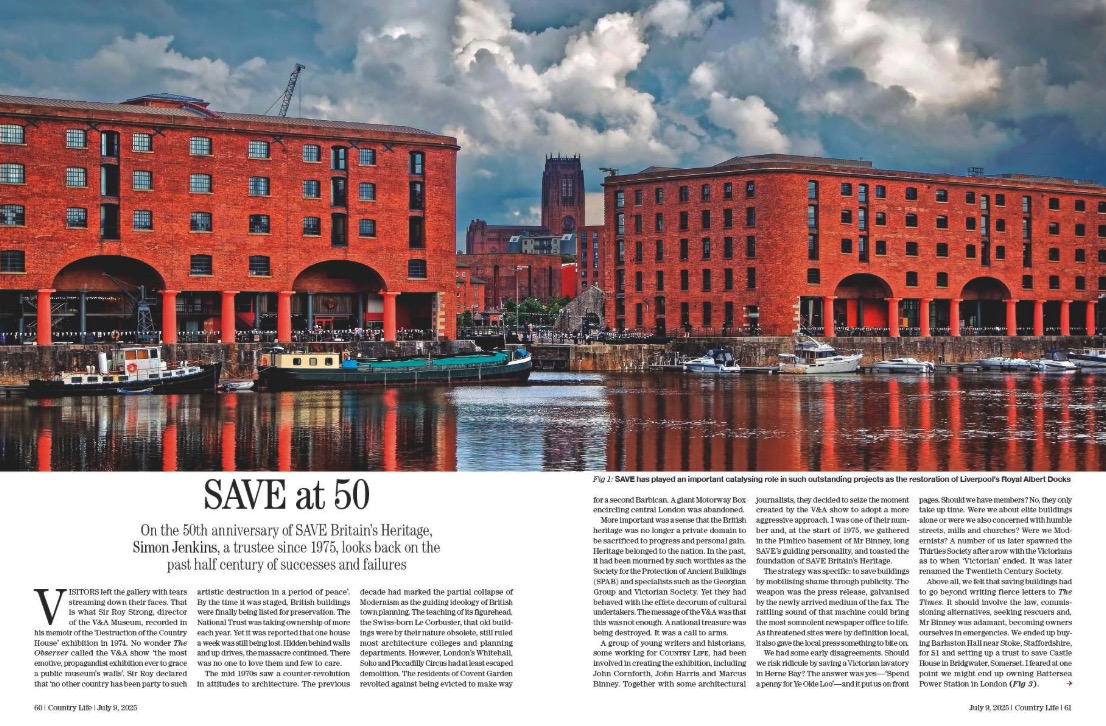
SAVE at 50

Founding trustee Simon Jenkins reflects on 50 years of SAVE Britain’s Heritage and the charity’s battles to safeguard a string of historic buildings

Magazine spread from Country Life 9 July 2025

The legacy

Dedication’s what you need and Ross and Norris McWhirter, the twins behind the Guinness World Records, had it in abundance, as Amie Elizabeth White learns

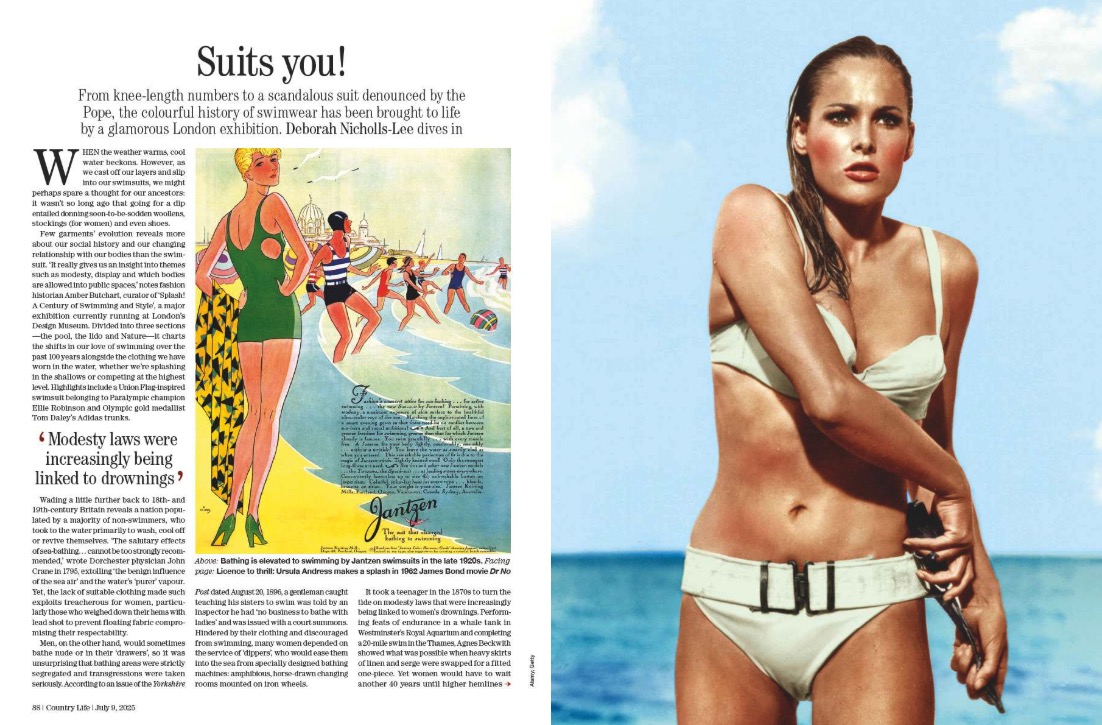
Suits you!

When did the sodden knitwear cossie give way to the glamorous bikini? Deborah Nicholls-Lee dives into the history of swimwear

Magazine spread from Country Life 9 July 2025

The good stuff

Hetty Lintell is beach ready with a collection of coastal favourites

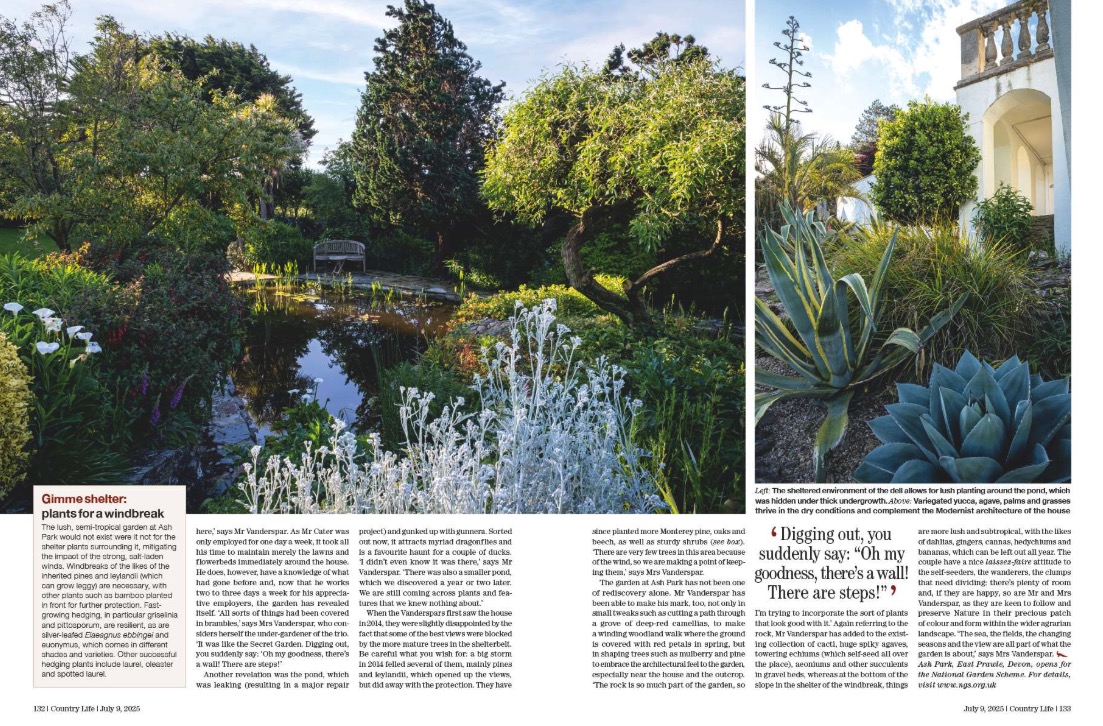
Sheer bliss

Caroline Donald hails the blend of love and laissez-faire that has created a spectacular garden on an escarpment overlooking the sea at Ash Park in Devon

Magazine spread from Country Life 9 July 2025

A smell by any other name

Ian Morton profiles the flora and fauna causing a stink in the natural world, some to attract a meal or mate, others to repel a predator

Tyger, tyger burning bright

Tipu Sultan threw a spanner in the works of Britain’s Imperial ambition, but the Tiger of Mysore was an inspiration to Blake and Keats, reveals Lucien de Guise

Winging it

Mark Cocker pays tribute to the beauty, elegance and laser-like predatory precision of the kestrel

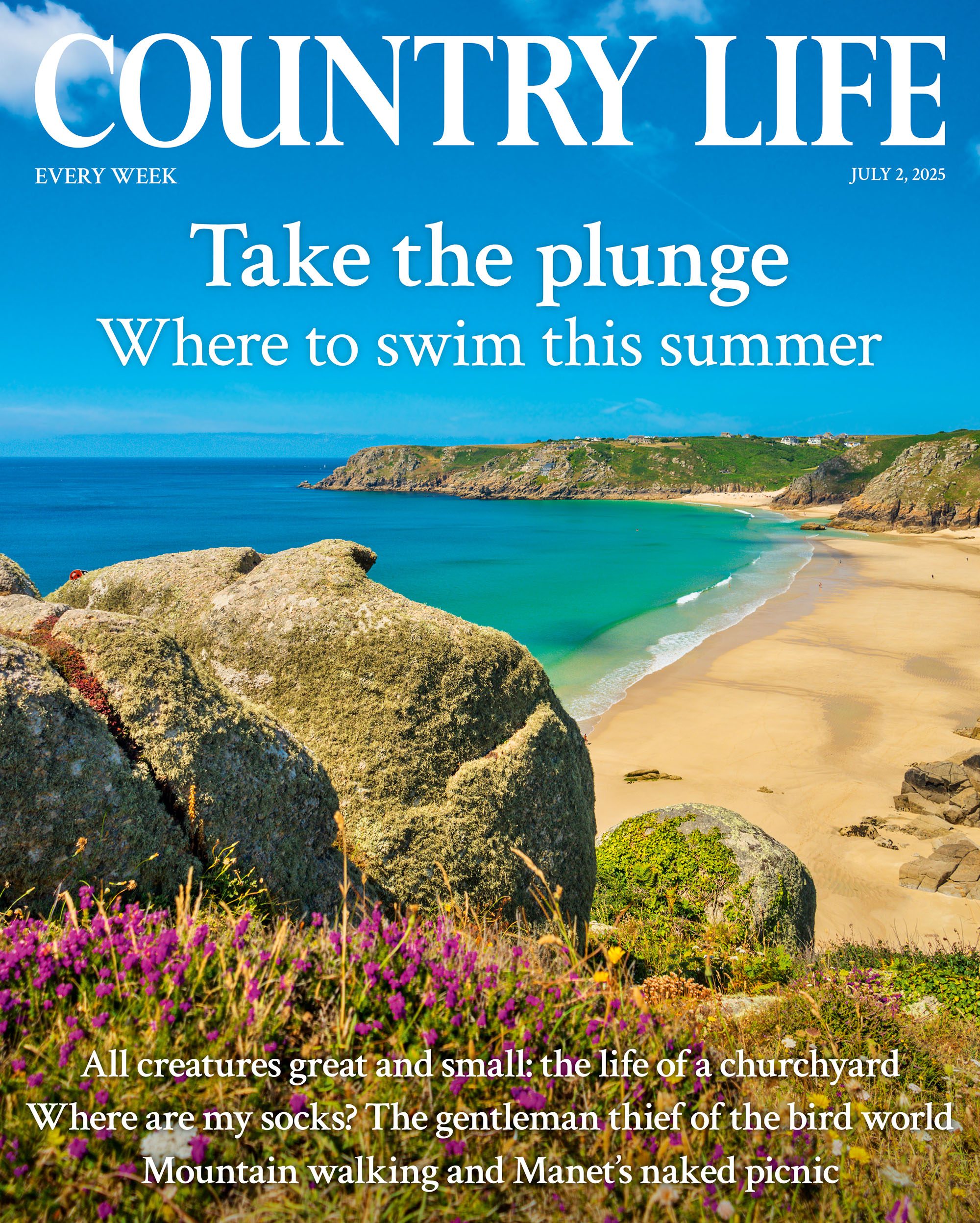
COUNTRY LIFE MAGAZINE – JULY 2, 2025 PREVIEW

Country Life Cover 2 July 2025

COUNTRY LIFE MAGAZINE: The latest issue features “Take The Plunge’… –

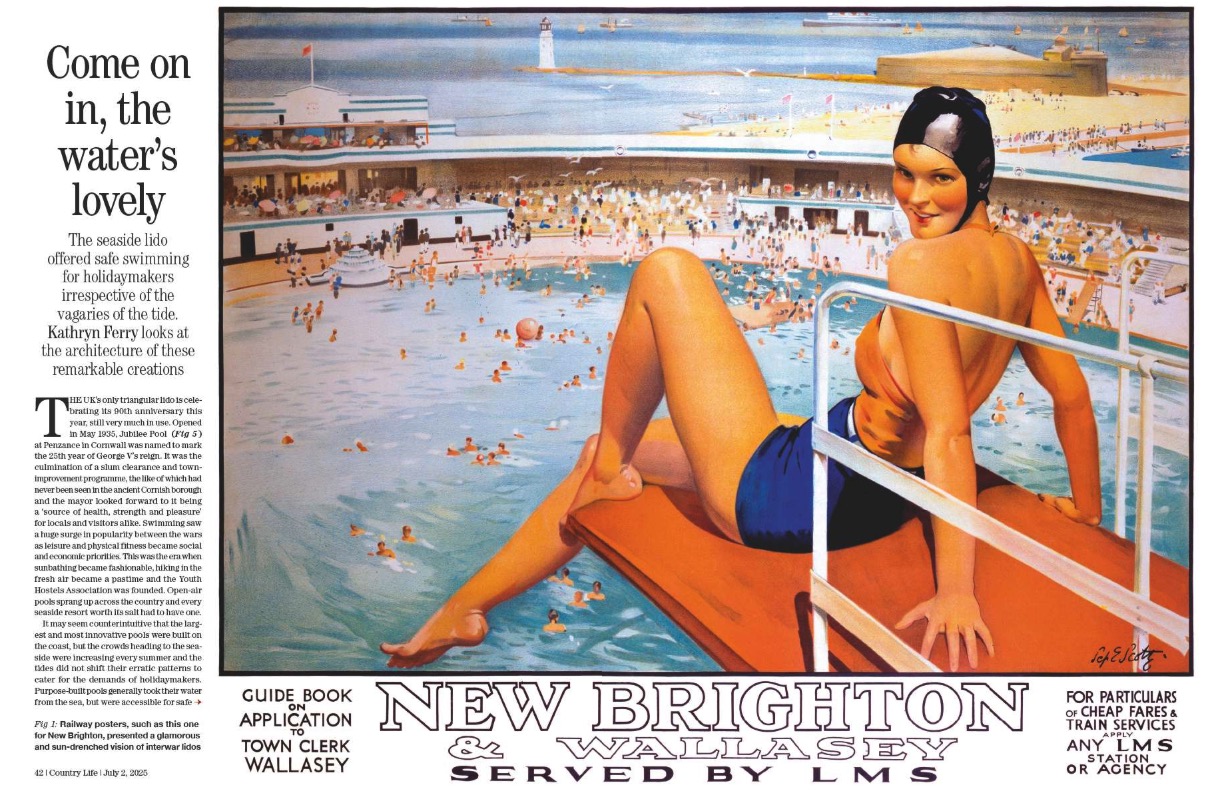
Come on in, the water’s lovely

The seaside lido is enjoying a fresh wave of popularity a century and more after its first appearance on the British coast. Kathryn Ferry dives in

Spreads from Country Life 2 July 2025

Winging it

Watch out, watch out, there’s a thief about! Mark Cocker warns that no undergarment is safe from the resurgent red kite, a bird soaring back from near extinction

Travel

• Christopher Wallace checks in to a new opening in Marrakech, Morocco’s Mecca for luxury hotels

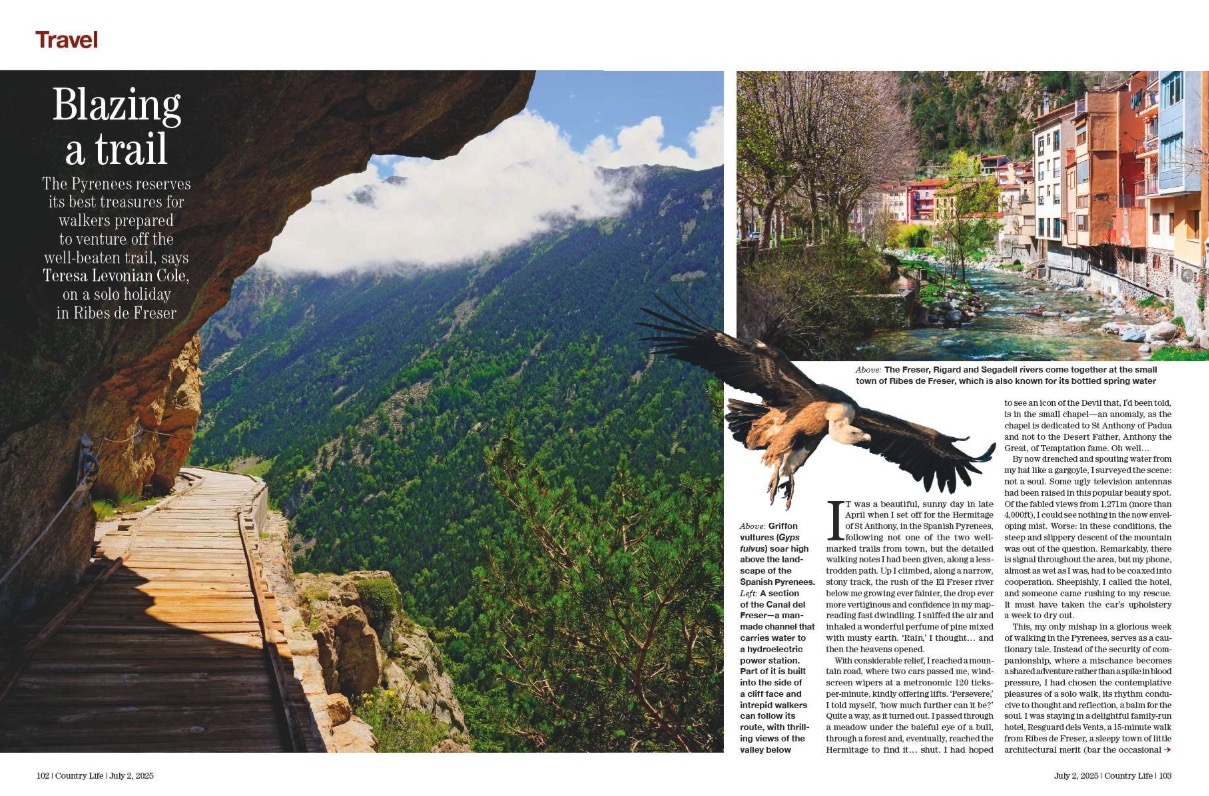
• Teresa Levonian Cole blazes a trail in the Spanish Pyrenees

• Pamela Goodman gets on her bike to explore the Welsh border country

Spreads from Country Life 2 July 2025

Life’s a pretty picnic

Deborah Nicholls-Lee shares a hamper-full of tasty morsels from the long and varied history of alfresco dining on canvas

Ricardo Afonso’s favourite painting

The musical-theatre actor chooses an ‘otherworldly’ work that stirs complex emotions

The legacy

Amie Elizabeth White salutes Sir James Clark Ross, the vastly experienced naval officer who discovered Antarctica in 1841

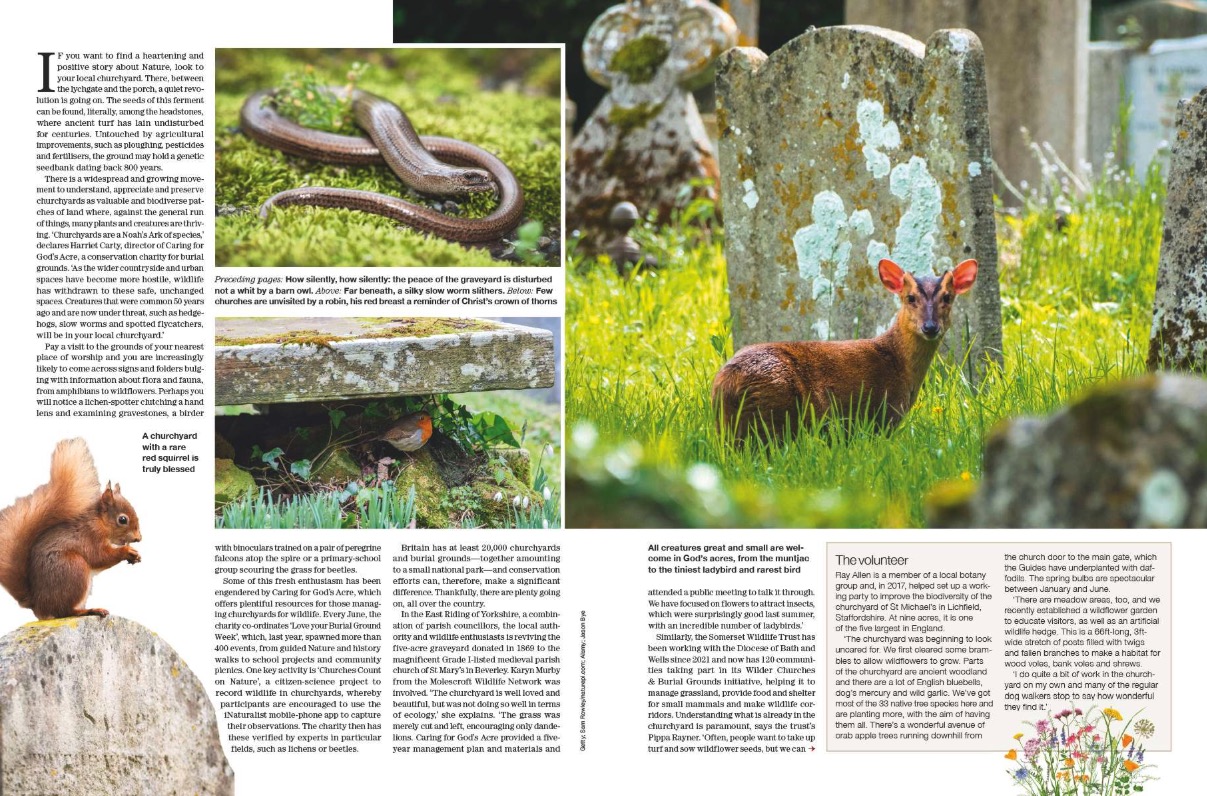
In God’s acre we trust

Laura Parker learns how the absence of interference over centuries enabled our wildlife-rich graveyards to become a ‘Noah’s Ark of species’

Spreads from Country Life 2 July 2025

Keeping a low profile

The countryside is littered with storm-damaged trees that simply refuse to die. Jack Watkins celebrates great arboreal survivors

The good stuff

Hetty Lintell puts her best foot forward with a selection of sandals

Interiors

Arabella Youens commends an elegant townhouse kitchen and Amelia Thorpe picks out rhubarb accessories to brighten the home

London Life

• Will Hosie assesses the cost of our partying in the parks

• How the style set are reaffirming that west is best

Lost, but not forgotten

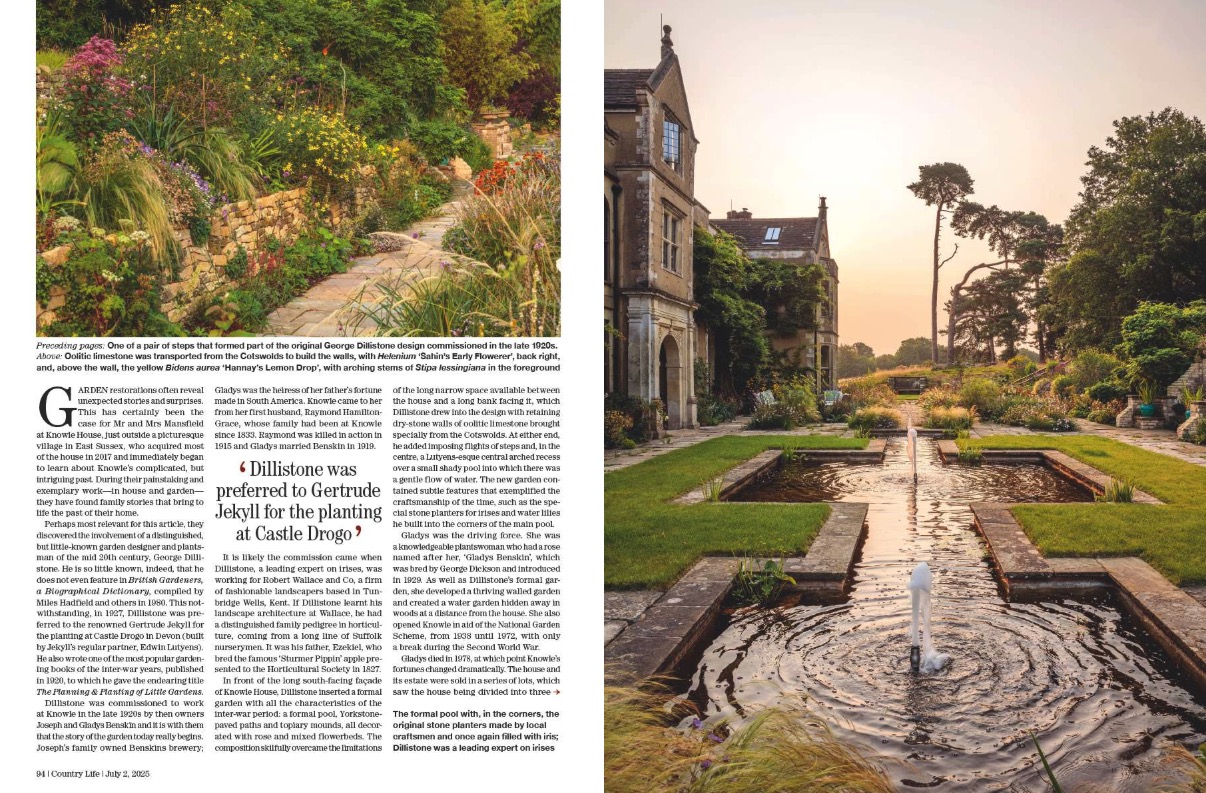
George Plumptre applauds the masterful restoration of the Arts-and-Crafts garden at Knowle House in East Sussex

Spreads from Country Life 2 July 2025

Arts & antiques

Laura Dadswell believes her pair of 18th-century Venetian mirrors is the fairest of them all, as she tells Carlo Passino

NATURE VIEWS: GLACIER NATIONAL PARK IN MONTANA

CBS Sunday Morning (June 29, 2025): Explore things to see and do in Glacier National Park. Established as a National Park in 1910 it is a land of mountain ranges carved by prehistoric ice rivers. It features alpine meadows, deep forests, waterfalls, about 25 glistening glaciers and 200 sparkling lakes. The vistas seen from Going-To-The-Sun Road are breathtaking, a photographer’s paradise. Relatively few miles of road exist in the park’s 1,600 square miles of picturesque landscape, thus preserving its primitive and unspoiled beauty.

SMITHSONIAN MAGAZINE – JULY/AUGUST 2025

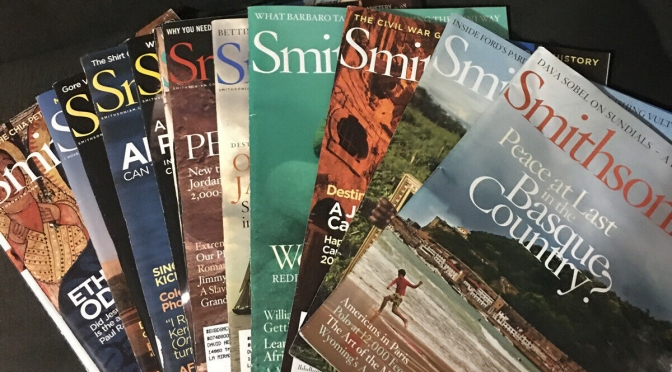
SMITHSONIAN MAGAZINE (June 27, 2025): The latest issue features ‘Hemingway in Pamplona’….

A Search for the World’s Best Durian, the Divisive Fruit That’s Prized—and Reviled

Devotees of the crop journey to a Malaysian island to find the most fragrant and tasty specimens

Tom Downey Photographs by Annice Lyn

Celebrate the 50th Anniversary of ‘Jaws’ With 15 Shark Snapshots

Archaeologists Say They’ve Pieced Together the Ancient Fragments of the ‘World’s Most Difficult Jigsaw Puzzle’

COUNTRY LIFE MAGAZINE – JUNE 25, 2025 PREVIEW

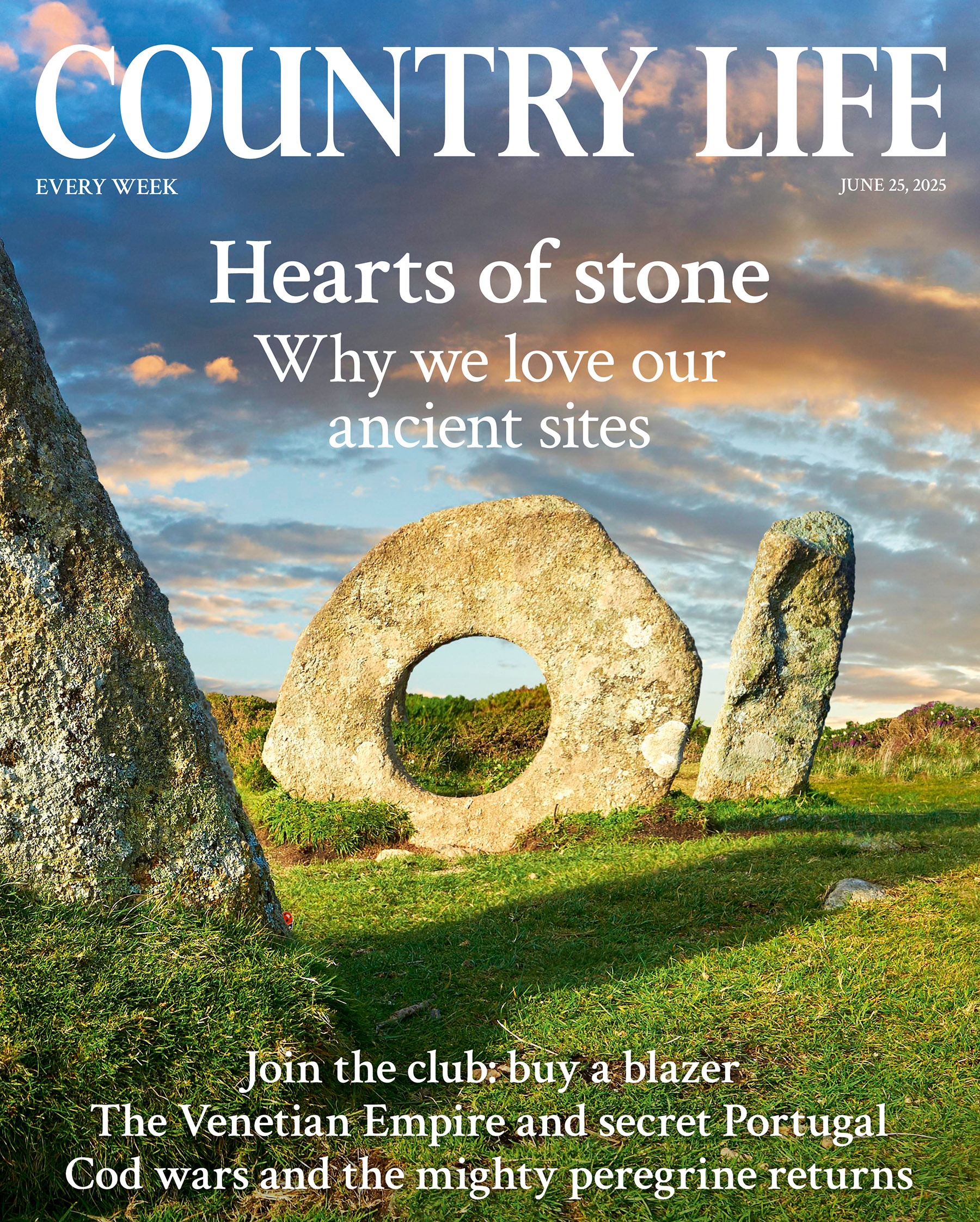
Cover of Country Life 25 June 2025

COUNTRY LIFE MAGAZINE: The latest issue features ‘Hearts of Stone’ – Why we love our ancient sites…

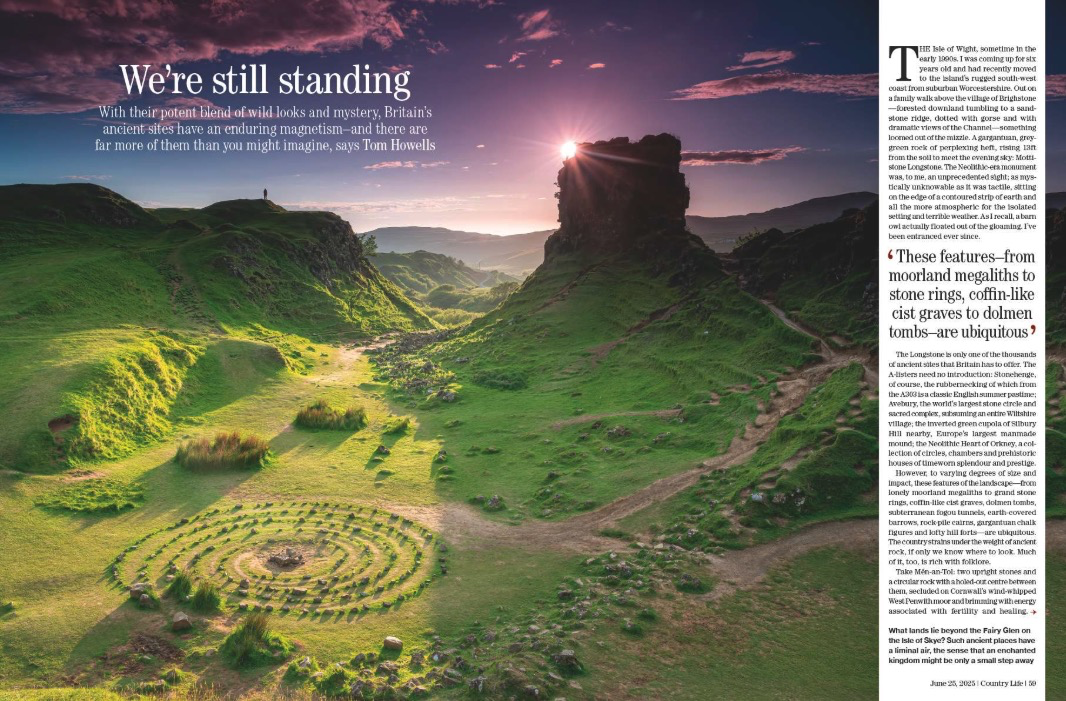
We’re still standing

Tom Howells explores the mystery and magnetism of the thousands of ancient British monoliths and monuments, from Cornwall to the Orkneys

Country Life magazine spread

Going down in a blazer of glory

It is a favourite of royalty and rowers, worn from Augusta to the Oscars — can there be a more versatile jacket than the blazer, asks Harry Pearson

Country Life International

• Russell Higham uncovers the secret society of Cascais
• Holly Kirkwood finds the age of chivalry alive and well in Valletta
• Matthew Dennison searches for traces of the Venetian Empire in Greece
• Tom Parker Bowles savours superb Spanish dishes
• Eileen Reid tracks the influence of two intellectual giants of Avignon

Winging it

Mark Cocker welcomes the renaissance of the peregrine falcon, a raptor that stoops to conquer at up to 240mph

New series: Scale model

Overfishing threatens the very existence of the cod, but Gadus morhua remains a monster of the deep for David Profumo

Dick Bird’s favourite painting

The stage designer chooses a monumental example of early-19th-century political art

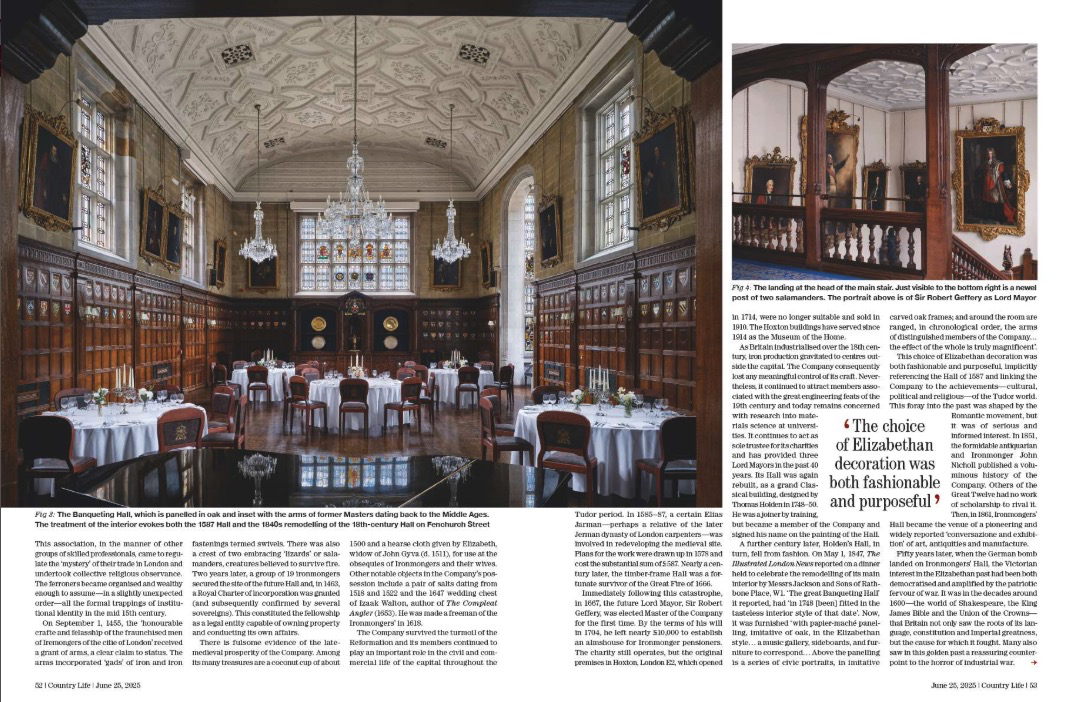
The virtues of history

John Goodall celebrates 100 years of the headquarters of the Worshipful Company of Ironmongers, one of London’s Great Twelve City Livery Companies

Country Life magazine spread

The legacy

Leslie Hore-Belisha created a beacon of hope for road users everywhere, finds Kate Green

Luxury

Anniversary jewels and Art Deco delights with Hetty Lintell, plus Willow Crossley’s favourite things

Interiors

Arabella Youens admires the kitchen of a house in the Scottish Borders and considers the earthly pleasures of terracotta

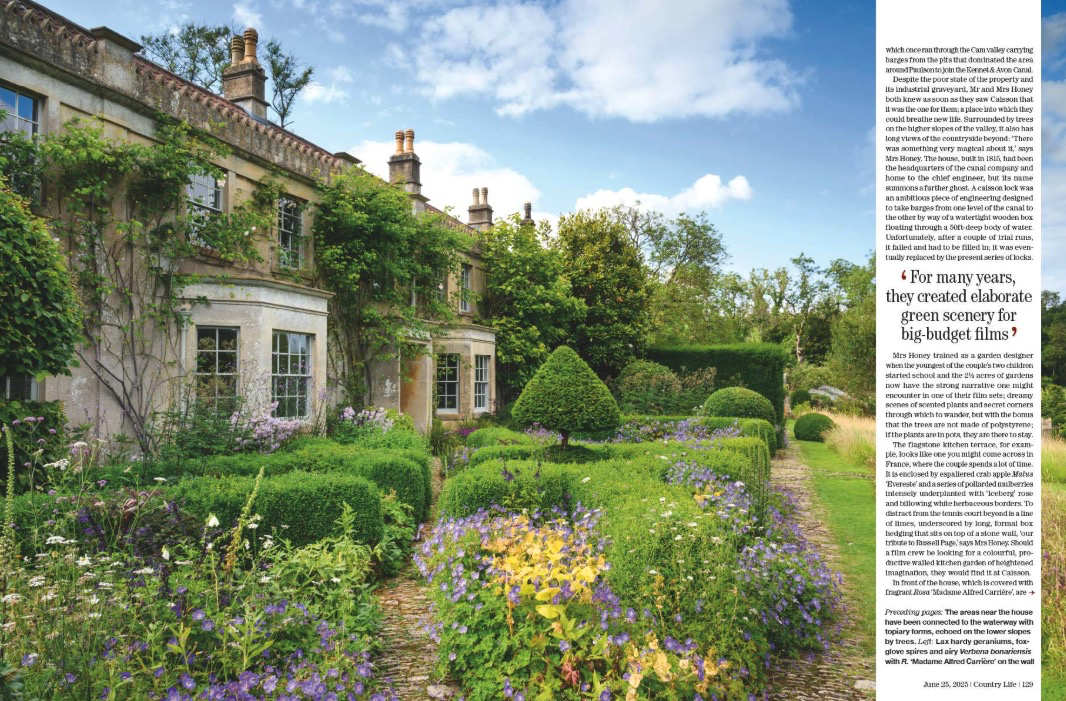
Laying ghosts to rest

A spectacular garden now graces the grounds of the old Somerset-shire Coal Canal Company HQ, as Caroline Donald discovers

Country Life magazine spreads

Water, water everywhere

John Lewis-Stempel delves into the depths of a field pond, mesmerised by the seemingly endless variety of aquatic life

Arts & antiques

A quartet of journeys with The King raised the profile of plein-air artist Warwick Fuller, who talks Royal Tours with Carla Passino

Making an impression

French Impressionism was a slow burner in Britain as Monet and Pissarro gradually influenced our art scene, reveals Caroline Bugler

And much more