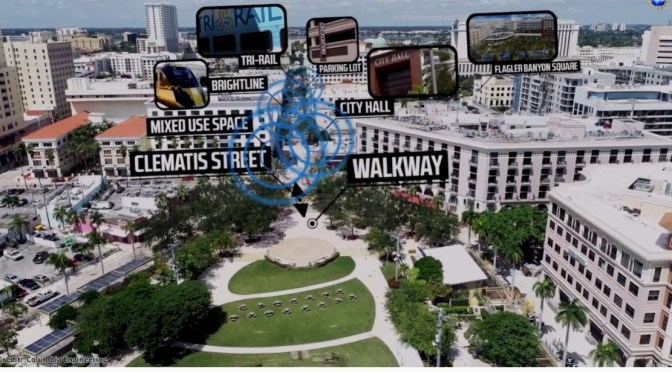
How are you connected on the street where you live, the street where you do business, the street you share with neighbors? But how could a smarter street improve your life?
Video timeline:00:00 Building Smarter Cities 00:14 Next Evolution 00:36 ERC Partners
Could technology help guide disabled pedestrians, eliminate traffic bottlenecks, enhance trash collection and pest control, improve emergency services, protect people from environmental and health threats. “Smart Streetscapes,” a new National Science Foundation Engineering Research Center, aims to create livable, safe, and inclusive communities. Learn more on NSF’s “The Discovery Files.”
World Economic Forum top stories of the week: 0:15 – The World’s First flying 3D printer 01:32 – Your outer circle of friends is more important for your career than you think 02:47 – How high interest rates lower inflation 04:47 – This Swedish start up has developed an electric passenger plane
Phoenix, Arizona is coming up with innovative ways to beat the heat.
Phoenix, the capital of Arizona, is accustomed to a hot desert climate, but day and night temperatures have been rising due to global heating and the city’s unchecked development, which has created a sprawling urban heat island.
Scorching temperatures have made summers increasingly perilous for the city’s 1.4 million people, with mortality and morbidity rates creeping up over the past two decades, but 2020 was a gamechanger when heat related deaths jumped by about 60%.
“I think most electric vehicles will have a solar roof in the future,” he told Dezeen. “It’s a topic that all big car manufacturers are working on.”
Integrated solar panels could help electric cars rival their fossil-fuel counterparts by making them less reliant on charging points and potentially free to run, says Lightyear‘s Emanuele Cornagliotti in this interview as part of our Solar Revolution series.
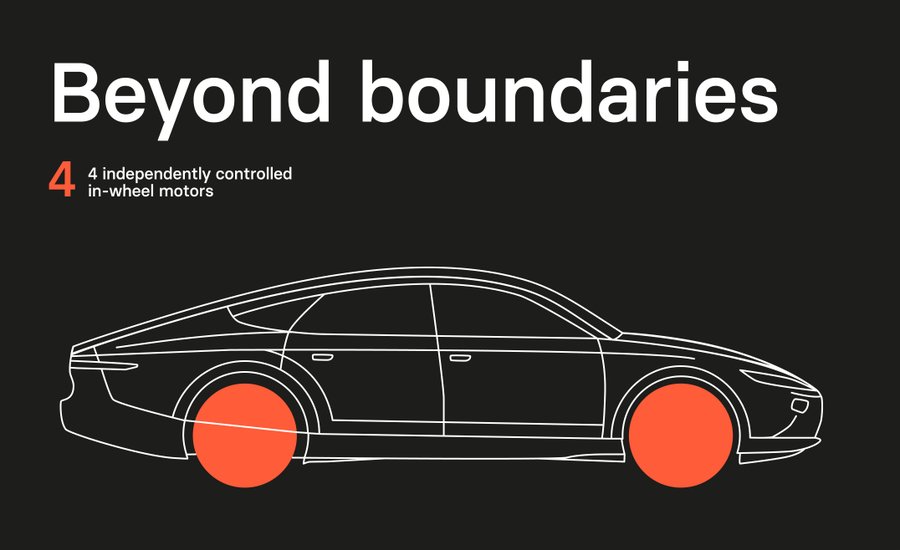
Lightyear 0’s in-wheel motor technology sets new industry standards and offers greater control on tricky terrains. Not only is our drivetrain in pole position for the highest efficiency, but it also reduces the number of rotating components, meaning much lower maintenance!
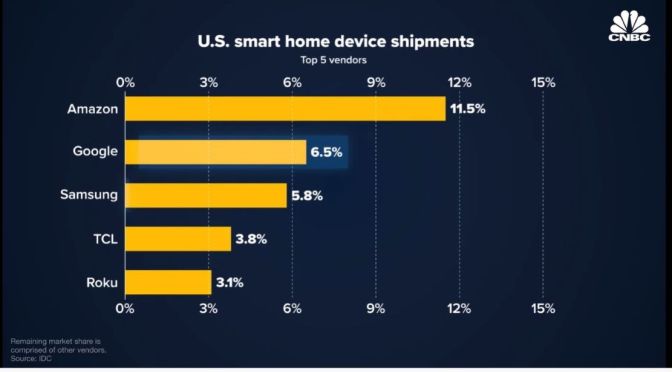
Amazon ships more U.S. smart home devices than any other company and says Alexa is now compatible with 140,000 devices, far beyond the Echo and Fire TV. But privacy advocates are concerned by all the data these devices collect, and are calling on the Federal Trade Commission to block Amazon’s latest smart home expansion.
Chapters:1:41 First to market 4:27 Acquiring iRobot 7:41 How it uses the data 9:45 Privacy concerns 11:33 Ambient home of the future
After acquiring video doorbell maker Ring in 2018 and mesh WiFi system Eero a year later, Amazon’s now looking to buy Roomba smart vacuum maker iRobot. In a rare move, the FTC is asking for more information before approving the $1.7 billion deal. Ahead of Amazon’s annual smart home event, we talked to Amazon’s VP of privacy to find out what really happens to all the data collected by its devices – and sat down with the head of smart home to hear the strategy behind Amazon’s race to dominate the internet of things.
A new industry of floating infrastructure is emerging to help adapt to rising sea levels. There are two distinct approaches that are being put forth as possible solutions: retrofitting homes to be amphibious and building floating cities.
Amphibious homes can preserve the accessibility of the house and maintain the congenial front porch culture in places like Louisiana, said Elizabeth English, founder and director of The Buoyant Foundation Project. English’s design places a steel frame beneath a house, and then below that, in the crawl space, buoyancy elements. Her team then recommends adding elements to prevent lateral movement so the home will not float away while on the surface of floodwaters.
She estimated that a contractor could do such a retrofit for about $20 to $30 per square foot, but cautioned the Federal Emergency Management Agency currently discourages this type of building practice. Modern floating cities are the brainchild of architect Bjarke Ingels. He told CNBC he hopes his Oceanix City, which is currently slated to be built in the harbor near Busan,
South Korea, will be “a city that is the most resilient city you can imagine, but at the same time, the most enjoyable city that you can imagine.” “We really hope that it will be a successful project and we would like to replicate it in other parts of the world,” Maimunah Mohd Sharif, executive director of the United Nations Human Settlements Programme, told CNBC of the Oceanix development.
She said the world must look more into adaptation and hopes that the project can help mitigate or even solve the problem of sea-level rise. Would you live in a floating city or retrofit your home so it floats during floods? Watch the video above to learn more about what life could be like in these innovative climate change adaptations.
Top stories of the week of September 23, 2022 from the World Economic Forum:
Video timeline: 0:15 Could These Solar Panel Windows Be The Future Of Green Energy? – If deployed on a large scale, Ubiquitous Energy says the windows could transform solar capacity worldwide. 01:33 What Would A Post-Economic Growth World Look Like? – ‘What is the type of growth that the world needs? And what is the type of de-growth we need?’ asks Tariq Al-Olaimy, Social Entrepreneur and Global Shapers Alumni. 04:41 Clean energy jobs boom – Green energy jobs in wind and solar are more available than fossil fuel jobs for the first time 05:57 Is your smartphone making you less smart? – Not according to scientists
A new electric flight school in Sweden is inspiring a future of emission-free aviation. Monocle takes to the sky, tries out the first fully electric plane to be approved for use in Europe and hears how Skellefteå has become a hotbed of green start-ups.
The ocean’s waves are immensely powerful. Harnessing that energy for grid-scale electricity production would be a major boon to the clean energy industry, but building durable, powerful, and cost-effective wave energy converters has proven difficult.
Chapters:1:46 The challenges 4:05 Wave energy in the U.S. 4:49 (Subchapter) CalWave 6:05 (Subchapter) Oscilla Power 7:34 (Subchapter) C-Power 9:00 Wave energy in Europe 11:51 The future
Now though, an influx of federal funding is helping many U.S. companies gear up to test their latest wave energy technologies, giving many in the industry hope that wave power will see massive growth over the next few decades.
Google Maps has transformed the way that we navigate the world, make decisions, and think about our privacy in the 17 years since its launch. Here’s an inside look at how it works and what’s next.
News, Views and Reviews For The Intellectually Curious