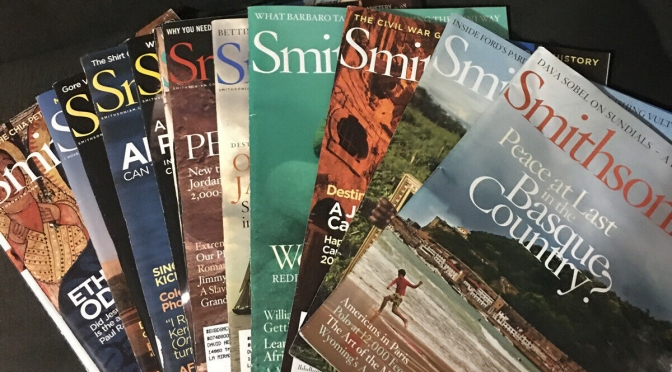
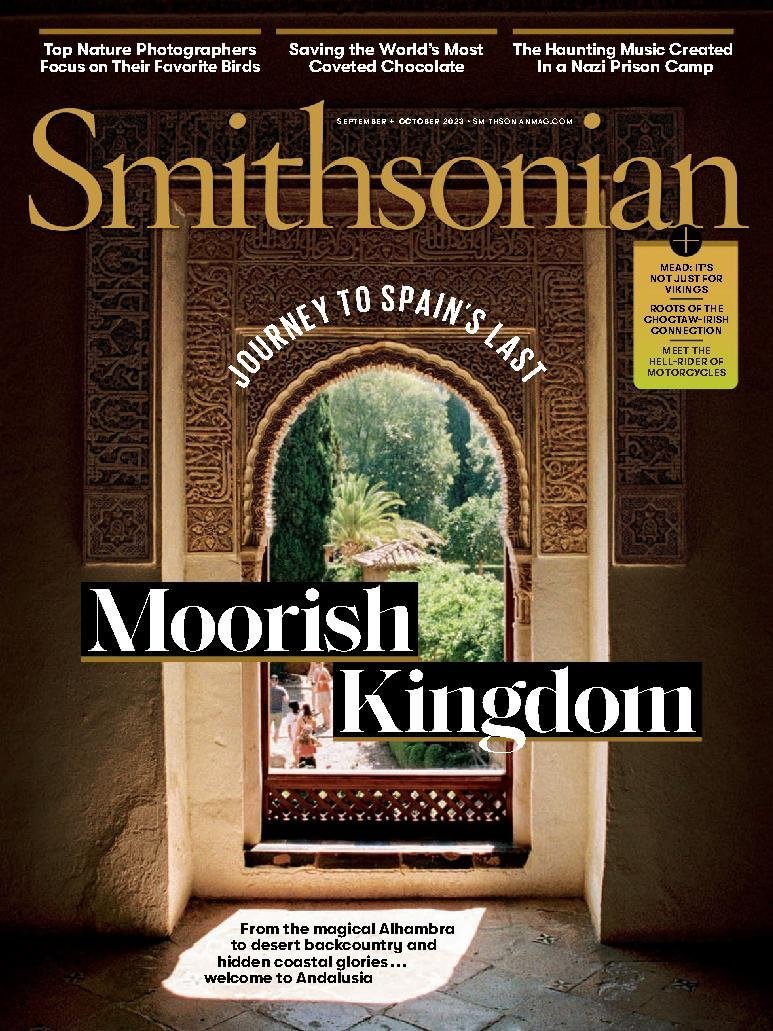
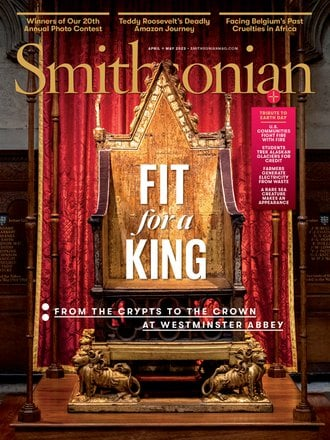
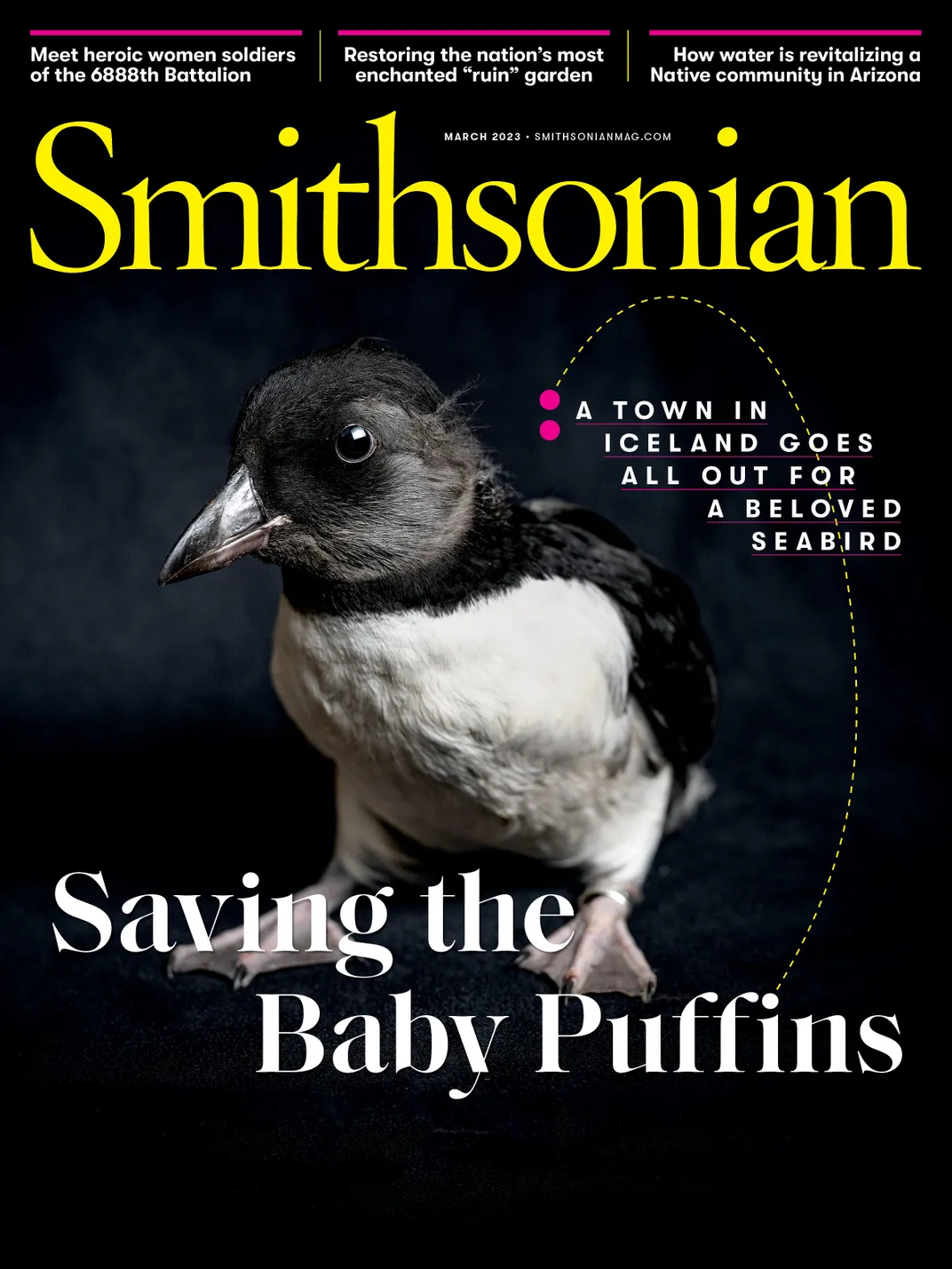
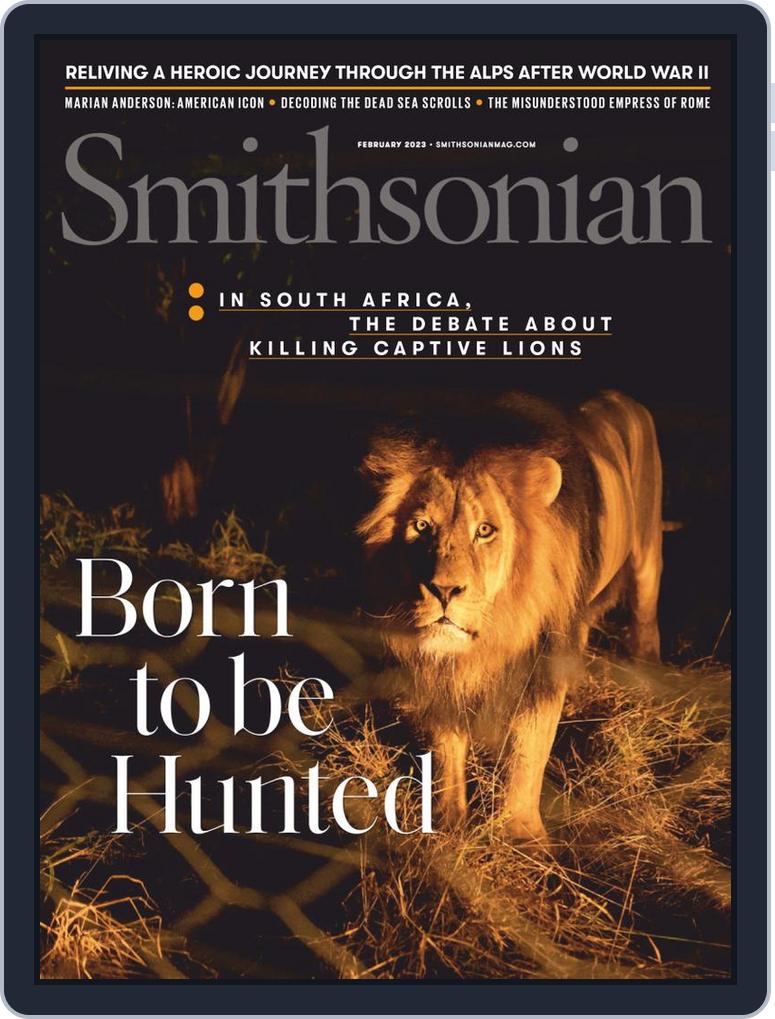
Smithsonian Magazine (September/October Issue) – Journey to Spain’s last Moorish Kingdom – From the magical Alhambra to desert backcountry and hidden coastal glories…welcome to Andalusia; Saving the world’s most coveted Chocolate; Mead – it’s not just for Vikings, and more…
Ötzi, the 5,300-year-old mummy found murdered high in the Alps with an arrow in his back, is a prehistoric celebrity who attracts 300,000 visitors a year to his custom cooling chamber in the South Tyrol Museum of Archaeology in Bolzano, Italy. Years of studies have revealed much about the Iceman, from his last meal—dried ibex and deer meat with einkorn wheat—to the distant Tuscan origins of his copper ax. But while the wizened mummy is extraordinarily well preserved for its age, it gives little impression of how Ötzi would have appeared in life. Now, a detailed genetic study has revealed much more about what the Iceman looked like—and traces the Copper Age corpse’s ancestral lineage back to Anatolia, an area that is now the Asian portion of Turkey.
Scientists have newly sequenced Ötzi’s genome a decade after an earlier effort, using modern techniques and comparative data to produce a much higher-quality result than ever before. The study published Wednesday in Cell Genomics reveals that Ötzi had dark eyes and skin pigmentation darker than that commonly seen among modern inhabitants of Greece or Sicily, though he’s previously been depicted with lighter skin more akin to that of Europeans living in the Alps today. And contrary to most artists’ interpretations, it also appears that he suffered from an age-old affliction still troublesome today—he was going bald.
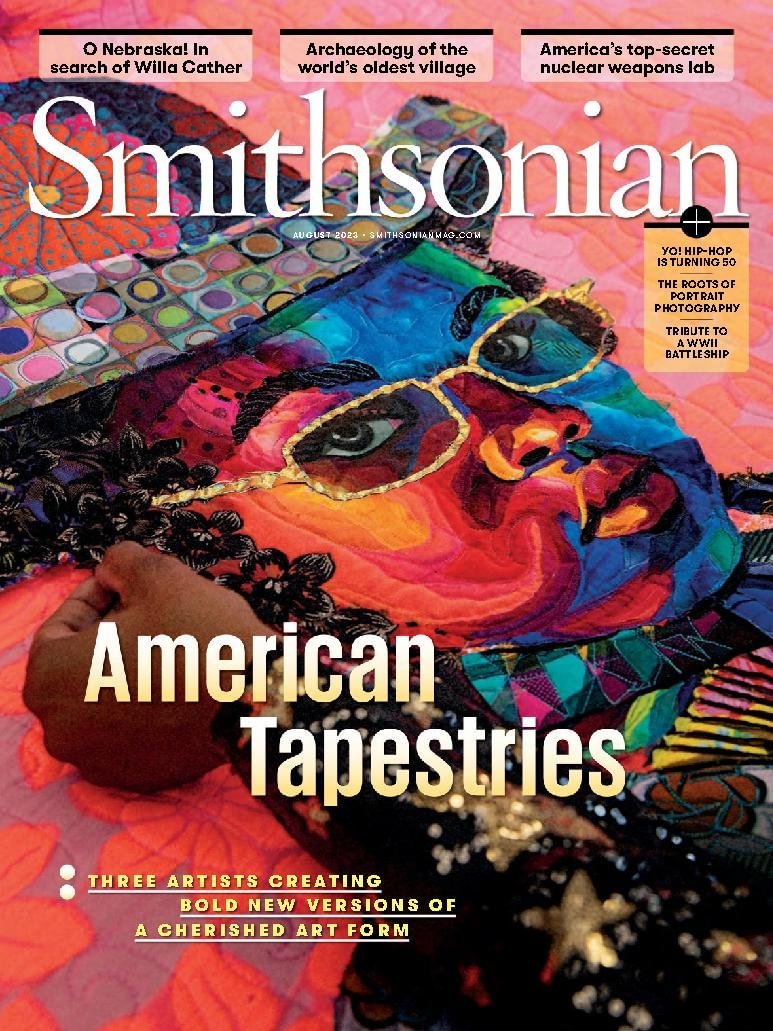
Smithsonian Magazine – July/August Issue: American Tapestries- Three artists creating bold new versions of a cherished art form; In search of Willa Cather; Archaeology of the world’s oldest village, and more…
Arresting portraits, now a part of the Smithsonian collections, illuminate the little-known role these artists played in chronicling 19th-century life
“Before daguerreotypes, if you wanted a portrait made, you commissioned a painter,” says John Jacob, SAAM’s director of photography, as we study Rhoda’s portrait. “Photography democratized portraiture because it was significantly cheaper. But until we acquired these images, we weren’t able to show in our collection that African Americans were part of this process, as photographers and subjects, and also as entrepreneurs and innovators, experimenting with the latest technology and investing in it.”
He famously captured industrial America—the Brooklyn Bridge, Pittsburgh’s steel mills—with his monumental canvases. But the painter Joseph Stella (1877-1946) looked to nature for respite, escaping his Manhattan studio to visit the New York Botanical Garden and to paint in southern Italy, where he grew up. “My devout wish,” the artist wrote, “[is] that my every working day might begin and end—as a good omen—with the light, gay painting of a flower.”
Scientists endlessly study lakes and rivers, historians document them, artists paint them, and travelers continue to explore them. In a series of articles, Smithsonian magazine highlights all that draws our eyes to our nation’s fresh and coastal waters.
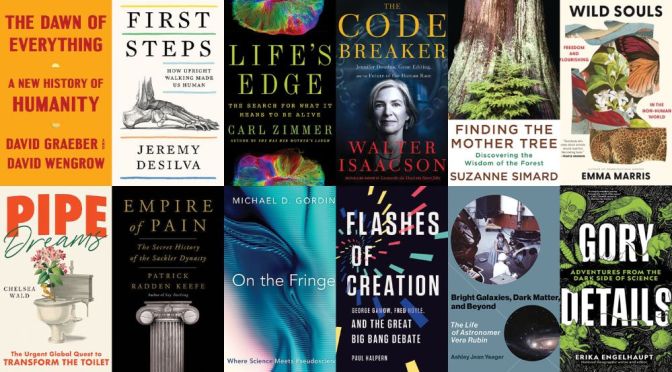
Smithsonian Magazine – Ten Best Science Books of 2022 – December 7, 2022: From a detective story on the origins of Covid-19 to a narrative that imagines a fateful day for dinosaurs, these works affected us the most this year
An Immense World: How Animal Senses Reveal the Hidden Realms Around Us by Ed Yong
In An Immense World, science journalist Ed Yong dives into the vast variety of animal senses with a seemingly endless supply of awe-inspiring facts. As humans, we move through the world within our Umwelt—a term for subjective sensory experience Yong borrows from the Baltic German biologist Jakob von Uexküll. But every creature on Earth has its own Umwelt that we can scarcely imagine. Through interviews with scientists around the globe, Yong teases out the astonishing details of other animals’ perceptions, introducing us to their fantastic Umwelten. Scallops, for example, have up to 200 eyes with impressive resolution, but their brains are likely not complex enough to receive and process such crisp images. Some butterflies can perceive ultraviolet color patterns on their wings that distinguish them from other species. And hammerhead sharks have receptors that scan the seafloor for the electric fields emitted by hidden prey, “as one might use metal detectors,” Yong writes. But many creatures’ senses have been thrown off by human activity, he notes. For example, our visually centered society has erected artificial lights that disorient migrating birds and hatchling sea turtles.
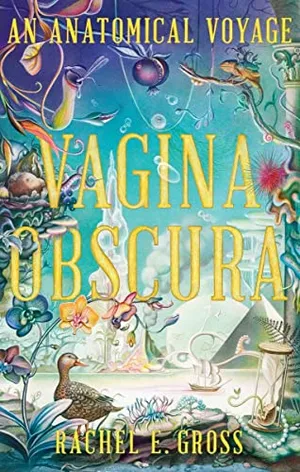
Vagina Obscura: An Anatomical Voyage by Rachel E. Gross
Perhaps no aspect of our anatomy is both more fascinating and misunderstood than the vagina—down to the very common usage of what that word means. A vagina isn’t the whole of a woman’s reproductive anatomy. Instead, the vagina is a muscular canal that’s part of many people’s reproductive systems, of varying genders, whether they were born with it or had it surgically constructed. Nuance exists in this territory that is so often overwhelmed by a tangle of science, myth and cultural perceptions, and journalist Rachel E. Gross has composed an enthralling, sensitive book that’s relevant to everyone no matter what your personal topography looks like.
The pages of Vagina Obscura contain plenty of cutting-edge popular science and historic reflection on everything from how ovaries were once miscategorized as female testicles to how operations for individuals injured in war paved the way for gender-affirming surgeries. The book is arranged by anatomical part, and Gross details the function each part carries out. Gross’ work stands out because the unfolding story is couched in what we’ve been wrong about, how our ideas have changed, and how every person—no matter their sex—shares far more in common than we often recognize. Everyone’s reproductive anatomy, as Gross notes, is made up of the same parts in different arrangements, a quirk of human development that underscores commonality. Gross’ exploration is far more than a natural history of human anatomy, but a narrative that busts myths and celebrates all that we’ve come to know about vaginas and their associated parts during a time when such clarity on sex, gender and bodily autonomy is more needed than ever. Where the popular understanding of human anatomy is sometimes shallow, Vagina Obscura brings depth. (Riley Black)
Breathless: The Scientific Race to Defeat a Deadly Virus by David Quammen
In Breathless, David Quammen has constructed a masterful book about scientists’ efforts to understand SARS-CoV-2, the virus that causes Covid-19. Make no mistake, the book is not about healthcare and our response to Covid-19. The main character in this tale is the virus, and Quammen crafts a detective tale about the coronavirus SARS-CoV-2 by chronicling the efforts of scientists around the world to identify it, search for its origins, understand how it mutates and respond to it. He interviewed 95 scientists and allows readers to look over the shoulders of many of them as they use their specialized expertise to study the virus. To show how the scientific process works on a global scale, he details the work of a genomic epidemiologist here, an evolutionary virologist there and a computational biologist somewhere else. Each expert adds or refutes some important detail about the rapidly evolving virus that has created a pandemic. Each discovery builds on those that came before.
Quammen has said he wrote the book with no outline, instead allowing each addition to naturally form on the next, in the way a crystal forms. He has the skills and knowledge to do this thanks to decades spent writing captivating science books, on everything including evolution and the spillover of disease from animals into humans. What results from his immense effort is a solid, reliable and entertaining scientific thriller about a shifty and prolific virus that is still very much evolving. (Joe Spring)
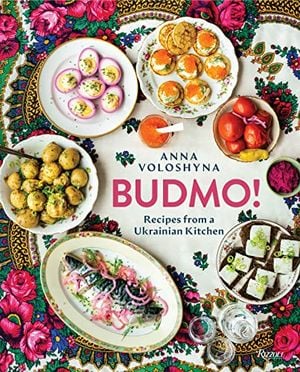
In this colorful cookbook you’ll find recipes for dishes like cold borscht, dark cherry varenyky and sweet pumpkin rice kasha from Ukrainian native Anna Voloshyna, who moved to California in 2011. Known for hosting pop-up dinners and cooking classes, Voloshyna is also a food stylist, photographer and blogger. In her debut cookbook, she offers modern and American spins on the typical dishes she grew up with, and she also includes details like food origins, customs and traditions in each recipe’s headnote. Budmo, which is how Ukrainians say “cheers,” shares the country’s complicated history that has led up to the current war, while simultaneously celebrating its varied and vibrant cuisine.
“It’s the boundary between two worlds: the Paris you see and the Paris you don’t,” writes Edward Chisholm, an Englishman who moved to Paris in 2012 and spent several years as a waiter while trying to build up his writing career. Now, his debut book, a no-holds-barred memoir detailing his time waiting tables in one of the world’s hottest restaurant cities, reveals what really goes on behind the scenes of fine dining establishments. This book is the next generation of Anthony Bourdain’s Kitchen Confidentialand Stephanie Danler’s Sweetbitter, with Chisholm exposing the often-shocking mayhem of the restaurant kitchen in visceral detail. He deftly uses the Parisian restaurant as a microcosm for France as a whole, with immigrants, people of color and blue-collar workers at the bottom of the food chain.
Ever wonder how apple pie became a symbol of America? Food writer and editor Rossi Anastopoulo slices into the history of pie in the good ol’ US of A, from pumpkin pie on Thanksgiving to apple pie on Independence Day, using the iconic American dessert to tell the story of a country. Still, it’s not all sweet, as she details how molasses pie traces its origin to slavery and Jell-O pie reveals the history of gender disparity in our country. All in all, Anastopoulo shares interesting facts behind 11 all-American pies, like how the first recipe for American apple pie appeared in a 1796 cookbook called American Cookery, which is believed to be the first cookbook ever published in the newly minted United States. The book includes a recipe for each pie, too.
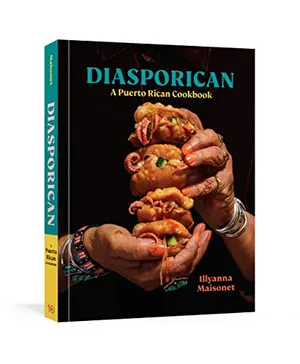
Part memoir and part cookbook, this debut from our country’s first Puerto Rican food columnist Illyanna Maisonet dives into the author’s personal family recipes, which she painstakingly documented from her extended relatives through the years, and also includes her interpretation of dishes by Puerto Rican friends, chefs and roadside food vendors. There are 90 recipes including traditional Puerto Rican dishes like tostones, pernil and mofongo. Other highlights include sloppy joes and sancocho. But more than just the recipes, Maisonet shares how migration and colonization have influenced and progressed Puerto Rican food, ingredients and techniques. In explaining why her family wraps their pasteles in foil, Maisonet writes in her intimate, conversational style, “When you think of my grandma coming to Sacramento as a 17-year-old mother of two in 1956, you have to wonder where the hell would she have found banana leaves in Northern California?” She posits that this progression is no less authentic than the original method, and that the resourcefulness of Puerto Ricans has evolved their cuisine into what it is today: dynamic and delicious.
Haunted by the approach of another world war, the beloved fantasy author created a new story of Middle-earth that few people even knew about—until now. BY JOHN GARTH, PHOTOGRAPHS BY KIERAN DODDS


:focal(800x602:801x603)/https://tf-cmsv2-smithsonianmag-media.s3.amazonaws.com/filer_public/de/52/de526958-55af-4faf-8b79-5b58b958e09a/iceman_web.jpg)
/https://tf-cmsv2-smithsonianmag-media.s3.amazonaws.com/filer_public/fe/e2/fee2954d-03e4-4587-8579-109266029f90/julaug2023_e12_saam-daguerreotypes.jpg)
:focal(1405x1057:1406x1058)/https://tf-cmsv2-smithsonianmag-media.s3.amazonaws.com/filer_public/58/3d/583dcc03-3d6e-44e0-9ed5-c794761dbc5a/jun2023_b01_prologue.jpg)
/https://tf-cmsv2-smithsonianmag-media.s3.amazonaws.com/filer_public/ed/74/ed74a32d-9c13-4800-9187-de14f431f9a9/opener_v1.jpg)
:focal(2993x1995:2994x1996)/https://tf-cmsv2-smithsonianmag-media.s3.amazonaws.com/filer_public/cd/68/cd68dff3-6597-4029-98d7-de3c9ae14fd0/gettyimages-1320816707.jpg)
:focal(2016x1517:2017x1518)/https://tf-cmsv2-smithsonianmag-media.s3.amazonaws.com/filer_public/4b/19/4b198b21-f266-4761-9157-24ec47e53973/img_0656.jpg)
/https://tf-cmsv2-smithsonianmag-media.s3.amazonaws.com/filer/86/4f/864fcf0e-4b26-410a-aa50-713fdcaf6407/untitled-1-recovered.jpg)

/https://tf-cmsv2-smithsonianmag-media.s3.amazonaws.com/filer_public/df/49/df49a5ec-80af-4776-9372-271ce96be319/janfeb2023_j04_gallaplacidiaempress.jpg)





/https://tf-cmsv2-smithsonianmag-media.s3.amazonaws.com/filer_public/77/b2/77b26047-7784-4bc6-bf89-29de6b3bc7e7/oct22_web_cover.jpg)
 Boomers Daily