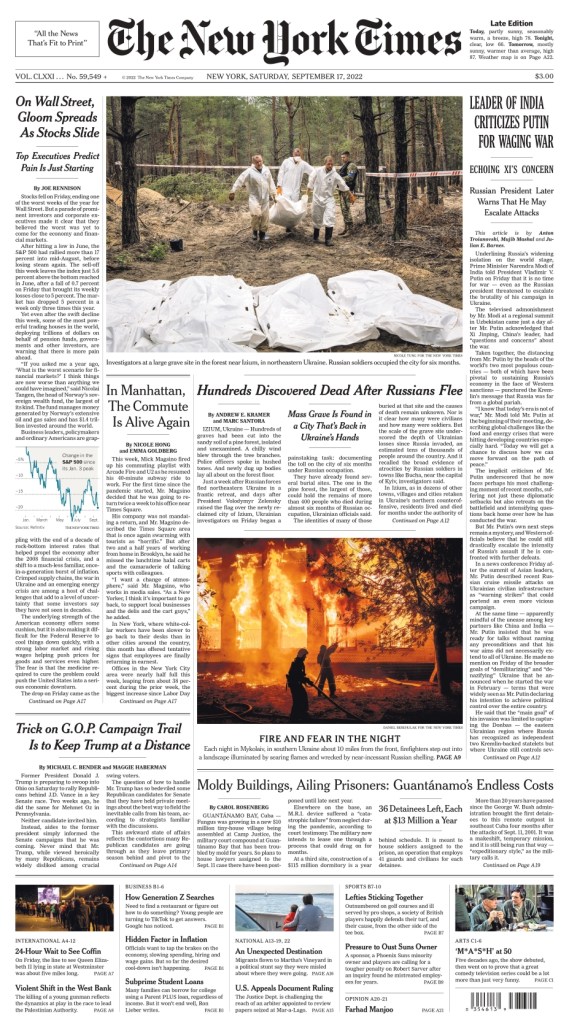
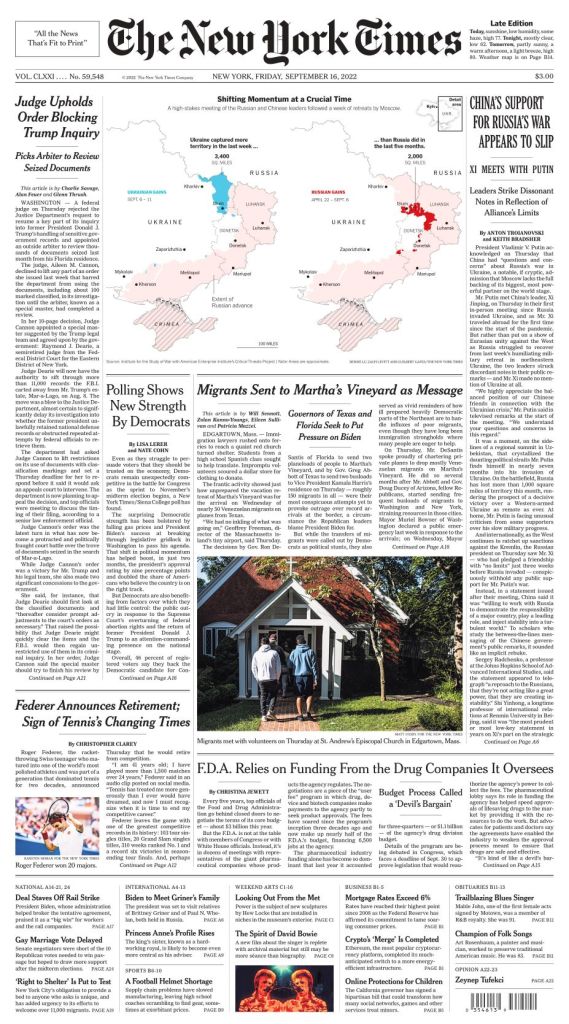
President Biden wants to avoid provoking Russia at a moment when American officials fear Vladimir V. Putin could escalate the war to compensate for recent losses.
In one small town in the Donbas region, everything suddenly fell apart. It was part of Vladimir Putin’s grand plan, and it helped lay the groundwork for the invasion of Ukraine. Now things are heating up again.
Georgina Godwin and cultural historian Gavin Plumley review the day’s papers, Andrew Tuck’s weekend column and Andrew Mueller takes a look at some of the week’s weirder stories.
Gates to Southwark Park reopen minutes after announcement that 14-hour line was at capacity
The announcements were clear: the queue to see the Queen lying in state had reached capacity and was being paused for six hours.
The message went out over the public address system at train stations across the capital, on official government Twitter accounts and across the media shortly before 10am on Friday.
There was just one problem: the queue carried on. And on. In fact, just after 5pm on Friday the government announced that the wait time was over 24 hours, and warned that “overnight temperatures will be cold”.
Russian troops held the city of Izium, in northeastern Ukraine, for six months. One burial site found this week could hold the remains of more than 400 people, investigators said.
After India’s prime minister said that now is not the time for war, an increasingly isolated Mr. Putin threatened “more serious” actions in Ukraine while insisting he was ready for talks.
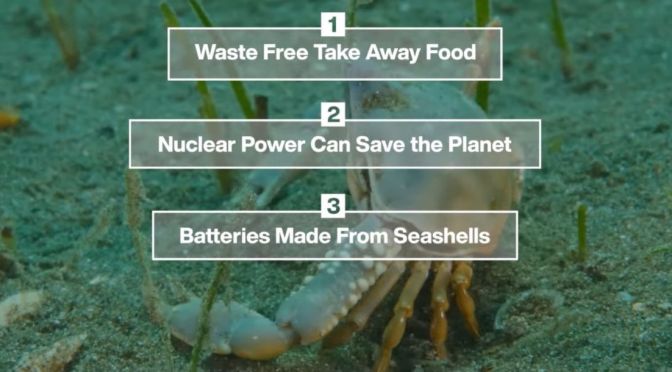
0.15 – These restaurants are making takeout sustainable: Just Salad, Loop, DeliverZero, and Burger King are cutting back on food containers and packaging. Here’s how. 01.38 – Nuclear Power is unpopular but could really save our planet: The IEA says the world’s nuclear power capacity must double by 2050 if we are to achieve net zero. 03:13 – The renewable battery made from crab and lobster shells: Scientists at the University of Maryland have shown the potential of the chemical chitin to make a biodegradable electrolyte. 04:10 – Handheld device lets you check for breast cancer at home: The device, called the Dotplot, has won the 2022 UK James Dyson Award.
The World Economic Forum is the International Organization for Public-Private Cooperation. The Forum engages the foremost political, business, cultural and other leaders of society to shape global, regional and industry agendas. We believe that progress happens by bringing together people from all walks of life who have the drive and the influence to make positive change.
Here is the truly amazing thing that few people besides Tommie Smith remember about his gold medal–winning 200-meter run in the 1968 Olympics: He broke the world record in just under 20 seconds on one good leg.
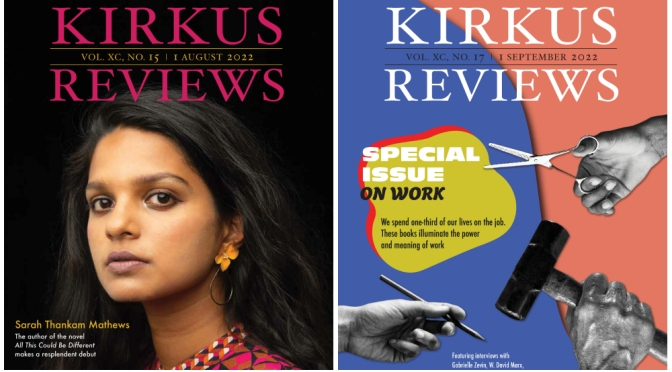
As we were editing our Sept. 15 issue in mid-August, news broke that author Salman Rushdie had been attacked at a lecture in western New York state. The story sent shock waves through the literary community—a stark reminder that violence can lurk in the corners of literary debate. Rushdie is the author of many works of fiction and nonfiction and is most celebrated for his 1981 novel, Midnight’s Children, a kaleidoscopic epic of Indian life after independence that won the Booker Prize as well as two subsequent honors, the Booker of Bookers in 1993 and the Best of the Booker in 2008.
The Globalist heads to Uzbekistan for the latest on the meeting between Xi Jinping and Vladimir Putin. Plus: the Aukus security pact, one year on; how the EU plans to manage big tech; and Andrew Mueller’s round-up of the week’s news.
The discordant messages of China’s president, Xi Jinping, and President Vladimir V. Putin of Russia suggested that despite an earlier pledge of “friendship,” Moscow does not have an unconditional ally in Beijing.
The Justice Department is planning to appeal, but the decision is likely to significantly delay its investigation into former President Donald J. Trump’s handling of government records.
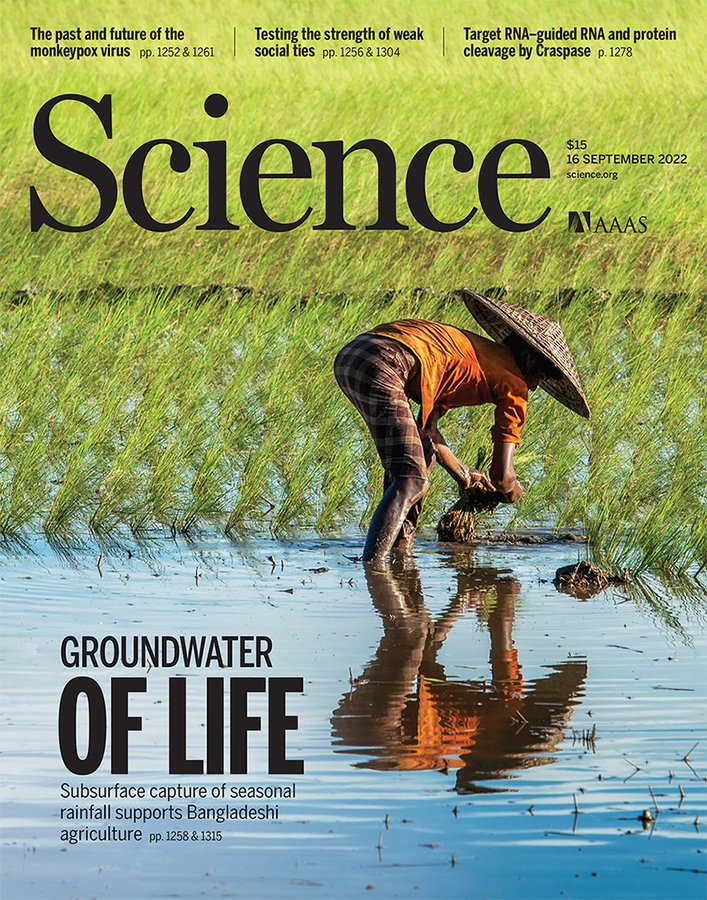
Seasonal monsoon rainfall replenishes groundwater reserves in the Bengal basin of Bangladesh thanks to the region’s seemingly counterintuitive intensive dry-season irrigation practices, a new Science study finds.
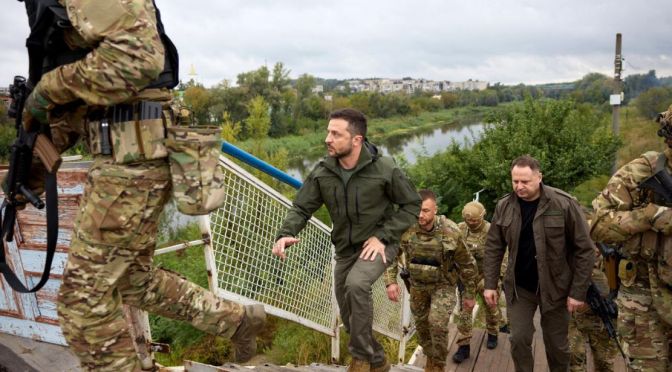
Ukrainian forces have reclaimed large swaths of territory in the Kharkiv region. WSJ’s Stephen Kalin reports from the liberated city of Izyum, where Ukrainian President Volodymyr Zelensky traveled to assess damage on Wednesday.
Izyum, also spelled Izium, city, eastern Ukraine. Izyum is located 75 miles (120 km) southeast of Kharkiv on the Donets River. The earliest historical mention of it dates as early as 1571; it has been a city since 1639. Izyum is linked with Kharkiv and Luhansk by rail. Industries have included railroad repair, brick making, brewing, and optical equipment manufacture.
News, Views and Reviews For The Intellectually Curious





 Boomers Daily