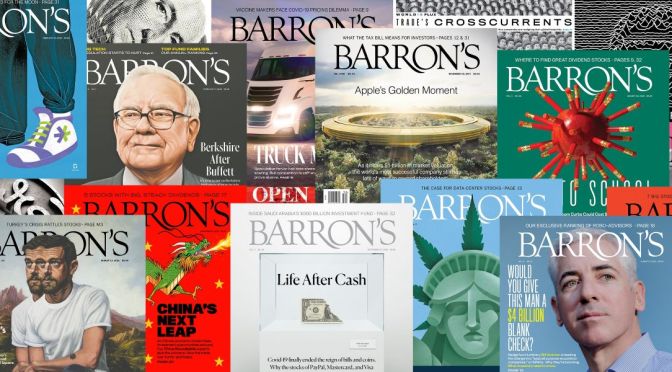
Real estate investment trusts have been clobbered over the past year. We survey the landscape, from REITs that specialize in cell towers, data centers, and warehouses to ones holding troubled office buildings. Where to find value and where to dodge traps.
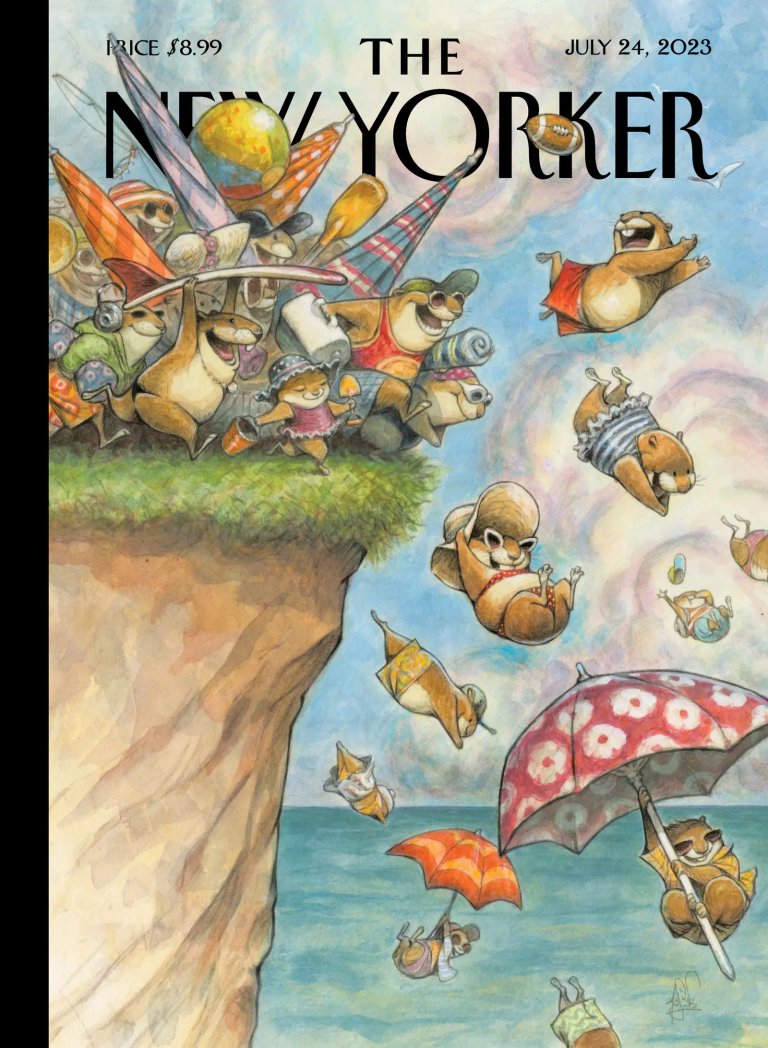
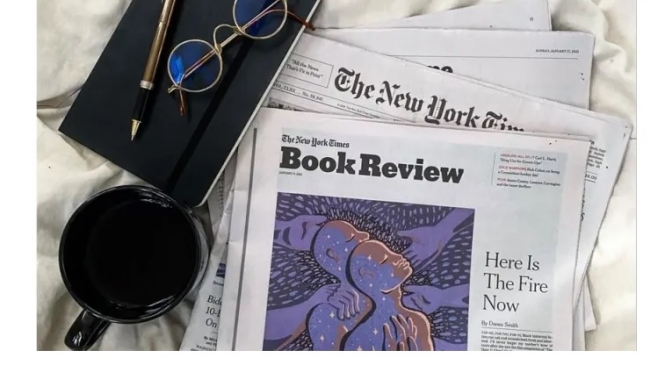
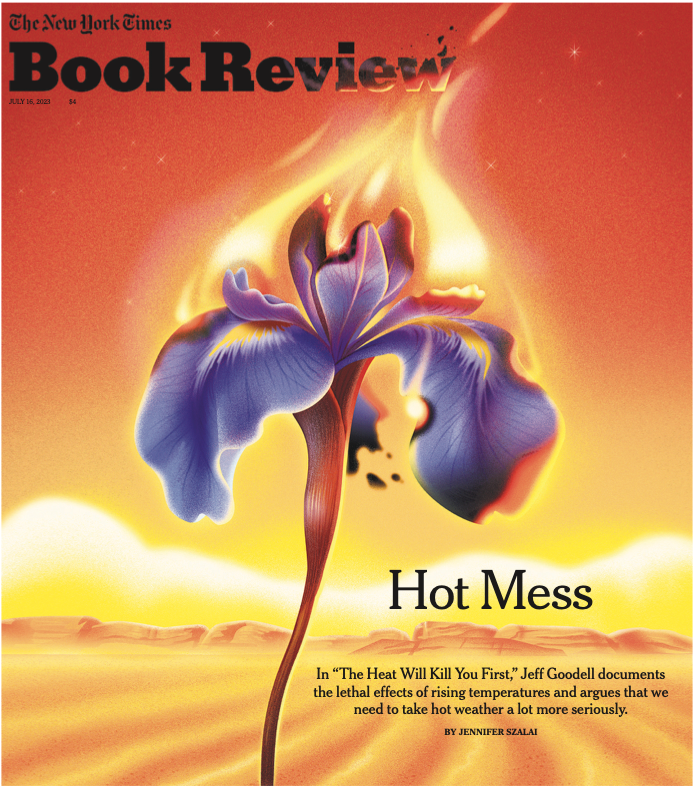
THE NEW YORK TIMES BOOK REVIEW – JUNE 4, 2023: The summer reading issue lands this weekend, 56 pages filled with suggestions of books to keep you company at the beach or in that shady mothballed nook you discovered in your rental share. The issue closes with a beautiful photo essay of swimmers pictured underwater, from an art book that evokes summer as vividly as fried clam strips and soft-serve ice cream: “Swimmers,” by Larry Sultan.
In “The Bathysphere Book,” Brad Fox chronicles the fascinating Depression-era ocean explorations of William Beebe.
Consider the siphonophore. An inhabitant of the lightless ocean, it looks like a single organism, but is actually a collection of minute creatures, each with its own purpose, working in harmony to move, to eat, to stay alive. They seem impossible but they are real. In 1930 William Beebe was 3,000 feet underwater in a bathysphere, an early deep-sea submersible, when he spotted a huge one: a writhing 20-yard mass whose pale magenta shone impossibly against the absolute blackness of the water. As you can imagine, it made an impression.
Henry Hoke’s latest novel, “Open Throat,” follows an observant — and starving — cougar living in the Los Angeles hills surrounding the Hollywood sign.
There is a moment toward the end of “Open Throat,” Henry Hoke’s slim jewel of a novel, where the narrator, a mountain lion living in the desert hills surrounding Los Angeles’s Hollywood sign, falls asleep and dreams of Disneyland. It will be hard for those who haven’t yet read this propulsive novel to understand, but the lion’s waking life at this moment is so precarious that this slippage into pleasant dream left me scared to turn the page.
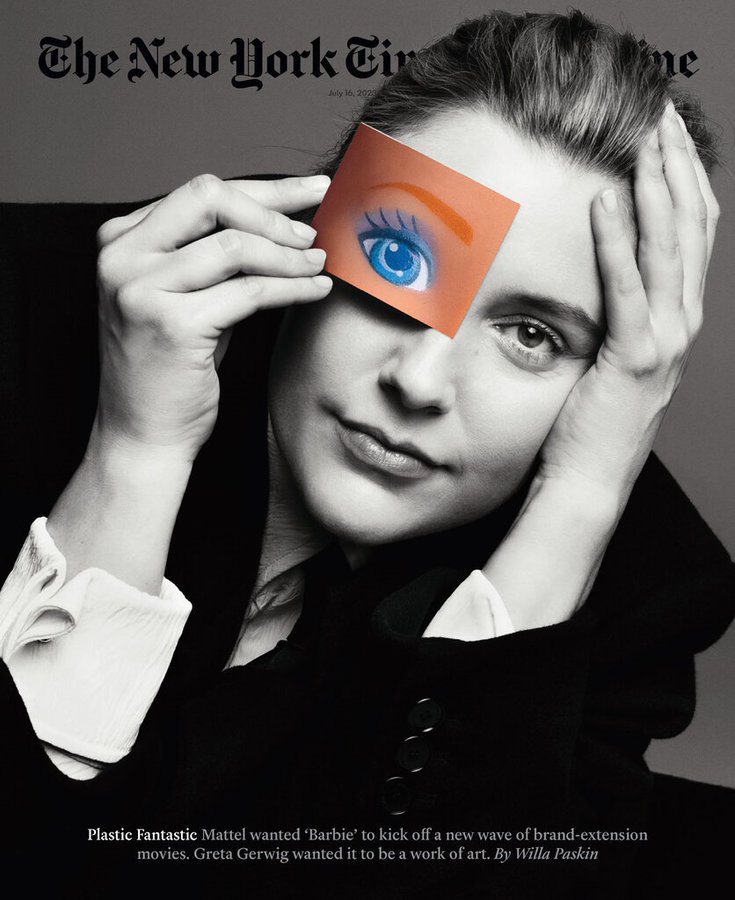
THE NEW YORK TIMES MAGAZINE (June 4, 2023) – California is the place where the future happens, for good and ill. That’s part of its magic. Read our first-ever California Issue to find out what roads the state will take us down next.
Inside: A fight over a parking lot that explains the housing crisis; the future of California’s power to shape national policy; how the state is adapting to a warming world — and more.
From reparations to tax revolts, the Golden State tries out new ideas all the time. What roads will its latest experiments send us down?
By Laila Lalami
I remember my first glimpse into the future. In August 1992, when I arrived in California as a student, I discovered during orientation that the university required all incoming students to have something called an email account. To access it, I had to call up a text-based mail client on Unix, using a series of line commands. If I needed a file that sat on a university computer in New York, I could use file transfer protocol to download it in Los Angeles, the whole process taking no more than a few minutes. That’s brilliant, I remember thinking.
For a while this winter, seemingly every text message that Buffy Wicks received asked if she was running for Congress. Representative Barbara Lee, of California’s 12th District, which includes Oakland, had announced that she would enter the race for Dianne Feinstein’s soon-to-be-vacated Senate seat. This decision by Lee, who is 76, created a rare opportunity for the next generation of California Democrats to vie for federal office. And Wicks — a 45-year-old State Assembly member who lives in Lee’s district and was last re-elected with 85 percent of the vote — seemed like a natural candidate.
What might change the world’s dire demographic trajectory?
In the roughly 250 years since the Industrial Revolution the world’s population, like its wealth, has exploded. Before the end of this century, however, the number of people on the planet could shrink for the first time since the Black Death. The root cause is not a surge in deaths, but a slump in births. Across much of the world the fertility rate, the average number of births per woman, is collapsing. Although the trend may be familiar, its extent and its consequences are not. Even as artificial intelligence (ai) leads to surging optimism in some quarters, the baby bust hangs over the future of the world economy.

It certainly wasn’t fair. Nor was it entirely free. But, like it or not, the victory on May 28th of Recep Tayyip Erdogan in Turkey’s presidential election is a fact. For the next five years Turkey, Europe and the wider world will have to deal with a prickly and authoritarian populist. That is bad news on many fronts: economically, democratically and regionally. And yet pragmatists have a duty to search for chinks of light in the gloom.
That compounds the problems of shrinking workforces and rising bills for health care and pensions
“Adam is a special child,” says the voice-over, as the camera pans across abandoned classrooms and deserted maternity wards. “He’s the last child born in Italy.” The short film made for Plasmon, an Italian brand of baby food owned by Kraft-Heinz, a giant American firm, is set in 2050. It imagines an Italy where babies are a thing of the past. It is exaggerating for effect, of course, but not by as much as you might imagine. The number of births in Italy peaked at 1m in 1964; by 2050, the un projects, it will have shrunk by almost two-thirds, to 346,000.
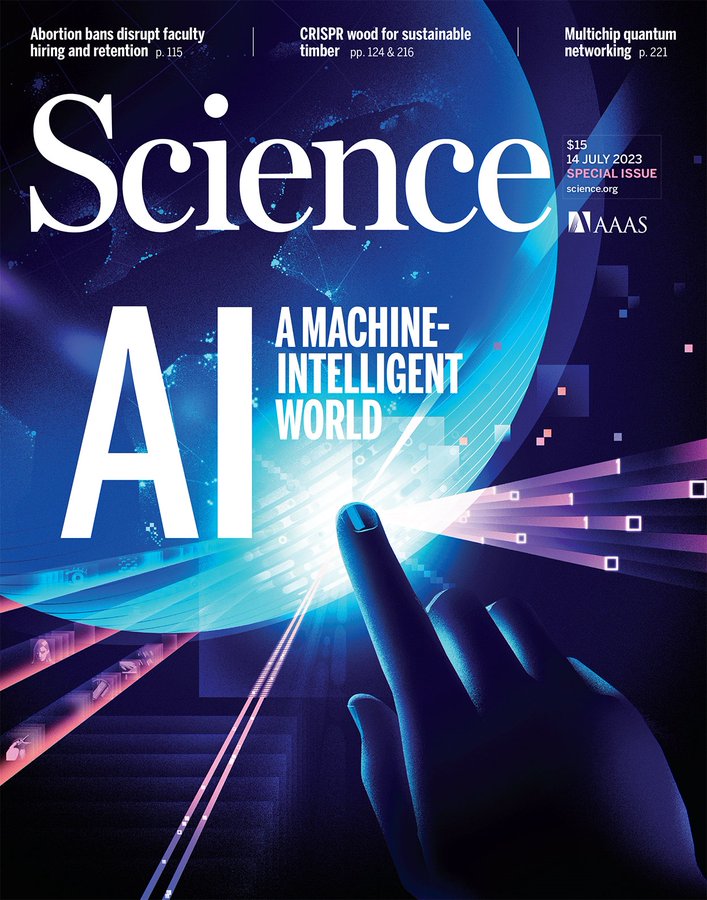
Science Magazine – June 2, 2023 issue: The snub-nosed monkey genus Rhinopithecus comprises five allopatric and morphologically differentiated species, the black-white snub-nosed monkey, the black snub-nosed monkey, the golden snub-nosed monkey, the gray snub-nosed monkey, and the Tonkin snub-nosed monkey.
Humans are primates. If we weren’t able to do things like write poetry and drive cars, we would likely be classified as another species of great ape, along with our closest cousins—chimpanzees, bonobos, gorillas, and orangutans. Thus, understanding the genomes, evolutionary history, sociality, and, some might argue, even ecology of modern primates greatly informs our understanding of ourselves.
Printing glass with additive manufacturing techniques could provide access to new materials and structures for many applications. However, one key limitation to this is the high temperature usually required to cure glass. Bauer et al. used a hybrid organic-inorganic polymer resin as a feedstock material that requires a much lower temperature for curing (see the Perspective by Colombo and Franchin).
Sonic Hedgehog signaling and primary cilia control the core mammalian circadian clock
Virtually all mammalian physiological functions fall under the control of an internal circadian rhythm, or body clock. This circadian rhythm is governed by master neural networks in the hypothalamus that synchronize the activity of peripheral clocks in cells throughout the body.
nature Magazine – June 1, 2023 issue: X-rays are widely used to characterize materials, but samples still require a reasonably high number of atoms for success. In this week’s issue, Saw-Wai Hla and his colleagues report that they have used synchrotron X-rays to characterize the elemental and chemical state of an individual atom. The team was able to detect X-ray-excited currents generated from an iron and a terbium atom in molecular hosts.
Philosophy Now Magazine (June/July 2023) – The ‘Meta Ethics Issue’ featuring Back to the Sophists: Nana Ariel corrects the record and the modern application of Sophistry and Will the Real John Locke Please Step Forward?Hilarius Bogbinder shows how Locke’s intellectual identity changed over time.
Times Literary Supplement (June 2, 2023): The Last Days of Weimar – Lesley Chamberlain on German culture before the catastrophe; Michel Houellebecq in the buff; Death by Dementia; The Art of Sex and Champagne socialist guilt.
CNBC (May 30, 2023) – From floods to droughts, CNBC Marathon explores the water crisis in the U.S. Today, one out of three people don’t have access to safe drinking water. And that’s the result of many things, but one of them is that 96.5% of that water is found in our oceans. It’s saturated with salt, and undrinkable.
Chapters:00:00 — Introduction 00:30 — Can Sea Water Desalination Save The World? (Published October 2019) 14:00 — U.S. Farms Waste A Lot Of Water — But This Tech Could Help (Published September 2022) 29:56 — How The West Coast Drought Could Cause More ‘Water Wars’ (Published July 2021) 40:07 — Why Flood Insurance Is Failing The U.S. (Published November 2020)
Most of the freshwater is locked away in glaciers or deep underground. Less than one percent of it is available to us. So why can’t we just take all that seawater, filter out the salt, and have a nearly unlimited supply of clean, drinkable water? The western U.S. is experience a megadrought so severe, it is the driest two decades in at least 1,200 years. And no sector has felt the impact more than agriculture, which takes up about 70% of the world’s freshwater.
With water resources becoming more scarce, several companies are working to improve irrigation efficiency and help sustain food production in a future where extreme climate may be more common. Water is a cornerstone of economic activity, and when it runs low, communities face tough choices. The extreme drought conditions in the U.S. West are straining water resources and providing a fertile ground for wildfires. How will the West Coast face this climate challenge? And 2020 was the busiest hurricane season on record. Flooding is one of a storm’s most devastating consequences.
FEMA estimates one inch of flood water can cause up to $25,000 in damage. The U.S. began offering national flood insurance in 1968 but the program, called the NFIP, is now over $20 billion in debt. Private companies are starting to offer flood insurance as well. However, flood insurance is more complicated than it may appear. Watch the video to better understand how flood insurance works, and doesn’t work, in the U.S.
Monocle Magazine (May 2023 issue) – Ever dreamed of ditching the rat race for a life on the land? We meet the new Mediterranean farmers doing just that in the latest edition of Monocle.
Issue 164 also includes an Art Special that puts collectors, galleries and this year’s Art Basel in the frame.
Plus: a guide to the Venice Architecture Biennale and a rare venture into Syria.
Ever dreamed of ditching the rat race for a life on the land?
News, Views and Reviews For The Intellectually Curious