Tag Archives: Research

Health Research: Type 2 Diabetes Caused By “Overflow Of Fat” From Liver To Pancreas

From a Newcastle University news release:

“When fat cannot be safely stored under the skin, it is then stored inside the liver, and over-spills to the rest of the body including the pancreas. This ‘clogs up’ the pancreas, switching off the genes which direct how insulin should effectively be produced, and this causes Type 2 diabetes.”

Newcastle Clinical ResearchThis latest paper builds on previous Newcastle studies supported by Diabetes UK showing exactly why Type 2 diabetes can be reversed back to normal glucose control. Those studies led to the large DiRECT trial which showed that Primary Care staff can achieve remission of Type 2 diabetes by using a low calorie diet with support to maintain the weight loss.

A quarter of participants achieved a staggering 15 kg or more weight loss, and of these, almost nine out of 10 people put their Type 2 diabetes into remission. After two years, more than one third of the group had been free of diabetes and off all diabetes medication for at least two years.

In 2020, this approach to management of short duration Type 2 diabetes is to be piloted in the NHS in up to 5,000 people across England, and a similar programme is being rolled out in Scotland.

Read more

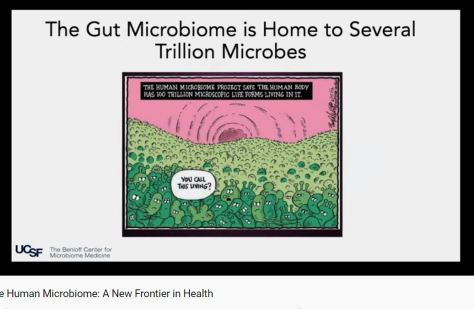
Research: “The Human Microbiome – A New Frontier In Health” (UCTV)

Microbiome expands the genetic and functional capacity of its human host. Susan Lynch explains that human microbiome develops early in life and that gut microbes shape immune function and relate to disease outcomes in childhood.

The Human Microbiome A New Frontier in Health UCTV

She also explores next-generation microbiome therapeutics and research.

Science & Technology: Reviewing Caltech’s “Decade Of Discovery”

From a Caltech online article:

Caltech LogoDuring this decade, as in previous decades, Caltech scientists and engineers reinvented the landscape of scientific endeavor: from the first detection of gravitational waves and the discovery of evidence for a ninth planet in the solar system; to bold missions to explore and understand the solar system; to the development of new methods to see inside the body and the brain and understand the universe around us; to the invention of devices to improve human health, some taking inspiration from nature; to the initiation of a transformative new effort to support research into the most pressing challenges in environmental sustainability.
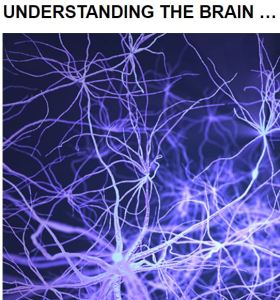
Caltech's Decade of Discovery Understanding the Brain December 19 2019Though the brain orchestrates how we experience the world, many questions remain about its complex workings. During the past 10 years, Caltech scientists have discovered how the brain recognizes faces and drives and quenches thirst, and learned about the pathways that govern sleep. A major focus has been on understanding the experience of non-neurotypical individuals, such as those who have autism or those who are missing a brain hemisphere. New realms of neuroscience research were made possible in 2016, when philanthropists Tianqiao and Chrissy Chen announced a gift to establish the Tianqiao and Chrissy Chen Institute for Neuroscience at Caltech.


Caltech's Decade of Discovery Advancing Medicin December 19 2019As modern technology advances, so do the possibilities for treating medical conditions that were previously considered untreatable. Caltech researchers used an electrode array to help a paralyzed patient stand and move his legs voluntarily and developed a novel method for preventing the spread of diseases, contact lenses for preventing blindness in diabetic patients, an app that monitors heart health, gene therapy for repairing nerves in the brain, and a robotic arm controlled by a paralyzed patient’s intent to move. The decade also saw the establishment of the Merkin Institute for Translational Research, which aims to advance medical technologies, and a continued commitment to the Donna and Benjamin M. Rosen Bioengineering Center.

To read more: https://www.caltech.edu/about/news/decade-of-discovery


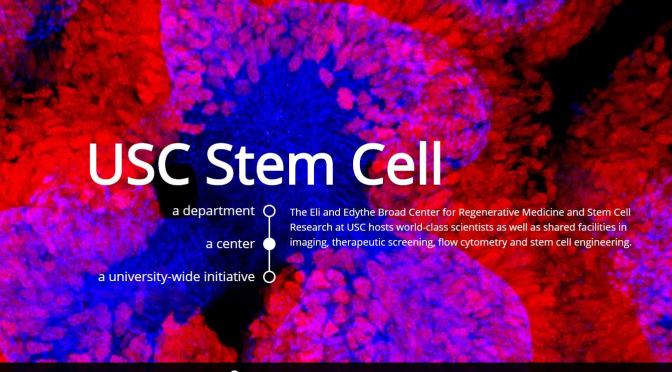
Research: USC Creates Organoids From Stem Cells To Treat Polycistic Kidney Disease (Video)

USC Stem Cell scientist Andy McMahon is using human stem cells to create mini-kidney structures known as organoids. His lab is using these organoids to study and find new drugs to treat polycystic kidney disease.

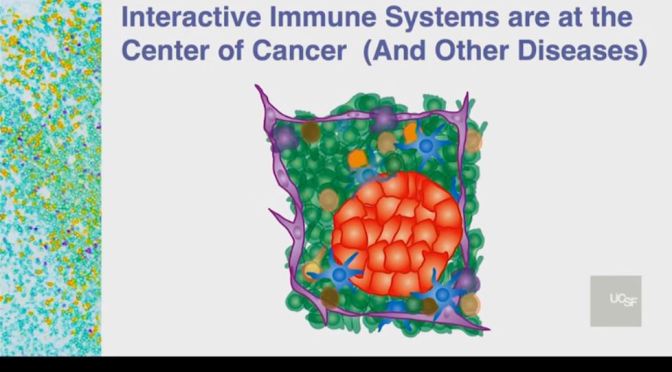
Health: “Treating Cancer And Other Diseases Through The Immune System” (UCTV Video)

Interactive immune systems are at the center of cancer and other diseases. Dr. Matthew Krummel explores how the immune system can regulate cancer progression. Recorded on 10/31/2019.

To read more: https://www.uctv.tv/shows/Understanding-and-Treating-Cancer-and-Other-Diseases-Through-the-Immune-System-35239

Health: “Understanding Parkinson’s Disease” (Nature Videos)

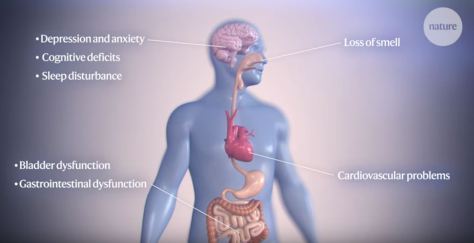
Parkinson’s disease is a neurological condition that affects the brain and other parts of the nervous system. The gradual loss of nerve cells leads to a suite of characteristic motor and non-motor symptoms.

Understanding Parkinson's Disease Nature Neuroscience Videos Dec 16 2019

What causes these cells to die and how the pathology develops in the nervous system are not yet clear but multiple lines of investigation are being pursued to answer these questions. In this animation, we explore some of the latest in Parkinson’s disease research.

Website: https://www.nature.com/articles/s41583-019-0254-x

New Research Videos: “In Search Of The Amazon’s Tallest Tree” (Cambridge)

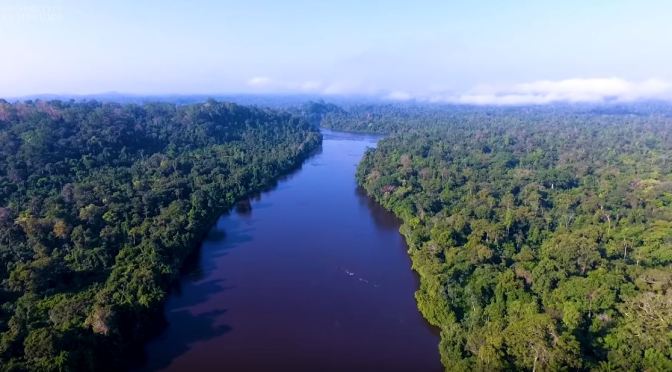
Research has discovered the tallest known tree in the Amazon, towering above the previous record holder at a whopping 88.5 metres. This giant could store as much carbon as an entire hectare of rainforest elsewhere in the Amazon. Toby Jackson, a plant scientist in the University of Cambridge, took part in an expedition to find the tree in a remote region of northern Brazil, and validate its height the old-fashioned way – by climbing it.

To read more: https://www.cam.ac.uk/research/news/expedition-finds-tallest-tree-in-the-amazon

Media: 41% Of Americans Believe News Has Become Less Reliable, 44% No Change (Rand Corp, 2019)

From a Rand.org online release:

Rand Corporation LogoMany people (41 percent) indicated that they believed that news has become less reliable than in the past; a similar number (44 percent) said they believed there has been no change; and 15 percent said they thought news is more reliable now.

Different demographic groups get their news in different ways

  • People whose primary news sources are social media and in-person contacts are generally younger and female, and they tend to have less education than a college degree and lower household incomes.
  • People whose primary news sources are print publications and broadcast television tend to be be significantly older, and they are less likely to be married.
  • People whose primary news source is radio are significantly more likely to be male, less likely to be retired, and more likely to have a college degree.
  • People whose primary news sources are online platforms are significantly younger, more likely to be male and have a college degree and higher income, and less likely to be black.

Attitudes toward the reliability of news are mixed

  • Overall, 44 percent reported that they believed “the news is as reliable now as in the past.”
  • Nearly the same amount — 41 percent — reported a belief that the news has become less reliable.
  • A minority (15 percent) said that they believed that the news is more reliable now.
  • There was an association between news consumption profiles and perceptions of reliability — people who relied more heavily on online, radio, and social media/in-person platforms to obtain news were less likely to say that news is more reliable now than in the past.

Rand News Study Respondents' Most Used News Source

Rand News Study Respondents' Top Two Most-Used News Source


To view full Rand Study: https://www.rand.org/pubs/research_reports/RR4212.html?utm_source=WhatCountsEmail&utm_medium=RAND%20Policy%20Currents+AEM:%20%20Email%20Address%20NOT%20LIKE%20DOTMIL&utm_campaign=AEM:631600804

New Research Videos: “Mining The Deep Sea” (MIT)

Mining minerals found 15,000 feet below sea level could help secure a low-carbon future, but at what cost? Researchers including Thomas Peacock, professor of mechanical engineering at MIT, are racing to understand the environmental impact of deep-sea mining.