A multitude of multiverses
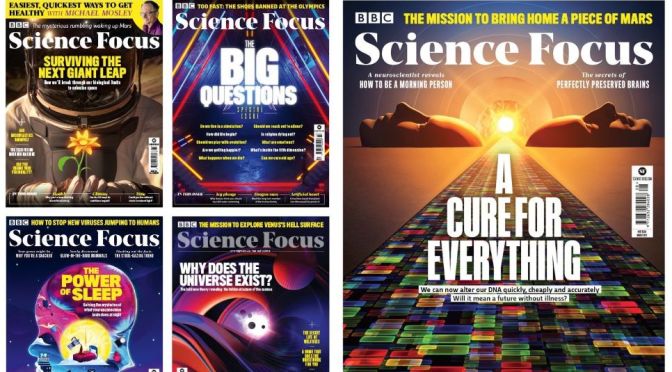
Excitingly, scientists say that alternative universes are allowed by physics. We find out about the leading multiverse theories, and establish whether they could harbour an alternate version of you.

Excitingly, scientists say that alternative universes are allowed by physics. We find out about the leading multiverse theories, and establish whether they could harbour an alternate version of you.
The TLS (Times Literary Supplement) for July 29, 2022 – @TheTLS, featuring @billmckibben on the future of farming; Bart van Es on Shakespeare’s life and sources; @profrhodrilewis on the sixteenth-century mind; @soniafaleiro on Geetanjali Shree; @mary_leng on straw men – and more.
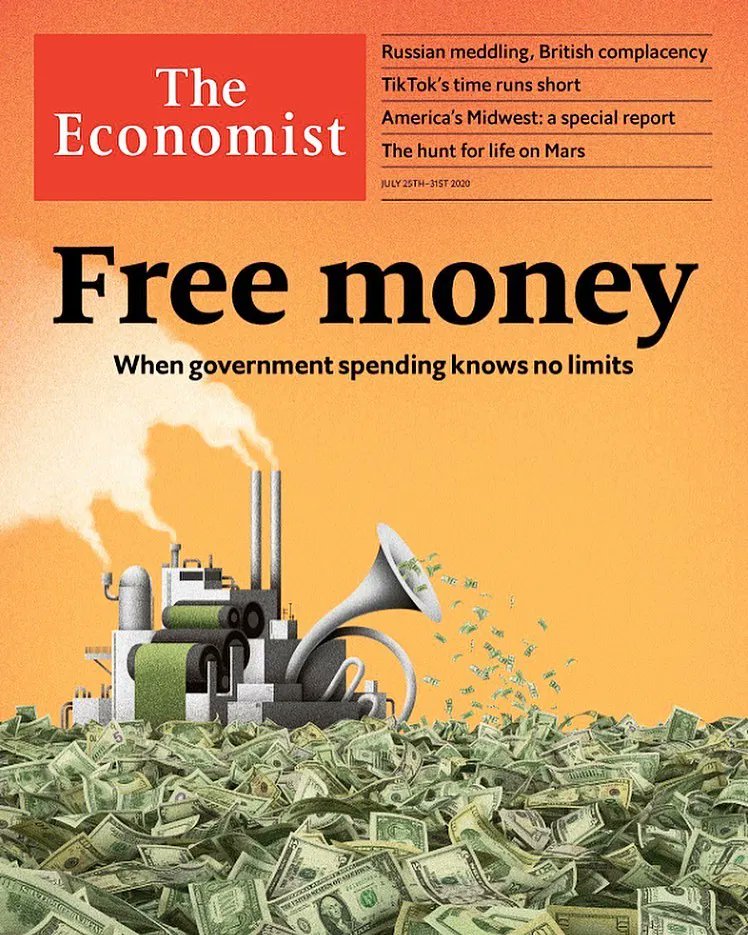
Budget constraints have gone missing. That presents both danger and opportunity
It is sometimes said that governments wasted the global financial crisis of 2007-09 by failing to rethink economic policy after the dust settled. Nobody will say the same about the covid-19 pandemic. It has led to a desperate scramble to enact policies that only a few months ago were either unimaginable or heretical. A profound shift is now taking place in economics as a result, of the sort that happens only once in a generation. Much as in the 1970s when clubby Keynesianism gave way to Milton Friedman’s austere monetarism, and in the 1990s when central banks were given their independence, so the pandemic marks the start of a new era. Its overriding preoccupation will be exploiting the opportunities and containing the enormous risks that stem from a supersized level of state intervention in the economy and financial markets.
August 2022

Fleeing his father’s empire, an Afghan prince travelled from Kabul to Sindh via Mecca, becoming a fugitive, courtier and pilgrim in the process.

What relevance do the Norman Conquest and the events of 1066 have to contemporary British politics? Everything and nothing.

Early modern methods of execution were carefully calculated to inflict shame upon the condemned.

The Battle of Stalingrad began in August 1942, subjecting its residents to months of living hell. But few doubted that the city was worth defending; its significance to the Soviet project made it too important to abandon.
Species tend to live in narrower slices of mountainside on tropical versus temperate mountains. Stronger competition in the tropics explains this pattern for birds. For example, the habitable range of this white-tipped sicklebill (Eutoxeres aquila) is limited as a result of competition with its close relative, the buff-tailed sicklebill (Eutoxeres condamini). See page 416.
Fast-spreading subvariants are coming and going. But an entirely new variant could still emerge
Satellites capture fall in light-blocking pollution
Finding sequences that code for short proteins could add thousands of genes
If you are the type of person who is loth to invest in firms that pollute the planet, mistreat workers and stuff their boards with cronies, you will no doubt be aware of one of the hottest trends in finance: environmental, social and governance (esg) investing. It is an attempt to make capitalism work better and deal with the grave threat posed by climate change. It has ballooned in recent years; the titans of investment management claim that more than a third of their assets, or $35trn in total, are monitored through one esg lens or another. It is on the lips of bosses and officials everywhere.
Blobs of human brain cells cultivated in the lab, known as brain organoids or “mini-brains”, are transforming our understanding of neural development and disease. Now, researchers are working to make them more like the real thing
The cover shows an artistic impression of marine life in Indonesia’s coral reefs. The question of whether there are limits to biodiversity in the seas is typically addressed by examining the fossil record. In this week’s issue, Pedro Cermeño and his colleagues present a model that combines the fossil record with plate tectonics and Earth’s environmental conditions to offer insight into regional diversification of marine invertebrates. The researchers used the model to examine how biodiversity recovered after mass extinctions during the Phanerozoic eon, covering
some 500 million years of Earth’s history. They found that throughout the Phanerozoic, less than 2% of area of the globe covered by water showed signs of diversity levels reaching saturation. The team also note that as Pangaea broke up into continents, the stability of Earth’s environmental conditions allowed the development of diversity hotspots that helped to drive an increase in biodiversity in the late Mesozoic and Cenozoic eras.

Bizarre sea creatures, a new view of the ocean, the race to the moon, and more
We humans may think of ourselves, or possibly beetles, as typical Earthlings, but to a first approximation, life on Earth exists in the sea. And what spectacular life! Our special package on the oceans is teeming with images of eerie, delicate, elaborate, glowing and occasionally kind of frightening creatures that have rarely been seen by terrestrial species. The in-depth report was guided by sustainability senior editor Mark Fischetti along three main themes: mystery, discovery and surprise.
The Times Literary Supplement (TheTLS) featuring @ambermedland on Jean Rhys; @joemoransblog on Britain’s housing inequality; @maryanneclark60 on the first true-crime play; @colincraiggrant on In the Black Fantastic; @bjkingape on the science of dogs – and more.