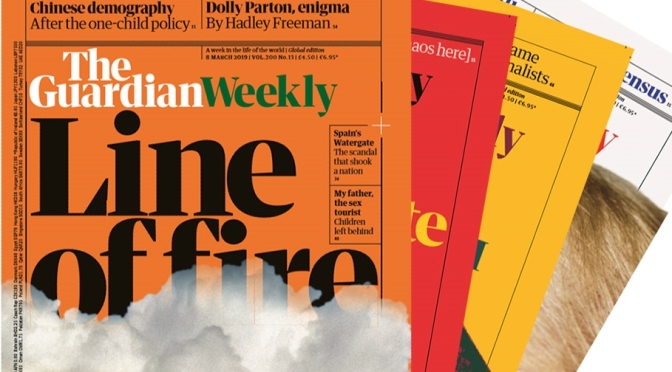
This was a year in which billions of people living in more than 80 countries had the right to cast their democratic votes in elections. But with democracy around the world under ever-greater threats – from attacks on freedom of speech, equality of participation and plurality of media to name a few – how did the election process bear up? Jonathan Yerushalmy and Oliver Holmes find reasons for hope amid the pressure.
1
The big story | France and the shadow of the Pelicot trial The mass rape case, in which verdicts and sentencing are expected this week, has horrified the world. But this is not French society’s first attempt to confront a sexually abusive culture, writes Kim Willsher, who has witnessed the harrowing proceedings in Avignon
2
Spotlight | How Ukrainian power plant workers keep the country running As winter closes in, Shaun Walker visits a Soviet-era coal-fired thermal installation to explore how it has held up to Russian attacks
3
Opinion | After the fall of Assad, the least Syrians deserve is our optimism With the tyrannical dynasty gone, it’s important not to impose a negative script on what comes next. Syrians deserve support and hope, argues Nesrine Malik
4
The shamelessness of Fifa’s process in awarding the 2034 tournament to Riyadh was a display of contempt for governance, democracy and good sense, writes Barney Ronay
What else we’ve been reading
With France on its fourth prime minister in a year and Germany facing a snap election in February, Paris and Berlin correspondents Jon Henley and Deborah Cole explain why the driving forces of the European Union are in the doldrums. An excellent primer to understand what will be a shaky start to next year for European politics. Isobel Montgomery, deputy editor
But between candidates who are defenders of the system and those who are anti-system. Democrats lost because they allowed Trump to be the only voice of antiestablishment rage.
Or reflexively denouncing every Trump policy. While we mustn’t underestimate the danger he poses to our democracy, when he says he wants to end war, the left should call his bluff.
“You and [Franklin] Roosevelt begin from two different starting points. But is there not a relation in ideas, a kinship of ideas, be-tween Moscow and Washington? In Washington I was struck by the same thing I see going on here; they are building offices, they are creating a number of state regula-tion bodies, they are organising a long-needed Civil Service.
Neoliberalism often presents itself as a victory for individual autonomy. In an interview, Grace Blakeley explains the hollowness of this claim — and why the Left needs to offer its own, better vision of human freedom.
Despite antitrust regulators’ efforts to rein it in, UnitedHealth Group has been growing to control ever more of the health care sector. The corporation’s expanding power has meant worse care, higher prices, and a mounting human toll.
The rocket company’s executives haven’t sought a higher security clearance for its CEO to avoid questions about his drug use and contact with foreign officials. The answers might no longer matter.
The scramble is on to define the future of Syria, quickly, to avert a war even more divisive than the conflict that has riven the nation for thirteen years. By Robin Wright
The Secret History of Risotto
The dish is governed by a set of laws that are rooted in tradition, rich in common sense, and aching to be broken or bent. By Anthony Lane
Brady Corbet’s Outsider American Epic
“The Brutalist,” the director’s nearly four-hour study of immigration, identity, and marriage, flowed from his own struggle to create art without compromise. “You really have to dare to suck to transcend,” he said. By Alexandra Schwartz
Monocle Radio Podcast (December 16, 2024): German chancellor Olaf Scholz is expected to lose a no-confidence motion set for today. What will that mean for Germany and the world as yet another nation faces a governmental crisis?
Plus: the latest from Israel, a look at the political situation in South Korea, the protests in Serbia and we meet Austrian singer Sofie Royer.
The Islamist rebels who ousted Syria’s dictator ran a pragmatic and disciplined administration in the territory they controlled. They also jailed their critics.
Aaron Siri, who specializes in vaccine lawsuits, has been at Robert F. Kennedy Jr.’s side reviewing candidates for top jobs at the Department of Health and Human Services.
Security Strategy of Recruiting Cheap Militiamen Backfires in Africa
By arming civilians who are poorly trained and have little to no respect for human rights, the military in Burkina Faso has brought the West African nation to the brink of civil war.
When we met them a dozen years ago, they were teenagers in trouble, playing for a basketball team that always lost. Did they find a way to win at life?
Gas Could Mean Billions for Indigenous People in Canada. Some Fear a Cost.
New export terminals along the rugged Pacific coastline have reignited a generations-old debate over identity and environmental stewardship.
News, Views and Reviews For The Intellectually Curious