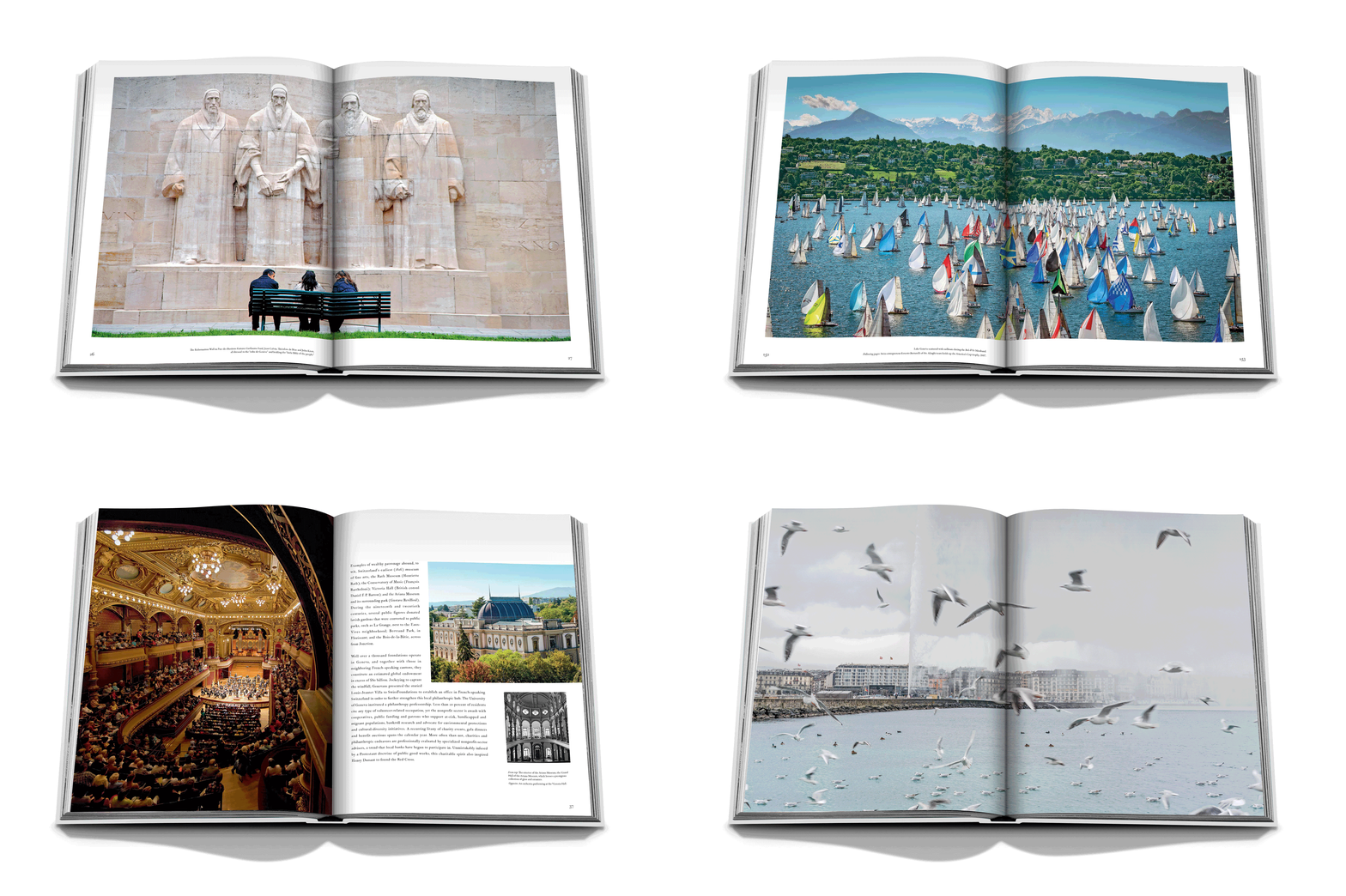
Striking, innovative, and dramatically sited, the twenty-nine projects in Tom Kundig: Working Title reveal the hand of a master of contextually astute, richly detailed architecture. As Kundig’s work has increased in scale and variety, in diverse locations from his native Seattle to Hawaii and Rio de Janeiro, it continues to exhibit his signature sensitivity to material and locale and to feature his fascinating kinetic “gizmos.”
Projects range from inviting homes that integrate nature to large-scale commercial and public buildings: wineries, high-performance mixed-use skyscrapers, a Visitor Center for Tillamook Creamery, the Burke Museum of Natural History and Culture, and the Wagner Education Center of the Center for Wooden Boats, among others. Tom Kundig: Working Title includes lush photography, sketches, and a dialogue between Tom Kundig and Michael Chaiken, curator of the Kundig-designed Bob Dylan Archive at the Helmerich Center for American Research.

The International Photography Hall of Fame and Museum mourns the passing of its first Lifetime Achievement Award Winner and 2017 inductee Kenny Rogers. Rogers was a dedicated and talented photographer for nearly four decades. His best-known images are portraits of well-known singers, actors, and dignitaries from around the globe.
At First Light chronicles twenty-six extraordinary artists of the last two hundred years who have lived and worked in Maine. Published to coincide with the state’s bicentennial in 2020, the volume considers the significant contributions artists have made to a deeper and more profound understanding of Maine’s history, its land and its peoples. Maine’s unique and breathtaking landscape–from its rugged coastline, quaint harbors, majestic mountains, and verdant forests–continues to have a powerful effect on the artists who are drawn to its shores.
Wildlife photographers and filmmakers, have a wonderful opportunity and great responsibility to share stories about wildlife, stories that both celebrate and also raise concern around conservation issues. My tireless efforts to document and protect the few remaining areas of wilderness are fueled by true love for nature and a desire to protect what’s left. As photographers, we have the chance to put into clear focus the beauty and richness of nature which we all have a communal responsibility to protect. But there is always more we can do.

As you will see from my portfolio, travel plays a huge part in my image-making. I visited nine countries in 2017 alone, and close to twenty since my journey into architectural photography began. I have always been fascinated by different cultures, foods, textures and colours. It is this love for travel, combined with my deep passion for photography, that keeps me motivated and dedicated to putting in the long lonely hours of research and logistical planning to then get out with the camera time and time again.

Adam Stevenson won the best Australian photograph with an incredible shot of a Kookaburra watching over the devastation of the bushfires that tore through the country over the past few months. The shot is titled “That’s Nothing to Laugh About” and was snapped with a Iphone X near Stevenson’s home at Wallabi Point in New South Wales.
comes over my life when I think […] that I’ve earned my reputation out of other people’s downfall. I’ve photographed dead people and I’ve photographed dying people, and people looking at me who are about to be murdered in alleyways. So I carry the guilt of survival, the shame of not being able to help dying people.’
On top of a hill a few miles from Don McCullin’s house in Somerset is a dew pond, a perfectly circular artificial pond for watering livestock. Nobody knows how long it has been there; some dew ponds date back to prehistoric times, and it’s tempting to think that this one served the Bronze Age hill-fort that overlooks the site. McCullin is obsessed with the pond. For more than 30 years, whenever he has had the time, he has walked up the hill and stood there with his camera waiting for the right moment to take a photograph. Often, the moment never comes: he can spend hours there, just looking. ‘It’s as if it has a hold over me,’ he tells me when I visit him at home in early January. ‘I can’t leave it alone, I photograph it all the time. And yet I think I’ve done my best picture the first time I ever did it. I can’t tell you how.’
Stephen Shore’s images from his travels across America in 1972-73 are considered the benchmark for documenting the extraordinary in the ordinary and continue to influence photographers today.