
Jan.08 — Bloomberg’s Haslinda Amin kicks off Season 8 on board the Singapore Flyer with the man who shot the “Afghan Girl”. Steve McCurry has spent a lifetime focusing on conflict and culture creating some of the world’s most iconic photos.
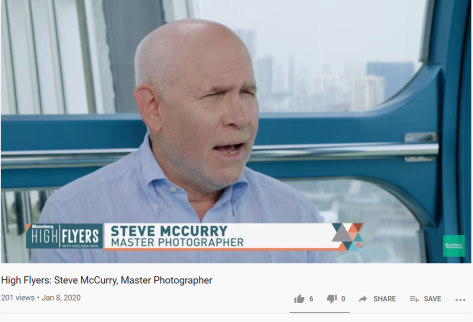

Jan.08 — Bloomberg’s Haslinda Amin kicks off Season 8 on board the Singapore Flyer with the man who shot the “Afghan Girl”. Steve McCurry has spent a lifetime focusing on conflict and culture creating some of the world’s most iconic photos.
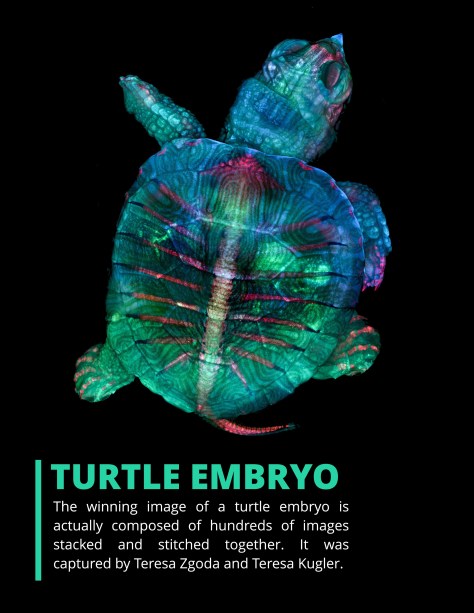
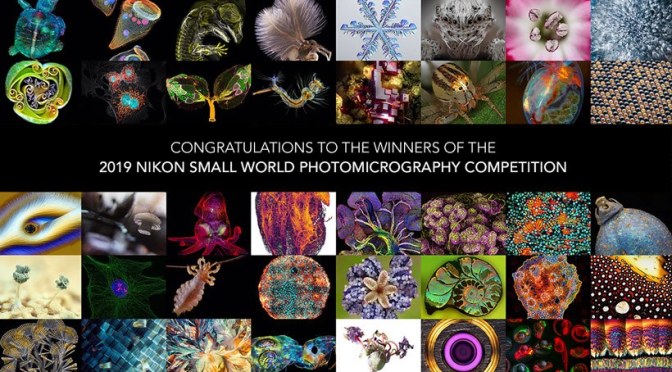
1st Place Fluorescent turtle embryo
For microscopy technician Teresa Zgoda and recent university graduate Teresa Kugler, microscopy is a discipline that allows them to blend their dual passions of art and science. The 2019 winning image is a spectacular example of that, featuring a colorful turtle embryo captured using a combination of fluorescence and stereomicroscopy.
The pair captured this image while assisting in the Marine Biological Laboratory’s embryology course. It was here they learned the precise technique required to properly prepare various types of embryos to be observed and photographed. Creating this image was a unique challenge, largely due to the size of the sample. Over an inch long, and thick, it took time and precision to ensure the entire subject was photographed completely. What’s more, the magnification used meant only a small part of the turtle could be imaged on the focal plane. The final image is a compilation of hundreds of images that had to be stacked and stitched together.
“Microscopy lets us get a better look at the small things in life,” said Kugler, “It allows me to do science with a purpose.”
“We are inspired by the beautiful images we see through the microscope,” added Zgoda, “It’s amazing to be able to share that science with other people.”



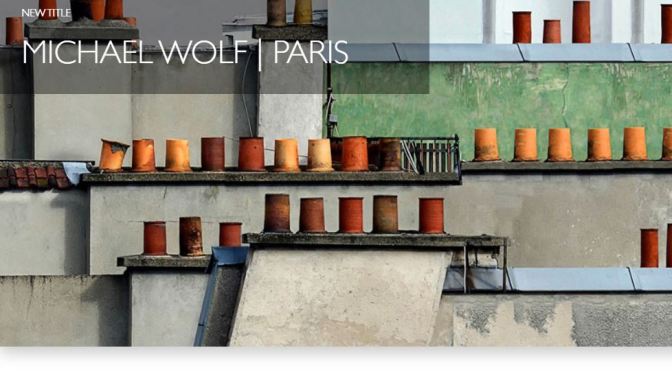
 Michael Wolf achieved fame when he won the 2005 World Press Photo with his China, Factory of the World project, and the 2010 World Press Photo with his Tokyo Compression. The present book offers his personal take on the French capital. Singling out typical architectural features of the Parisian landscape he renders the seemingly banal immortal, as only he knows how.
Roofs, chimneys, and lights provide the pictures with rhythm, with their colours, shapes, and above all their volumes. Wolf invites the reader to enter his highly distinctive visual world and let his gaze follow the snaking lines of walls and gutters, dwelling on unexpected details lovingly picked out. The photographer’s underlying desire is to encourage us to consider the environmental and architectural context that provides a framework for all these rigorously rectangular features.
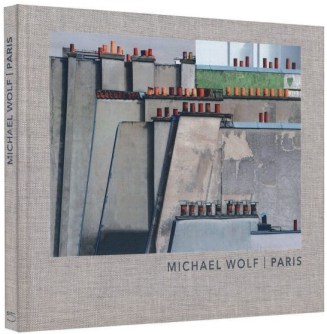 This dreamlike journey into a Paris viewed from the rooftops is underlined in the second part of the book. The shadows of trees decorate the façades of various buildings, creating a visual poetry and prompting an intimate dialogue where, in the absence of all human presence, nature and architecture blend into one another.
Michael Wolf (1954-2019) lived in Europe, America, and Asia, spending his last years in Hong Kong. A German photographer specialized in urban shots, he graduated in photography from the Folkwang University of the Arts in Essen, where he studied under Otto Steinert. Among his most noteworthy projects are the “beehive” skyscrapers in Hong Kong. The focus of his research is city life, especially in overpopulated contemporary metropolises, and their inhabitants’ loss of individuality. Wolf’s work has been displayed in a variety of locations, including the Venice Biennale of Architecture, the Aperture Foundation Gallery in New York, the Hong Kong Shenzhen Biennale, and the Museum of Contemporary Photography in Chicago. His works are also present in many permanent collections, including those of the Metropolitan Museum of Art in New York, the Museum of Contemporary Photography in Chicago, and the German Architecture Museum in Frankfurt.
Johan-Frederik Hel Guedj, a French writer, has published two novels (Le traitement des cendres, L’amour grave), a collection of short stories (De mon vivant), an account of polar exploration (Chercheurs d’éternité), and an essay on Orson Welles (La règle du faux). He lives in Brussels and writes on contemporary art in the daily newspaper L’Echo/De Tijd.
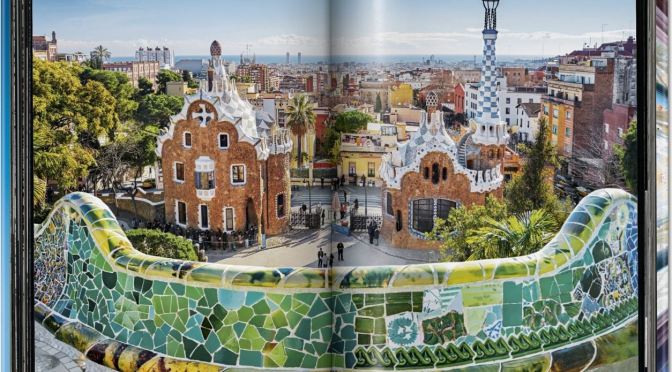
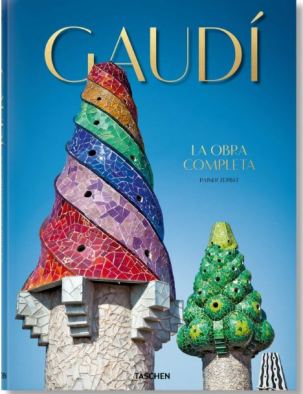 Through brand-new photography, plans and drawings by Gaudí himself, historical photos, as well as an appendix detailing all his works—from buildings to furniture, decor to unfinished projects—this book presents Gaudí’s universe like never before. Like a personal tour through Barcelona, we discover how the “Dante of architecture” was a builder in the truest sense of the word, crafting extraordinary constructions out of minute and mesmerizing details, and transforming fantastical visions into realities on the city streets.
The life of Antoni Gaudí (1852–1926) was full of complexity and contradictions. As a young man he joined the Catalonian nationalist movement and was critical of the church; toward the end of his life he devoted himself completely to the construction of one single spectacular church, La Sagrada Familia. In his youth, he courted a glamorous social life and the demeanor of a dandy. By the time of his death in a tram accident on the streets of Barcelona his clothes were so shabby passersby assumed he was a beggar.
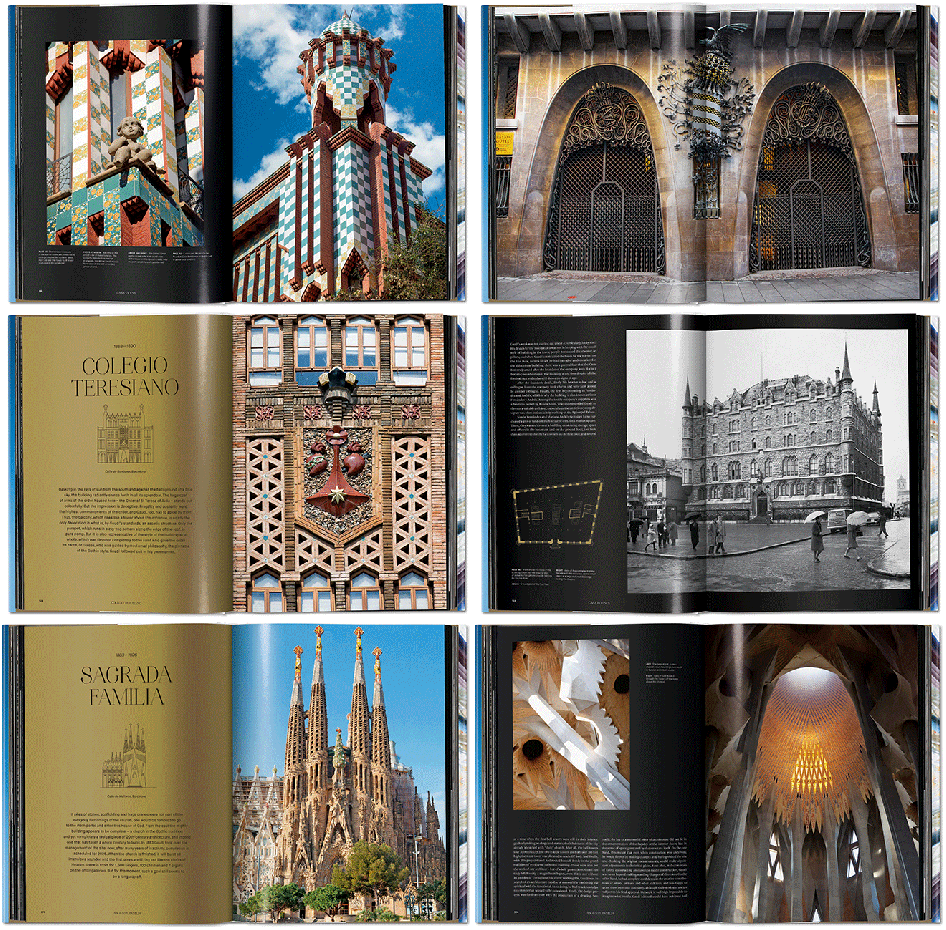
 Gaudí’s incomparable architecture channels much of this multifaceted intricacy. From the shimmering textures and skeletal forms of Casa Batlló to the Hispano-Arabic matrix of Casa Vicens, his work merged the influences of Orientalism, natural forms, new materials, and religious faith into a unique Modernista aesthetic. Today, his unique aesthetic enjoys global popularity and acclaim. His magnum opus, the Sagrada Familia, is the most-visited monument in Spain, and seven of his works are UNESCO World Heritage Sites.
Rainer Zerbst studied modern languages at the University of Tübingen and in Wales from 1969 to 1975. From 1976 to 1982 he worked as a research assistant in the Department of English at the University of Tübingen. Since completing his doctorate in 1982, Zerbst has been active as a critic in the fields of art, literature, and theater.
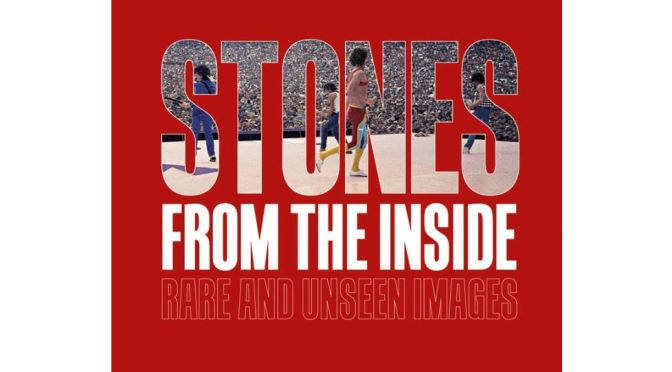
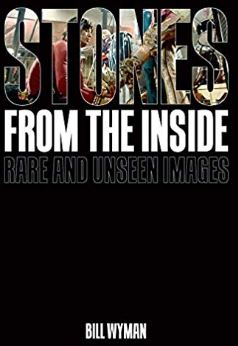 Along with the images of the band at work and play, Wyman includes remarkable images of those along for the ride, from John Lennon, Eric Clapton, David Bowie and Iggy Pop to John Belushi and Dan Aykroyd. To accompany his photographs, Wyman offers up wonderful insights, anecdotes and behind-the-photo stories, giving all us a front-row seat and backstage pass to what it was like to be there, as music history was made as a member of The Rolling Stones.
Known, unknown, rare and unseen images from former Rolling Stones bassist Bill Wyman, capturing life on-stage, backstage and on the road
In addition to this trade edition, there will also be a limited edition of 300 copies, which comes in a slipcase, with an open-edition A4 print
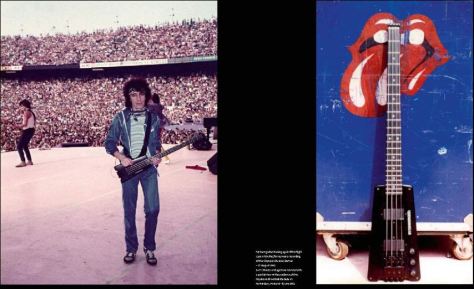
As soon as Bill Wyman was given a camera as a young boy, he quickly developed a passion for photography. After joining what would become the world’s greatest rock ‘n’ roll band, Wyman continued his hobby. When he didn’t have his bass, he had his camera. The result is an arresting, insightful and often poignant collection of photographs, showing his exclusive inside view of the band. From travelling to relaxing, backstage and on, Stones From the Inside is a unique view captured by a man who was there, every step of the way.
 The Historic Photographer of the Year awards showcase the world’s very best historic places and cultural sites from across the globe, capturing everything from the most famous national treasures to the obscure and forgotten hidden gems.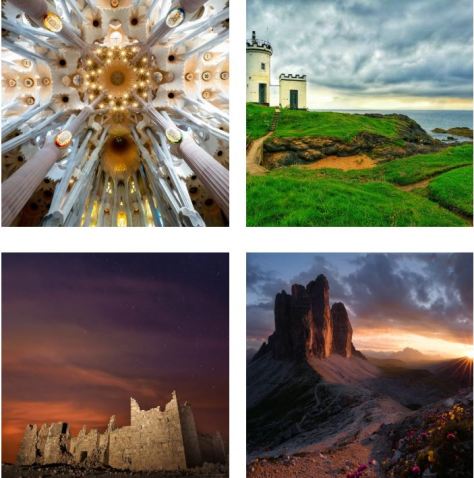
The 2019 Awards attracted a swathe of astonishing entries from amateurs and professionals who have climbed, hiked and trekked their way to snap stunning historic places from every corner of the globe.
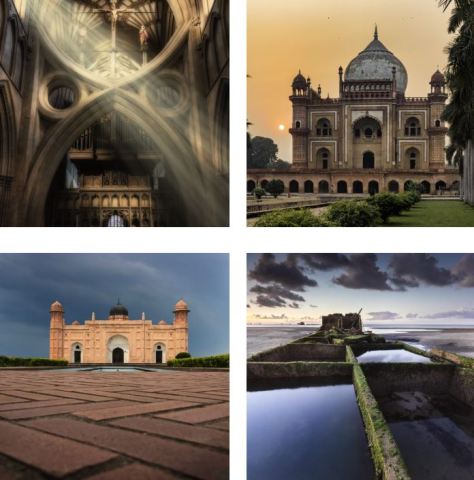
The Overall Winner was an outstanding image of the ruins of the Arromanches Mulberry Harbour in Normandy and was shot by Stéphane Hurel.
The Historic England category was won by JP Appleton with his haunting shot of the Victorian era Roker Pier, while HISTORY’s Short Filmmaker of the Year was awarded to Dibs McCallum for a fascinating short documentary exploring the remains of the RAF Barnham nuclear weapons storage facility.
To read more: https://www.historicphotographeroftheyear.com/2019-winners/
From an Interesting Engineering online article:
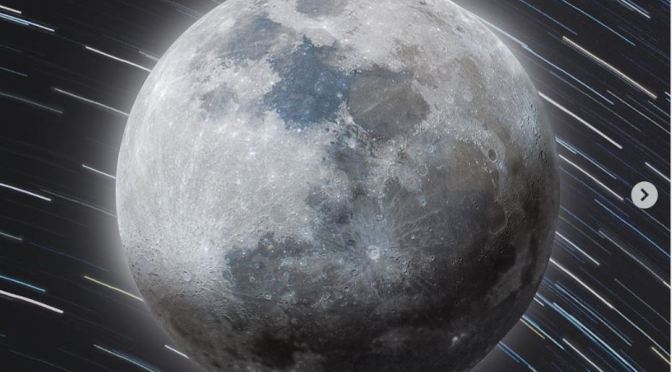
Morgunov said, “This picture is two different types of photos, a long exposure (to capture earthshine) and a fast shutter to capture the illuminated side.”
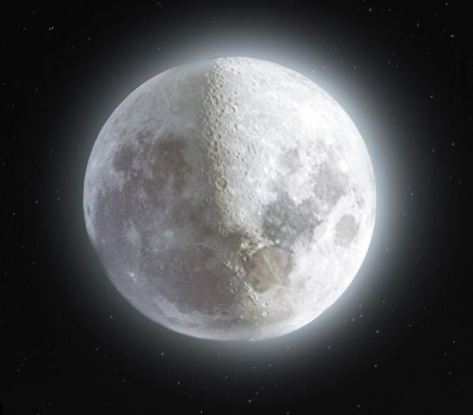
He continued to explain the additional images he used, which created the final piece: “The illuminated side is 500 photos of 1/60 at 100iso, was stacked and sharpened in autostakertt3 and registax6. The earthshine was around 15 photos at 3-second expo w/ 1600iso stacked and sharpened in autostakertt3 and registax6. I blended the two photos together in photoshop (a lot more work then it seems) added a star trail background gave it glow.”
https://www.instagram.com/ericmorgunov/
Eric Morgunov’s image of the Moon stands out for one main reason: it’s 500 pictures of the Moon brought together to create one incredible 52 megapixel photograph.
From a Colossal online article:
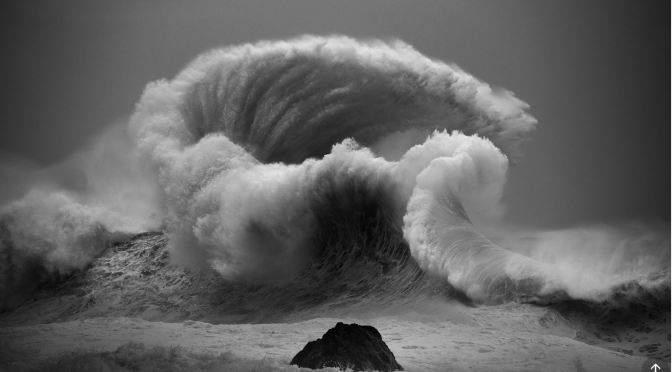
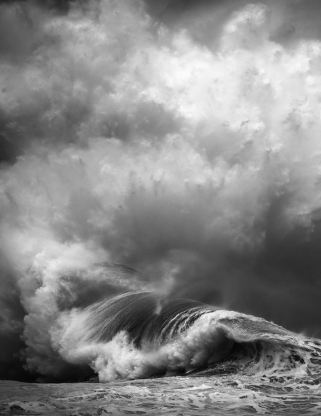 In a statement on the artist’s website, the Maelstrom series is described as “a cursory glimpse of the exchange, cycle and balance of power fundamental to the functioning of our planet and its oceans… Maelstrom encourages the viewer to reflect upon our own naivety and place as a species within the greater natural balance of power.”
Luke Shadbolt captures the roiling majesty of ocean waves in his large-scale aquatic photographs. Printed at 150 x 100 cm (nearly 6 feet by 3.3 feet), the color and black-and-white images show the dramatic shapes and dynamic textures of open water when agitated by major weather events.
https://lukeshadbolt.com/portfolio
The Acquiesce the Front series similarly seeks to draw connections between the human experience and our natural environment. “The physical manifestations portrayed are a deft reflection of those storms that are implicit to the human condition,” and our individual frailty in the face of big events. Yet Shadbolt finds hope in the potential “to learn and grow from these events. While we may be powerless to stop the storm from approaching, we can work to redirect the flood.”
To read more: https://www.thisiscolossal.com/2019/10/waves-by-luke-shadbolt/?mc_cid=e31c291cfd&mc_eid=28f9488a9b



 Boomers Daily