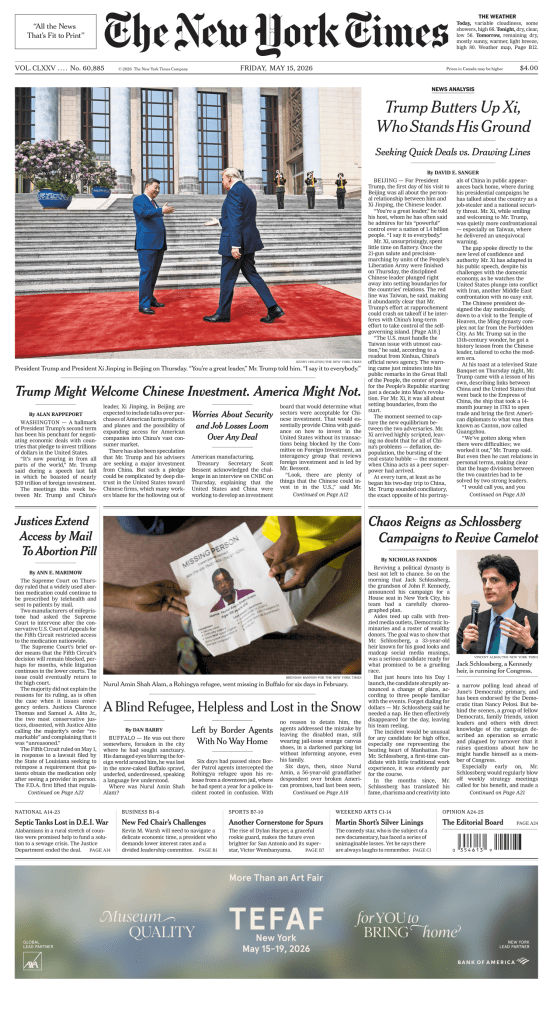
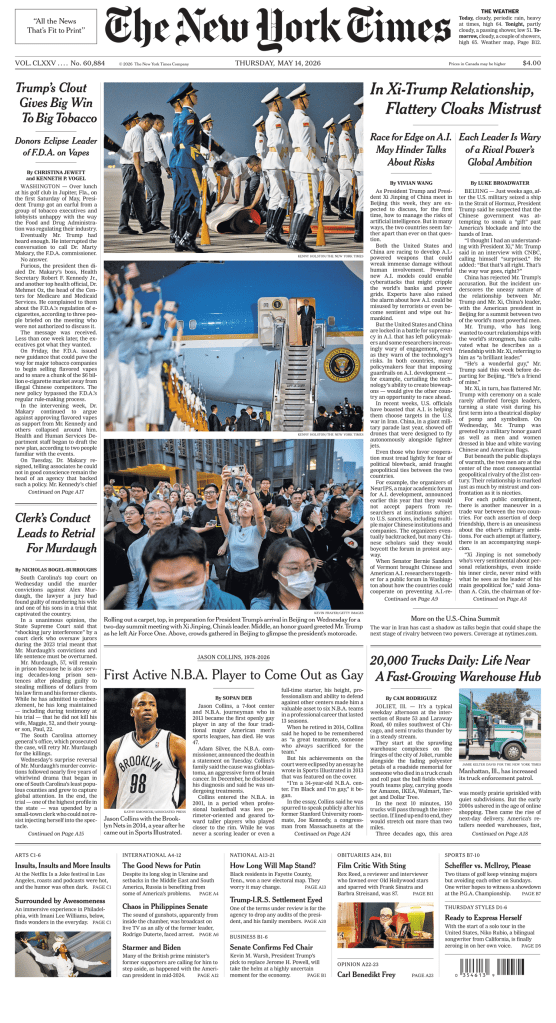
As President Trump left Beijing, there was no indication that he and Xi Jinping had resolved any big points of contention on trade, Iran or other issues.
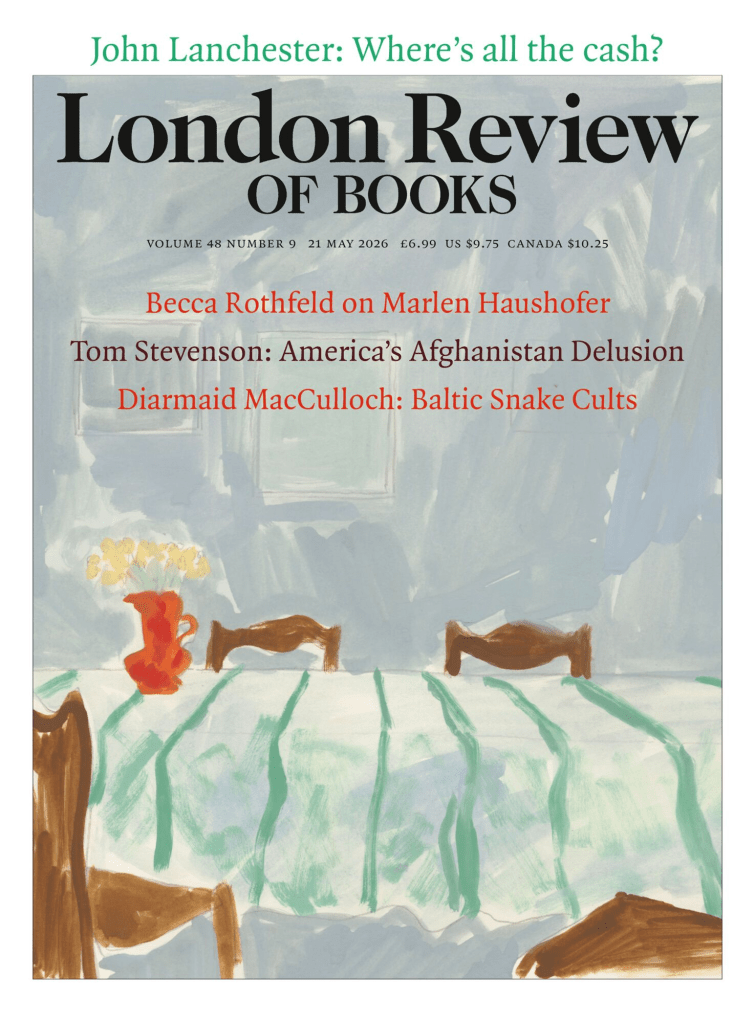
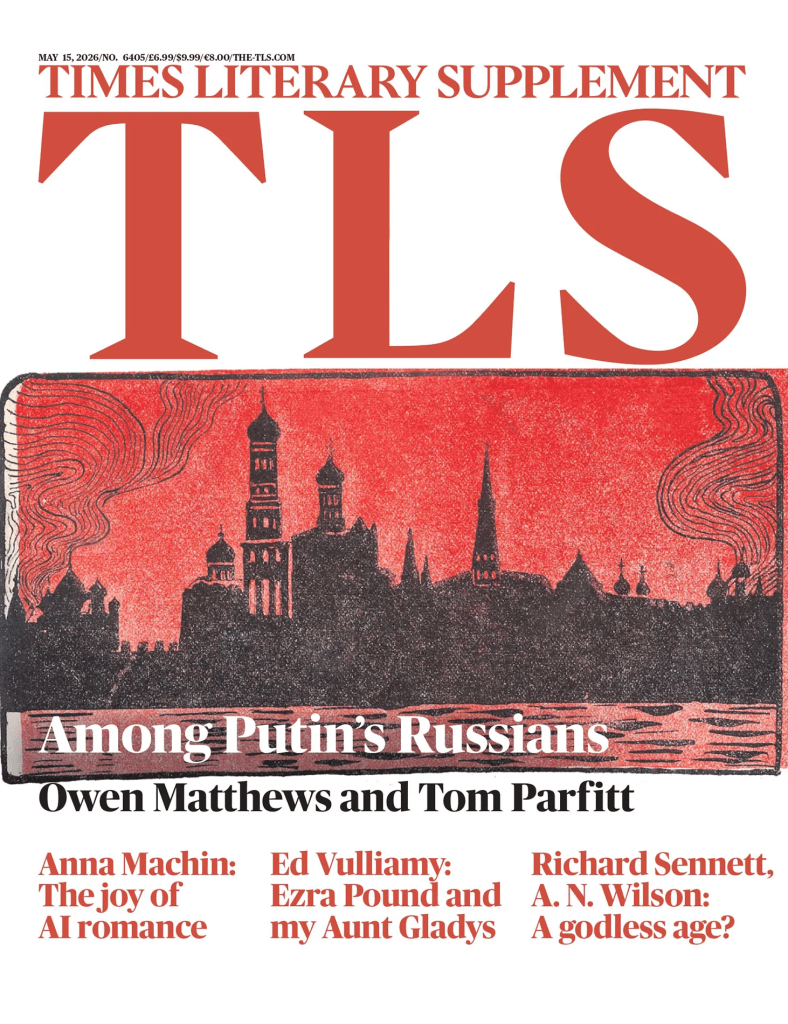
“America’s Afghanistan Delusion” by Tom Stevenson: Stevenson examines the legacy of the War on Terror, arguing that the 2021 withdrawal from Kabul was viewed by the Western establishment as a “mistake” or “cautionary tale” rather than the “crime” he suggests it was. He traces the expansion of American power through “black sites” and military advisers across the globe.
“Short Cuts: Labour’s Failure” by James Butler: Butler analyzes the results of the English local elections (held on May 7). He criticizes Keir Starmer’s leadership style as “all injunction and no argument” and explores why national revulsion toward the Labour Party overshadowed local government issues.
“Where’s All the Cash?” by John Lanchester: A characteristically lucid investigation into modern economics, focusing on the circulation of physical currency and the shifting nature of wealth in a digital-first economy.
Literature & History
“On Marlen Haushofer” by Becca Rothfeld: A deep dive into the work of the Austrian writer, specifically her 1963 masterpiece The Wall. Rothfeld explores Haushofer’s recurring themes of entrapment and isolation, noting the paradoxical “joy” found in her most barricaded characters.
“Baltic Snake Cults” by Diarmaid MacCulloch: The eminent historian reviews the long survival of paganism and “serpent worship” in the Baltic regions, challenging the standard narrative of a monolithic Christian Europe during the Middle Ages.
“Should We Punish?” by Thomas Nagel: The philosopher engages with the ethics of the penal system, weighing the traditional justifications for punishment against contemporary moral and legal theories.
Other Features
“The Clearance of Aoineadh Mòr, 1824” by Tarn MacArthur: A historical account of the Highland Clearances, specifically focusing on the displacement of communities in Scotland.
At the Movies: Michael Wood provides his regular column of film criticism, likely focusing on current European or art-house releases.
Poetry & Correspondence: The issue also contains poems and a robust letters section, which in this period has been heavily occupied by debates over the Arctic (following Laleh Khalili’s piece in the previous issue) and the fallout of the UK local elections.
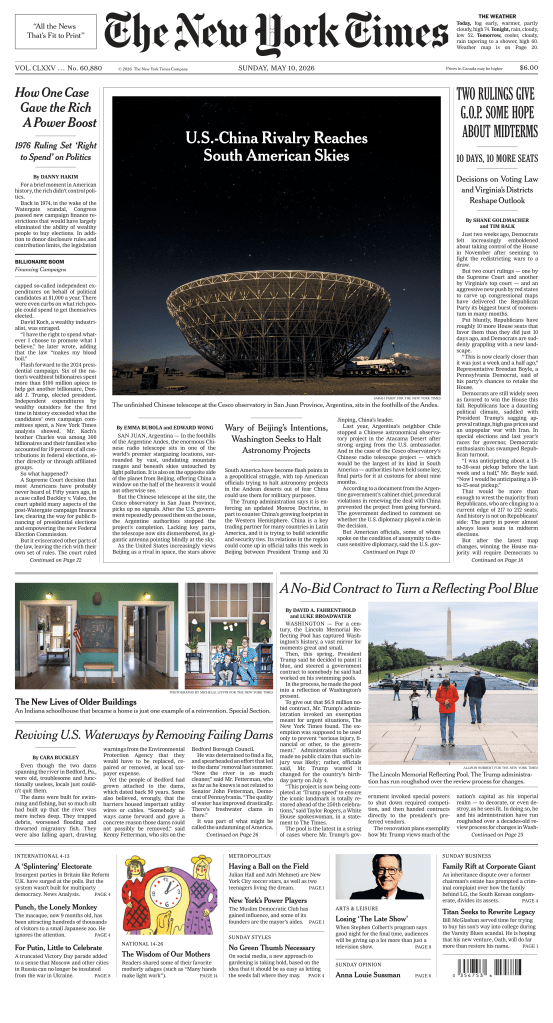
Xi Jinping told President Trump that the issue of Taiwan, if handled poorly, could lead to a clash with the U.S. They are also expected to discuss trade and the Iran war.
Both leaders attended a state banquet in Beijing, where they emphasized cooperation and Mr. Trump invited Mr. Xi to visit the White House.
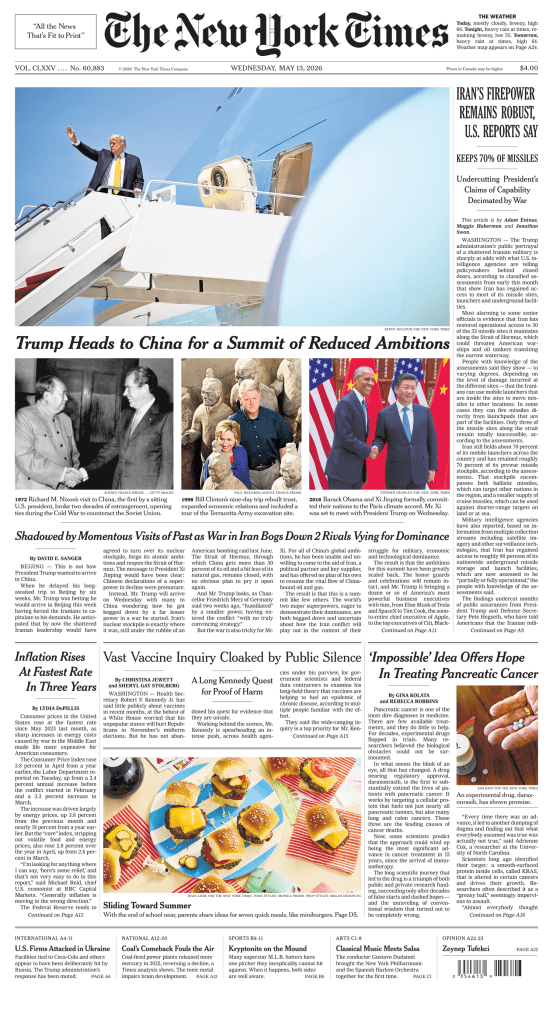
President Trump landed in Beijing for a two-day summit with China’s leader, Xi Jinping. The war in Iran has complicated the issues they hope to address.
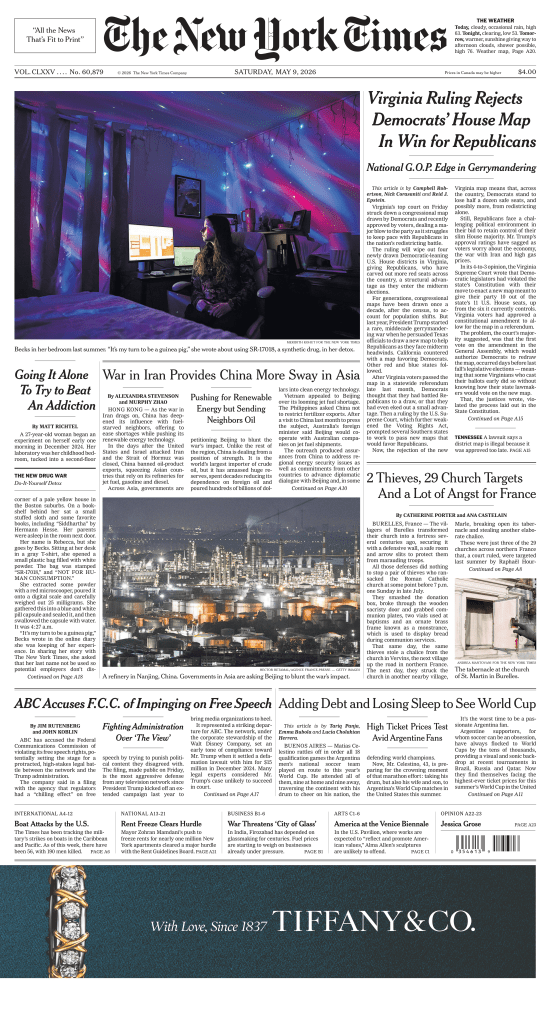
Secret U.S. intelligence assessments say Iran has access to 30 of its 33 missile sites and could threaten American warships and tankers in the Strait of Hormuz.
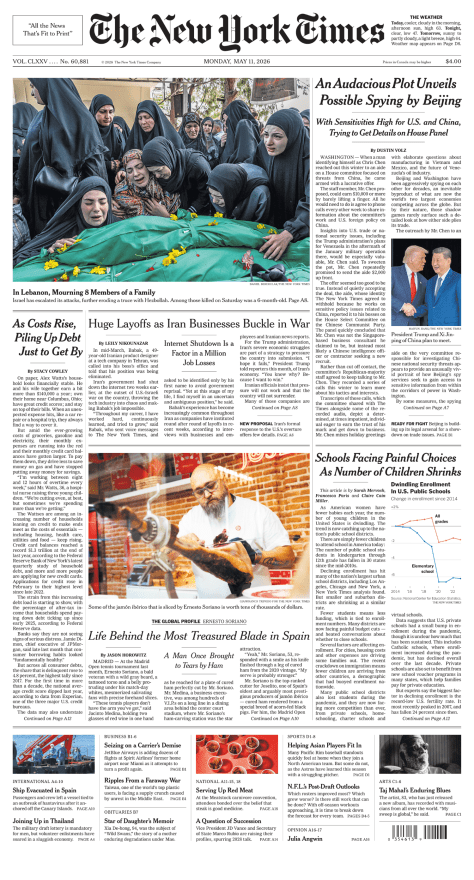
Consumer prices rose at the fastest rate since May 2023 last month, as sharp increases in energy costs caused by the Iran war made life more expensive for Americans.
Beijing has called Taiwan the “core of China’s core interests.” Xi Jinping is likely to focus on getting President Trump to slow approval of weapons for the island.
President Trump called an Iranian proposal to end the war and reopen the Strait of Hormuz “garbage.” An Iranian official raised the prospect of escalating nuclear enrichment.
Tehran demanded U.S. war reparations, recognition of its sovereignty over the Strait of Hormuz and an end to American sanctions, Iranian state media reported.
Asian nations worry that the president might trade security commitments for better economic terms with China during his planned meeting with Xi Jinping this week.
Iran was already struggling economically before 2026 brought widespread instability. A government-imposed internet shutdown has crippled an entire sector.
Dire conditions prompted an exodus from the country. After its leader’s ousting, the question is whether things have changed enough to make a return appealing.
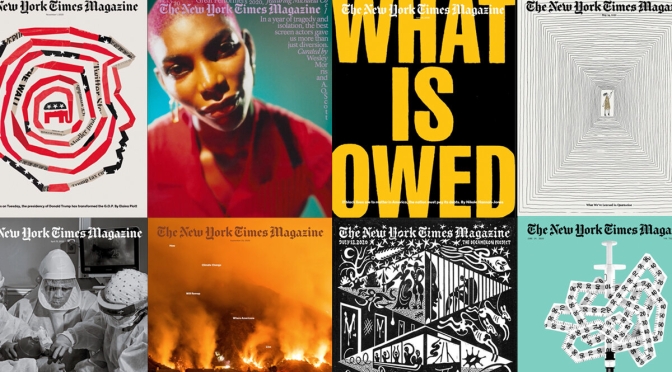
THE NEW YORK TIMES MAGAZINE: The latest issue features Amanda Hess on experiments in extending the life of dogs; Susan Dominus on the quest to master cellular rejuvenation; Devin Gordon on how athletes are extending their careers; Mark O’Connell on the rich and powerful craving eternal life; and more.
Trump has taken an active role in the arts in his second term, which may be evident in the work on display at the Venice Biennale — depending on how you look at it. By M.H. Miller
Xi Jinping spent 13 years building a military to rival that of the United States. But the stronger the Chinese forces grew, the less he trusted the generals he had handpicked to run them.
The landlocked body of water has taken on new significance, with Russia shipping military and commercial goods to bolster Tehran’s ability to withstand the U.S. assault.



 Boomers Daily