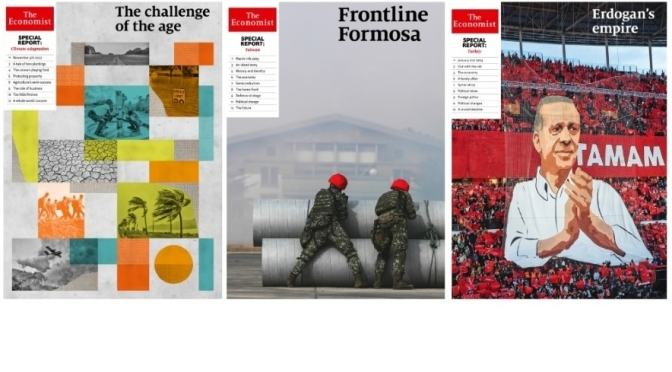
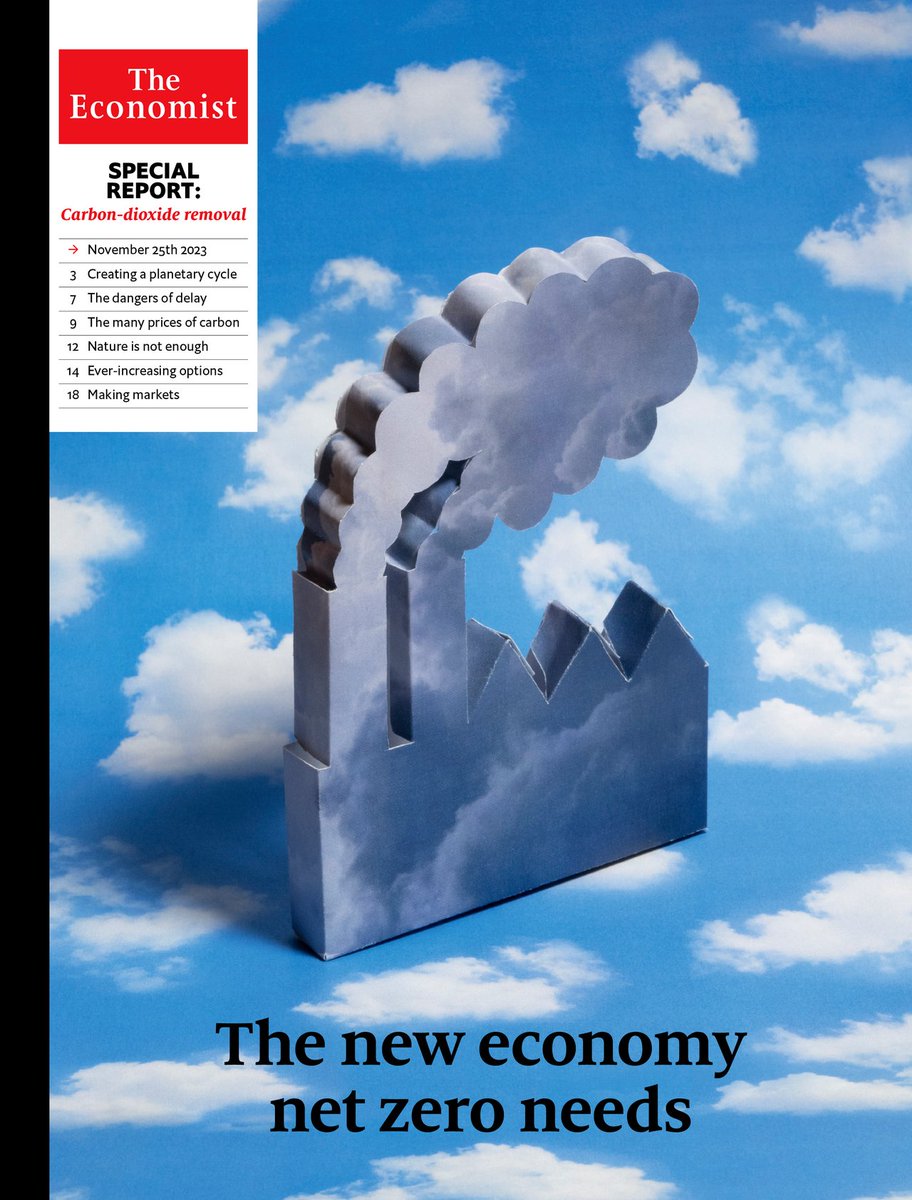
The Economist SPECIAL REPORTS (January 12, 2024): The latest issue is focused on ‘Philanthropy’ – Move fast and mend things. Charitable organizations are hoping to get money to the needy faster….
They are hoping to get money to the needy faster, says Avantika Chilkoti
A nudge is not always enough to force change within an industry. Sometimes a series of forceful shoves is required. In the rarified world of Western philanthropy, the shoves began in 2020. The covid-19 pandemic, protests for racial justice across America that summer and the outflow of refugees from Ukraine starting in early 2022 created a new urgency around charitable giving and revealed failings in how it worked. Donors began to consider how they could disburse money faster and with more impact.
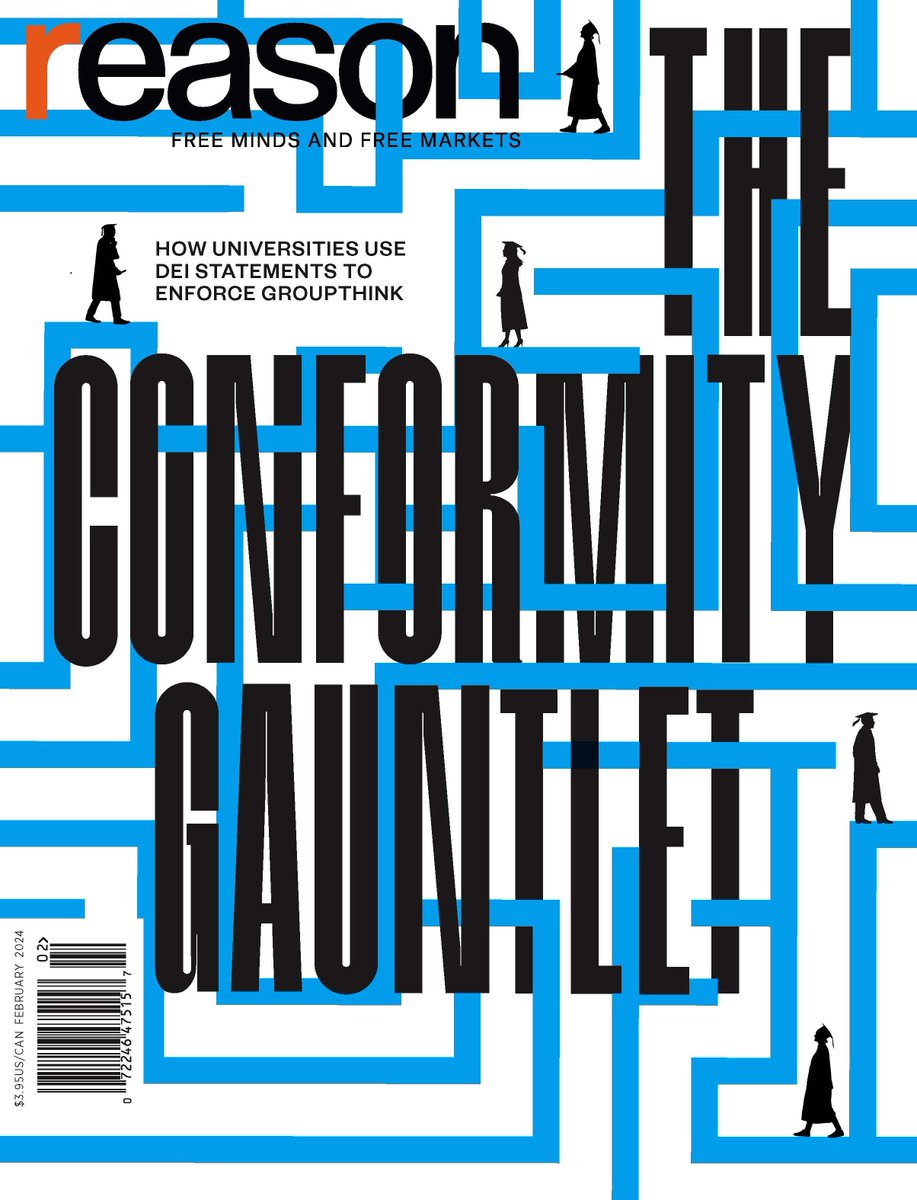
REASON MAGAZINE (December 21, 2023) – The latest issue features ‘The Conformity Gauntlet’ – How Universities use DEI Statements to Enforce Groupthink; The Post-Neoliberalism Moment; We Absolutely Do Not Need an FDA for AI, and more…
Universities Use DEI Statements To Enforce Groupthink
DEI statements are political litmus tests, write Greg Lukianoff and Rikki Schlott.
The Post-Neoliberalism Moment
Anyone advocating neoliberal policies is now persona non grata in Washington, D.C.
If our best and brightest technologists and theorists are struggling to see the way forward for AI, what makes anyone think politicians are going to get there first?
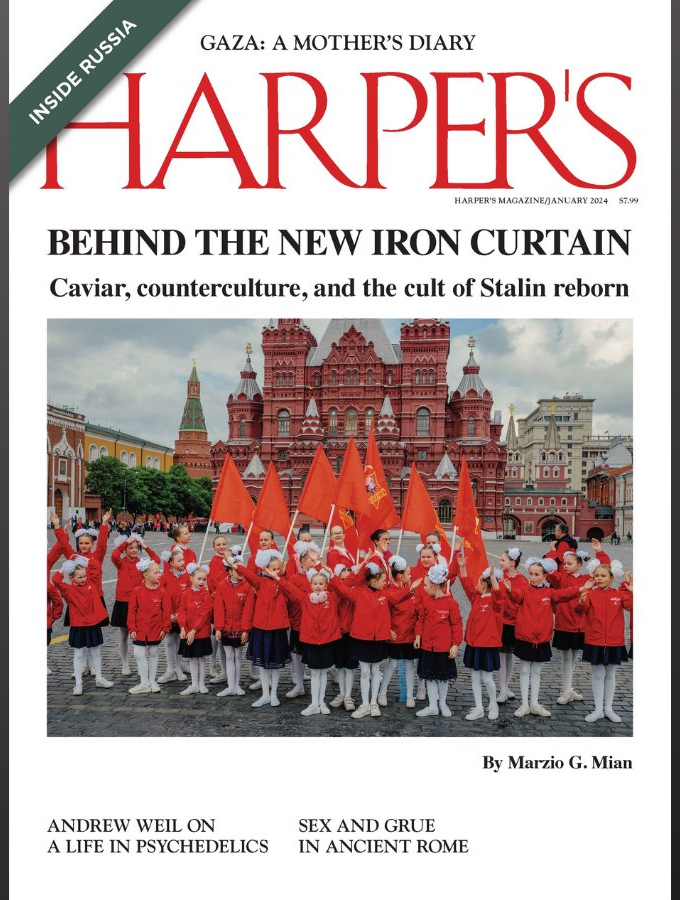
HARPER’S MAGAZINE – JANUARY 2024:This issue features ‘Behind the Iron Curtain’ – Caviar, counterculture, and the cult of Stalin reborn; A Life in Psychedelics; Sex and Grue in Ancient Rome, and more…
Russia has become, to observers in the West, a distant, mysterious, and hostile land once again. It seems implausible, in the age of social media, that so little should be known about the country that has shattered the international order, but the shadows surrounding Russia have only grown since the days of the Soviet Union. Of course, it is one thing to observe the country from the outside; it is another to try to understand how Russians experience the war and react to sanctions from within, and what they hope the future holds. If Russia seems to have become…
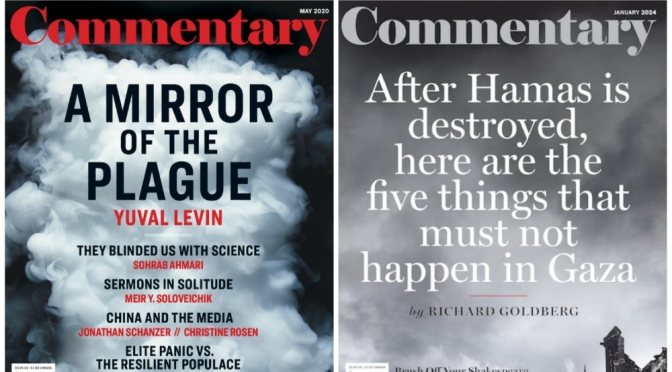
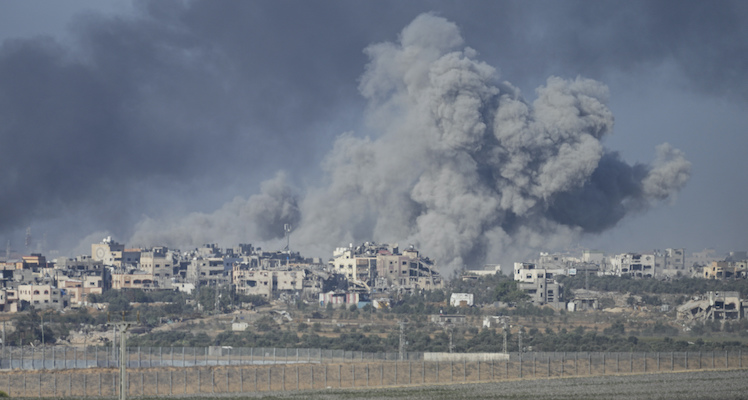
Israel is resolved to remove Hamas and its terrorist infrastructure from the Gaza Strip permanently, and for much of the world, its determination raises one question more than any other: What comes next in Gaza? For those who disapprove of Israel’s actions in the war or those who either passively or actively support the role of Hamas as the Strip’s governing authority, the lack of answers provides a pretext not only to demand a permanent cease-fire but to suggest (often quietly and with a furrowed brow indicating supposed realpolitik wisdom) that the path Israel seems to be making for itself is a dead end from which it needs to be saved.
In his new book, The Conservative Futurist: How to Create the Sci-Fi World We Were Promised,American Enterprise Institute scholar James Pethokoukis writes about the go-go years of the 1960s: Saturn V rockets were blasting to the moon, atomic power promised to make electricity “too cheap to meter,” and sci-fi TV shows like Star Trek depicted new marvels right around the corner.
“Joseph,” my friend Edward Shils said to me, “we have spoken about many things, among them about various writers, but we are both too civilized ever to talk about Shakespeare. After all, what could one say?” Yes, what can one say? Over a long writing career, I have never written about Shakespeare, and, best I can recall, among the many millions of words I have produced, have never even quoted him. Truth is, I have long admired Shakespeare without being especially nuts about him.
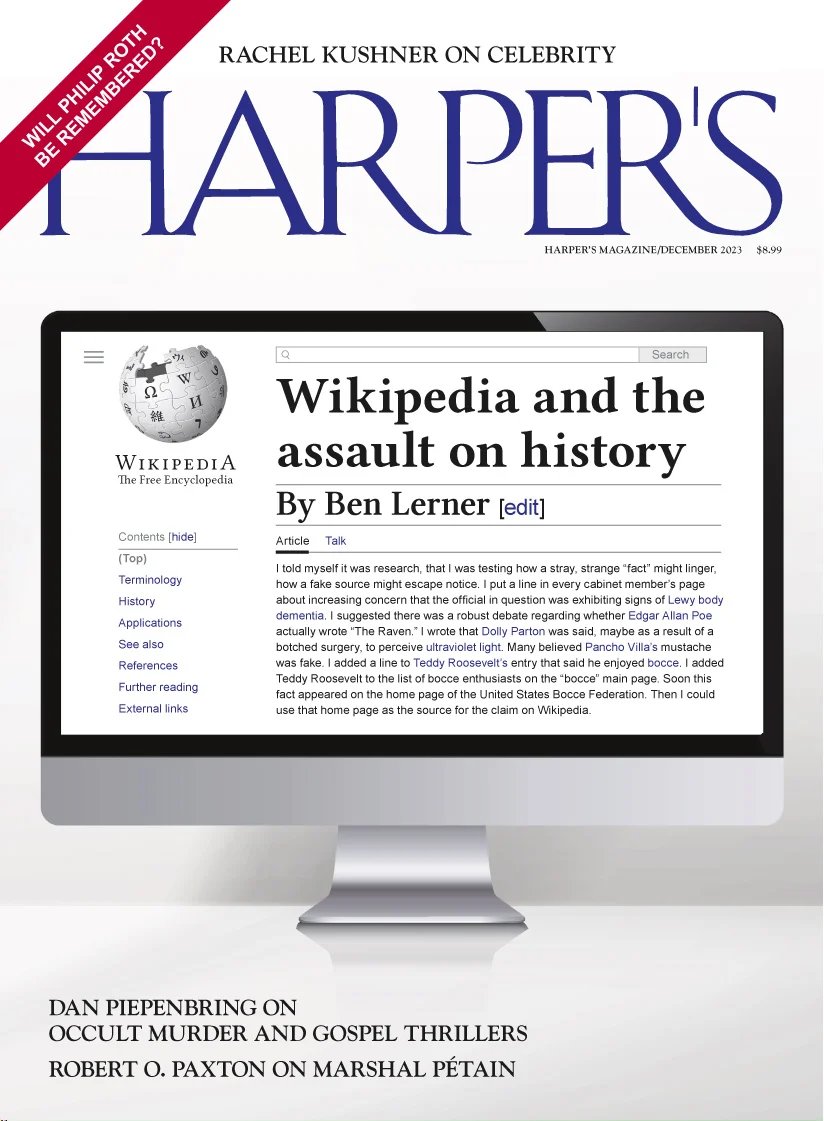
HARPER’S MAGAZINE – DECEMBER 2023: This issue features The Hofmann Wobble – Wikipedia and the problem of historical memory; Your Mind’s in the Hands of Everything – Letting go of Philip Roth; Risky Disco – A sensory workshop bridges the gap; Occult Murder and Gospel Thrillers, and more…
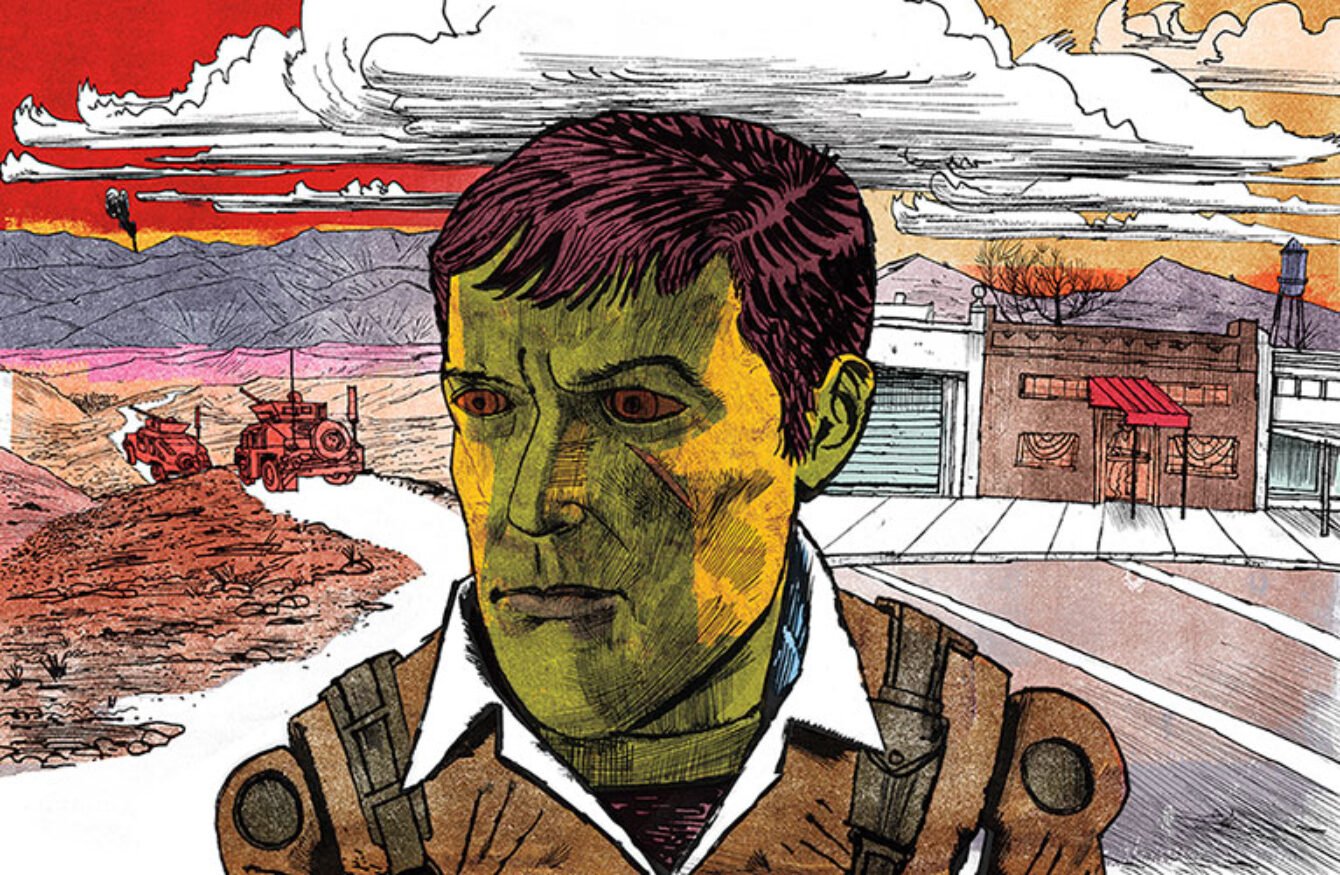
At twenty-six, in 2006, the year before the iPhone launched, I found myself driving a red Subaru Outback—the color was technically “claret metallic,” the friend who’d lent me the car had told me, in case I ever wanted to touch up the paint—on Highway 12 in Utah. I was heading to the East Bay after a painful breakup in New York. I remember, wrongly, that I was listening to a book on tape, a work by a prominent linguist, as I moved through the alien landscape, jagged formations of red rock towering against a cloudless sky.
It is difficult to predict when one will spend the night at a hotel in Newark, let alone three, and uncommon to agree to such a scenario willingly. If you live there already, you stay home. If you’re there for a professional engagement, your boss made you go. If your flight has been canceled, you go there as a last resort. Whereas, though I felt compelled to be there, I couldn’t point to an authority outside of myself that had forced my hand. The room had been booked a week in advance.
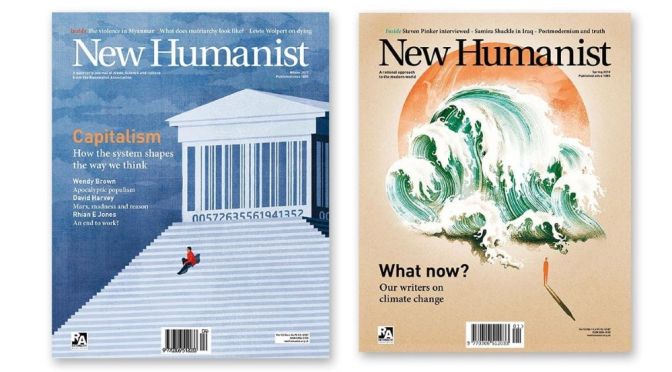
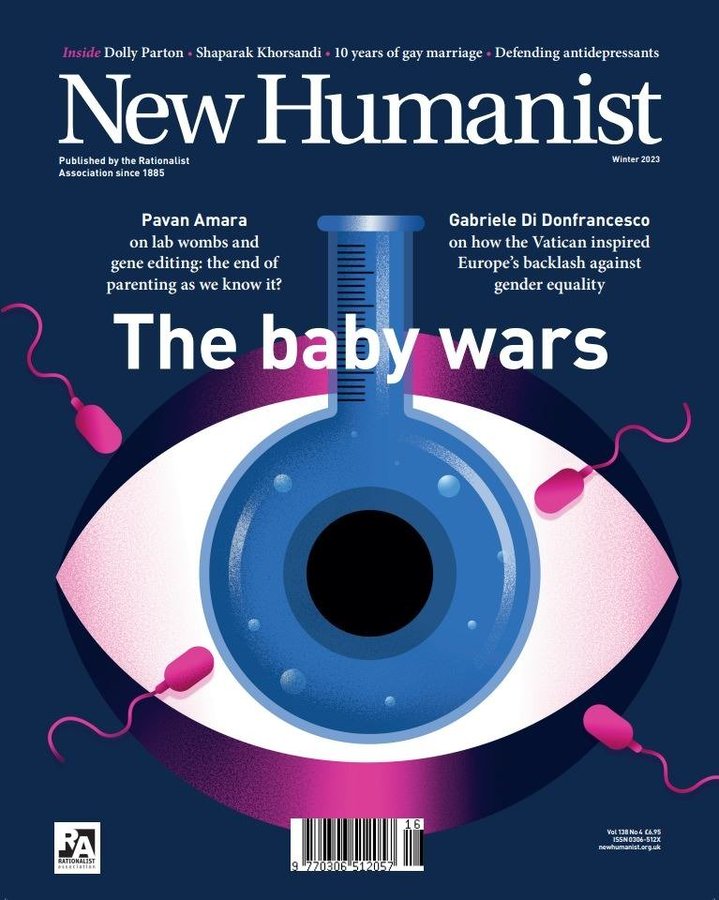
NEW HUMANIST MAGAZINE – WINTER 2023 ISSUE: The new issue features Pavan Amara on the new technologies revolutionising reproduction, Gabriele Di Donfrancesco on Europe’s battle over “family values” and Rachael Lennon on a decade of same-sex marriage, and a new column from Shaparak Khorsandi…
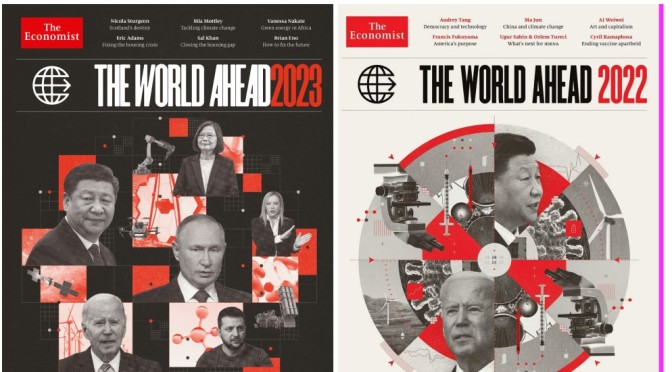
The Economist The World Ahead 2024 (November 14, 2023) – Future-gazing analysis, predictions and speculation including Ten trends to watch in 2024; 2024 will be stressful for those who care about liberal democracy; America will need a new vocabulary to discuss its presidential election; Europe needs to step up support for Ukraine; Don’t give up on peace in the Middle East, and more…
Life comes at you fast. Whether it’s the upsurge in armed conflict, the redrawing of the global energy-resources map or rapid progress in artificial intelligence (ai), the world is changing at mind-boggling speed. From the situation in the Middle East to the adoption of electric vehicles to the treatment of obesity, things look very different from the way they did just a year or two ago. Our aim is to help you keep your worldview up to date—and tell you what might be coming next. To kick things off, here are ten themes to watch in the coming year.
In theory it should be a triumphant year for democracy. In practice it will be the opposite
By Zanny Minton Beddoes
More than half the people on the planet live in countries that will hold nationwide elections in 2024, the first time this milestone has been reached. Based on recent patterns of voter turnout, close to 2bn people in more than 70 countries will head to the polls. Ballots will be cast from Britain to Bangladesh, from India to Indonesia. Yet what sounds like it should be a triumphant year for democracy will be the opposite.
The fragility of the Western coalition is a crucial weakness
By Patrick Foulis
As 2023 drew to a close, wars were raging in Africa, Israel and Gaza, and Ukraine. These crises are explosive in their own right. Combine them with a presidential race in America and 2024 promises to be a make-or-break year for the post-1945 world order.
The 2020s were destined to be dangerous. The West’s share of world gdp has fallen towards 50% for the first time since the 19th century. Countries such as India and Turkey believe the global institutions created after 1945 do not reflect their concerns. China and Russia want to go further and subvert this system.
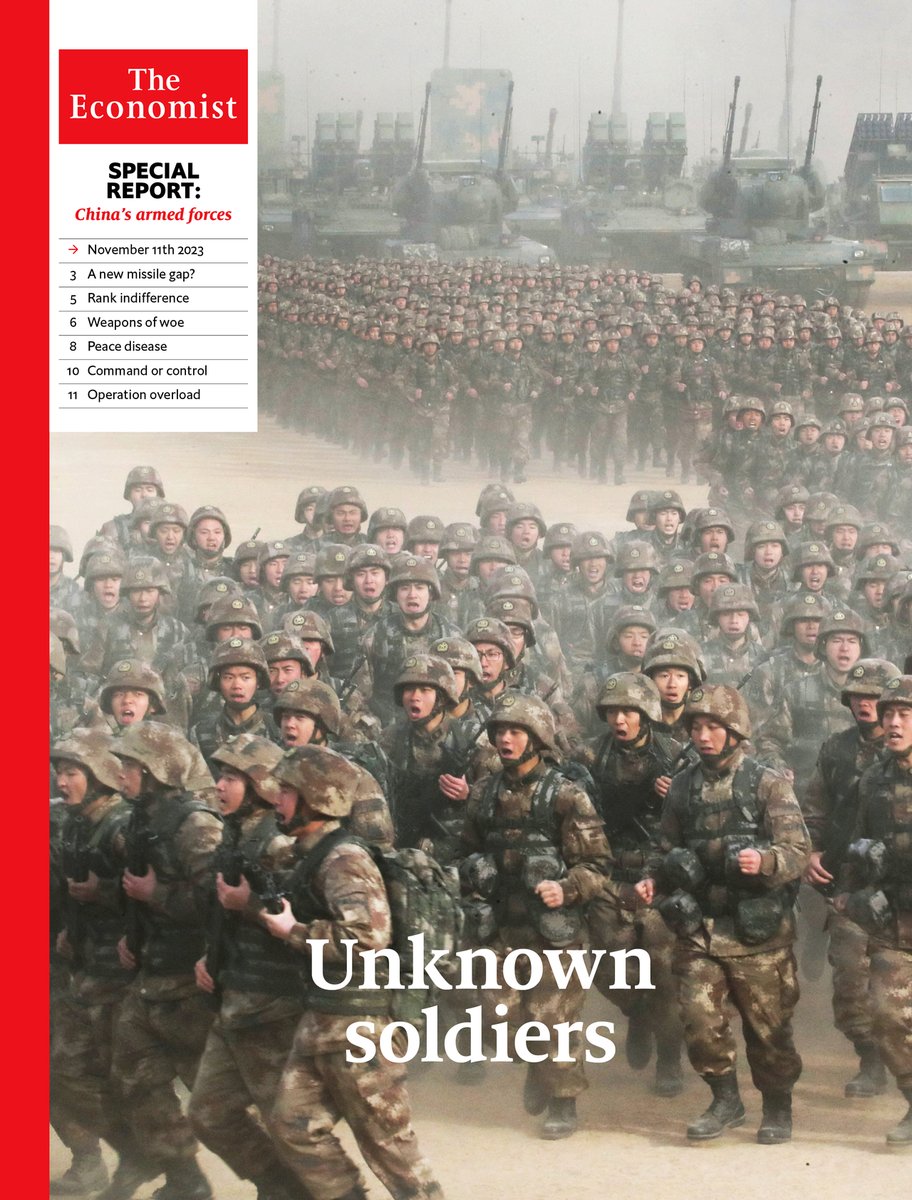
The Economist SPECIAL REPORTS – CHINA’S ARMED FORCES (NOVEMBER 11, 2023): Overestimating China’s armed forces would be dangerous; Unknown soldiers – The People’s Liberation Army is not yet as formidable as the West fears; Rank indifference – China is struggling to recruit enough highly skilled troops; Weapons of woe – From hypersonic missiles to undersea drones, the PLA is making leaps…
Overestimating China’s armed forces would be dangerous, argues Jeremy Page
In 1957 america was gripped by fears of a “missile gap” with the Soviet Union. The Kremlin had stunned the world with a test flight of an intercontinental ballistic missile (icbm) and the launch of Sputnik. An American intelligence report predicted that by 1962, the Soviets could have 500 icbms, outstripping America’s arsenal. When word of that leaked, a political furore erupted. Eyeing the presidency from his Senate seat, John F. Kennedy demanded action to prevent a Soviet “shortcut to world domination”.



















 Boomers Daily