

News about billionaires like Elon Musk and Larry Ellison moving out of California might lead you to believe that tycoons have abandoned the state. Tesla’s “Technoking” Musk confirmed in December that he had moved to Austin, Texas. And that same month Ellison told employees at software firm Oracle that he was moving to the Hawaiian island of Lanai, which he owns. But it turns out that the Golden State has yet to lose its appeal for the ultra-wealthy. Forbes just released the 2021 list of the World’s Billionaires, and California is once again home to more billionaires than any other state, with 189 billionaire residents out of the 2,755 billionaires Forbes tracked globally. That’s 24 more than a year ago, due mostly to a surge in the number of new billionaires. New York comes in second with 126 billionaires, up from 118 last year. Altogether, 732 members of the 2021 list live in the U.S., including non-U.S. citizens, like Ireland’s John and Patrick Collison, the brothers who founded San Francisco-based payments firm Stripe. (There are 724 U.S. citizens on the list.) Large states dominate the top 10 states for these tycoons: seven out of the ten most populous U.S. states are also home to the most billionaires. One of the outliers, Massachusetts, a tech hub, has 7 more billionaires than a year ago; the fastest vaccine development in history—spurred by the Covid-19 pandemic—minted several new biotech billionaires who live in the state. Seven states don’t have any billionaire residents that Forbes could find: Alabama, Alaska, Delaware, New Hampshire, North Dakota, Vermont and West Virginia. (Jim Justice, the governor of West Virginia, used to be a billionaire but was recently revealed to have borrowed $850 million from Greensill Capital, a U.K. based lender that has filed for insolvency.) Read the full profile on Forbes: https://www.forbes.com/sites/krisztia…
Tag Archives: New York
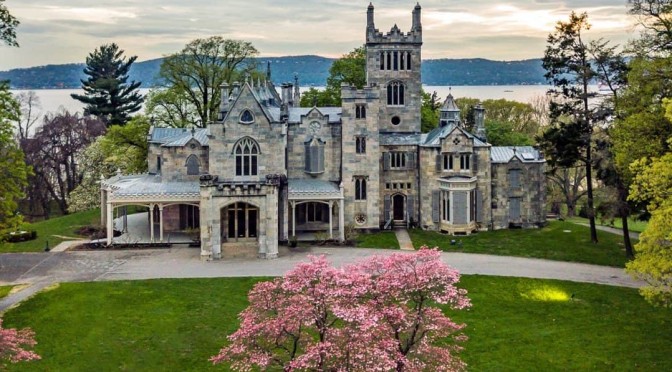
Estate Tours: Lyndhurst Mansion In The Hudson Valley, New York (Video)
The historic Lyndhurst Mansion, designed by architect Alexander Jackson Davis, is a prime example of the Gothic Revival style, located on 67 beautifully-landscaped acres in New York’s Hudson Valley. “Sunday Morning” host Jane Pauley offers viewers a tour.
Lyndhurst, also known as the Jay Gould estate, is a Gothic Revival country house that sits in its own 67-acre park beside the Hudson River in Tarrytown, New York, about a half mile south of the Tappan Zee Bridge on US 9. The house was designated a National Historic Landmark in 1966.
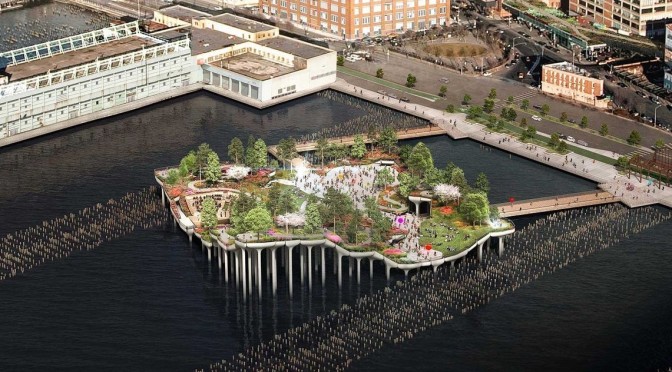
NYC Walks: ‘Little Island’ – First Floating Public Park
Little Island is a public park that provides a one-of-a-kind relationship between nature and art—a break from urban life and a connection to spontaneity and joy.
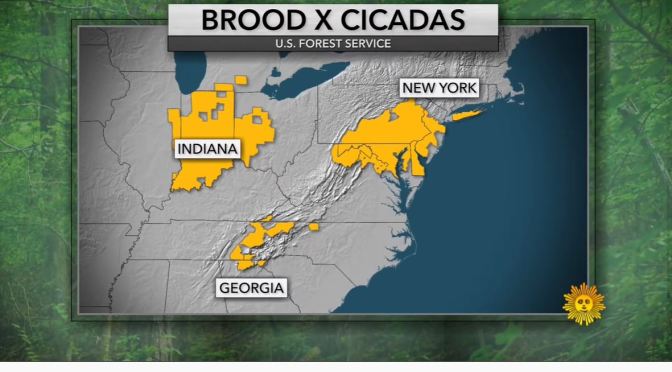
Views: Billions Of Cicadas Emerge In The Eastern U.S. After 17 Years (CBS Video)
Periodical cicadas, identified as Brood X, are back, providing us with a once-every-17-years opportunity to witness a remarkable natural phenomenon, as these insects emerge and breed, while producing sounds as loud as a jet engine. Correspondent Chip Reid talks with entomologists about the cicadas’ cycle, and how their protein can satiate the appetites of predators (and cookie lovers).

City Views: Summit One Vanderbilt Observation Deck In New York City
A new skyscraper in New York’s midtown Manhattan that towers 150 feet above the Empire State Building transports visitors in glass elevators up the sides of the building to an observation deck high above the city.
One Vanderbilt is a 1,401-foot office tower next to Grand Central from developer SL Green and architects Kohn Pedersen Fox. The 77-story, 1.7 million-square-foot skyscraper is NYC’s fourth-tallest tower. It officially opened to office tenants this past September, and still to come are $220 million in public open space and transit infrastructure improvements.
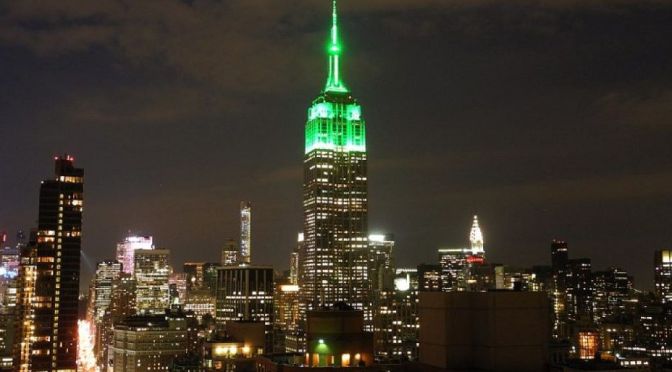
Climate: The Empire State Building’s Green Upgrade
Energy usage by large, old buildings like the Empire State Building represents a huge obstacle to cities’ dreams of carbon neutrality. New York City’s buildings account for 70% of its carbon emissions, for example, and half of those emissions are produced by the largest 5% of its structures. But retrofitting old buildings to make them more energy efficient represents a formidable challenge, both from an engineering perspective and in terms of convincing owners that doing so is in their financial interest.
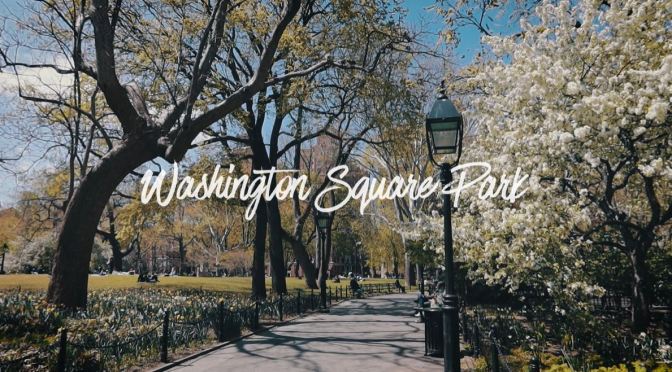
Spring Views: Washington Square Park, New York
Washington Square Park is a 9.75-acre public park in the Greenwich Village neighborhood of Lower Manhattan, New York City. One of the best known of New York City’s public parks, it is an icon as well as a meeting place and center for cultural activity.
It is named for George Washington (1732-1799), the commander of the Continental Army, who was inaugurated in New York City as the first President of the United States on April 30, 1789.
The land was once a marsh fed by Minetta Brook located near an Indian village known as Sapokanikan. In 1797 the City’s Common Council acquired the land for use as a “Potter’s Field” and for public executions, giving rise to the legend of the “Hangman’s Elm” in the park’s northwest corner.
Used first as the Washington Military Parade Ground in 1826, the site became a public park in 1827. Following this designation, prominent families, wanting to escape the disease and congestion of downtown Manhattan, moved into the area and built the distinguished Greek Revival mansions that still line the square’s north side. In 1838 the park hosted the first public demonstration of the telegraph by Samuel F.B. Morse.
Soon after the creation of the City’s Department of Public Parks in 1870, the square was redesigned and improved by M.A. Kellogg, Engineer-in-Chief, and I.A. Pilat, Chief Landscape Gardener. Their plan followed the principles of Fredrick Law Olmsted – providing a more rustic and informal space with curvilinear paths along its periphery, retaining many of the diagonal paths within the park’s core, and defining plots of grass with shade trees. The most dramatic change was the addition of a carriage drive through the park’s interior connecting Fifth Avenue to Lower Manhattan.
The marble Washington Arch, designed by noted architect Stanford White, was built between 1890-1892 and replaced a wooden arch erected in 1889 to honor the centennial of the first president’s inauguration. Statues of Washington were later installed on Arch’s north side – Washington as Commander-in-Chief, Accompanied by Fame and Valor (1916) by Hermon MacNeil, and Washington as President, Accompanied by Wisdom and Justice (1918) by Alexander Stirling Calder.

Nicknames: Story Of New York City’s “The Big Apple”
A lot of American cities have great nicknames. But it was 100 years ago when the nation’s biggest city got its most famous one. Michelle Miller has the details on how “The Big Apple” came to signify New York.

Tiny Home Living: 24 Hours In A ‘Getaway Cabin Rental’
Getaway, a Brooklyn-based startup, offers the experience of a tiny home, but only for as many nights as you’re willing to pay for.

2020 Census: Which States Are Gaining Or Losing Seats In Congress (Video)
The first batch of released data shows some states are set to gain more congressional seats while others will lose some.
 Boomers Daily