Tag Archives: New York Times

European Food Review: Italian Restaurant Movement In Paris Has “Exploded” In Last 3 Years

From a New York Times online article:
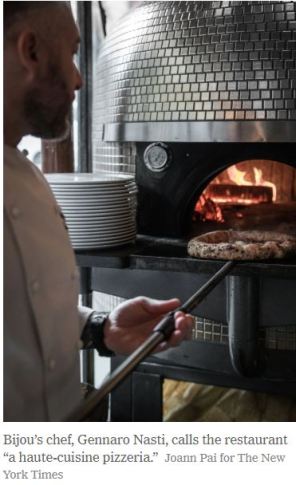
Bijou Paris restaurant NY Times“There’s really an Italian movement that has exploded over the last three years,” Mr. Imbroisi said.

Thanks to that explosion, Paris might now be the best city outside of Italy for Italian eating and drinking. With a few Metro tickets, you can journey from Venetian aperitivo culture (Hostaria Urbana), then south to Sicilian home cooking (Pane e Olio), disembarking occasionally at cozy wine bars (Tappo), massive indoor food halls (La Felicità) and new Italian restaurants from French celebrity chefs (for example, Piero TT, by Pierre Gagnaire). Racines Paris restaurant Joann Pai NY TimesIn April, the Right Bank welcomed an outlet of Eataly with a glittery gala, and the Left Bank should soon see a luxury hotel from the Italian JK brand. The marquee attraction will be a restaurant by Miky Grendene, the Italian creator of the exclusive Casa Tua members’ club in Miami.
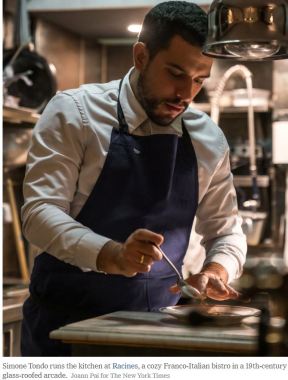
From experimental aperitivo bars to pizza labs to Michelin-starred bistros, cool Italian establishments are filling the French capital, and Parisians are flocking to them.

To read more: https://www.nytimes.com/2019/12/04/travel/Italian-food-in-Paris.html

Investigative Debate: “Journalists Who Broke Harvey Weinstein Story” (Oxford Union Video)

On 5 October 2017, Twohey and Kantor, already respected investigative journalists, published a story in the New York Times that lit the world ablaze. The article, which detailed decades of sexual harassment and abuse perpetrated by Harvey Weinstein, launched the #MeToo movement into the mainstream and began an ongoing dialogue about the relationship between power and sexual exploitation. The article was the product of months of investigation by Twohey and Kantor, and was awarded the Pulitzer Prize for Public Service in 2018.

Health Studies: Eating After Exercise Found To Burn “Twice The Fat”

From a New York Times online article:

Journal of Clinical Endocrinology & MetabolismThe riders who had pedaled on an empty stomach, however, had incinerated about twice as much fat during each ride as the men who consumed the shake first. The riders all had burned about the same number of calories while pedaling, but more of those calories came from fat when the men did not eat first.

Those riders also showed greater improvements in insulin sensitivity at the end of the study and had developed higher levels of certain proteins in their muscles that influence how well muscle cells respond to insulin and use blood sugar.

Working out on an empty stomach could amplify the health benefits of the activity, according to a well-timed new study of the interplay of meal timing, metabolic health and moving. The study, which involved sedentary men and moderate cycling, suggests that whether and when we eat may affect how exercise affects us.

To read more: https://www.nytimes.com/2019/11/27/well/move/eating-food-exercise-fasting-insulin-weight-loss-fat.html

Reviews: 2019 Books Of The Year (NY Times Podcast)

For the second year in a row, editors at The New York Times got together for a live taping of the podcast to discuss the Book Review’s list of the year’s 10 Best Books. “These are books that we think will endure, that will be looked at and read and consulted and referred to well after the year in which they were named,” says Pamela Paul, the editor of The New York Times Book Review, as part of her introductory remarks about what the editors look for in their selections.

In the first chapter of this assured debut novel, two young girls vanish, sending shock waves through a town perched on the edge of the remote, brooding Kamchatka Peninsula. What follows is a novel of overlapping short stories about the various women who have been affected by their disappearance. Each richly textured tale pushes the narrative forward another month and exposes the ways in which the women of Kamchatka have been shattered — personally, culturally and emotionally — by the crime.

Fiction | Alfred A. Knopf. $26.95. | Read the review | Listen: Julia Phillips on the podcast

Lerner’s exhilarating third novel, after “Leaving the Atocha Station” and “10:04,” rocks an emphatically American amplitude, ranging freely from parenthood to childhood, from toxic masculinity to the niceties of cunnilingus, from Freud’s Oedipus complex to Tupac’s “All Eyez on Me.” Adam Gordon returns as the protagonist, but this time as a high school debate star, and mostly in the third person. Equal portions of the book are given over to the voices of his psychologist parents, and to a former classmate whose cognitive deficits are the inverse of Adam’s gifts. The earlier novels’ questions about art and authenticity persist; but Adam’s faithlessness is now stretched into a symptom of a national crisis of belief. Lerner’s own arsenal has always included a composer’s feel for orchestration, a ventriloquist’s vocal range and a fine ethnographic attunement. Never before, though, has the latter been so joyously indulged, or the bubblicious texture of late Clintonism been so lovingly evoked.

Fiction | Farrar, Straus & Giroux. $27. | Read the review

Many of the nine deeply beautiful stories in this collection explore the material consequences of time travel. Reading them feels like sitting at dinner with a friend who explains scientific theory to you without an ounce of condescension. Each thoughtful, elegantly crafted story poses a philosophical question; Chiang curates all nine into a conversation that comes full circle, after having traversed remarkable terrain.

Fiction | Alfred A. Knopf. $25.95. | Read the review | Listen: Ted Chiang on the podcast

The Mexican author’s third novel — her first to be written in English — unfolds against a backdrop of crisis: of children crossing borders, facing death, being detained, being deported unaccompanied by their guardians. The novel centers on a couple and their two children (all unnamed), who are taking a road trip from New York City to the Mexican border; the couple’s marriage is on the brink of collapse as they pursue independent ethnographic research projects and the woman tries to help a Mexican immigrant find her daughters, who’ve gone missing in their attempt to cross the border behind her. The brilliance of Luiselli’s writing stirs rage and pity, but what might one do after reading such a novel? Acutely sensitive to these misgivings, Luiselli has delivered a madly allusive, self-reflexive, experimental book, one that is as much about storytellers and storytelling as it is about lost children.

Fiction | Alfred A. Knopf. $27.95. | Read the review | Read our profile of Luiselli

A desolate ferry terminal on the Spanish coast isn’t a place where you’d expect to encounter sharp-edged lyricism or rueful philosophy, but thanks to the two Irish gangster antiheroes of Barry’s novel, there’s plenty of both on display, along with scabrously amusing tale-telling and much summoning of painful memories. Their lives have become so intertwined that the young woman whose arrival they await can qualify as family for either man. Will she show? How much do they care? Their banter is a shield against the dark, a witty new take on “Waiting for Godot.”

Fiction | Doubleday. $25.95. | Read the review | Listen: Kevin Barry on the podcast

Masked intruders dragged Jean McConville, a 38-year-old widow and mother of 10, from her Belfast home in 1972. In this meticulously reported book — as finely paced as a novel — Keefe uses McConville’s murder as a prism to tell the history of the Troubles in Northern Ireland. Interviewing people on both sides of the conflict, he transforms the tragic damage and waste of the era into a searing, utterly gripping saga.

Nonfiction | Doubleday. $28.95. | Read the review

The English painter Joshua Reynolds just wanted to cheer up his friend Samuel Johnson, who was feeling blue. Who knew that the Friday night gab sessions he proposed they convene at London’s Turk’s Head Tavern would end up attracting virtually all the leading lights of late-18th-century Britain? Damrosch brings the Club’s redoubtable personalities — the brilliant minds, the jousting wits, the tender camaraderie — to vivid life, delivering indelible portraits of Johnson and Reynolds, Edmund Burke, Adam Smith, the actor David Garrick, the historian Edward Gibbon and, of course, Johnson’s loyal biographer James Boswell: “a constellation of talent that has rarely if ever been equaled.”

Nonfiction | Yale University Press. $30. | Read the review

In her extraordinary, engrossing debut, Broom pushes past the baseline expectations of memoir to create an entertaining and inventive amalgamation of literary forms. Part oral history, part urban history, part celebration of a bygone way of life, “The Yellow House” is a full indictment of the greed, discrimination, indifference and poor city planning that led her family’s home to be wiped off the map. Tracing the history of a single home in New Orleans East (an area “50 times the size of the French Quarter,” yet nowhere to be found on most tourist maps, comprising scraps of real estate whites have passed over), from the ’60s to Hurricane Katrina, this is an instantly essential text, examining the past, present and possible future of the city of New Orleans, and of America writ large.

Nonfiction | Grove Press. $26. | Read the review | Listen: Sarah M. Broom on the podcast

Snyder’s thoroughly reported book covers what the World Health Organization has called “a global health problem of epidemic proportions.” In America alone, more than half of all murdered women are killed by a current or former partner; domestic violence cuts across lines of class, religion and race. Snyder debunks pervasive myths (restraining orders are the answer, abusers never change) and writes movingly about the lives (and deaths) of people on both sides of the equation. She doesn’t give easy answers but presents a wealth of information that is its own form of hope.

Nonfiction | Bloomsbury Publishing. $28. | Read the review | Listen: Rachel Louise Snyder on the podcast

Higginbotham’s superb account of the April 1986 explosion at the Chernobyl nuclear power plant is one of those rare books about science and technology that read like a tension-filled thriller. Replete with vivid detail and sharply etched personalities, this narrative of astounding incompetence moves from mistake to mistake, miscalculation to miscalculation, as it builds to the inevitable, history-changing disaster.

Book Review Podcasts: “Margaret Thatcher – Herself Alone” By Charles Moore (New York Times)

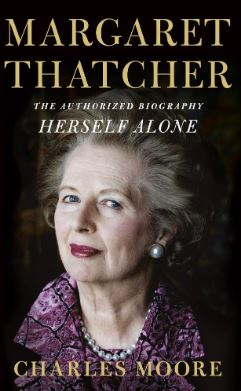
Margaret Thatcher Charles Moore“I don’t think you can think about British politics or British history without thinking about her a very great deal,” Charles Moore, the authorized biographer of Margaret Thatcher, says of his subject on this week’s podcast. “And to some extent, you can’t think about the history of the modern West without thinking about her a very great deal.”

The third and concluding volume of Moore’s 2,700-page biography is titled “Herself Alone.”

Adrienne Brodeur visits the podcast this week to discuss her new book, “Wild Game: My Mother, Her Lover, and Me.” When Brodeur was 14, her mother confided in her about an extramarital affair she was conducting. “The temptation is to view a mother like this in sort of the ‘monster mother’ perspective, and the fact is, the most important thing for me in writing this book was to present a very nuanced portrayal of both her and of our relationship,” Brodeur says.

Also on this week’s episode, Alexandra Alter discusses the winners of this year’s National Book Awards; and Susan Dominus, A.O. Scott and John Williams talk about what people are reading. Pamela Paul is the host.

Medical Diagnosis: 56-Year Old Woman Had Heart Attacks, But No Heart Disease? (New York Times)

From a New York Times Magazine article:

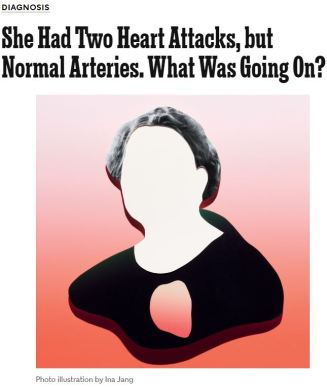
Diagnosis New York Times Illustration by Ina Jang 2019It was all horribly familiar — a rerun of an episode 15 months earlier, when she was with her family in River Vale, N.J. Back then, the burning pressure sent her to the emergency department, and she was told the same thing: She was having a heart attack. Immediately the cardiologist looked for blockages in the coronary arteries, which feed blood and oxygen to the hardworking muscles of her heart. That was the cause of most heart attacks. But they found no blockage.

Since childhood, she had frequent terrible canker sores that lasted for weeks. Sometimes it was hard to eat or even talk. Her mother, a nurse, told her everybody got them and thought she was being dramatic when she complained. So she had never brought them up with her doctors. Now the woman saw that her answer somehow made sense to the rheumatologist.

New York Times MagazineIndeed, that was the clue that led the rheumatologist to a likely diagnosis: Behcet’s disease. It’s an unusual inflammatory disorder characterized by joint pains, muscle pains and recurrent ulcers in mucus membranes throughout the body. Almost any part of the body can be involved — the eyes, the nose and lungs, the brain, the blood vessels, even the heart. Behcet’s was named after a Turkish dermatologist who in 1937 described a triad of clinical findings including canker sores (medically known as aphthous ulcers), genital ulcers and an inflammatory condition of the eye.
To read more: https://www.nytimes.com/2019/11/20/magazine/heart-attack-diagnosis.html?te=1&nl=the-new%20york%20times%20magazine&emc=edit_ma_20191122?campaign_id=52&instance_id=14017&segment_id=19010&user_id=415092ec82728104b9ca7bbb44eeb7d3&regi_id=7441254120191122

Book Review Podcasts: Nicholas Buccola (“The Fire Is Upon Us”) Discusses A Great Intellectual Debate In 1965 (NY Times)

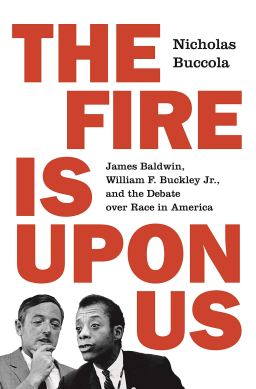
The Fire Is Upon Us Nicholas BuccolaIn 1965, James Baldwin, by then internationally famous, faced off against William F. Buckley Jr., one of the leading voices of American conservatism, in a debate hosted by the Cambridge Union in England. The debate proposition before the house was: “The American dream is at the expense of the American Negro.”


Nicholas Buccola’s “The Fire Is Upon Us” tells the story of that intellectual prizefight as well as the larger story of Buckley’s and Baldwin’s lives.


Trends In Healthy Living: Copenhagen, Denmark Is The “Global Exemplar Of Bicycle Culture”

From a New York Times online article:

Copenhagen Cyclists Betina Garcia for The New York TimesCopenhagen’s legendary bicycle setup has been propelled by all of these aspirations, but the critical element is the simplest: People here eagerly use their bicycles — in any weather, carrying the young, the infirm, the elderly and the dead — because it is typically the easiest way to get around.
Copenhagen’s status as a global exemplar of bicycle culture owes to the accommodating flatness of the terrain and the lack of a Danish auto industry, which might have hijacked the policy levers. Trouble also played a role.

Nearly half of all journeys to school and work in Copenhagen take place on bicycles. And people like it that way.

The global oil shock of the 1970s lifted the price of gasoline, making driving exorbitantly costly. A dismal economy in the 1980s brought the city to the brink of bankruptcy, depriving it of finance to build roads, and making bicycle lanes an appealingly thrifty alternative.

To read more: https://www.nytimes.com/2019/11/09/world/europe/biking-copenhagen.html

Book Review Podcasts: “Antisocial” By Andrew Marantz, “No Stopping Us Now” By Gail Collins (NYT)

AntiSocial Andrew Marantz

From the New York Times Book Review:

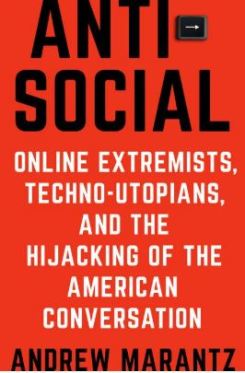
“Antisocial,” the new book by Andrew Marantz, plainly states its subject in its subtitle: “Online Extremists, Techno-Utopians, and the Hijacking of the American Conversation.” In order to write it, Marantz immersed himself in corners of the internet most of us would go out of our way to avoid.

Gail Collins visits the podcast this week to discuss her new book, “No Stopping Us Now,” an eye-opening chronicle of older women’s journey to progress in the United States over the years. “It used to be, the whole vision of your life if you were a woman was that you got married, you had children and, once the children were grown, you were old — done,” 

No Stopping Us Now Gail Collins

Collins says on the podcast this week. “That was the thing I was looking at: What counted as old, and then what did women do when they got to what was regarded as old? How did they use it, how did they fight it?”

To read more: https://www.nytimes.com/2019/11/08/books/review/Andrew-Marantz-Gail-Collins-interview.html

Book Review Podcasts: Thomas Edison, Celebrity Memoirs And Latest Book Club Reads (NY Times)

NY Times Book ReviewThe acclaimed biographer Edmund Morris died earlier this year, at 78, before he could see the publication of his new book, “Edison,” about the brilliant and prolific inventor. David Oshinsky, who reviewed the biography for us, visits the podcast this week to discuss Morris and Edison.

Tina Jordan is on this week’s episode, discussing three new celebrity memoirs, by Demi Moore, Julie Andrews and Carly Simon. “Of the three, the Demi Moore stood out,” Jordan says, “because I’m not used to seeing a book that frank in an era where 99.9 percent of our celebrity memoirs are just vapid.”