The greatest roles of her life were behind the scenes. Natalie Wood: What Remains Behind is an intimate portrait of actor Natalie Wood’s life and career, told through the eyes of her daughter Natasha Gregson Wagner and others who knew her best. The film celebrates the woman behind the iconic imagery and explores the compelling details of Wood’s personal life and illustrious career that are often overshadowed by her tragic death.
Listen to the latest from the world of science, brought to you by Benjamin Thompson and Nick Howe. This week, Nautre speaks to Rosamund Pike about her experience portraying Marie Skłodowska Curie, and we find out how science in Russia is changing after years of decline.
Born in Lund, Sweden, von Sydow studied at Stockholm’s Royal Dramatic Theatre before getting his start in the film business through his work with mentor Ingmar Bergman. The pair’s credits included world cinema classic The Seventh Seal, in which he portrays a man who plays a chess game with Death, the Oscar-nominated Wild Strawberries, and the Oscar-winning The Virgin Spring.
Max von Sydow, the Sweden-born French actor whose credits included Ingmar Bergman’s The Seventh Seal, William Friedkin’s The Exorcist, and the role of Emperor Ming in Flash Gordon, has died at the age of 90.
The actor’s 65-year career spanned acclaimed arthouse, Hollywood blockbusters, and television. In recent years, he played Lor San Tekka in Star Wars: The Force Awakens, the Three-Eyed Raven in Game Of Thrones, and voiced a character on The Simpsons.
In this report first broadcast on August 19, 2007, thirty years after the death of comedian Groucho Marx, “Sunday Morning” host Charles Osgood looks back at the life of the ringleader of the Marx Brothers, who starred in such classics as “Animal Crackers,” “Duck Soup” and “A Night at the Opera.”
Osgood speaks with Marx Brothers fans Elliott Gould, David Steinberg, Frank Ferrante (who played Groucho on stage), Washington Post columnist Harold Meyerson, and Charlotte Chandler, author of the book “Hello, I Must Be Going: Groucho and His Friends.”
Recorded February 14, 2020 at the Columbia Museum of Art.
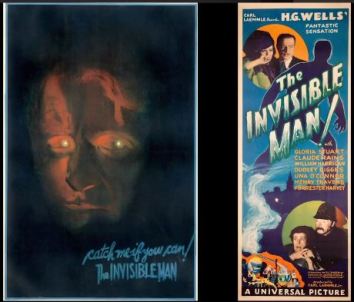
Daniel Finamore, curator of It’s Alive! Classic Horror and Sci-Fi Art from the Kirk Hammett Collection talks about the exhibition and where these posters fit into the canon of art history. Finamore is the curator of Maritime Art and History at the Peabody Essex Museum. Best known as lead guitarist of the famed rock band Metallica, Kirk Hammett is also an obsessive collector of visually arresting horror and sci-fi film art and has dedicated the last three decades to creating one of the world’s most important collections.
It’s Alive! features more than 100 pieces of graphic art, many hailing back to the days of Boris Karloff and Bela Lugosi, that have seeped into the public imagination and reflected society’s deepest fears and anxieties for nearly a century. Not only do these objects explore the power of graphic art in its own right, they have inspired Hammett’s work throughout his own artistic career.
Organized by the Peabody Essex Museum, Salem, Massachusetts.
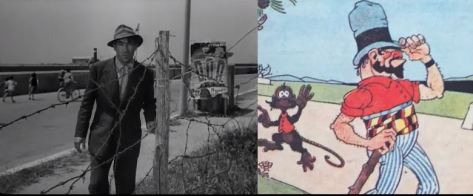
Federico Fellini’s films were bright, surprising and above all, fun. His films are a testament to an extraordinary imagination, but also a deep love of an art form that is often overlooked: comics!
In this video essay, BFI producer Nic Wassell speaks to Fellini experts to draw out the links between the great director’s love of American and Italian comics and the surreal, joyful imagery found in his films.
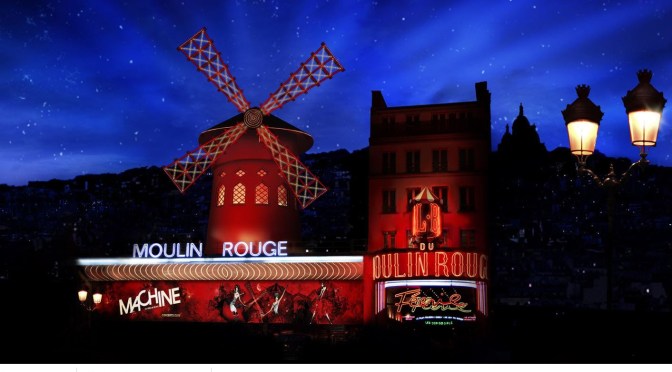
The Moulin Rouge, the famous cabaret with a windmill that opened in the Montmartre section of Paris 130 years ago, is still drawing crowds to its spectacular shows featuring a chorus line of often-topless dancers. And it’s now the inspiration for a hit Broadway musical. Correspondent Alina Cho visits the landmark that has inspired artists and writers (and even marriage proposals), and talks with its artistic director and dancers, along with the Tony Award-winning set designer of the new Broadway show, “Moulin Rouge!: The Musical.”
Moulin Rouge (“Red Mill”) is a cabaret in Paris, France.
The original house, which burned down in 1915, was co-founded in 1889 by Charles Zidler and Joseph Oller, who also owned the Paris Olympia. Close to Montmartre in the Paris district of Pigalle on Boulevard de Clichy in the 18th arrondissement, it is marked by the red windmill on its roof. The closest métro station is Blanche.
Moulin Rouge is best known as the birthplace of the modern form of the can-can dance. Originally introduced as a seductive dance by the courtesans who operated from the site, the can-can dance revue evolved into a form of entertainment of its own and led to the introduction of cabarets across Europe. Today, the Moulin Rouge is a tourist attraction, offering musical dance entertainment for visitors from around the world. The club’s decor still contains much of the romance of fin de siècle France.
Soundtrack/theme music from the 1962 Terence Young film “Dr. No,” with Sean Connery, Ursula Andress, Joseph Wiseman, Jack Lord, John Kitzmiller, Lois Maxwell & Bernard Lee.
Monty Norman (born 4 April 1928) is a singer and film composer best known for composing the “James Bond Theme”.
Norman is famous for writing the music to the first James Bond movie, Dr. No, including the “James Bond Theme”, the signature theme of the James Bond franchise. Norman has received royalties since 1962 for the theme. However, as the producers were dissatisfied with Norman’s arrangement, John Barry re-arranged the theme. Barry later claimed that it was actually he who wrote the theme, but Norman won two libel actions against publishers for claiming that Barry was the composer, most recently against The Sunday Times in 2001. In the made-for-DVD documentary Inside Dr. No, Norman performs a music piece which he wrote for the stage several years earlier entitled “Bad Sign, Good Sign”, that resembles the melody of the “James Bond Theme” in several places.
Norman collected around £600,000 in royalties between the years 1976 and 1999 for the use of the theme since Dr. No.
In this preview of a conversation with correspondent Lee Cowan to be broadcast on “CBS Sunday Morning” on February 16, Harrison Ford, the actor who has played iconic characters in the “Star Wars” and Indiana Jones franchises, talks about returning to familiar roles.
Harrison Ford (born July 13, 1942) is an American actor, aviator, and environmental activist. He gained worldwide fame for his starring role as Han Solo in the original Star Wars Trilogy (1977–1983), eventually reprising the role decades later in the sequel trilogy (2015–2019). Ford is also widely known for his portrayal of Indiana Jones in the Indiana Jones film franchise and as Tom Clancy’s Jack Ryan in the spy thrillers Patriot Games (1992) and Clear and Present Danger (1994).
Film critic Roger Ebert described Ford as “the great modern movie everyman”. His career spans six decades and includes roles in many highly successful Hollywood films. Some of his most popular films include Apocalypse Now (1979), Witness (1985), Presumed Innocent (1990), The Fugitive (1993), Air Force One (1997), What Lies Beneath (2000), and (2013). Seven of his films have been inducted into the National Film Registry: American Graffiti (1973), The Conversation (1974), Star Wars (1977), Apocalypse Now (1979), The Empire Strikes Back (1980), Raiders of the Lost Ark (1981), and Blade Runner (1982).
As of 2019, the U.S. domestic box-office grosses of Ford’s films total over $5.1billion, with worldwide grosses surpassing $9.3billion, making him the fourth highest-grossing domestic box-office star of all time.
From a New Yorker online review (February 11, 2020):
Wes Anderson’s new movie, “The French Dispatch,” which will open this summer, is about the doings of a fictional weekly magazine that looks an awful lot like—and was, in fact, inspired by—The New Yorker. The editor and writers of this fictional magazine, and the stories it publishes—three of which are dramatized in the film—are also loosely inspired by The New Yorker. Anderson has been a New Yorker devotee since he was a teen-ager, and has even amassed a vast collection of bound volumes of the magazine, going back to the nineteen-forties. That he has placed his fictional magazine in a made-up French metropolis (it’s called Ennui-sur-Blasé), at some point midway through the last century, only makes connecting the dots between “The French Dispatch” and The New Yorker that much more delightful.
Directed by: Wes Anderson
Screenplay by: Wes Anderson
Produced by: Wes Anderson, Steven Rales and Jeremy Dawson
Cast: Benicio del Toro, Adrien Brody, Tilda Swinton, Léa Seydoux, Frances McDormand, Timothée Chalamet, Lyna Khoudri, Jeffrey Wright, Mathieu Amalric, Stephen Park, Bill Murray and Owen Wilson


 Listen to the latest from the world of science, brought to you by Benjamin Thompson and Nick Howe. This week, Nautre speaks to Rosamund Pike about her experience portraying Marie Skłodowska Curie, and we find out how science in Russia is changing after years of decline.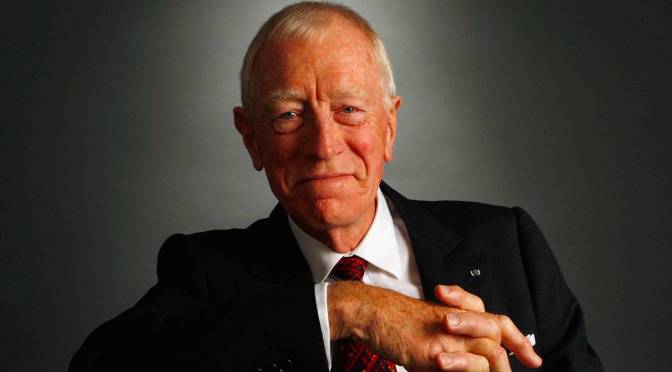
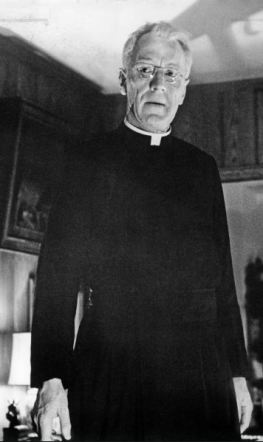 Born in Lund, Sweden, von Sydow studied at Stockholm’s Royal Dramatic Theatre before getting his start in the film business through his work with mentor Ingmar Bergman. The pair’s credits included world cinema classic
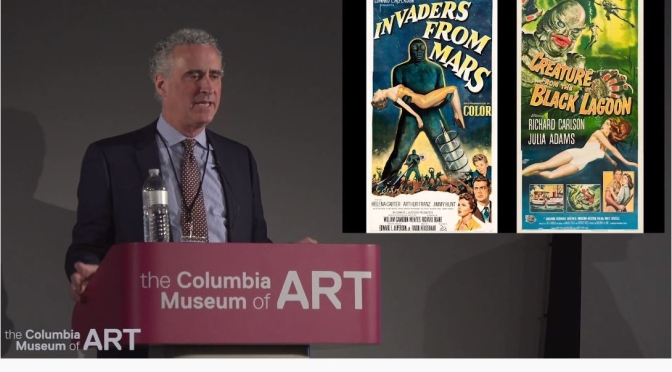
 of art history. Finamore is the curator of Maritime Art and History at the Peabody Essex Museum. Best known as lead guitarist of the famed rock band Metallica, Kirk Hammett is also an obsessive collector of visually arresting horror and sci-fi film art and has dedicated the last three decades to creating one of the world’s most important collections.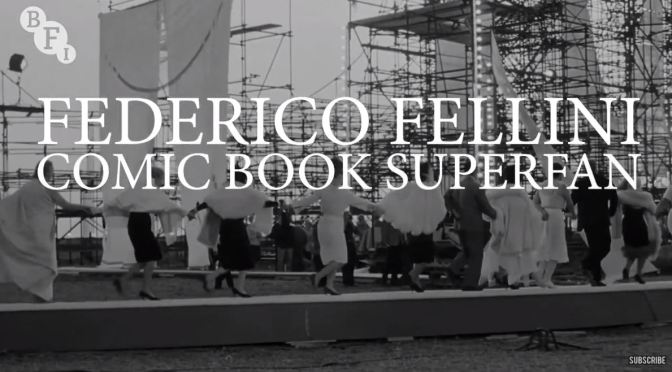
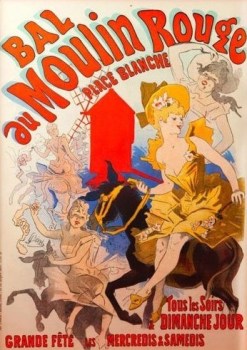 the inspiration for a hit Broadway musical. Correspondent Alina Cho visits the landmark that has inspired artists and writers (and even marriage proposals), and talks with its artistic director and dancers, along with the Tony Award-winning set designer of the new Broadway show, “Moulin Rouge!: The Musical.”



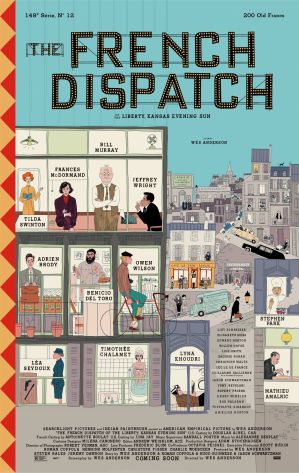 Wes Anderson’s new movie, “The French Dispatch,” which will open this summer, is about the doings of a fictional weekly magazine that looks an awful lot like—and was, in fact, inspired by—The New Yorker. The editor and writers of this fictional magazine, and the stories it publishes—three of which are dramatized in the film—are also loosely inspired by The New Yorker. Anderson has been a New Yorker devotee since he was a teen-ager, and has even amassed a vast collection of bound volumes of the magazine, going back to the nineteen-forties. That he has placed his fictional magazine in a made-up French metropolis (it’s called Ennui-sur-Blasé), at some point midway through the last century, only makes connecting the dots between “The French Dispatch” and The New Yorker that much more delightful.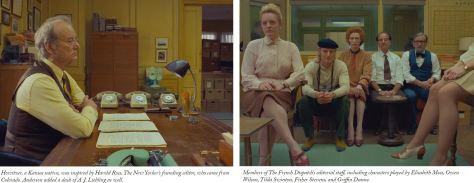
 Boomers Daily