From a CalTech news article (February 4, 2020):
 The hope, Lee says, is that ultrasound will kill cancer cells in a specific way that will also engage the immune system and arouse it to attack any cancer cells remaining after the treatment.
A new technique could offer a targeted approach to fighting cancer: low-intensity pulses of ultrasound have been shown to selectively kill cancer cells while leaving normal cells unharmed.
 Ultrasound waves—sound waves with frequencies higher than humans can hear—have been used as a cancer treatment before, albeit in a broad-brush approach: high-intensity bursts of ultrasound can heat up tissue, killing cancer and normal cells in a target area. Now, scientists and engineers are exploring the use of low-intensity pulsed ultrasound (LIPUS) in an effort to create a more selective treatment.
A study describing the effectiveness of the new approach in cell models was published in Applied Physics Letters on January 7. The researchers behind the work caution that it is still preliminary—it still has not been tested in a live animal let alone in a human, and there remain several key challenges to address—but the results so far are promising.
Read more



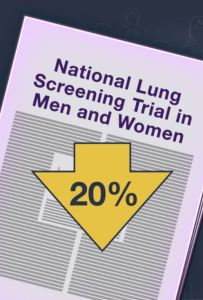 Featuring articles on lung-cancer screening in the NELSON trial, ribociclib and fulvestrant in metastatic breast cancer, vitamin D in pregnancy and asthma, treatment thresholds for neonatal hypoglycemia, and CAR-NK cells in anti-CD19 lymphoid tumors; a review article on placebo and nocebo effects; a Clinical Problem-Solving describing a rapid change in pressure; and Perspective articles on altruism in Extremis, on abuses of FDA regulatory procedures, and on joining forces against delirium.
 Scientists have just discovered a new mechanism that can be key in regulating these immune attacks, raising new hopes of drugs that can protect against joint inflammation and the ailments it can bring.
 cardiovascular events.
 “The results we saw were stunning and suggest that holistically addressing aging via gene therapy could be more effective than the piecemeal approach that currently exists,” said first author Noah Davidsohn, a former research scientist at the Wyss Institute and HMS who is now chief technology officer of Rejuvenate Bio. “Everyone wants to stay as healthy as possible for as long as possible, and this study is a first step toward reducing the suffering caused by debilitating diseases.”
 Boomers Daily