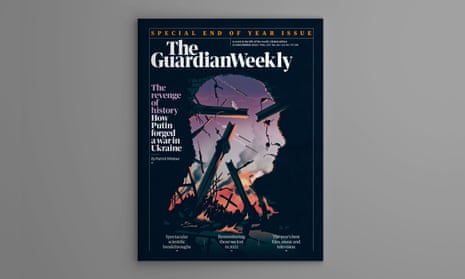
As we near the end of another tumultuous year, one story has dominated the news agenda on almost every level.Vladimir Putin’s invasion of Ukraine in February had been signposted for months, but the shattering of Europe’s postwar order still came as a seismic shock.
The economic and human cost inflicted by Russia on Ukraine has been enormous, while the concurrent shock waves of energy, food and migration crises have reverberated around the world. In a special essay for the final Guardian Weekly magazine of 2022, diplomatic editor Patrick Wintour examines the competing grand narratives of the past that lie at the heart of the conflict – and which make it so difficult to resolve.
In other reflections on 2022, we look back at a year of scientific successes, frommedicine to mathematics via the moon. From the Observer, we remember those we lost over the course of the year, by those who knew them best. There’s a stunning photo gallery featuring work from the agency photographers of the year, and a comprehensive look at the best film and music of 2022 – not forgetting the now traditional roundup of the Guardian Weekly team’s must-see TV.
From Montreal came some hopeful news to round off an otherwise alarming year for the environment. The Cop15 biodiversity summit reached international agreement to try to halt the destruction of Earth’s ecosystems, including targets to protect 30% of the planet for nature by the end of the decade and restore 30% of degraded water, coastal and marine ecosystems. Biodiversity reporters Patrick Greenfield and Phoebe Weston have the details.
The Guardian Weekly (December 16, 2022): In Germany, 25 conspirators were arrested and accused of plotting to overthrow the government. The eclectic grouping, known as the Reichsbürger plotters, espoused a far-right ideology but hailed largely from the centre of respectable German society, headed up by an elderly minor aristocrat and including in their ranks family doctors, judges, a celebrity chef and an opera singer.
Three months have passed since fervent anti-regime demonstrations began in Iran. As more grim details emerged of public executions of protesters and the grotesque targeting of women by security forces, Christopher de Bellaigue takes a deep look at the movement, in particular the role played by women and young people, and asks what it might take for a popular revolution to succeed.
Mark Zuckerberg, the CEO of Meta (formerly Facebook) has spent $100bn building a virtual reality world known as the metaverse, which he believes will replace the conventional internet. The problem is, hardly anyone seems to prefer its clunky headsets and empty landscapes to the real world. With poor financial results and redundancies at Meta, has it all been a hugely expensive mistake? Steve Rose ventures into the metaverse, so you don’t have to.
Monocle’s editorial director Tyler Brûlé brings us a festive programme while our Christmas market takes place at Midori House. Featuring Monocle’s Andrew Tuck, Emma Nelson, Andrew Mueller and Guy De Launey.
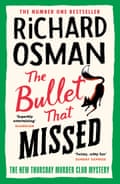
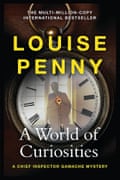
Given the relentlessly grim nature of the news this year, it’s hardly surprising that escapism in the form of cosy crime continues to challenge traditional crime/thriller bestsellers, with Richard Osman’s third Thursday Murder Club mystery, The Bullet That Missed (Viking), riding high in the charts. The last 12 months have seen a bumper crop of excellent books at the cosy end of the spectrum, from Ajay Chowdhury’s second crime novel, The Cook (Harvill Secker), set against the backdrop of an east London curry house, to veteran Canadian author Louise Penny’s 18th Armand Gamache novel,A World of Curiosities(Hodder & Stoughton).
Inventiveness appears to be on the rise, too. Janice Hallett’s second novel, The Twyford Code (Viper), told in transcribed audio files retrieved from an iPhone, succeeds in being fiendishly clever and very moving. Authors such as Gillian McAllister, whose Wrong Place Wrong Time (Michael Joseph) is an ingeniously plotted murder mystery in which time travels backwards, and Gabino Iglesias, whose high-octane southern noir thriller The Devil Takes You Home (Wildfire) has supernatural elements, are also giving the genre a welcome shot in the arm. Others have approached familiar tropes from new angles: the main character in CS Robertson’s The Undiscovered Deaths of Grace McGill (Hodder & Stoughton) is not a cop but a “death cleaner”.
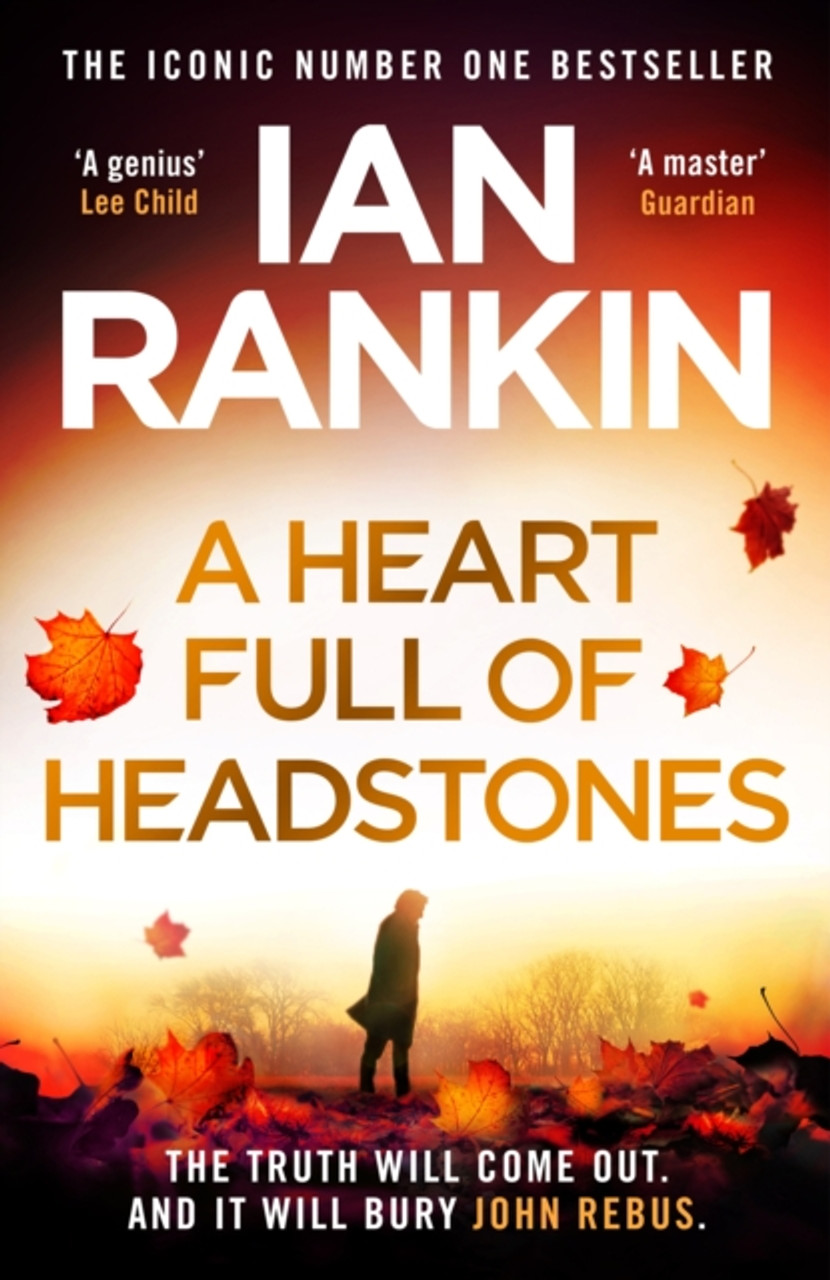
Recent revelations have meant that the British public’s growing distrust of the police is very much a part of the UK’s permacrisis. Ian Rankin, creator of maverick cop John Rebus, commented recently that there are “big questions” for authors who write police procedurals. “In the current state of the world, how can you write about a police officer and make them the goody, when we look around us and see that so often the police are not the goodies?” In his latest Rebus novel, the splendid A Heart Full of Headstones (Orion), an officer who has been charged with domestic violence tries to make a deal by stitching up dodgy colleagues.
The year has been punctuated by the collective groans of crime fiction critics as the results of yet another male celebrity’s lockdown diversion landed on their doormats (presumably the female celebrities were too busy home schooling). The most impressive of these is Frankie Boyle’sMeantime(John Murray): set in Glasgow during the aftermath of the 2014 referendum on Scottish independence, it’s both funny and moving.
There have been plenty of excellent non-celebrity debuts. Standouts include Patrick Worrall’s complex spy thriller The Partisan (Transworld); Conner Habib’s Hawk Mountain (Transworld), a paranoid and unsettling tale of masculinity in crisis; and Wake (Hodder & Stoughton), Australian newcomer Shelley Burr’s sensitive exploration of the aftermath of trauma in a parched outback town. Katie Gutierrez’s More Than You’ll Ever Know (Michael Joseph) is an intelligent and nuanced examination of the complicated relationship between a true-crime writer and her subject, a female bigamist. And The Maid by Nita Prose (HarperCollins) will have you rooting for its titular heroine, neurodivergent Molly, as she finds herself caught up in a web of deception at the fancy Regency Grand Hotel.
There have been strong additions to other long-running and well-loved police series, such as Give Unto Others (Hutchinson Heinemann), the 31st novel to feature Donna Leon’s Commissario Brunetti, and The Murder Book (Little, Brown), 18th outing for Mark Billingham’s Tom Thorne. More recent additions to the police procedural canon include Elly Griffith’s DI Harbinder Kaur, who had her third outing in Bleeding Heart Yard(Quercus), and Alan Parks’s shambolic, mid-70s Glaswegian detective Harry McCoy, who had his fifth in May God Forgive (Canongate). Maror by Lavie Tidhar (Apollo), an epic, multi-generational thriller set in Israel, with an enigmatic cop at its centre, is also well worth the read.
Highlights in historical crime include Blue Water (Viper) by Leonora Nattrass, a shipboard thriller set in 1794, and The Lost Man of Bombay (Hodder & Stoughton), the third in Vaseem Khan’s excellent series set in post-partition India. Alternative history has been well served by the thoroughly chilling Queen High (Quercus), CJ Carey’s sequel to last year’s superb Widowland, which imagines a postwar Britain under Nazi rule.
Although translated crime fiction seems thinner on the ground at the moment, the quality is high: standouts include Olivier Norek’s impressive policier Breaking Point (MacLehose, translated from French by Nick Caister) and Antti Tuomainen’s delightfully funny The Moose Paradox (Orenda, translated from Finnish by David Hackston). All in all, the genre seems in good shape: a broader church, less formulaic and more exciting.
December 2, 2022:The pullback by Ukraine’s military in the south of the country. Also, letter bombs sent to high profile targets in Spain. Croatia becomes the 20th member of the Euro Zone.
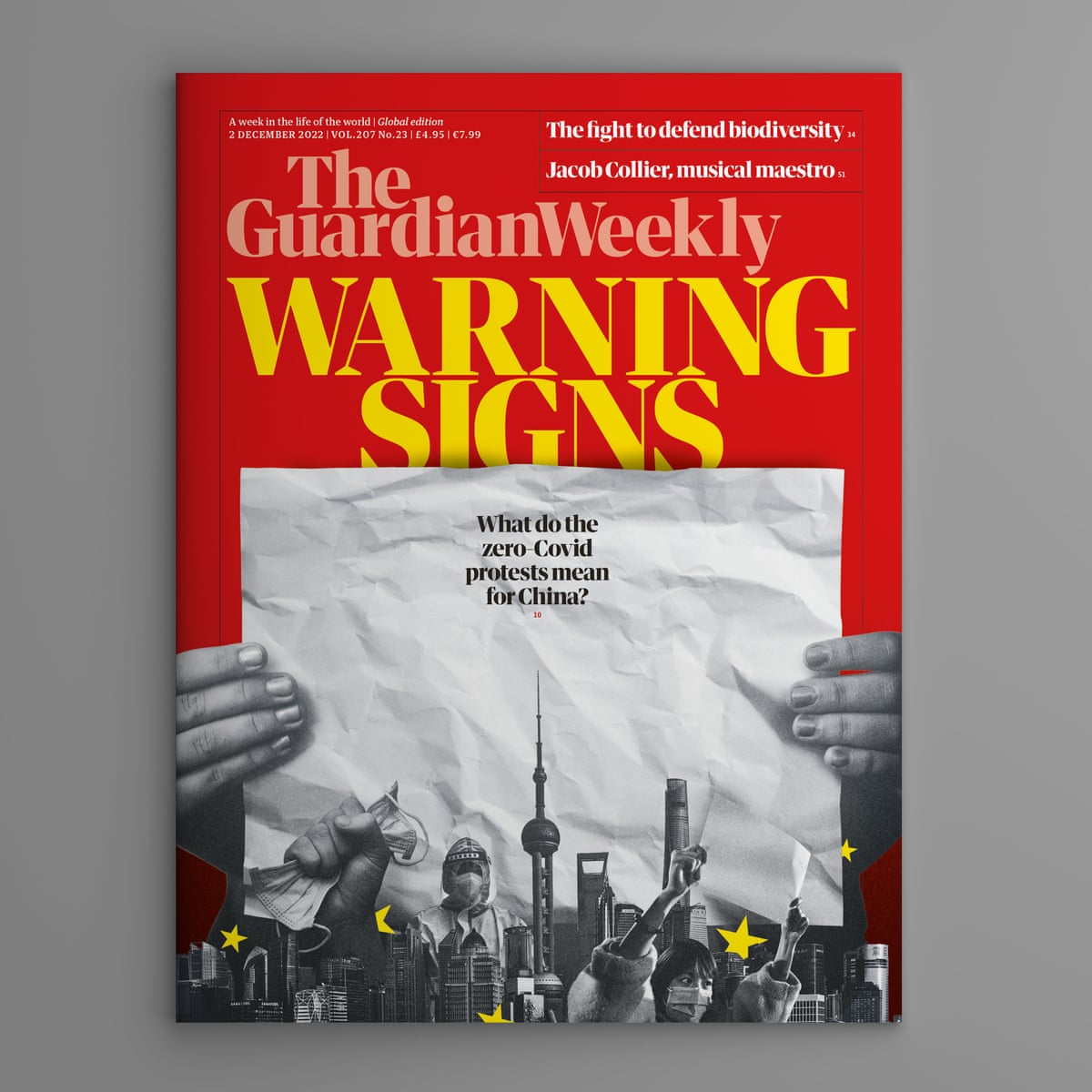
Discontent over China’s zero-Covid suppression policy came to a head last weekend in a series of unprecedented protests across the country. The civil disobedience – remarkable just for the fact it was happening at all in a state where such behaviour is rarely tolerated – seemed to have been smothered by police by the start of the week. Even so it revealed to the world signs of a hitherto unseen fracture in China’s totalitarian political system.
From one Cop to another: hot on the heels of the recent climate conference comes this month’s global summit on biodiversity, which is being held in Montreal. To set the scene, biodiversity reporter Phoebe Weston explains how the damage done to the natural world is a tale of decline spanning thousands of years. Can delegates at Cop15 seize their chance to change the narrative?
With five Grammy awards off the back of four albums spanning everything from folk to jazz and pop, the British multi-instrumentalist Jacob Collier is a global phenomenon. But despite being feted by music royalty including Stormzy, Chris Martin and Herbie Hancock, the 28-year-old has kept a relatively low profile. Global music critic Ammar Kalia takes a trip into Collier’s colourful, polyharmonic world of quarter-tones and non-standardised pitch.
Financial Times – The FT’s Daniel Garrahan and food critic Tim Hayward visit Silo, a ‘zero waste’ restaurant in Hackney, which rejects the bin, makes ice cream from waste bread, turns seaweed into pendant lighting and ‘upcycles’ used wine bottles
SILO BEGAN IN AUSTRALIA IN 2011 WITH ARTIST JOOST BAKKER WHO PROPOSED THE IDEA OF ‘NOT HAVING A BIN’… FROM THAT POINT SILO’S CHEF AND OWNER HAS BUILT THE BUSINESS UP TO BEING THE WORLD’S FIRST ZERO WASTE RESTAURANT.
SILO IS A RESTAURANT CONCEIVED FROM A DESIRE TO INNOVATE THE FOOD INDUSTRY WHILST DEMONSTRATING RESPECT: RESPECT FOR THE ENVIRONMENT, RESPECT FOR THE WAY OUR FOOD IS GENERATED AND RESPECT FOR THE NOURISHMENT GIVEN TO OUR BODIES. THIS MEANS WE CREATE EVERYTHING FROM ITS WHOLE FORM, CUTTING OUT FOOD MILES AND OVER-PROCESSING, WHILST PRESERVING NUTRIENTS AND THE INTEGRITY OF THE INGREDIENTS IN THE PROCESS.
News, Views and Reviews For The Intellectually Curious













 Boomers Daily