Tag Archives: Japan

Reviews: ‘Can Subaru Hold On To Its Recent Success?’

Subaru started as a small scrappy Japanese brand, brought to the states by a couple of American businessmen in the 1960s, and was quickly met with ridicule. But it persisted, and over the decades has gone from being a small niche player to one of the most successful brands in America.

Subaru has weathered economic recessions far better than much larger competitors, and it is positioned near the top of consumer satisfaction surveys. But the ever-changing auto market presents some challenges for them, and they need to adapt to keep up.

When Subaru entered the United States in the 1960s it was panned by critics, and actually advertised its own cheap ugliness. Over the next several decades it would become a highly successful brand through a combination of offbeat but practical cars and a relentless focus on understanding its own customers.

The scrappy brand enjoyed a 93-month sales increase streak that ended in 2019, and it has found ways to survive during the coronavirus pandemic. But it is not without challenges. The intense demand for its vehicles has at times brought growing pains — quality issues and recalls gave led to an unusual quarterly loss in 2018.

There is also pressure on the company, like all automakers, to develop some kind of electrification strategy. Subaru does have a partnership with the much larger Japanese automaker Toyota, which is expected to soon produce an electric vehicle jointly made by the two companies.

Mountain Views: ‘Aoni Village – Nagano, Japan’

This is a very small village in Hakuba, and unfortunately there is no public transport to get there. After driving up the mountain for about 20 minutes from Hakuba-station, you will come to an amazing view
with 14 large traditional Japanese houses and 7 warehouses, that were build during the Edo period (1603-1868) and the Meiji period (1868-1912).

This village is stated to be Japan’s important preservation district of historic buildings. It keeps it traditional atmosphere, has not been turned into a tourist spot.

You will be able to enjoy the primitive relaxing walk here just like the olden times. It is also famous for their beautiful terraced rice-fields.
If you visit Aoni Village, you should definitely go up the terraced rice-fields and take a look at the wonderful view of the Northern Alps over the village.

Timeline: 00:00​ タイトル(title) 00:23​ 青鬼集落(Aoni Village) 06:37​ 青鬼神社(Aoni Shrine) 07:38​ 棚田(Rice Terraces)

Architectural History: ‘Frank Lloyd Wright – The Imperial Hotel’ (Video)

Frank Lloyd Wright: The Lost Works explores some of Wright’s most important demolished and unrealized structures. The project brings these lost buildings to life through immersive digital animations reconstructed from Wright’s original plans and drawings, along with archival photographs.

Two years in the making and based on a Japanese publication of original plans and historical photos, Frank Lloyd Wright: The Lost Works – The Imperial Hotel is a comprehensive digitally-animated recreation of the exterior (Part I) and interior (Part II) of this masterpiece.

Learn more about the Frank Lloyd Wright Trust: https://flwright.org

Documentary: ‘Fukushima – The Age Of Radioactivity’

The USS Ronald Reagan cruised into a radioactive cloud from the Fukushima nuclear power plant in March 2011. Sailors on the aircraft carrier were exposed to radiation. This documentary looks at the event and what came before it. The discovery of the atom and radioactivity are among the most important advances in 20th Century science. This film provides a comprehensive, historical examination of a century of radioactivity. At the same time it remembers the victims – from the Curies to Fukushima.

The film-makers visit Japanese families who sued Tepco, the operator of the Fukushima reactor, after their children developed thyroid cancer following the tsunami and subsequent nuclear disaster. Sent to help tsunami victims, sailors from the USS Ronald Reagan give detailed accounts of what happened on board the carrier. Radiation victims on both sides of the Pacific recount their difficulties in getting information. The film also introduces others harmed by industrial and military secrecy over the issue. Among them are fishermen and veterans exposed to radiation during the nuclear bomb tests on Bikini Atoll, Hiroshima survivors and young women who worked with radium in US factories in the 1920s. Radioactivity is invisible and odorless, yet very harmful to life. A Japanese doctor tells viewers how radioactivity affects the human body, why it causes cancer, and what can be done to shield people against it.

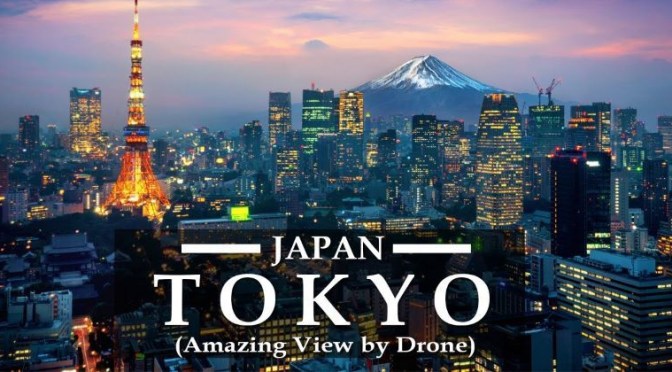
Aerial Skyline Views: ‘Tokyo – Japan’ (Video)

Tokyo, Japan’s busy capital, mixes the ultramodern and the traditional, from neon-lit skyscrapers to historic temples. The opulent Meiji Shinto Shrine is known for its towering gate and surrounding woods. The Imperial Palace sits amid large public gardens. The city’s many museums offer exhibits ranging from classical art (in the Tokyo National Museum) to a reconstructed kabuki theater (in the Edo-Tokyo Museum). 

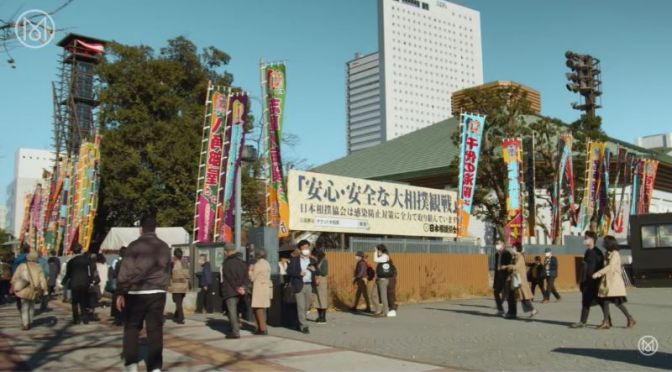
Travel Guides: ‘Ryogoku And Kuramae’, Tokyo, Japan

With any luck you’ll spot a sumo wrestler out and about in Ryogoku, the riverside neighbourhood that is home to Kokugikan, Tokyo’s distinctive sumo stadium. Across the water is Kuramae, another old neighbourhood that has long been famous for its craft workshops and still hums with industry.

The historic center of Japanese wrestling, riverside Ryogoku is home to Ryogoku Kokugikan arena, which hosts sumo and boxing, as well as classical concerts. Nearby Ryogoku Edo Noren is a dining street resembling an Edo-period village, where restaurants serve chanko nabe, the traditional protein-rich stew favored by wrestlers. In the striking, modern Edo-Tokyo Museum, scale and life-sized models recreate feudal life.

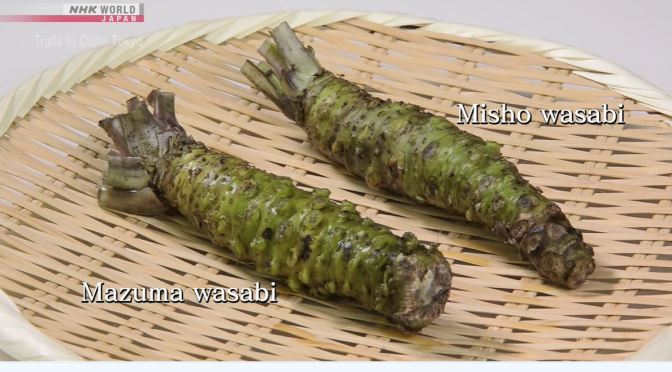
Food Insider: ‘Wasabi – Japanese Horseradish’

See what’s up with wasabi (Japanese horseradish), the root with a pungent punch that plays an important role in Japanese cuisine.

Wasabi or Japanese horseradish is a plant of the family Brassicaceae, which also includes horseradish and mustard in other genera. A paste made from its ground rhizomes is used as a pungent condiment for sushi and other foods. 

Travel Guides: ‘Harajuku & Aoyama’ In Tokyo (Video)

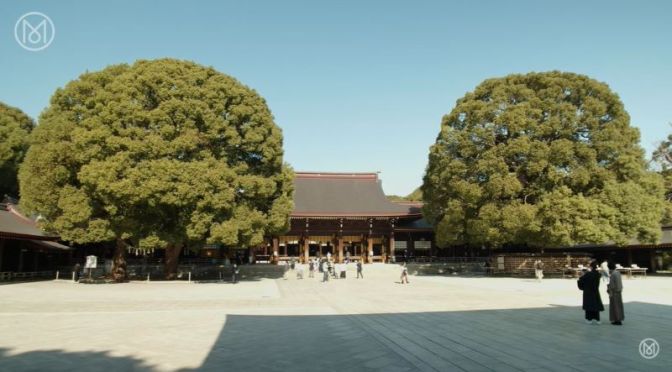
Harajuku is a neighbourhood of contrasts, home to the Meiji Shrine, which is surrounded by one of Tokyo’s largest green spaces, and a dense network of small streets packed with shops and cafés. Aoyama attracts a more grown-up crowd. Here, chic boutiques sit alongside one of the city’s most exquisite museums.

Buzzing Harajuku is renowned for colorful street art and youth fashion, with quirky vintage clothing stores and cosplay shops along Takeshita Street, and traditional, upmarket boutiques on leafy Omotesando Avenue. Small, trendy bars fill the surrounding lanes, while dessert shops and carts specialize in sweet crêpes, donuts, and bubble tea. Watari Museum of Contemporary Art hosts cutting-edge temporary exhibitions. 

Aoyama is one of the wealthiest neighborhoods of Tokyo, located in the northwest portion of Minato Ward. The area is well known for its international fashion houses, cafes and restaurants. 

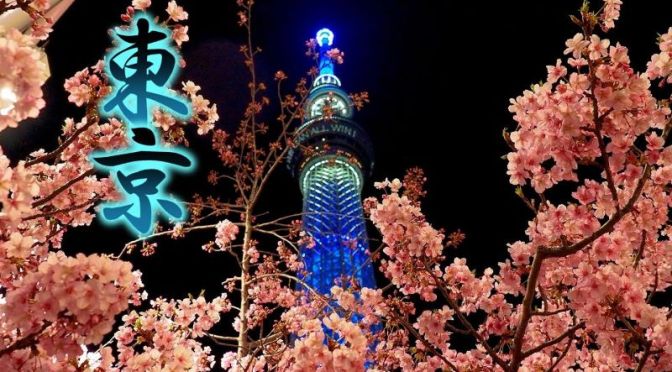
Spring City Views: Cherry Blossom Season (Sakura) Begins In Tokyo (Video)

Date taken: February 27, 2021.

The Japanese cherry blossom, or sakura, has long been adored by people across the globe. It is regarded as a symbol of renewal, vitality, and beauty. During the spring season of each year, thousands travel to Japan to view the wondrous spectacle of these white or pink flowers blooming en masse.

Video timeline: 0:00​ TOKYO SKYTREE https://bit.ly/3sAQ2Xs1:32​ Sakura-Jingu shrine https://bit.ly/2ZVmec1 2:34​ Nihonbashi https://bit.ly/3bOz4OC5:58​ Ueno park https://bit.ly/3kuthBM7:41​ Kanda jinbocho https://bit.ly/3aXUABo