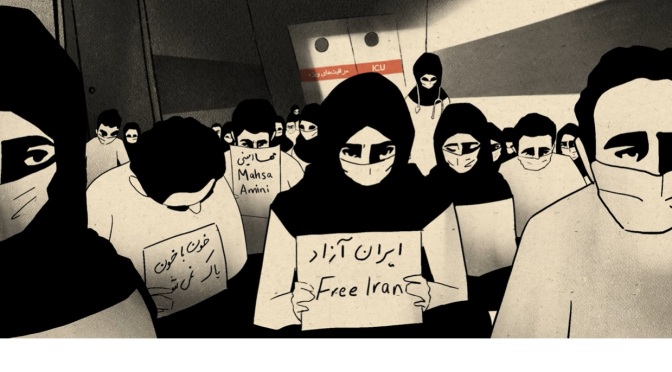
The New Yorker (April 17, 2024): In “The Smallest Power,” the filmmaker Andy Sarjahani captures the power of an individual act of resistance amid the chaos of nationwide disorder. The animated short is a product of his own circuitous journey to understand his dual identities. Sarjahani’s mother, Tammie, is a Baptist from the American South.
His father, Ali, was born a Shiite Muslim from Iran. They met in the library at the University of Alabama in Huntsville, married in 1978, and eventually settled in Russellville, Arkansas. “I grew up in the Ozarks, so I didn’t have a deep connection to my Iranian heritage,” Sarjahani told me. His family had Christmas trees and celebrated Easter but also marked Nowruz, the Persian New Year.
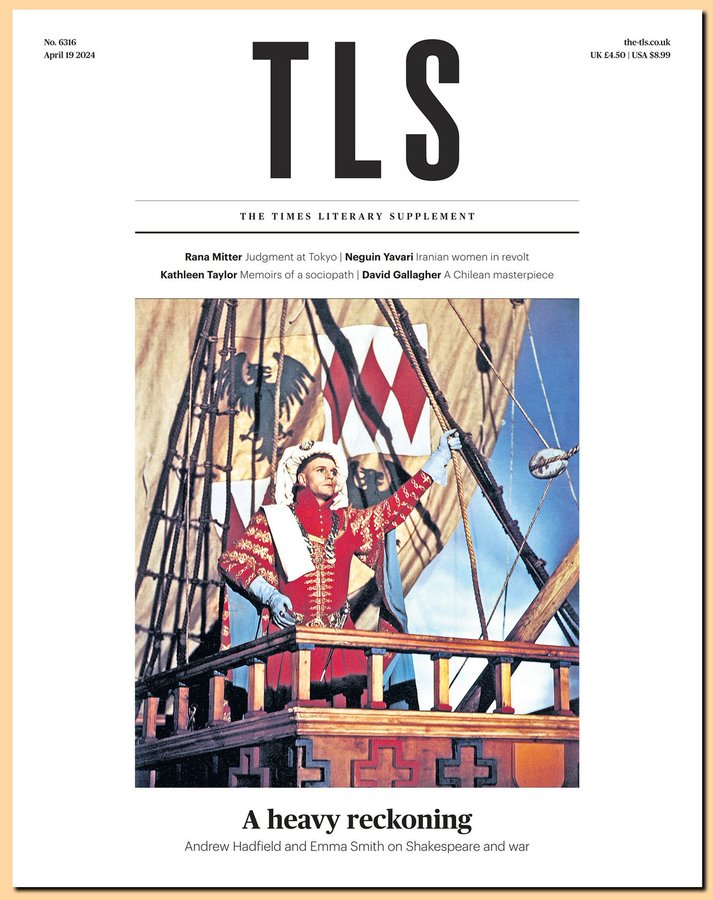
Times Literary Supplement (April 17, 2024): The latest issue features ‘A Heavy Reckoning’ – Shakespeare and War’; Judgment at Tokyo; Iranian women in revolt; Memoirs of a sociopath and A Chilean masterpiece…
The Globalist (April 17, 2024): The foreign ministers of the G7 nations touch down in Capri to discuss the crisis in the Middle East and the ongoing war in Ukraine.
Then: Georgia’s controversial bill on ‘foreign influence’ and a look at the debate around South Africa’s National Health Insurance. Plus: newspapers, television news, 100 days to go before the Olympic Games and we speak with luxury home-appliance manufacturer Gaggenau.
The Globalist (April 16, 2024): We discuss rising tensions in the Middle East amid fears of an Israeli military response to Iran’s weekend attacks.
We also have the latest on Donald Trump’s historic criminal trial, Croatia’s parliamentary elections and Monocle’s team in Milan checks in from the first day of the 62nd edition of Salone del Mobile. Plus: a special interview with the former Commanding General of US Army Europe, Ben Hodges, on the laws of engagement in Ukraine, Gaza and beyond.
The Globalist (April 15, 2024): The latest on the conflict in the Middle East following Iran’s reprisal attack on Israel. Then: after days of clashes, we discuss the unrest at the Thailand-Myanmar border.
Plus: the implications of Senegal’s new presidency for regional dynamics and fashion news.
Artificial intelligence holds huge promise in health care. But it also faces massive barriers
Better diagnoses. Personalised support for patients. Faster drug discovery. Greater efficiency. Artificial intelligence (ai) is generating excitement and hyperbole everywhere, but in the field of health care it has the potential to be transformational. In Europe analysts predict that deploying ai could save hundreds of thousands of lives each year; in America, they say, it could also save money, shaving $200bn-360bn from overall annual medical spending, now $4.5trn a year (or 17% of gdp). From smart stethoscopes and robot surgeons to the analysis of large data sets or the ability to chat to a medical ai with a human face, opportunities abound.
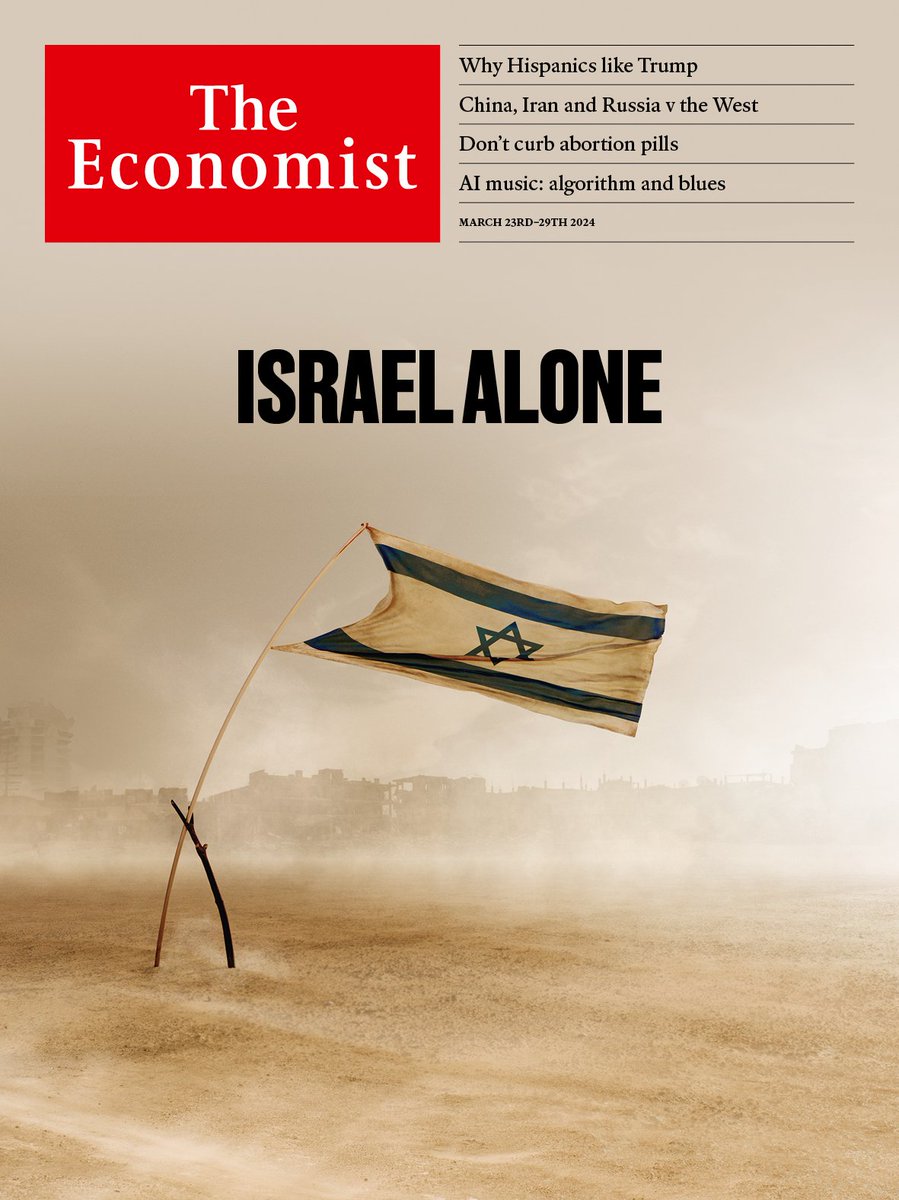
The Economist Magazine (March 21, 2024): The latest issue features ‘Israel Alone’ – At a moment of military might, Israel looks deeply; ‘How To Trade An Election’ – It is getting harder for investors to ignore politics; China, Iran and Russia versus The West – Assessing the economic threat posed by the anti-Western axis…
There is still a narrow path out of the hellscape of Gaza. A temporary ceasefire and hostage release could cause a change of Israel’s government; the rump of Hamas fighters in south Gaza could be contained or fade away; and from the rubble, talks on a two-state solution could begin, underwritten by America and its Gulf allies. It is just as likely, however, that ceasefire talks will fail. That could leave Israel locked in the bleakest trajectory of its 75-year existence, featuring endless occupation, hard-right politics and isolation. Today many Israelis are in denial about this, but a political reckoning will come eventually. It will determine not only the fate of Palestinians, but also whether Israel thrives in the next 75 years.
It is becoming harder for investors to ignore politics
Investors differ in their approach to elections. Some see politics as an edge to exploit; others as noise to block out. Even for those without a financial interest, markets offer a brutally frank perspective on the economic stakes. As elections approach in America and Britain, as well as plenty of other countries, that is especially valuable.
The Economist Magazine (March 7, 2024): The latest issue features Three big risks that might tip America’s presidential election – Third parties, the Trump trials and the candidates’ age introduce a high degree of uncertainty; Xi Jinping’s hunger for power is hurting China’s economy; How to fix the Ivy League – Its supremacy is being undermined by bad leadership…













 Boomers Daily