FRANCE 24 (July 6, 2023) – Beaune is the wine capital of France’s Burgundy region. Above ground, the old fortified city is already beautiful. But the real treasure is hidden below the surface, down in the cellars. They contain two million bottles of wine, in a total of five kilometres of galleries, all linked together.
One of the oldest cellars in Beaune has been occupied for four generations by the Maison Drouhin. It contains traces of the city’s ancient past. Meanwhile, the cellars of Maison Champy were once frequented by Louis Pasteur and Gustave Eiffel. The much more modern Jadot winery has an unexpected skylight.
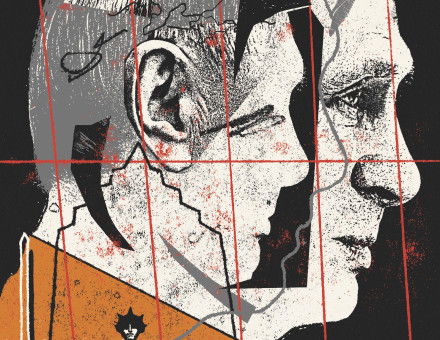
In the 1970s and ’80s, geographer Ken Martis mapped every congressional district and color-coded them by political party, going all the way back to the first Congress.
In the captivating survey “Comparative Hell: Arts of Asian Underworlds,” the damned are boiled alive. Writhing in pain, they are skewered, mauled by dogs, and devoured by ink-black birds. But the show is dotted throughout by charming reprieves: a lush jade-green garden, creamy-white blossoms, and whirling clouds. This is a hell that delights as much as it punishes.
Ashmolean Museum (June 26, 2023): This short film by Carina Hanslik shares an insight into the incredible story behind an ancient ceramic camel.
The object that inspired this animation, a ceramic camel dating back to the Tang Dynasty (AD 618–907), helps us to tell the story of Paul Jacobsthal, a Jewish professor of Archaeology at the University of Marburg in the 1930s, who was forced to leave Germany.
FRANCE 24 (June 23, 2023) – Bordering the French Riviera, Marseille is a one-of-a-kind place in France with a soul of its own. The colourful metropolis is famous for being the sunniest city in the country and a fascinating destination with a rich history.
The southern port city has been at the crossroads of trade and immigration since it was first founded in 600 BC. All this has made Marseille into a Mediterranean melting pot with a diverse cultural and gastronomic heritage.
HISTORY TODAY MAGAZINE (JULY 2023) – Civil war in Ancient Rome, England’s most useless charities, agents of anarchy in the fin de siècle, the battle for the Korean peninsula, a Catholic sympathiser at Elizabeth I’s court, Bardolatry, Hong Kong’s floating population.
Vitellius led through the streets of Rome by the people, by Georges Rochegrosse, 1883.
For citizens of Ancient Rome, the recurrence of brutal civil war was par for the course. For writers, it was an opportunity.
During the Roman Empire, outbreaks of civil war (and the assassinations which often preceded them) were generally intended to change the emperor, not the imperial system. Even though there was a brief moment after the emperor Caligula’s assassination in AD 41 when a change in the political system might have been triggered, the rudderless and leaderless soldiers quickly reverted to the reassuring default mode of imperial rule after conveniently finding Claudius hiding behind a curtain and making him emperor.
National Geographic Traveller Magazine (July/August 2023): The issue features the best-value safaris available, an off-road journey in Bolivia, three Camino de Santiago itineraries and a weekend in Czech Republic’s South Moravia.
This issue also comes with a free UK & Ireland guide — featuring 52 short breaks around Britain and Ireland, whether it’s cycling in the Peak District or exploring Edinburgh’s finest wine bars.
Also inside this issue:
Bolivia: An off-road take on the classic journey from the Atacama Desert to the Uyuni Salt Flat. Florida: The show must go on in the Sunshine State, be it the Everglades or tropical Keys. Sardinia: Hiking trails, colourful townsand resilient communities from coast to mountains. Camino de Santiago: Retrace ancient pilgrim paths. Jaipur: Art is all around you in Rajasthan’s largest city. Perth: The capital of Western Australia beckons with revitalised public spaces. South Moravia: Germanic villages, ancient forests and wine cellars in the Czech Republic’s south east. Belém: Long overlooked as a culinary destination, this Brazilian city puts the spotlight on Amazonian ingredients. Bali: Where to stay on this popular Indonesian island.
The American Scholar (June 9, 2023):The idea of “Western civilization” looms large in the popular imagination, but it’s no longer taken seriously in academia.
In her new book, The West: A New History in Fourteen Lives, historian Naoíse Mac Sweeney examines why the West won’t die and, in the process, dismantles ahistorical concepts like the “clash of civilizations” and the notion of a linear progression from Greek and Roman ideals to those of our present day—“from Plato to NATO.”
Through biographical portraits of figures both well-known and forgotten—Herodotus and Francis Bacon, Livilla and Phyllis Wheatley, Tullia d’Aragona and Abu Yusuf Yaqub ibn Ishaq al-Kindi—Mac Sweeney assembles a history that resembles less of a grand narrative than a spiderweb of influence. Successive empires (whether Ottoman, Holy Roman, British, or American) built up self-mythologies in the service of their expansionist, patriarchal, or, later, racist ideologies.
Mac Sweeney joins the podcast to talk about why the West has been such a dominant idea and on what values we might base a new vision of contemporary “western” identity.Go beyond the episode:Naoíse Mac Sweeney’s The West: A New History in Fourteen LivesWe have covered Greece and Rome in previous episodes, as well as Njinga of AngolaIn our Summer 2023 issue, Sarah Ruden considers how modern biographers distort VergilTune in every week to catch interviews with the liveliest voices from literature, the arts, sciences, history, and public affairs; reports on cutting-edge works in progress; long-form narratives; and compelling excerpts from new books.
THE AMERICAN SCHOLAR – SUMMER 2023 issue: What does Antoni van Leeuwenhoek have to do with Covid? Can a digital restoration of a supposed da Vinci be just as good as the real thing? What was it like to be a young journalist on one of François Truffaut’s sets?
Antoni van Leeuwenhoek, in a circa 1680 painting by the Dutch artist Jan Verkolje, famous for his portraits of prominent members of Delft society
Antoni van Leeuwenhoek’s discovery of microorganisms made possible the revolutionary advances in biology and medicine that continue to inform our Covid age
One night in 1677, a grizzled man in a wrinkled linen nightshirt rushed from his bemused wife’s bed with a candle in hand to examine the “remains of conjugal coitus, immediately after ejaculation before six beats of the pulse.” Using the candle to cast a pool of light in his dark study, he put a drop of the liquid into a tiny glass vial he had blown himself, attaching it to the back of a strange-looking device he had also constructed.
What a digital restoration of the most expensive painting ever sold tells us about beauty, authenticity, and the fragility of existence
I got the call late on a summer afternoon. Yanai Segal, an artist I’ve known for years, asked me whether I’d heard of the Salvator Mundi—the painting attributed to Leonardo da Vinci that was lost for more than two centuries before resurfacing in New Orleans in 2005. I told him that I’d heard something of the story but that I didn’t remember the details. He had recently undertaken a project related to the painting, he said, and wanted to tell me about it. I was eager to hear more, but first I needed to remind myself of the basic facts. We agreed to speak again soon.
FRANCE 24 (June 6, 2023) – It’s one of the most iconic motor races in the world. The “24 hours of Le Mans” race marks a centenary this year. Seven auto manufacturers will be fighting for overall victory with 16 teams represented.
The unique race tests its participants’ reliability and endurance and encourages innovation. The 13,626km track attracts hundreds of thousands of fans from around the world every year. The endurance classic is both a physical and mental challenge for the drivers; the car that covers the greatest distance in 24 hours wins.
News, Views and Reviews For The Intellectually Curious