

Tag Archives: Health
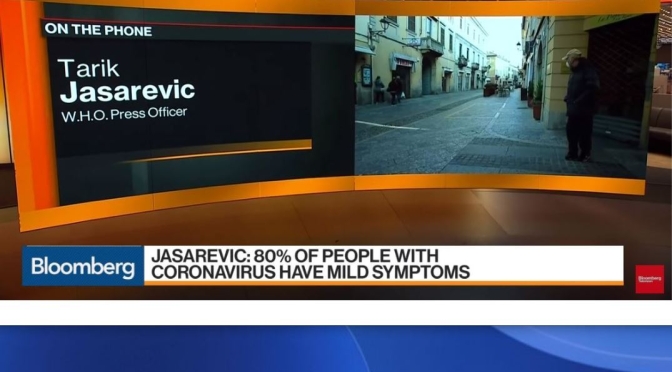
W.H.O. Update: 80% Of “Coronavirus/Covid-19” Patients – “Mild Symptoms”
Mar.03 — World Health Organization spokesman Tarik Jasarevic speaks from Geneva about the latest advice for avoiding the coronavirus. He also comments on efforts to develop a vaccine and advice for public health workers. He speaks on “Bloomberg Markets: European Open.”
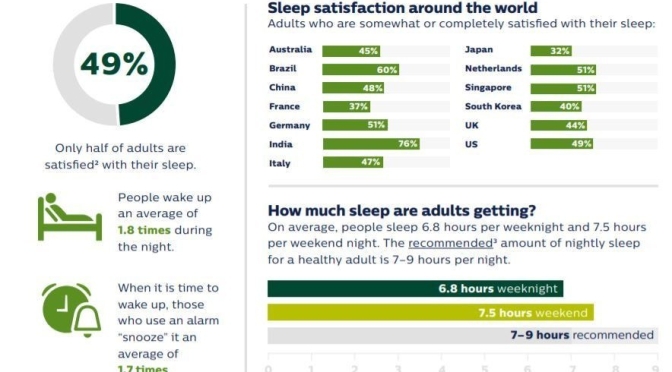
“2020 Philips Sleep Survey”: 50% Of People Sleep Poorly, With Decrease In Those Trying To Improve It
From a Philips “2020 Sleep Survey” online release (Mar 2, 2020):
 “The decrease in people taking action to improve sleep is alarming, especially when it is clear people around the world deeply value sleep. Sleep deficit impacts people both mentally and physically, so we need to educate people on available sleep resources and empower them with the confidence that their efforts will pay off,” said Mark Aloia, PhD, Global Lead for Behavior Change, Sleep & Respiratory Care at Philips.
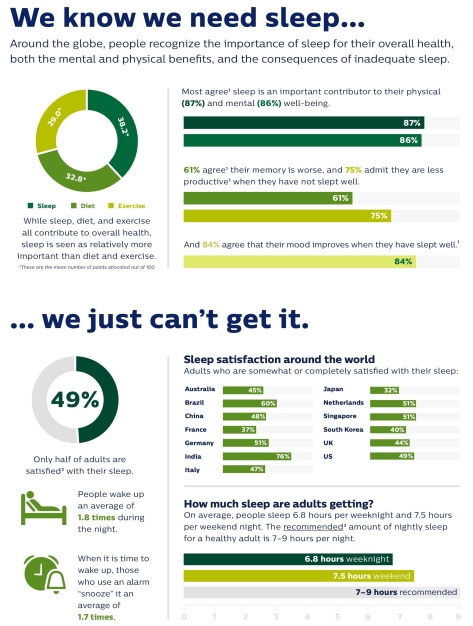
Only 49% of people are satisfied with their sleep, with worry/stress reported as the most limiting factor to a good night’s sleep (33%). Interestingly, fewer people in 2020 are taking action to improve sleep compared to 2019, with nearly all listed strategies to improve sleep lower or consistent in 2020 when compared to 2019 results. For example, reading before bed was the most popular strategy used to improve sleep in 2019 (39%), but only 28% of people report reading to improve sleep in 2020. Other notable distinctions in sleep-related behavior appeared across age and gender differences.
.
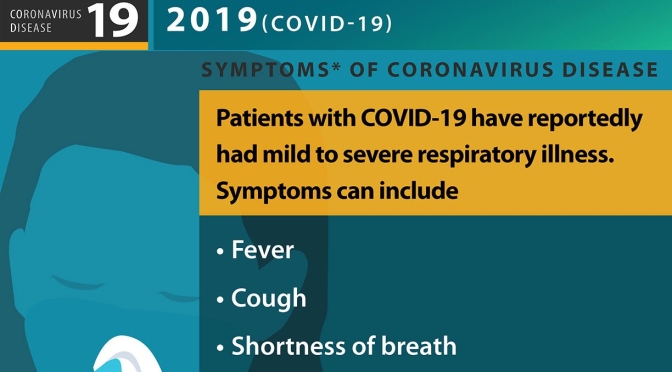
Coronavirus: Lack Of “Adequate Knowledge” Driving Public Panic (BMJ)
From a BMJ Opinion article (Feb 28, 2020):
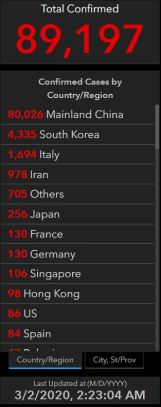 A lack of adequate knowledge is probably the driving force for the public panic, particularly at the early stages of an outbreak—highlighting the fact that information is crucial. Misunderstandings about the information that is available, even worse exaggerating such information, may further aggravate the panic. Unfortunately, these phenomena are not uncommon. To relieve the public panic, an effective approach would be timely publication of trustworthy research evidence in a manner appropriate for the public.
Click here for real-time update
To date, there have been a number of reports and research papers published in peer reviewed journals. However, this information is largely aimed at researchers and healthcare professionals. The study findings are often obscure for the general public. Some of the published evidence is reporting on early findings and there are some methodological limitations. If inappropriately interpreted, they could misinform the public and could potentially cause further panic or psychological stress. We believe that providing the public with timely and credible evidence and appropriate interpretation is very important. Disseminating the evidence effectively is critical to improving the public’s understanding of the outbreak.

Diet Studies: “Eat Less, Live Longer” – Calorie Restriction Delays Age-Related Diseases (Salk)
 Eat less, live longer- If you want to reduce levels of inflammation throughout your body, delay the onset of age-related diseases and live longer—eat less food. That’s the conclusion of a new study by scientists from the US and China that provides the most detailed report to date of the cellular effects of a calorie-restricted diet in rats.
(Salk News, February 27, 2020)
While the benefits of caloric restriction have long been known, the new results show how this restriction can protect against aging in cellular pathways, as detailed in Cell on February 27, 2020.
Aging is the highest risk factor for many human diseases, including cancer, dementia, diabetes and metabolic syndrome. Caloric restriction has been shown in animal models to be one of the most effective interventions against these age-related diseases. And although researchers know that individual cells undergo many changes as an organism ages, they have not known how caloric restriction might influence these changes.
In the new paper, Belmonte and his collaborators—including three alumni of his Salk lab who are now professors running their own research programs in China—compared rats who ate 30 percent fewer calories with rats on normal diets. The animals’ diets were controlled from age 18 months through 27 months. (In humans, this would be roughly equivalent to someone following a calorie-restricted diet from age 50 through 70.)
Health Talk: “Macular Degeneration” – Diagnosis & Treatment (Mayo Clinic)
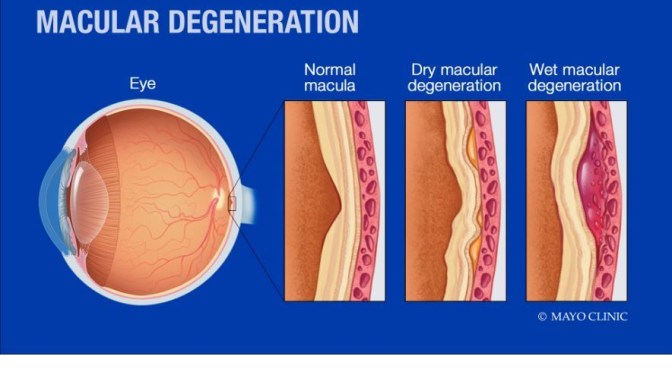
On the Mayo Clinic Radio podcast, Dr. Sophie Bakri, a Mayo Clinic ophthalmologist and retina specialist, discusses macular degeneration, a common eye disorder with age. This interview originally aired Feb. 29, 2020.
Dry macular degeneration is a common eye disorder among people over 50. It causes blurred or reduced central vision, due to thinning of the macula (MAK-u-luh). The macula is the part of the retina responsible for clear vision in your direct line of sight.
Dry macular degeneration may first develop in one eye and then affect both. Over time your vision may worsen and affect your ability to do things such as read, drive and recognize faces. But this doesn’t mean you’ll lose all of your sight.
Early detection and self-care measures may delay vision loss due to dry macular degeneration.
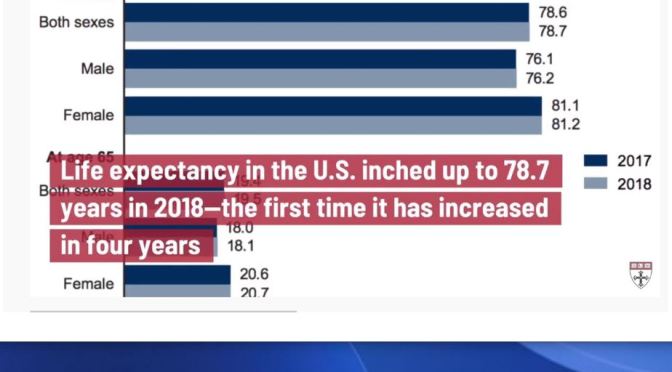
Health: Why U.S. Life Expectancy Stopped Declining In 2018
A slight uptick in U.S. life expectancy in the U.S. in 2018 was due partly to a decrease in overdose deaths, but mostly to decreasing cancer deaths.

Podcast: “Nature” Reviews Worldwide Reporting On “Coronavirus / Covid-19”
 In this edition of Backchat we take a deep dive into Nature’s coverage of coronavirus. As cases climb, what are some of the challenges involved in reporting on the virus?
Health: What To Expect From The Spread Of Coronavirus (Covid-19)
 In public health, honesty is worth a lot more than hope. It has become clear in the past week that the new viral disease, covid-19, which struck China at the start of December will spread around the world. Many governments have been signalling that they will stop the disease. Instead, they need to start preparing people for the onslaught
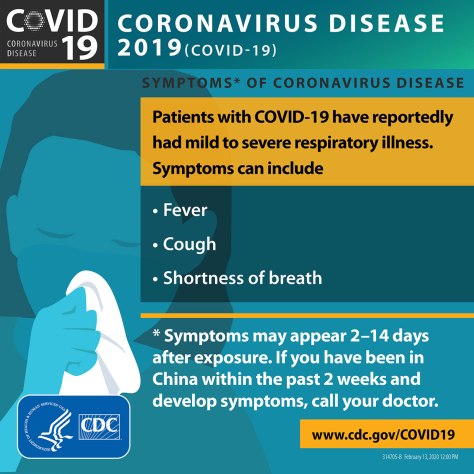
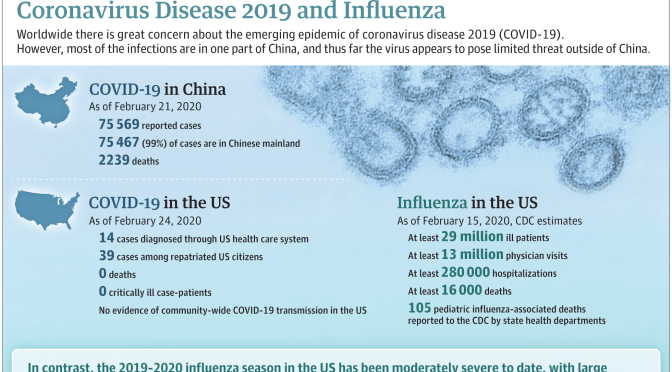
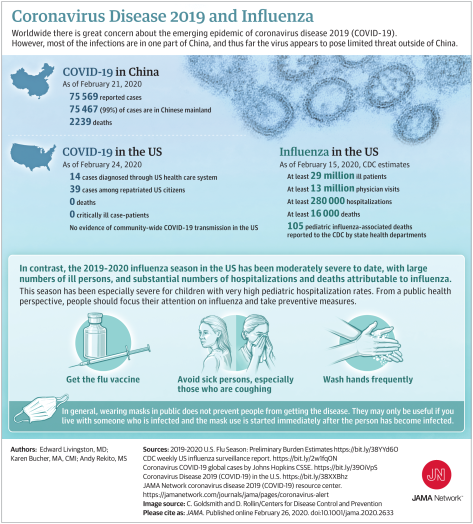
Health: Coronavirus Disease (Covid – 19) And Influenza In 2020 (JAMA)
 Boomers Daily