Though U.S. legislation targeting the problem of surprise medical bills advanced out of key congressional committees in 2019 with support from leaders in both parties, Congress ultimately failed to pass a law to end such bills.
Erin Fuse Brown is an associate professor of law at Georgia State University. Stephen Morrissey, the interviewer, is the Executive Managing Editor of the Journal.
Chloroquine was shown in 2004 to be active in vitro against SARS coronavirus but is of unproven efficacy and safety in patients infected with SARS-CoV-2. The drug’s potential benefits and risks for COVID-19 patients, without and with azithromycin, is discussed by Dr. David Juurlink, head of the Division of Clinical Pharmacology and Toxicology at Sunnybrook Health Sciences Centre in Toronto.
From Wall Street Journal article:
Our experience suggests that hydroxychloroquine, with or without a Z-Pak, should be a first-line treatment. Unfortunately, there is already a shortage of hydroxychloroquine. The federal government should immediately contract with generic manufacturers to ramp up production. Any stockpiles should be released.
As a matter of clinical practice, hydroxychloroquine should be given early to patients who test positive, and perhaps if Covid-19 is presumed—in the case of ill household contacts, for instance. It may be especially useful to treat mild cases and young patients, which would significantly decrease viral transmission and, as they say, “flatten the curve.”
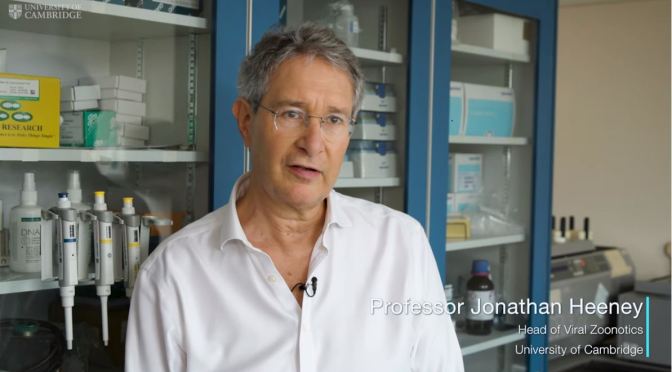
The race is on to find a vaccine against the new COVID-19 coronavirus. Professor Jonathan Heeney explains why a cautious approach is needed and how his team is using new technology developed for influenza and Ebola viruses to target the new infection.
It is hard now to conceive that two months ago, few people had heard of the new coronavirus. Now, the virus, which causes the disease COVID-19, has spread to every corner of the globe. The World Health Organization has officially declared the outbreak a pandemic.
With the threat of hundreds of thousands – possibly millions – of people being infected and healthcare systems becoming overwhelmed, the race is on to develop a vaccine that will protect individuals and slow the spread of the disease. But Professor Jonathan Heeney, Head of the Laboratory of Viral Zoonotics at the University of Cambridge, and one of the people working on a vaccine, says that coronaviruses present a particular challenge to vaccine developers.
Coronaviruses are named after their appearance: they are spherical objects, on the surface of which sit ‘spike’ proteins. The virus uses these spikes to attach to and invade cells in our body. Once inside, the virus uses the cell’s own machinery to help itself replicate and spread throughout the body, causing disease and allowing it to transmit onwards.
Traditionally, scientists would develop vaccines that programme the body to produce antibodies that recognise and block these spikes. But this strategy can misfire with coronaviruses due to a phenomenon known as ‘antibody-induced enhancement’ or ‘vaccine-induced enhancement’, says Heeney.
“If you make antibodies against the spike, they can end up binding to it and helping the virus invade important immune cells known as monocyte-macrophages. Rather than destroying the virus, these cells can then end up being reprogrammed by the viruses, exacerbating the immune response and making the disease much, much worse than it would otherwise be.”
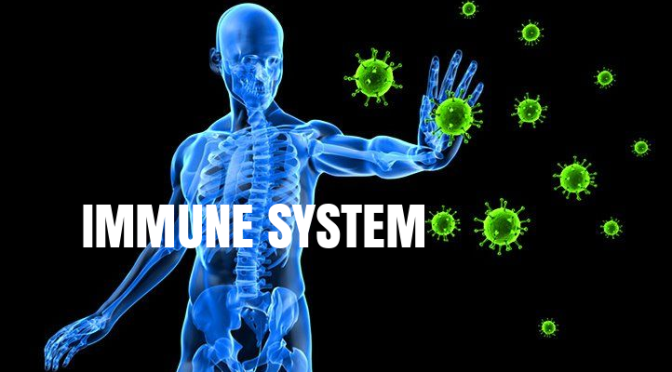
\This video from Harvard Medical School’s HMX Fundamentals Immunology online course offers a high-level overview of the immune system at work in the context of daily life.
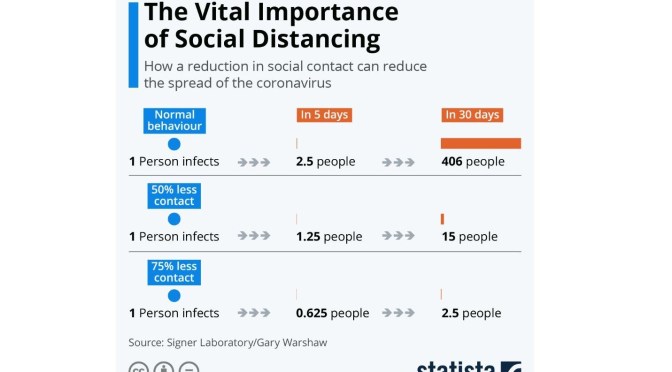
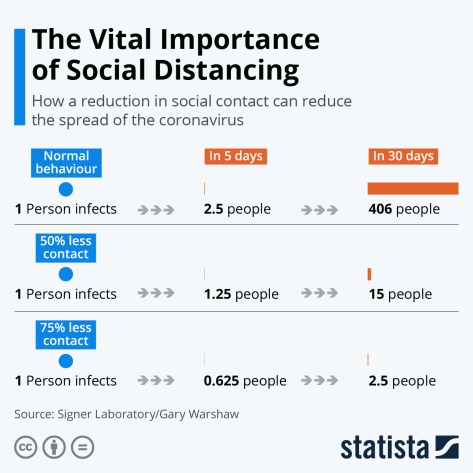
In order to stem the spread of the coronavirus, social interactions around the world are being restricted. This infographic, based on calculations by Robert A. J. Signer, Assistant Professor of Medicine at the University of California San Diego, shows how this so-called social distancing can reduce the spread of the virus.
With no changes to social behaviour, one infected person will on average pass the virus to 2.5 people within five days. After 30 days, the figure would rise to a devastating 406 new infections. The number can be significantly reduced though by engaging in less social contact. With a 50 percent reduction, the number of new infections caused by the average person after 30 days is just 15 people. A 75 percent change would result in an even lower 2.5 new cases – greatly reducing the burden on health services and, if followed by everybody, allowing a country to ‘flatten the curve’ of new infections.
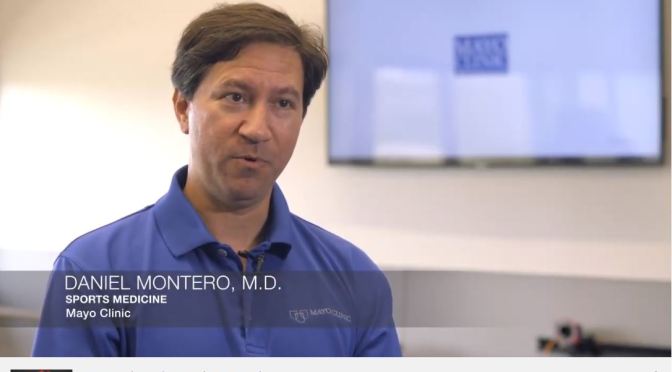
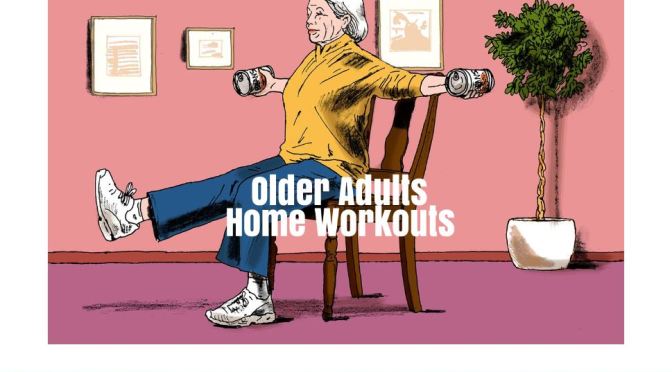
As we’re spending more time at home, it’s important to find new ways to remain active and exercise is important. Mayo Clinic physical therapist Sunni Alessandria and her colleagues offer some insight and tips for exercises you can do at home.
As coronavirus continues to spread around the world, face masks are in high demand as people look for ways to protect themselves. But do they really protect most people from contracting the virus? Dr Shunmay Yeung from London School of Hygiene and Tropical Medicine explains.
From a Wall Street Journal article (March 21, 2020):
As we age, our balance declines, says Dani Johnson, a physical therapist with the Mayo Clinic’s Healthy Living Program in Rochester, Minn. Implementing balance exercises as simple as standing on one leg as you brush your teeth can help prevent falls. Getting a daily dose of cardio can boost the immune system.
This at-home circuit routine will get your heart rate up while also challenging strength and balance. Perform the circuit three times. Walk up and down steps or march in place for two to three minutes between sets. To up the effort, she suggests adding dumbbells or improvising with cans or tube socks filled with coins or rice.
Chair squats
Stand in front of a chair with your feet shoulder-width apart. Bend your knees, lowering your hips back, keeping weight in your heels and your chest upright. Start by sitting into the chair and standing back up 10 to 12 times. If this is easy, hover above the chair then return to standing.
Counter push-ups
Place your hands on the edge of a counter, just beyond shoulder-width apart. Lower into a push-up then press back up. Repeat 10 to 12 times. For more of a challenge, walk your feet farther away from the counter.
Chair triceps dips
Sit upright in a chair with your hands on the armrests, elbows bent at 90 degrees. Straighten your arms, lifting your body off the chair. Hold briefly. Then lower yourself down. Use your legs to balance. Repeat 10 to 12 times.
Calf raises
Begin in a standing position. Rise up onto your toes, hold briefly, then lower back down. Repeat 10 to 12 times. Place one or both hands on a table or chair for more support. For an added challenge, perform on one leg at a time.
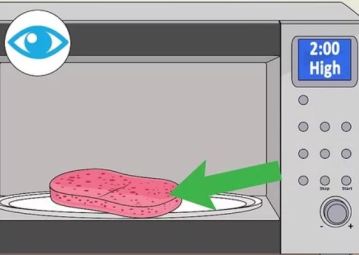
“I personally have been microwaving my N95 mask at home everyday so I can reuse it since I travel to several clinics per day and see some high risk patients. The microwave denatures the proteins (and by extrapolation, the virus) and makes it safe to reuse! (the same procedure is used to clean our kitchen sponges)..”
From the CDC:
.
Microwaves are used in medicine for disinfection of soft contact lenses, dental instruments, dentures, milk, and urinary catheters for intermittent self-catheterization925-931. However, microwaves must only be used with products that are compatible (e.g., do not melt) 931. Microwaves are radio-frequency waves, which are usually used at a frequency of 2450 MHz. The microwaves produce friction of water molecules in an alternating electrical field. The intermolecular friction derived from the vibrations generates heat and some authors believe that the effect of microwaves depends on the heat produced while others postulate a nonthermal lethal effect932-934. The initial reports showed microwaves to be an effective microbicide. The microwaves produced by a “home-type” microwave oven (2.45 GHz) completely inactivate bacterial cultures, mycobacteria, viruses, and G. stearothermophilus spores within 60 seconds to 5 minutes depending on the challenge organism933, 935-937. Another study confirmed these resuIts but also found that higher power microwaves in the presence of water may be needed for sterilization932. Complete destruction of Mycobacterium bovis was obtained with 4 minutes of microwave exposure (600W, 2450 MHz)937. The effectiveness of microwave ovens for different sterilization and disinfection purposes should be tested and demonstrated as test conditions affect the results (e.g., presence of water, microwave power). Sterilization of metal instruments can be accomplished but requires certain precautions.926. Of concern is that home-type microwave ovens may not have even distribution of microwave energy over the entire dry device (there may be hot and cold spots on solid medical devices); hence there may be areas that are not sterilized or disinfected. The use of microwave ovens to disinfect intermittent-use catheters also has been suggested. Researchers found that test bacteria (e.g., E. coli, Klebsiella pneumoniae, Candida albicans) were eliminated from red rubber catheters within 5 minutes 931. Microwaves used for sterilization of medical devices have not been FDA cleared.


 Though U.S. legislation targeting the problem of surprise medical bills advanced out of key congressional committees in 2019 with support from leaders in both parties, Congress ultimately failed to pass a law to end such bills.

 Chloroquine was shown in 2004 to be active in vitro against SARS coronavirus but is of unproven efficacy and safety in patients infected with SARS-CoV-2. The drug’s potential benefits and risks for COVID-19 patients, without and with azithromycin, is discussed by Dr. David Juurlink, head of the Division of Clinical Pharmacology and Toxicology at Sunnybrook Health Sciences Centre in Toronto.

 Place your hands on the edge of a counter, just beyond shoulder-width apart. Lower into a push-up then press back up. Repeat 10 to 12 times. For more of a challenge, walk your feet farther away from the counter.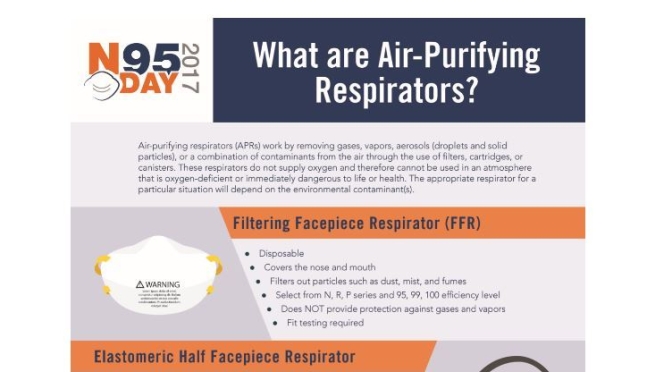
 Microwaves are used in medicine for disinfection of soft contact lenses, dental instruments, dentures, milk, and urinary catheters for intermittent self-catheterization925-931. However, microwaves must only be used with products that are compatible (e.g., do not melt) 931. Microwaves are radio-frequency waves, which are usually used at a frequency of 2450 MHz. The microwaves produce friction of water molecules in an alternating electrical field. The intermolecular friction derived from the vibrations generates heat and some authors believe that the effect of microwaves depends on the heat produced while others postulate a nonthermal lethal effect932-934. The initial reports showed microwaves to be an effective microbicide. The microwaves produced by a “home-type” microwave oven (2.45 GHz) completely inactivate bacterial cultures, mycobacteria, viruses, and G. stearothermophilus spores within 60 seconds to 5 minutes depending on the challenge organism933, 935-937. Another study confirmed these resuIts but also found that higher power microwaves in the presence of water may be needed for sterilization932. Complete destruction of Mycobacterium bovis was obtained with 4 minutes of microwave exposure (600W, 2450 MHz)937. The effectiveness of microwave ovens for different sterilization and disinfection purposes should be tested and demonstrated as test conditions affect the results (e.g., presence of water, microwave power). Sterilization of metal instruments can be accomplished but requires certain precautions.926. Of concern is that home-type microwave ovens may not have even distribution of microwave energy over the entire dry device (there may be hot and cold spots on solid medical devices); hence there may be areas that are not sterilized or disinfected. The use of microwave ovens to disinfect intermittent-use catheters also has been suggested. Researchers found that test bacteria (e.g., E. coli, Klebsiella pneumoniae, Candida albicans) were eliminated from red rubber catheters within 5 minutes 931. Microwaves used for sterilization of medical devices have not been FDA cleared.
 Boomers Daily