



Staff Writer Meredith Wadman and host Sarah Crespi discuss what to expect from the two messenger RNA–based vaccines against COVID-19 that have recently released encouraging results from their phase III trials and the short-term side effects some recipients might see on the day of injection.
Sarah also talks with researcher Xing Chen, a project co-leader and postdoctoral scientist at the Netherlands Institute for Neuroscience, about using brain stimulation to restore vision. Researchers have known for about 70 years that electrical stimulation at certain points in the brain can lead to the appearance of a phosphene—a spot of light that appears not because there’s light there, but because of some other stimulation, like pressing on the eyeball. If electrical stimulation can make a little light appear, how about many lights? Can we think about phosphenes as pixels and draw a picture for the brain? How about a moving picture?
Travel bubbles are under development in some places in an effort to revive air travel, which has plummeted during the pandemic. WSJ explains how reopening the skies without quarantine requirements at both ends of a trip could help reboot the global economy.
Illustration: Crystal Tai

One year since the outbreak emerged in Wuhan, China says it has vaccinated nearly one million people against Covid-19. FRANCE 24 correspondent Charles Pellegrin says while the vaccines have yet to be fully approved for market, authorities have granted permission for their limited use on selected groups of the population.
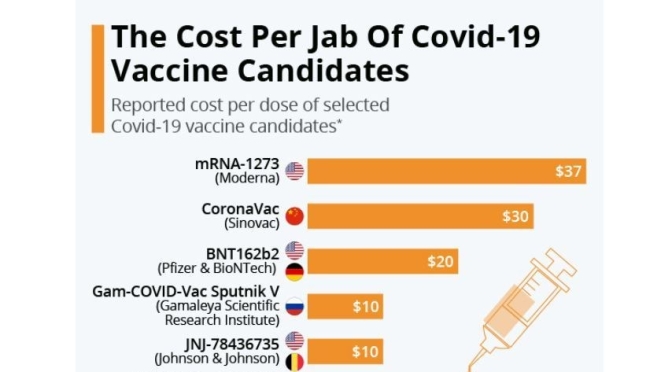
The initial doses of Pfizer and BioNTech’s Covid-19 vaccines could go out next month, if the FDA grants emergency authorization. There are also three other promising vaccine candidates in the pipeline from AstraZeneca, Moderna, and Johnson & Johnson. The process of distributing the vaccine to the 330 million people living in the U.S., however, could prove a logistical challenge. Here’s a look at how the federal government plans to do it.
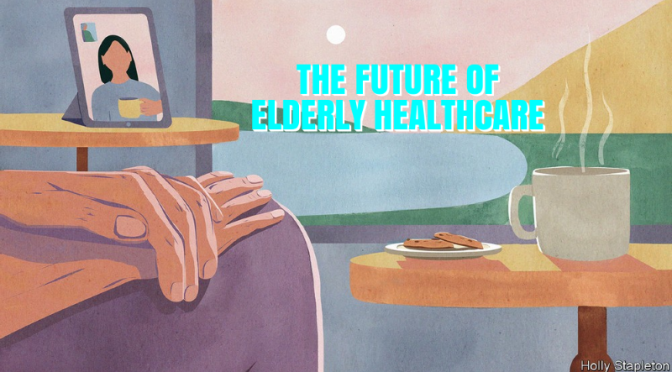
Across the rich world around half of covid-19 deaths have been in care homes. Countries need to radically rethink how they care for their elderly—and some innovative solutions are on offer.

In this audio interview conducted on November 25, 2020, the editors look at new studies of disease transmission in closed environments and provide updates on convalescent plasma and hydroxychloroquine.
The worsening pandemic continues to mean millions of Americans out of work. For older employees in particular, this kind of long-term unemployment can represent the end of a career — especially when they may be facing age discrimination and bias. Economics correspondent Paul Solman looks at the problem as part of his series Unfinished Business.







 Boomers Daily