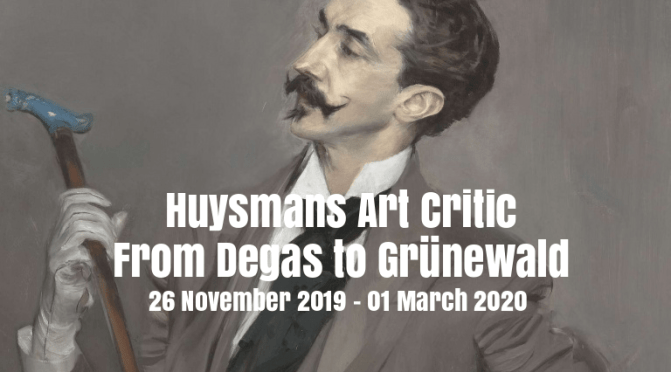
A key writer of the late 19th century, Joris-Karl Huysmans (1848-1907) was an art critic who is still little known or little understood by the general public. However, his contribution to the artistic press and the aesthetic debate was as decisive as the impact of his novel Against Nature.
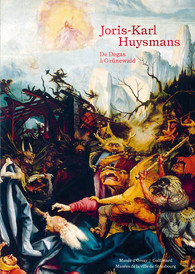
More passionate about Hals and Rembrandt until his discovery of Degas in 1876-1879, Huysmans admitted that this was a defining moment. And yet, his art criticism immediately accepted the possibility of a double modernity. The modernity of the painters of modern life and that of the explorers of dreams were not mutually exclusive. Here, Manet coexists with Rops and Redon. The desire Huysmans showed very early on to escape from the logic of church doctrine no doubt blurred the perception of his aesthetic choices.
How is a drapery put in place? For what reasons does this motive persist until today? How to explain its power of fascination? These are the questions that this exhibition intends to pose, in order to enter the “factory” of the drapery and to get closer to the artistic gesture. By showing the stages of making a drapery, the visitor will discover the singular practices of artists from the Renaissance to the second half of the 20th century.
November 30, 2019 – March 8, 2020, Museum of Fine Arts of Lyon
Albrecht Dürer, Drapery Study, 1508, Brush and Indian Ink, heightened white on dark green paper
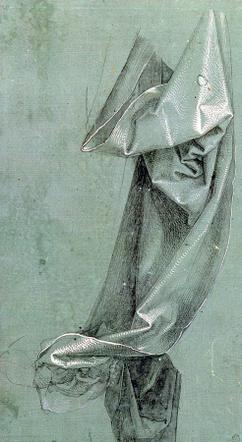
The Musée des Beaux-Arts in Lyon retains an exceptional drawing by Albrecht Dürer studying a piece of drapery. This meticulous study reveals how the flexibility of a fabric lends itself to an infinity of folds, underlined by shadows and lights.
The mahout (elephant keeper), the turbaned Ottoman warriors, and the crowning crescent all allude to the Eastern origins of the elephant. Within the Kunstkammer the elephant represented rulership. This automaton clock, which strikes at both the quarter hour and the hour, is driven by a movement connected to a wheel mounted on the walkway of the howdah (saddle). On the hour, the four Muslim warriors revolve around the brickwork tower. The mahout thumps his arm up and down, as though he were leading the animal, and his counterweighted eyes move back and forth as the machine travels.
Presented to Empress Maria Theresa in Vienna in 1760, this automaton was made at the height of the “century of writing.” Written communication connected scientists, dignitaries, scholars, and artists across long distances, and the act of writing was celebrated in every form. This piece is the last in a series of increasingly complicated ones that Friedrich von Knaus produced during his tenure as Austrian court machinist; he presented other examples to dignitaries such as the French king Louis XV and Duke Charles Alexander of Lorraine.
The machine writes through the hand of the small statuette seated at its top, one of the first mechanical writing figures in human form. This video shows the mechanisms inside the sphere that produce its precise movements. Up to 107 words can be preprogrammed by the arrangement of pegs on a barrel. The figure can also be set via a hand-worked control to appear to write from dictation; this technology that presaged the first typewriter.
Duke Charles Alexander of Lorraine, who bought this automaton clock in 1777, collected luxury objects made in his realm that demonstrated local technical advances. The self-moving components of this timepiece represent the height of Flemish invention in a fashionable Neoclassical style. Mechanically complex and visually impressive, this sparkling clock was a worthy addition to the duke’s collection of timepieces and scientific instruments.
This video shows the movement of the dials for hours, minutes, and seconds; days of the month; and phases of the moon, as well as that of the seven dynamic design elements. The cross-of-Lorraine pendulum swings steadily over the main dial, underneath a dancing letter M. Above the calendar dial turns a Catherine wheel, while the four dragons supporting the obelisk flap their wings and spit pearls. Another Catherine wheel spins above the moon-phase dial, and the entire obelisk is topped by a rotating planetarium. The fourth dial shows the maker’s signature.
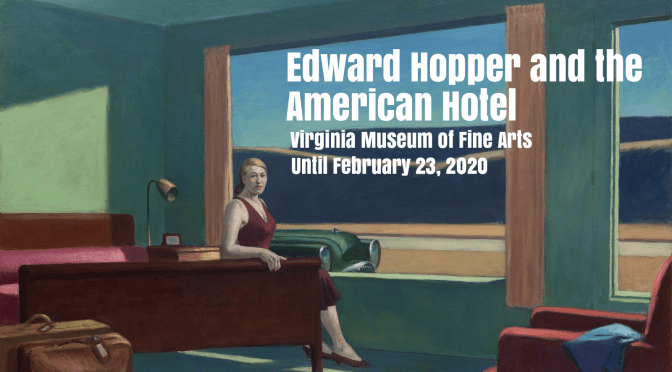
Isolation was a persistent theme in Hopper’s art and life. Was he dogged by isolation or did he pursue it? ‘Did anybody really know this silent, non-communicative man?’ asked Raphael Soyer in a 1981 interview, 14 years after Hopper’s death. His friends recollected a cynical and taciturn artist, self-doubting, introspective and distrustful of fame. But before Hopper became the painter of lonely figures in all-night diners, he was the illustrator of raucous party scenes and smiling couples waltzing together at summer fêtes.
Edward Hopper and the American Hotel, a rich exhibition now at the Virginia Museum of Fine Arts, highlights the contrast between Hopper’s early, lesser-known years as a commercial illustrator and his later eminence as laconic American icon, the serious solitary who painted crumbling Victorian boarding houses, faded hotel lobbies and highway motels.
The artist incorporates an array of art historical scenes such as John Martin’s English-Romantic apocalypses and Edouard Manet’s Luncheon on the Grass with ubiquitous imagery sourced from the Internet. The highly rendered areas in her paintings resemble a cascade of Google image search results where cellphone photos of skylines and gardens slide past gestural marks.
Shulamit Nazarian is pleased to present Strange Little Beast, a solo exhibition of new works by Los Angeles-based painter Annie Lapin. This will be the artist’s first solo exhibition with the gallery.
Annie Lapin’s paintings call attention to the human desire for meaning making–our effort to create order out of chaos. In Strange Little Beast, Lapin’s paintings use her interest in art history, perception, and the materiality of painting itself to examine the role of digital technology and narrative building in our contemporary moment.
From Helen of Troy’s abduction to the deception of the Trojan Horse and the fall of the city, tread the line between myth and reality in this phenomenal new exhibition.
The story of the ancient city of Troy, and of the great war that was fought over it, has been told for some 3,000 years. Spread by travelling storytellers, it was cast into powerful words by the Greek poet Homer as early as the eighth to seventh century BC – and into powerful images by ancient Greek and Roman artists. Just as it enraptured audiences in the past, it still speaks to us today and it’s easy to see why. It’s a story that has it all – love and loss, courage and passion, violence and vengeance, triumph and tragedy – on a truly epic scale.
Spanning several decades, the tale is set in Greece’s mythical past. At its heart is the powerful city of Troy on the western coast of Anatolia (modern-day Turkey), besieged for 10 years by the Greeks, who sailed across the Aegean Sea to take revenge for a grave insult – the abduction of a woman. This ancient world war features a stellar cast of characters. Even the gods are involved.
Caravaggio & Bernini: The Discovery of Emotions features some of the artists’ greatest works, but also charts their influence on others. And that influence proved to be powerful and enduring. Caravaggistas spread across Europe like termites. And so we could call this exhibition a battle of the swaggerers, the pomp of a very eclectic brand of Viennese historicism facing off against the theatrical push and preen of two great Italians.
Bernini, “Medusa” (1638–40)
From almost the beginning, Caravaggio, that man who arrived in Rome in the 1590s, is completely outrageous. Whom did he think were his principal patrons? Churchmen, of course. Did they care that he depicted John the Baptist in an extraordinary painting, circa 1602, as a carefree, lascivious, curly-haired boy with the cheekiest of grins imaginable?
Titled Trinity: B.A.T. 5-7-9 and poised to take place at Phillips Berkeley Square on 20–23 November 2019, the exhibition will highlight B.A.T. 5, 7 and 9s’ visionary aesthetics in addition to their significance in the wider context of 20th-century art, architecture and design.
Designed for Bertone by the supremely talented Franco Scaglione in the 1950s, the Alfa Romeo-based Berlinetta Aerodinamica Tecnica concept cars are seminal objects of 20th-century design. Widely known as the B.A.T. cars, the trio of audacious, ultra-aerodynamic and fully functional prototypes pushed the boundaries of automotive design like nothing that had come before and truly embodied avant-garde creativity.
Featured cars have won many of the world’s most iconic races, including Le Mans, the Indianapolis 500, and the Italian Grand Prix, and were loaned to the Museum by internationally recognized collectors from Arizona and across the United States. Legends of Speed offers an unparalleled opportunity for Museum guests to experience and learn about some of the most successful and famous racecars of all time.
Legends of Speed is the first major exhibition of racing cars presented at Phoenix Art Museum. Opening in fall 2019 and featuring more than 20 legendary cars by Maserati, Mercedes, Alfa Romeo, Ford, and more, the landmark exhibition showcases an unprecedented collection of cars driven by some of the greatest drivers in the history of racing, including A.J. Foyt, Dan Gurney, and Stirling Moss.
James McElhinney: Discover the Hudson Anew presents the painter’s sketch books and prints related to the River in a comprehensive showing for the first time. A video program, animating turning pages, will allow visitors to see additional sketchbook paintings. McElhinney says he wants his art to demonstrate “that constructive dialogue between humanity and nature is alive and well, while underscoring how art provides durable and dynamic modes of engagement.”
Big ideas often come in small packages. James McElhinney has journeyed around the world with a pocket-size sketchbook and watercolor tin, communing with nature, and stopping to observe and record the glorious views around him. Fourteen years ago, during a period of convalescence, he used a sketchbook and watercolor to paint views from his hospital windows. That pragmatic decision was pivotal for the artist. He fell in love with the mobility and intimacy of this small-format media, which can be packed into the lining of a hiking vest, following in the footsteps of historical expeditionary artists. Since then, he has engaged in pictorial conversation with the Hudson River, always with materials on hand.

 A key writer of the late 19th century, Joris-Karl Huysmans (1848-1907) was an art critic who is still little known or little understood by the general public. However, his contribution to the artistic press and the aesthetic debate was as decisive as the impact of his novel Against Nature.
 More passionate about Hals and Rembrandt until his discovery of Degas in 1876-1879, Huysmans admitted that this was a defining moment. And yet, his art criticism immediately accepted the possibility of a double modernity. The modernity of the painters of modern life and that of the explorers of dreams were not mutually exclusive. Here, Manet coexists with Rops and Redon. The desire Huysmans showed very early on to escape from the logic of church doctrine no doubt blurred the perception of his aesthetic choices.
 How is a drapery put in place? For what reasons does this motive persist until today? How to explain its power of fascination? These are the questions that this exhibition intends to pose, in order to enter the “factory” of the drapery and to get closer to the artistic gesture. By showing the stages of making a drapery, the visitor will discover the singular practices of artists from the Renaissance to the second half of the 20th century.
 Albrecht Dürer, Drapery Study, 1508, Brush and Indian Ink, heightened white on dark green paper
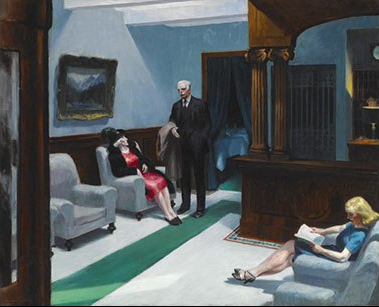 Isolation was a persistent theme in Hopper’s art and life. Was he dogged by isolation or did he pursue it? ‘Did anybody really know this silent, non-communicative man?’ asked Raphael Soyer in a 1981 interview, 14 years after Hopper’s death. His friends recollected a cynical and taciturn artist, self-doubting, introspective and distrustful of fame. But before Hopper became the painter of lonely figures in all-night diners, he was the illustrator of raucous party scenes and smiling couples waltzing together at summer fêtes.
 The artist incorporates an array of art historical scenes such as John Martin’s English-Romantic apocalypses and Edouard Manet’s Luncheon on the Grass with ubiquitous imagery sourced from the Internet. The highly rendered areas in her paintings resemble a cascade of Google image search results where cellphone photos of skylines and gardens slide past gestural marks.
  Shulamit Nazarian is pleased to present Strange Little Beast, a solo exhibition of new works by Los Angeles-based painter Annie Lapin. This will be the artist’s first solo exhibition with the gallery.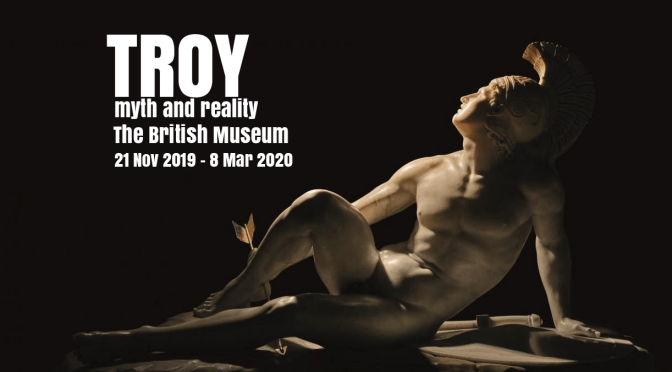
 From Helen of Troy’s abduction to the deception of the Trojan Horse and the fall of the city, tread the line between myth and reality in this phenomenal new exhibition.
 The story of the ancient city of Troy, and of the great war that was fought over it, has been told for some 3,000 years. Spread by travelling storytellers, it was cast into powerful words by the Greek poet Homer as early as the eighth to seventh century BC – and into powerful images by ancient Greek and Roman artists. Just as it enraptured audiences in the past, it still speaks to us today and it’s easy to see why. It’s a story that has it all – love and loss, courage and passion, violence and vengeance, triumph and tragedy – on a truly epic scale.


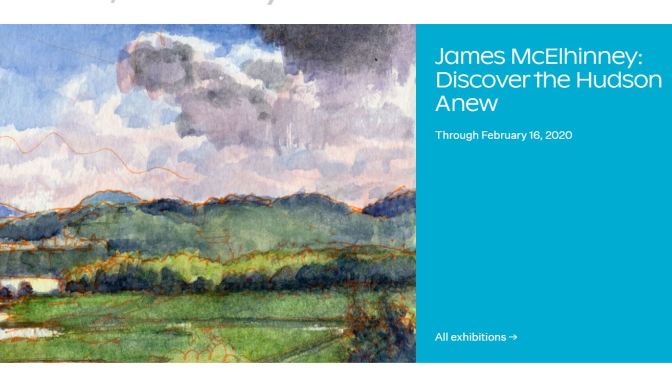
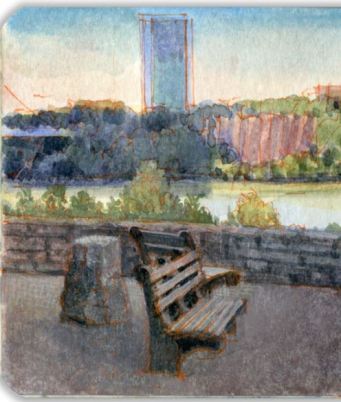 James McElhinney: Discover the Hudson Anew presents the painter’s sketch books and prints related to the River in a comprehensive showing for the first time. A video program, animating turning pages, will allow visitors to see additional sketchbook paintings. McElhinney says he wants his art to demonstrate “that constructive dialogue between humanity and nature is alive and well, while underscoring how art provides durable and dynamic modes of engagement.”
 Boomers Daily