

From a Harvard news online release:
 “This study identifies a new molecular connection between exercise and inflammation that takes place in the bone marrow and highlights a previously unappreciated role of leptin in exercise-mediated cardiovascular protection,” said Michelle Olive, program officer at the National Heart, Lung, and Blood Institute Division of Cardiovascular Sciences. “This work adds a new piece to the puzzle of how sedentary lifestyles affect cardiovascular health and underscores the importance of following physical-activity guidelines.”
Scientists at Harvard-affiliated Massachusetts General Hospital (MGH) have identified a previously unknown biological pathway that promotes chronic inflammation and may help explain why sedentary people have an increased risk for heart disease and strokes.
In a study to be published in the November issue of Nature Medicine, MGH scientists and colleagues at several other institutions found that regular exercise blocks this pathway. This discovery could aid the development of new therapies to prevent cardiovascular disease.
To read more: https://news.harvard.edu/gazette/story/2019/11/exercise-found-to-block-chronic-inflammation-in-mice/

 The investigators discovered that patients with a higher genetic risk for depression were more likely to be diagnosed with depression over the next 2 years. However, more physically active patients at baseline were less likely to depression, even after they accounted for genetic risks.
 “Another behavior change is physical exercise,” Pillemer said. “A paradox of pain is that exercise helps reduce it, but it’s difficult for people in pain to think about exercising. So they don’t exercise, they get more sedentary and the pain increases; it’s a vicious circle. So how do you get people to actually change their behavior?”
 Researchers suggest that intensity is critical. Seniors who exercised using short, bursts of activity saw an improvement of up to 30 percent in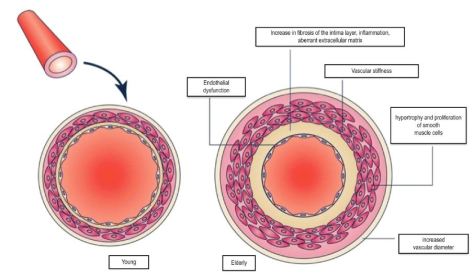

 Now 63, Mr. Peterson has progressed from bike paths to rugged mountain trails and is known for his caped helmet emblazoned with his nickname, UniGeezer. Based on his GPS and bike computer, he estimates he’s logged nearly 30,000 miles, or 24 million pedal revolutions, since he started.
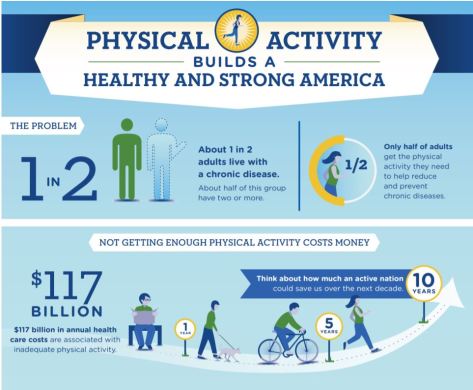
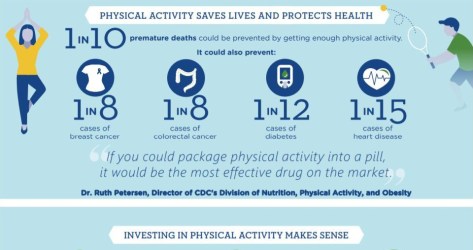
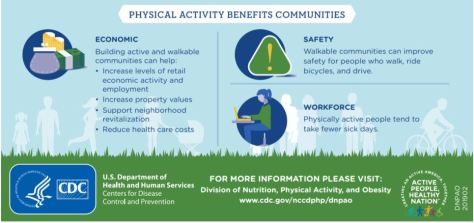
 “Living a healthy lifestyle may help offset a person’s genetic risk of dementia, according to new research.
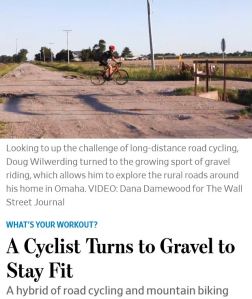 Gravel riding is more jarring than road riding so strength and mobility really come into play. “Your upper body takes much more of a beating,” Mr. Wilwerding says. “Especially when you’re riding bumpy terrain for eight hours.” With the help of a coach, he has trained to participate in five century rides—three road, two gravel—this summer. His next ride, the SBT GRVL, takes place Aug. 18 and covers 141 miles and about 9,000 feet of climbing in Steamboat Springs, Colo. “I’m in the best shape of my life outside of my collegiate swimming career,” he says.
  Boomers Daily