The U.K. became the first Western nation to vaccinate patients against Covid-19. WSJ explains how the country is planning to roll out the BioNTech-Pfizer vaccine at record speed, making it a test case for the rest of the world.
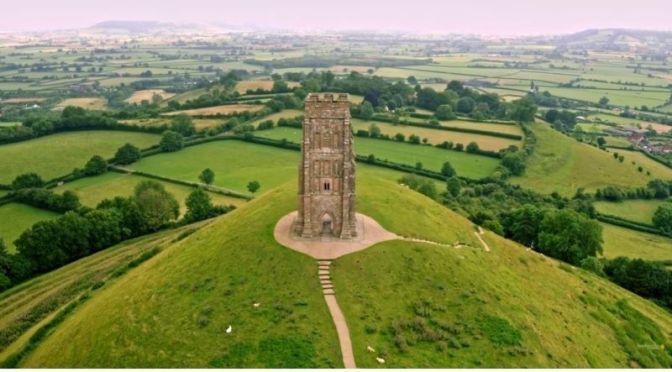
One of the most evocative and breathtakingly beautiful coastal landscapes in Britain is the historic county of Cornwall. It’s also a place steeped in legend, including that of Britain’s legendary King Arthur.
Cornwall is a county on England’s rugged southwestern tip. It forms a peninsula encompassing wild moorland and hundreds of sandy beaches, culminating at the promontory Land’s End. The south coast, dubbed the Cornish Riviera, is home to picturesque harbour villages such as Fowey and Falmouth. The north coast is lined with towering cliffs and seaside resorts like Newquay, known for surfing.
The White Cliffs of Dover, part of the North Downs formation, is the region of English coastline facing the Strait of Dover and France. The cliff face, which reaches a height of 350 feet, owes its striking appearance to its composition of chalk accented by streaks of black flint.
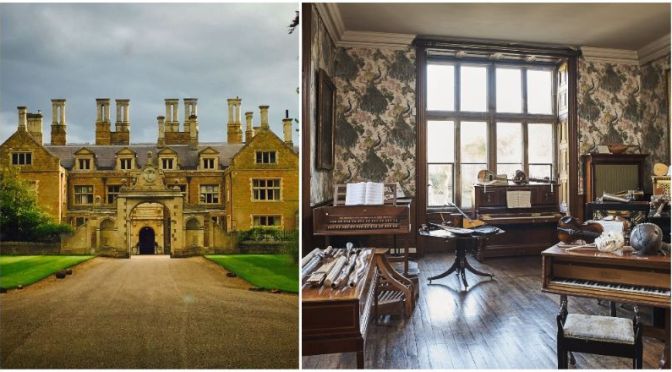
When you visit a stately home like Holdenby, you expect the pomp, the glamor, the sense of history. Less expected, perhaps, is a museum for some of the rarest musical instruments around.
Holdenby House is a historic country house in Northamptonshire, traditionally pronounced, and sometimes spelt, Holmby. The house is situated in the parish of Holdenby, six miles northwest of Northampton and close to Althorp. It is a Grade II* listed building.
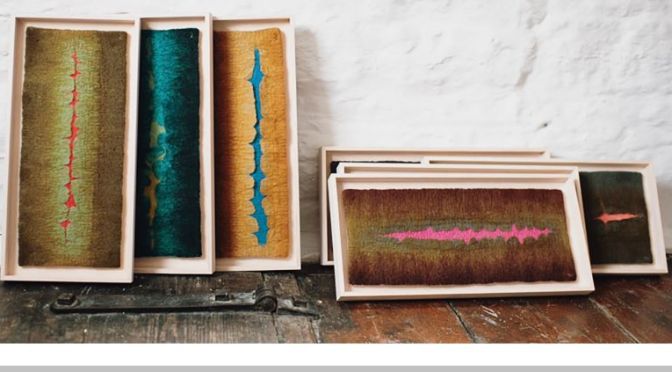
My main fascination lies within the manipulation of fibres and textiles as an expressive art form. Taking the rural environment as my inspiration,I explore long-term interests of texture, colour, layering and process to create contemplative and ethereal artworks.
My primary technique is wet felting; a traditional craft technique using wool tops, hot water, soapsuds and friction to interlock the fibres together. The making is muscular and rhythmic as I lay, pour, roll and squeeze again and again. It seems repetition nudges me into a semi-meditative space – it invites me to trust myself, and let the haptic connections sinuously paint a new space for the viewer to contemplate.
The compositions are built in layers, hinting at what may lie beneath, and use translucency and light to create absorbing moods. These are highly textured felt pieces in which cloth is embedded, prints disguised, and threads unravelled as a painter with her brush. The analogy with painting is significant throughout, making the viewing inquisitive, and challenging people’s perception.
Brought up in France and French Polynesia, I originally came to the UK to study textile design and am now a widely exhibited artist working and living in West Yorkshire. In 2015, I was awarded the Embroidery Magazine’s Best Emerging Textile Artist at SIT Select Showcase, as well as Best Picture in Show at theGreat North Art Show.
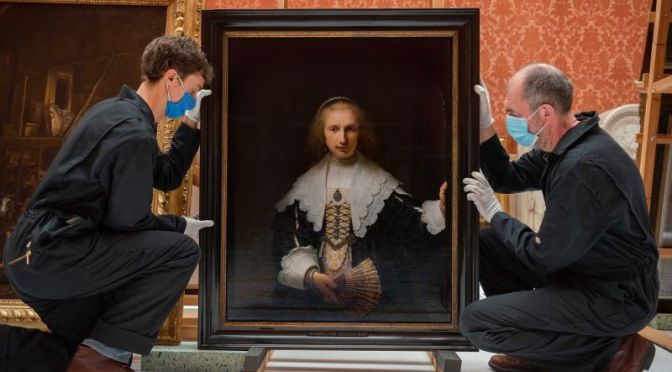
An exhibition called ‘Masterpieces from Buckingham Palace’ is on display at The Queen’s Gallery in London, featuring 65 Old Master paintings from The Royal Collection.
Cromer is a coastal town and civil parish on the north coast of the English county of Norfolk. It is approximately 23 miles north of the county town of Norwich, 116 miles north-northeast of London and 4 miles east of Sheringham on the North Sea coastline.
Cromer is a traditional Victorian seaside resort, with a sand and shingle beach popular for swimming and surfing. Many of the buildings in the town date back to the Victorian era, although the town has expanded rapidly in the last fifty years. Some shelter is provided by the pier, which houses a theatre and gardens.Cromer beach and pier are part of the quintessentially Victorian seaside resort of Cromer, on the popular North Norfolk coast. Just along the road from Sheringham and West Runton, and just around the corner from Overstrand, Cromer beach, just like many other Norfolk beaches, has so much to offer, from the little fun fair on the promenade to a museum on the beach front, to the wonderful iconic Pier with its Pavilion Theatre and lifeboat station at the end. Never a dull moment.
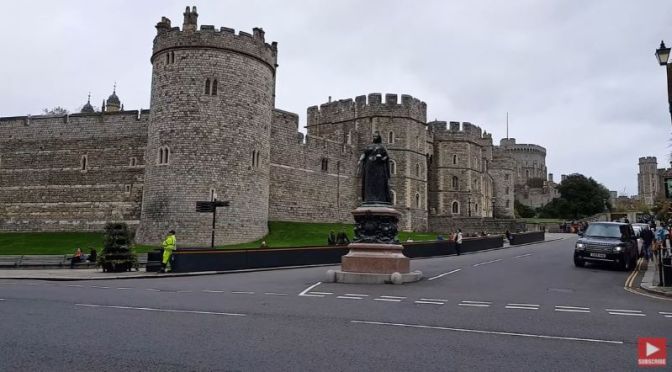
Walking in Windsor Town Centre, including Castle Hill, Peascod Street, Bridgewater Way, Windsor and Eton Central Station, Thames Street and Alexandra Park. 📅 Filmed on the 31st October 2020
⏱️ TIMESTAMPS / 🏛️ POINTS OF INTEREST 0:00 – Intro 0:57 – Cobbled streets Side Streets 1:56 – Windsor Castle’s Walls 2:13 – Castle Hill 3:05 – Thames St and Windsor Castle’s Walls 3:25 – Peascod Street 12:25 – Windsor Yards Shopping Centre 14:41 – Windsor and Eton Central Station 18:39 – Thames Street 21:30 – Narrow Passage 21:56 – Diamond Jubilee Monument 22.47 – Alexandra Park
Windsor is a town on the River Thames in southeast England, just west of London. It’s home to Windsor Castle, a residence of the British Royal Family. Built by William The Conqueror in the 11th century, the castle was extensively remodelled by subsequent monarchs. Public tours take in the State Apartments, which contain opulent furnishings, and paintings from the royal art collection.
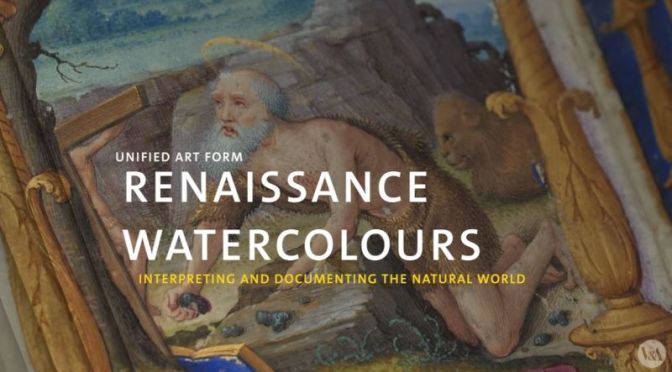
Focussing on the three types of object featured in the V&A display Renaissance Watercolours: illuminated manuscripts, portrait miniatures and coloured drawings, this film showcases the qualities that made watercolour the medium of choice for many artists during the Renaissance.
A modern-day painting of a pomegranate, using traditional watercolour techniques, by artist Lucy Smith, also demonstrates how watercolour painting remains a versatile medium, ideal for capturing life-like details that help us to record our diverse world.
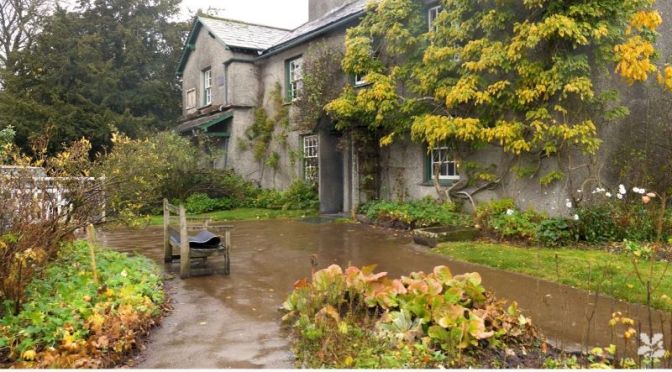
Hill Top, the much-loved Cumbrian home of author Beatrix Potter, creator of the character Peter Rabbit™. Although the farm is closed at the moment you can still explore the writer’s paintings, drawings, treasured objects, as well as the surrounding countryside that inspired her. Look out for your favourite characters along the way.
Hill Top is a 17th-century house in Near Sawrey near Hawkshead, in the English county of Cumbria. It is an example of Lakeland vernacular architecture with random stone walls and slate roof. The house was once the home of children’s author and illustrator Beatrix Potter who left it to the National Trust.
News, Views and Reviews For The Intellectually Curious




 Boomers Daily