
A selection of three essential articles read aloud from the latest issue of The Economist. This week, what happened to the Ukrainians who fled to Russia, how the sun is both our creator and destroyer (27:56), and how magicians won the attention economy (34:32).
Tag Archives: Economics

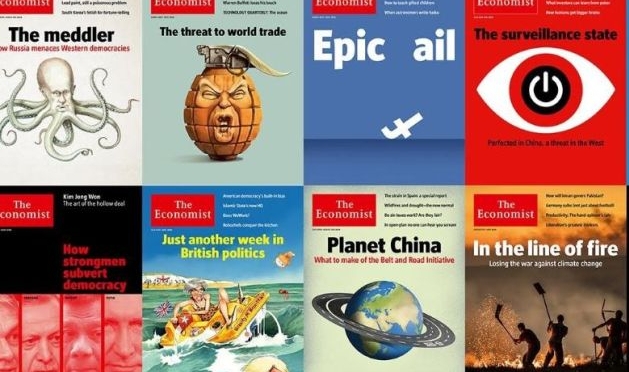
Covers: The Economist Magazine – July 23, 2022
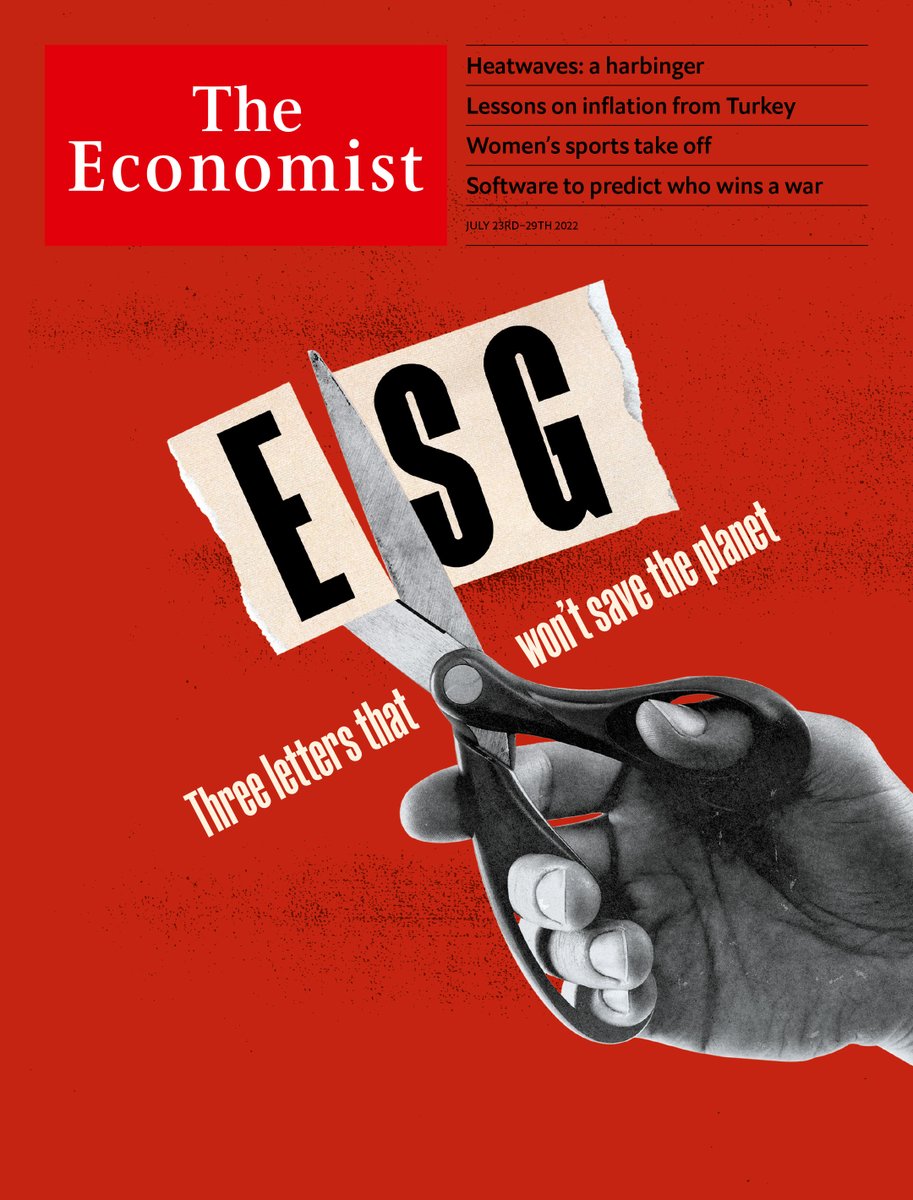
ESG is often well-meaning but it is deeply flawed. The industry is a mess and needs to be ruthlessly streamlined.
If you are the type of person who is loth to invest in firms that pollute the planet, mistreat workers and stuff their boards with cronies, you will no doubt be aware of one of the hottest trends in finance: environmental, social and governance (esg) investing. It is an attempt to make capitalism work better and deal with the grave threat posed by climate change. It has ballooned in recent years; the titans of investment management claim that more than a third of their assets, or $35trn in total, are monitored through one esg lens or another. It is on the lips of bosses and officials everywhere.
Preview: The Economist Magazine – July 18, 2022
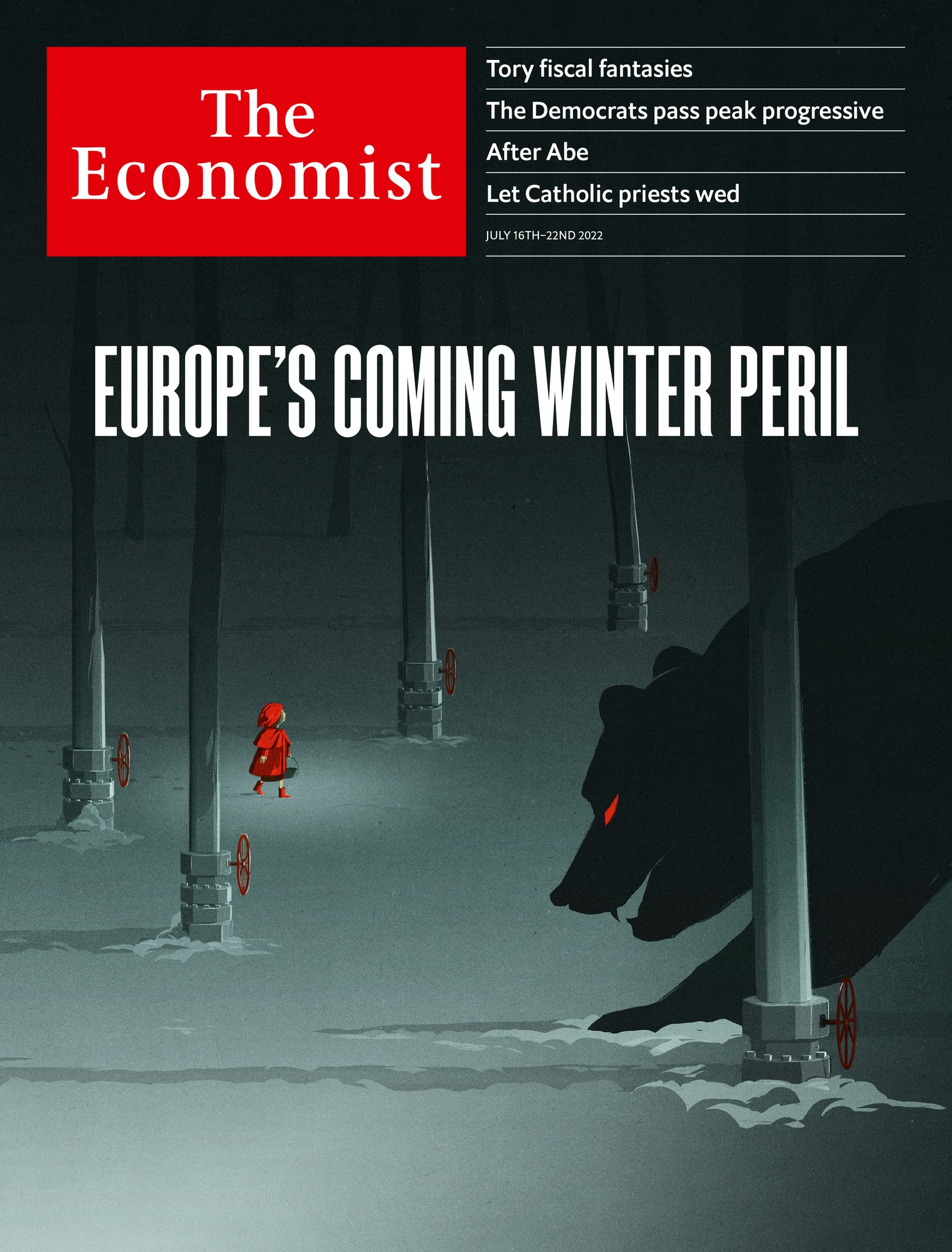
The Economist, July 18, 2022 – Europe’s winter of discontent
Even as temperatures soar Europe faces a bitter energy crisis later this year
There may be a heatwave in Europe, but winter is coming. It promises to be brutal and divisive: the energy crisis is rapidly worsening as Vladimir Putin strangles gas supplies https://econ.st/3aJz3ir
Preview: The Economist Magazine – July 9, 2022

The hype about TikTok is justified—and so are the concerns. There’s a reason why the world’s most exciting app is also its most mistrusted https://econ.st/3bQE9JX
World Economic Forum: Top Stories Of The Week
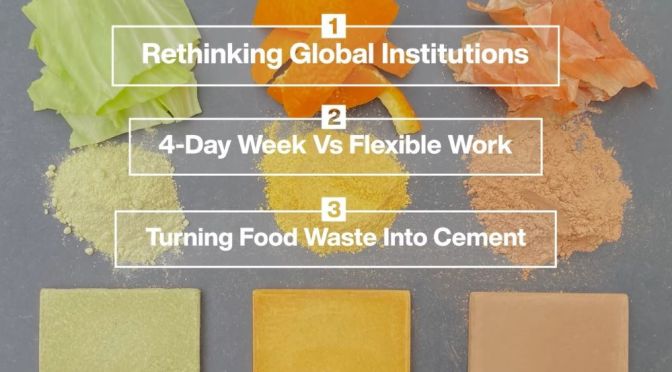
This week the World Economic Forum are highlighting 4 top stories – rethinking global institutions, 4-day week vs flexible work, turning food waste into cement and income loss for UK mothers.
The World Economic Forum is the International Organization for Public-Private Cooperation. The Forum engages the foremost political, business, cultural and other leaders of society to shape global, regional and industry agendas. We believe that progress happens by bringing together people from all walks of life who have the drive and the influence to make positive change.
Preview: The Economist Magazine – June 25, 2022
How to fix the world’s energy emergency without wrecking the environment
Even as they firefight, governments must resolve the conflict between safe supply and a safe climate.
This year’s energy shock is the most serious since the Middle Eastern oil crises of 1973 and 1979. Like those calamities, it promises to inflict short-term pain and in the longer term to transform the energy industry. The pain is all but guaranteed: owing to high fuel and power prices, most countries are facing soggy growth, inflation, squeezed living standards and a savage political backlash. But the long-run consequences are far from preordained. If governments respond ineptly, they could trigger a relapse towards fossil fuels that makes it even harder to stabilise the climate. Instead they must follow a perilous path that combines security of energy supply with climate security.
World Economic Forum: Top Stories Of The Week
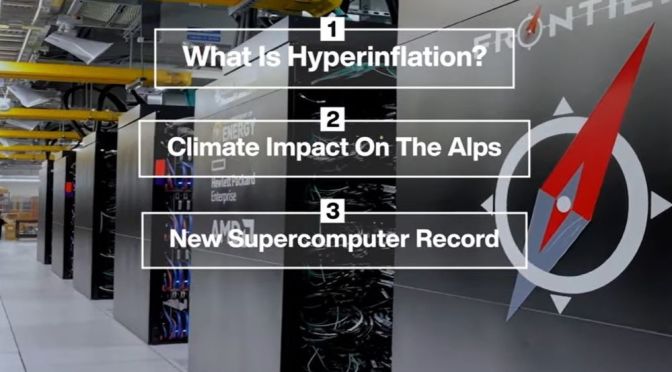
This week The World Economic Forum are highlighting 4 top stories:
- What is hyperinflation,
- the impact of climate change on the Alps,
- a record breaking super computer and
- the world’s first autonomous ship.
The World Economic Forum is the International Organization for Public-Private Cooperation. The Forum engages the foremost political, business, cultural and other leaders of society to shape global, regional and industry agendas. We believe that progress happens by bringing together people from all walks of life who have the drive and the influence to make positive change.
Preview: The Economist Magazine – June 11, 2022
Artificial intelligence’s new frontier
The promise and perils of a breakthrough in machine intelligence

Jun 9th 2022ShareGive
Picture a computer that could finish your sentences, using a better turn of phrase; or use a snatch of melody to compose music that sounds as if you wrote it (though you never would have); or solve a problem by creating hundreds of lines of computer code—leaving you to focus on something even harder. In a sense, that computer is merely the descendant of the power looms and steam engines that hastened the Industrial Revolution. But it also belongs to a new class of machine, because it grasps the symbols in language, music and programming and uses them in ways that seem creative. A bit like a human.
The “foundation models” that can do these things represent a breakthrough in artificial intelligence, or ai. They, too, promise a revolution, but this one will affect the high-status brainwork that the Industrial Revolution never touched. There are no guarantees about what lies ahead—after all, ai has stumbled in the past. But it is time to look at the promise and perils of the next big thing in machine intelligence.

Wednesday News: Turkey’s Foreign Policy, Russia In Donbas, World Economies
What are Turkish president Recep Tayyip Erdogan’s foreign-policy aims? Plus: Russian troops try to encircle Ukrainian special forces in the Donbas region, a dispatch from our team at the World Economic Forum, and the latest business news.
World Economic Forum: Top Stories Of The Week
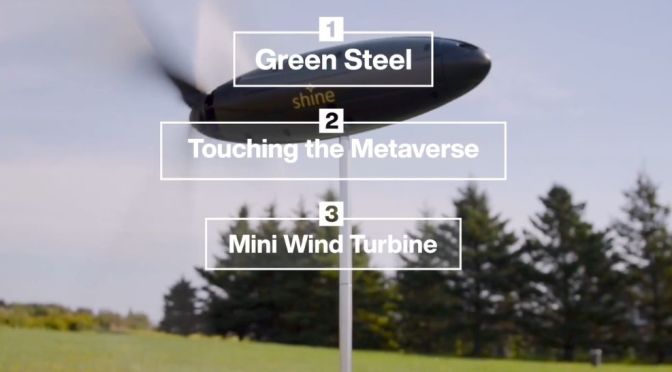
This week The World Economic Forum are highlighting 4 top stories – green steel that could help save the planet, a device that allows you to feel the Metaverse with your bare hands, a wind turbine that fits in your backpack and jet packs for paramedics on mountains.
Timeline: 00:15 Green Steel 02:09 Feeling the Metaverse 03:10 Backpack Wind Turbines 04:46 Jet Packs for Paramedics
 Boomers Daily