
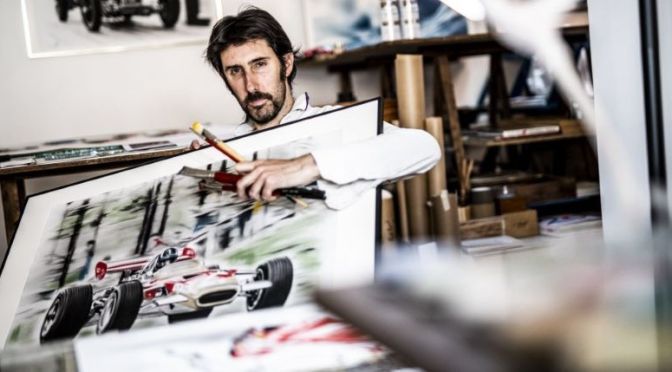
“My primary era is clearly the ’60s,” he says. “For these scenes, I use period photos with the agreement of their photographer and allow myself some freedom on the framing, for example. I like racing cars, and if they have flaws or imperfections, I represent them faithfully, of course.”
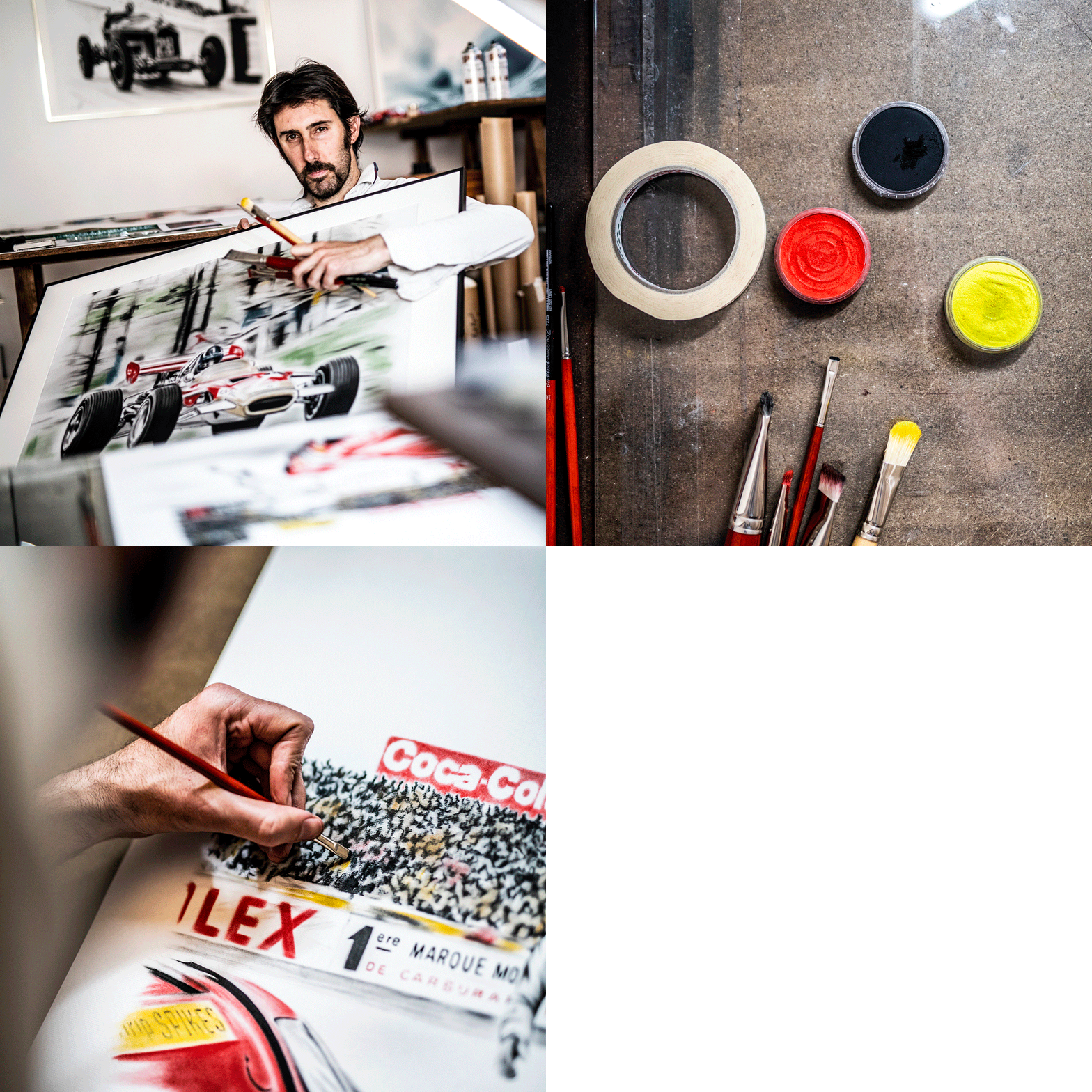

“My master is Leonardo da Vinci, who is the ultimate reference in drawing because of his mastery of blur and movement,” he says. “There’s an indeterminate aspect to these drawings that’s essential. It reminds me of Picasso’s famous phrase ‘finishing a drawing, what a horror’ – that’s exactly it, I always leave an area of blur and a part of emptiness. The viewer fills that space with their experience, their story. In this way, a drawing is simply an exchange – an encounter between two people.”
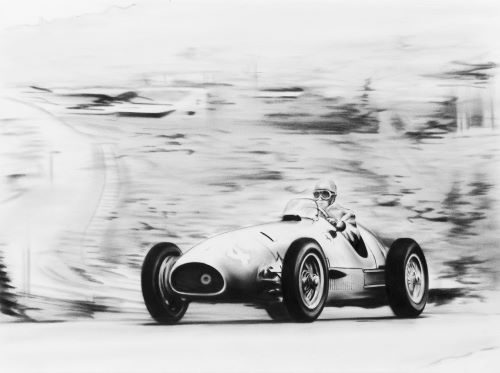
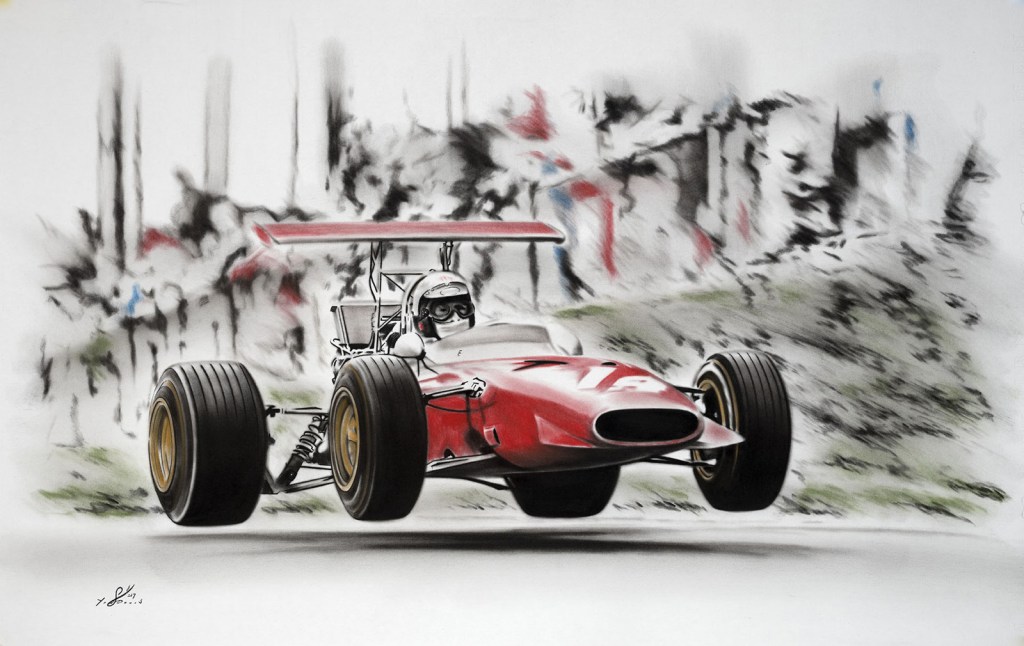
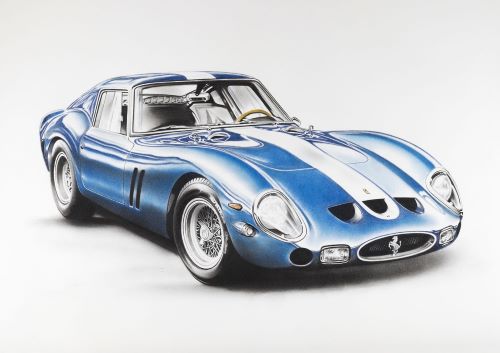
Few artists, like Yan Denes, understand how to make the thrill of speed tangible for the observer with pen and paper. Not only did he design Scuderia Ferrari’s anniversary helmets in Formula 1, but he is also inspired by historic motorsport.
While the vast majority of Denes’ commissions come from owners of modern Ferrari race cars such as the 360 Challenge, 430 GT2, 488 GT3 and FXX, Yan is actually better known for his passion for historic racing scenes.
It has to be said that Denes is a virtuoso when it comes to transcribing speed and movement.

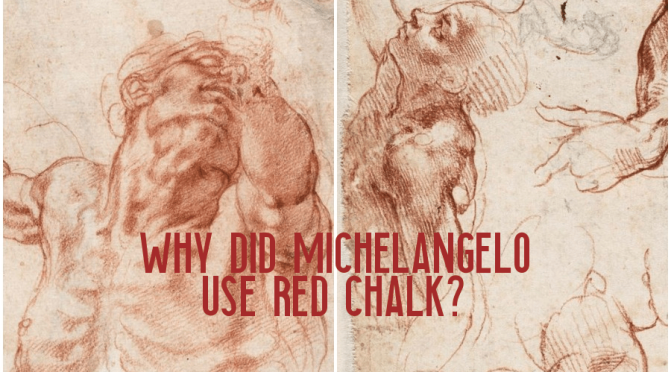
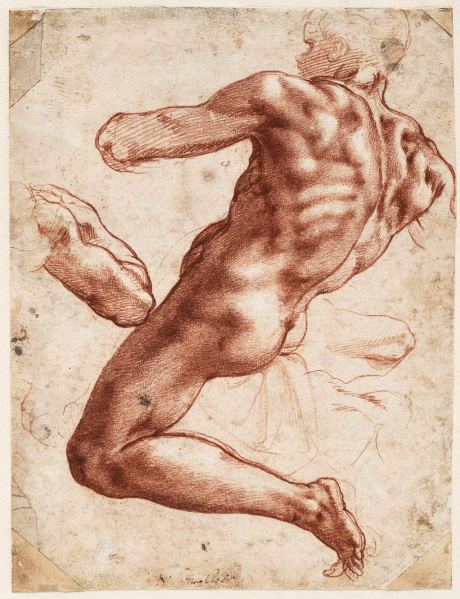 To work out the details of all the figures in pen and ink would have been extremely labor-intensive, and sharpening quills and mixing inks would’ve added an additional distraction. Drawing in chalk necessitated great skill, but it also allowed Michelangelo a flexibility. He could create subtle tonal variations by applying more or less pressure onto the chalk or by wetting it. The red chalk also provided an immediate mid-tone on the paper and could be easily blended when modeling and shading forms. Being a naturally occurring material that was available to artists in sticks that could be sharpened as desired, it was also convenient and portable.
 During his lifetime, Michelangelo likely produced tens of thousands of drawings. But being protective of his ideas, and to give an impression of effortless genius, he destroyed many of them. Today only about 600 drawings by the Renaissance artist survive.
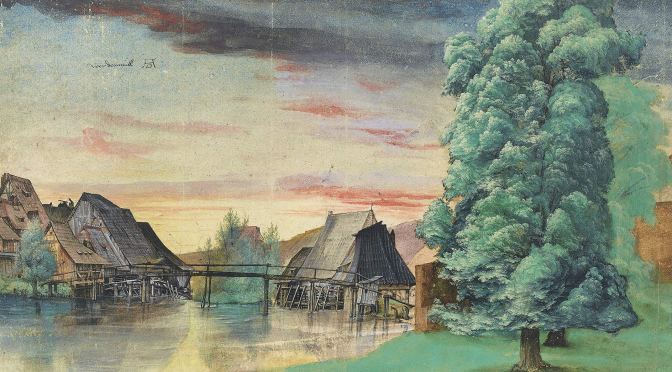
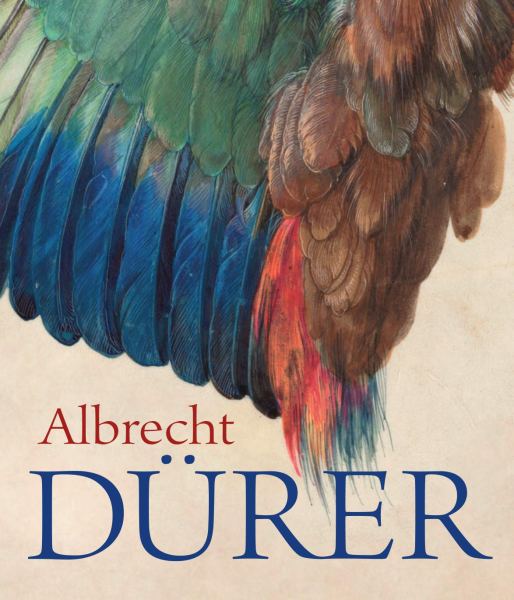 This book showcases more than 100 of Dürer’s drawings including Hare, Self Portrait at the Age of 13, and Melencolia I, along with paintings and prints. Featuring scholarly essays and beautifully reproduced works, this book shows the reader not only how important Dürer’s drawings are to his own oeuvre, but also how he helped drawing become an appreciated medium in its own right.
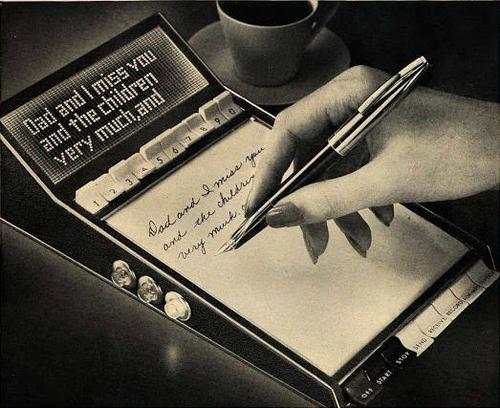
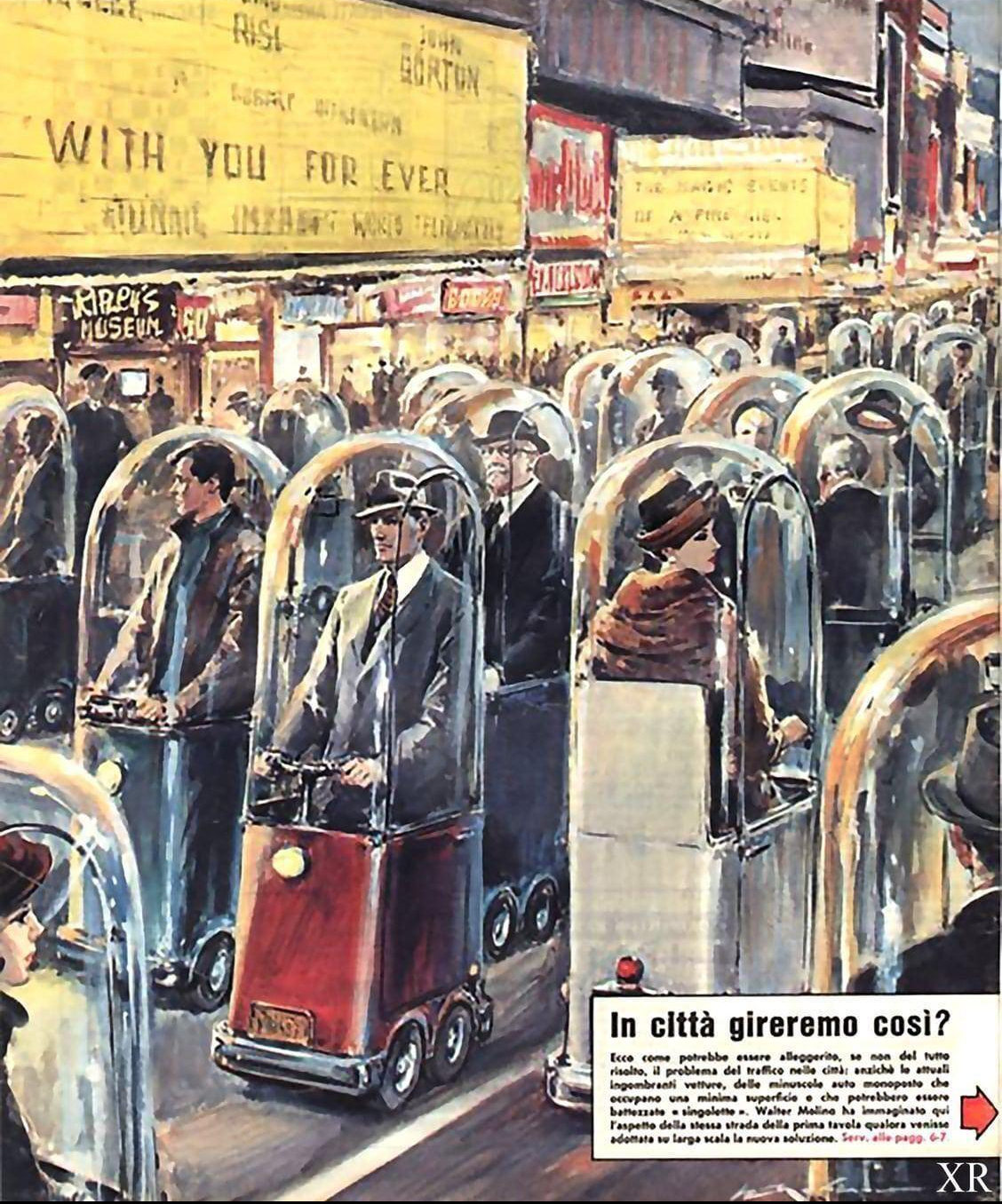 It is unclear why people in the 1950s thought this was a practical way to travel; not only it looks like it is impossible to breathe in there, who would want to stand upright while driving? It would definitely ease the traffic; however, probably no one would want to use it.
 Towering transmitters in the city and private-jet traffic in the sky… This is a prediction that was made probably too early and it is definitely not so far from reality. Today, we paint a similar future for smart-cities and sci-fi movies depict the future cities in the same manner. It seems that older generations and we have a similar vision of the future look of the world.
 I became engrossed in Mitchell’s drawings while browsing the book—they’re vivid, intimate—but her handwritten lyrics and poems are just as revelatory. It’s hard not to think about art-making of any kind as an alchemical process, in which feelings and experiences go in and something else comes out. Whatever happens in between is mysterious, if not sublime: suddenly, an ordinary sensation is made beautiful. Our most profound writers do this work with ease, or at least appear to. Mitchell’s lyrics are never overworked or self-conscious, and she manages to be precise in her descriptions while remaining ambiguous about what’s right and what’s wrong; in her songs, the cures and the diseases are sometimes indistinguishable.
  Joni Mitchell, in the foreword to “
 Boomers Daily