
Tag Archives: Digital Health
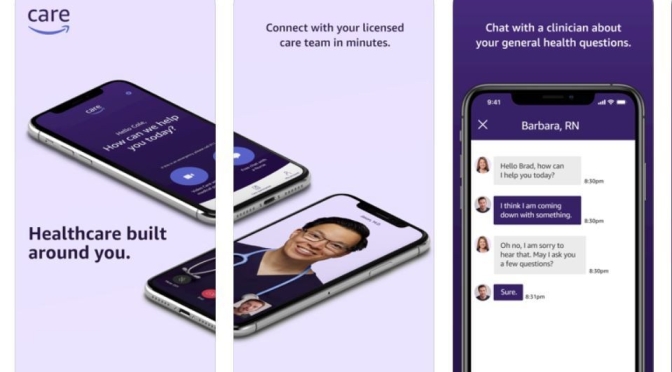
Health: “Amazon Care” Virtual Medical Service Smartphone App Launches
From a Becker’s Hospital Review release (02/19/2020):
 Amazon’s virtual medical clinic that offers in-person follow-ups is now available to Amazon employees in Seattle.
Five things to know:
1. The virtual medical service, called Amazon Care, went live via the company’s employee benefits portal on Feb. 18. It is available to Amazon employees who work at the company’s headquarters and their dependents.
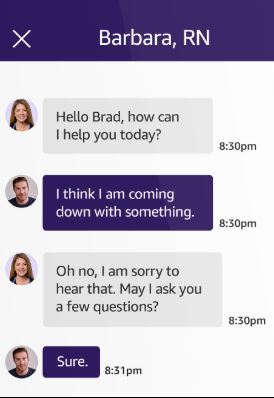
2. Amazon Care offers employees virtual medical consultations with physicians and nurse practitioners. Patients can use the app to schedule a follow-up visit in their home or office.
 3. Medications prescribed via Amazon Care can be delivered to a patient’s home.
4. “Amazon Care eliminates travel and wait time, connecting employees and their family members to a physician or nurse practitioner through live chat or video, with the option for in-person follow up services from a registered nurse ranging from immunizations to instant strep throat detection,” an Amazon spokesperson told CNBC.
5. Amazon first shared information about Amazon Care in September, noting that it planned to pilot the service in Seattle.
Digital Health: Americans Open To 24/7 Monitoring Devices, AI Technology To Lower Health Care Costs
Center for the Digital Future at USC Annenberg (Feb 19, 2020):
 Many Americans are willing to make significant personal tradeoffs to lower their health insurance rates or medical costs, such as agreeing to 24/7 personal monitoring or working with artificial intelligence instead of a human doctor, the Center for the Digital Future at the USC Annenberg School for Communication and Journalism finds.
Among the study’s findings:
- Nearly 1 in 4 Americans (24%) would work with an artificial intelligence-based technology if it lowered the cost of their health care.
- Most Americans (80%) think that access to health care is a basic right that should be available to all citizens regardless of their ability to pay. This is a view shared even by a majority of citizens who identify themselves as very conservative (56%).
- Significant percentages of Americans are willing to make profound lifestyle choices in exchange for lower insurance rates. For example, one-third of Americans would agree to 24/7 personal monitoring by insurance companies or health care professionals if their insurance rates were reduced.
- Twenty-one percent of Americans said they would stay in their current job if leaving it meant losing their current health coverage.
- Almost all Americans say health care is a key issue in the 2020 presidential election (92%).
- Even though Americans say they are satisfied with their current health insurance, they are open to alternatives. Thirty percent of Americans would consider buying health coverage from any company that offers lower costs, including a variety of non-insurance companies such as Amazon, Google, or Costco.
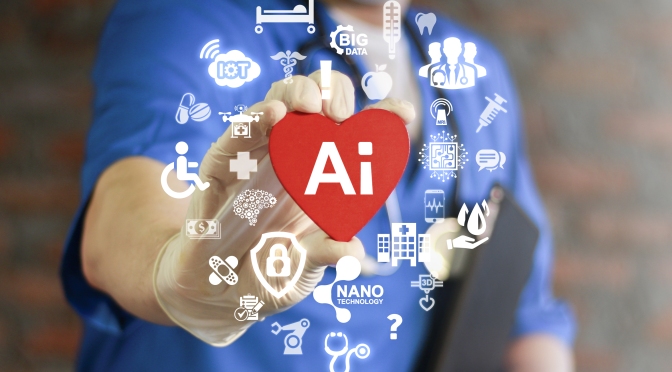
Health: New “Digital AI Device” Helps Identify Patients With Atrial Fibrillation (Mayo Clinic)
 This small device may change how doctors identify and manage patients with atrial fibrillation, an irregular heart rhythm that increases risk of stroke.
And the past. The device uses artificial intelligence, or AI, to not only determine if a person is in the midst of an episode of atrial fibrillation, but also it can reveal if they’ve had the irregular rhythm before or will have it in the future.
Dr. Paul Friedman and his team trained the device to detect subtle changes in the heart’s electrical signals. Then in a study, they found it can identify patients with episodic atrial fibrillation. Even when they record the heart while the rhythm is normal – something no current wearable heart monitor can do.
That’s because a heart monitor won’t detect atrial fibrillation unless you have an episode while wearing it. But in a matter of moments, the AI device can identify people with atrial fibrillation, even if their heart is in normal rhythm. Then they can get on the right treatment to help prevent life-threatening strokes from happening.
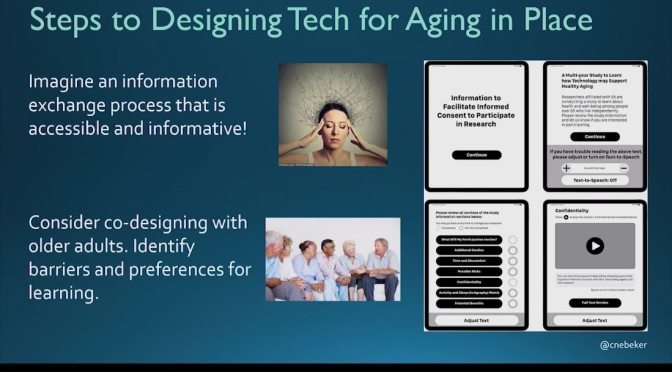
Research: “Designing Tech For Healthy Aging In Place” (UC San Diego Video)
Digital tools including mobile apps, wearable sensors, and social network platforms offer unprecedented opportunities in health research and healthcare. However, this rapidly emerging sector is outpacing existing regulatory structures and challenging norms for ethical practice.
Camille Nebeker, EdD, MS, Associate Professor of Behavioral Medicine in the Department of Family Medicine & Public Health at the UC San Diego School of Medicine describes how technologies, including wearable sensors and artificial intelligence, are leveraged to capture personal health data and infer health status. Nebeker presents the ethical considerations specific to informed consent, risks of harm and potential benefits while underscoring the role that funding agencies, policy makers, researchers, ethicists, and editors have in creating the infrastructure needed to advance safe digital health research and practice.
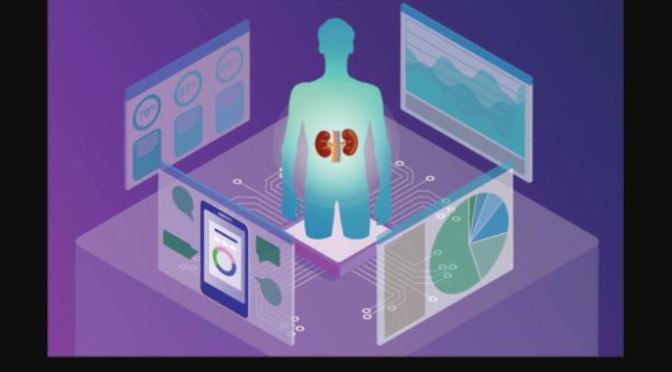
Digital Medicine: Apps For Smartphones, Machine Learning To Treat Kidney Disease (The Lancet)
From a The Lancet online article (January 18, 2020):
 Smartphone app-based platforms for urine testing could improve adherence to albumin creatinine ratio (ACR) testing. One study showed screening of at-risk patients almost doubled with a home urine test kit that uses a smartphone camera to easily and accurately quantify ACR from a user-performed urine dipstick. If independently validated in a large, diverse population, this low-cost strategy could change the often dim trajectory for individuals with declining kidney function.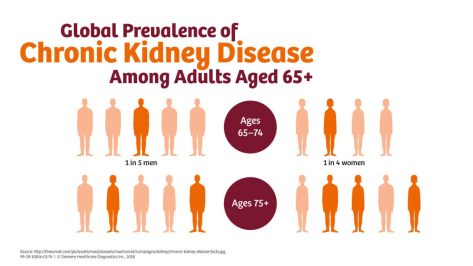
In the outpatient setting, a Japanese team used machine learning and natural language processing to predict disease progression and need for dialysis over 6 months in patients with diabetic nephropathy. And while the increased risk of contrast-induced acute kidney injury has been long appreciated, a machine learning algorithm trained and tested on 3 million adults effectively quantified the degree of kidney injury on the basis of the volume of contrast used and individual patient-level characteristics.
Medical Technology: “Digital Health Trends” At CES 2020 Show (Podcast)
January 8, 2020 – Digital health is one of the hottest and fastest-growing tech categories, not just at CES but throughout the entire tech industry. Join us for a roundtable with media experts discussing health innovations at CES 2020, the growth potential for the health care market and more.
Guests Amy Roberts, Managing Editor, Reviewed Dana Wollman, Editor-In-Chief, Engadget Neil Batra, Principal—Life Sciences & Health Care Strategy, Deloitte
Healthcare For Seniors: Best Buy To Increase “Digital Health” Service And Insurers Will Pay
From a Becker’s Hospital Review online release:
 “Today, most of the seniors we serve are utilizing easy-to-use mobile phone products and connected devices that are tailored for seniors and come with a range of relevant services,” Best Buy CEO Corie Barry said during an earnings call Nov. 26, according to a transcript from Seeking Alpha.
“We also expect to advance our commercial business where the services we provide for seniors are paid for by insurance providers. This includes services such as remote monitoring based solutions that provide meaningful insights to improve timely care and reduce the cost to serve frail seniors,” she said.
Best Buy is known as the largest specialty electronics retailer in the U.S., and a key part of its growth strategy is centered on digital health initiatives.
In the past year, Best Buy has spent roughly $1 billion on acquisitions to expand its healthcare services, according to Forbes. The company’s expansion into healthcare has helped it overcome broader declines in consumer electronic sales, according to Bloomberg.
Medical Technology: 3D Deep-Learning Systems Show Promise For Automated Detection Of Glaucoma (Lancet Audio)
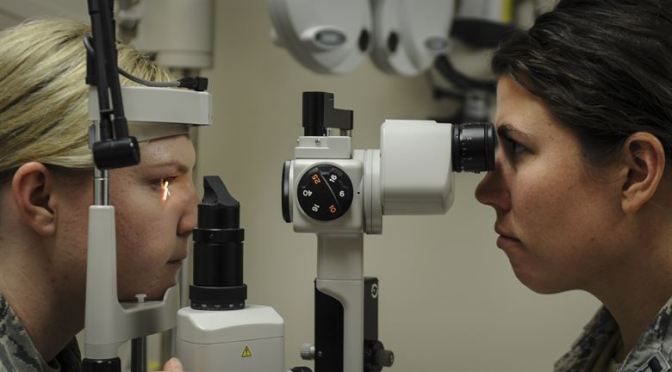
 Our 3D deep-learning system performed well in both primary and external validations, suggesting that it could potentially be used for automated detection of glaucomatous optic neuropathy based on SDOCT volumes. Screening with the deep-learning system is much faster than conventional glaucoma screening methods (ie, by experienced specialists), can be done automatically, and does not require a large number of trained personnel on site. Further prospective studies are warranted to estimate the incremental cost-effectiveness of incorporating this artificial intelligence-based model for screening for glaucoma, both in the general population and among at-risk people.
To read more: https://www.thelancet.com/journals/landig/article/PIIS2589-7500(19)30085-8/fulltext
 Boomers Daily