From a CityLab online article (April 10, 2020):
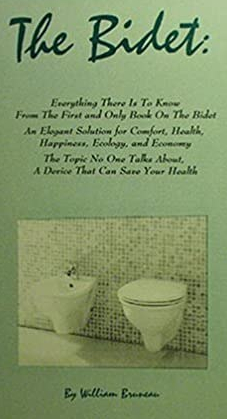 What might that mean for the bathrooms of the post-coronavirus world? Americans have already demonstrated a keen fixation with this household feature: In the last 50 years, the number of home bathrooms per person has doubled. One could easily see the lavatory-building boom accelerate further as future homeowners keep the needs of the self-quarantined in mind. And many have speculated that sales of bidet attachments will surge as toilet-paper shortages encourage Americans to embrace this more sustainable alternative.
Alter predicted that disease-avoidance would rise to the fore of bathroom design a few years ago, when he observed the traumatizing effects of the 2003 SARS outbreak on Toronto, which killed 44 people. But home design in general — and bathroom design in particular — has long been influenced by infectious disease.
The modern bathroom developed alongside outbreaks of tuberculosis, cholera and influenza; its standard fixtures, wallcoverings, floorings, and finishes were implemented, in part, to promote health and hygiene in the home at a time of widespread public health concerns.
Read more

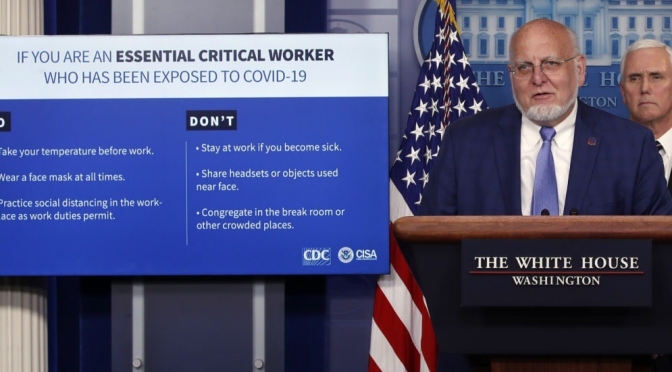
 Historically, the U.S. Centers for Disease control and Prevention has been the agency in charge of predicting, and containing outbreaks of disease. But as Covid 19 ravaged the country, the agency took a backseat to the White House.
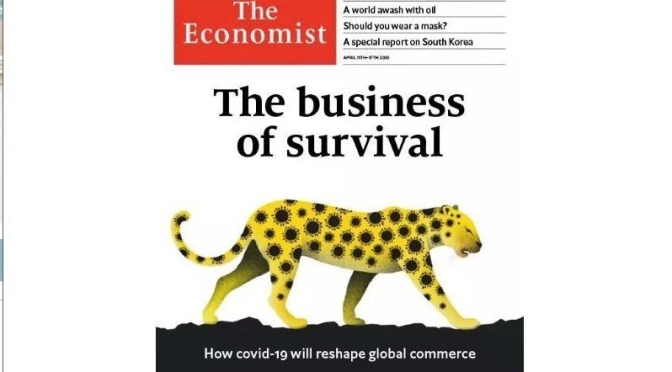
 A selection of three essential articles read aloud from the latest issue of The Economist. This week, the
 On this week’s show, Staff Writer Robert Service talks with host Sarah Crespi about a new National Academy of Sciences report that suggests the novel coronavirus can go airborne, the evidence for this idea, and what this means for the mask-wearing debate.
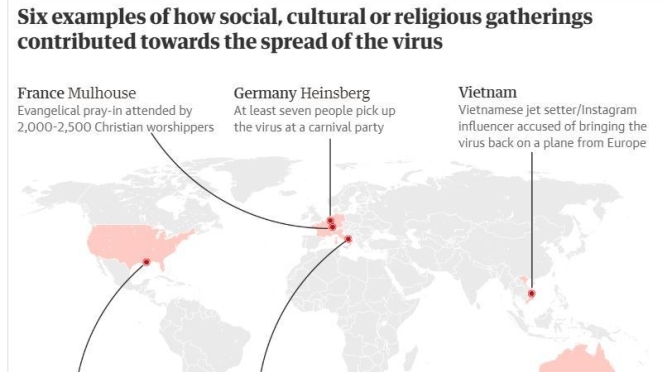
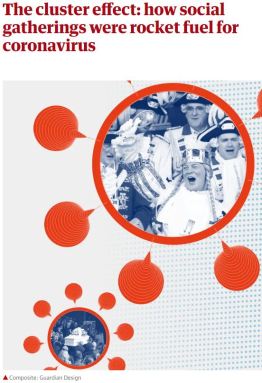 A hundred days after a Chinese government website announced the discovery of a “pneumonia of unknown cause”, it has become clearer that the dynamics behind the virus’s rapid expansion across the globe has relied heavily on such “cluster effects”.
 An interview with Dr. Anthony Fauci about what it will take to open America back up after the coronavirus pandemic: “It isn’t like a light switch, on and off.”
 Rupert Beale talks again to Thomas Jones about his work at the Francis Crick Institute, where he’s helping to set up a testing lab for Covid-19.
 Boomers Daily