Former Vice President Joe Biden stops short of declaring victory but says he has a mandate as his lead increases. President Donald Trump’s efforts to get the courts to intervene in the election and change the outcome have yet to yield results. The number of new daily confirmed coronavirus infections top a record-breaking 120,000 cases.
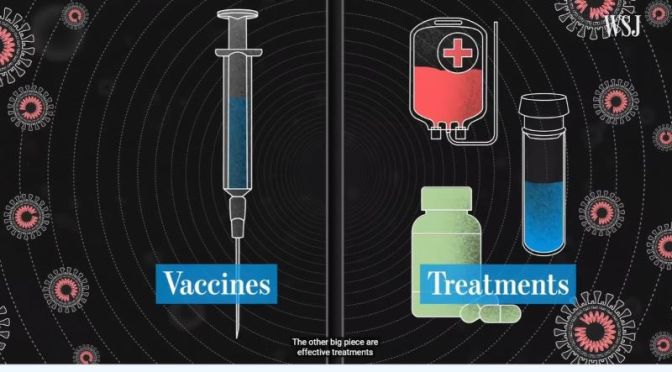
Health experts say having a vaccine is just one front in a two-front battle against COVID-19. The other is effective treatments for those who are already sick with the disease. WSJ breaks down the three most promising types in development.
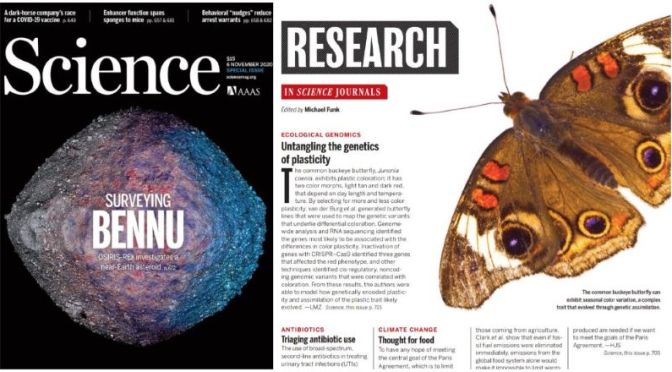
Astronomers pin down the likely origins of mysterious fast radio bursts, Covid-19 in schools, octopuses taste with touch and the latest on what the US election means for science.
In this episode:
00:46 The origins of mysterious fast radio bursts
The detection of a brief but enormously-powerful radio burst originating from within the Milky Way could help researchers answer one of astronomy’s biggest mysteries.
At the start of the pandemic, there were fears that schools could become hotspots for infections. We discuss the evidence suggesting that this is unlikely to be the case, and the rates of infection in children of different ages.
Although the winner of this year’s US election is unclear, we discuss the current situation and what it might mean for science.
28:58 Briefing Chat
We discuss some highlights from the Nature Briefing. This time, ancient genomes reveal the migration of man’s best friend, and a new polio vaccine looks set to receive emergency approval.
President Trump and Joe Biden target battleground states, schools weigh plans for rapid COVID-19 tests, and 6 ways small businesses can boost holiday sales in 2020 amid the pandemic.
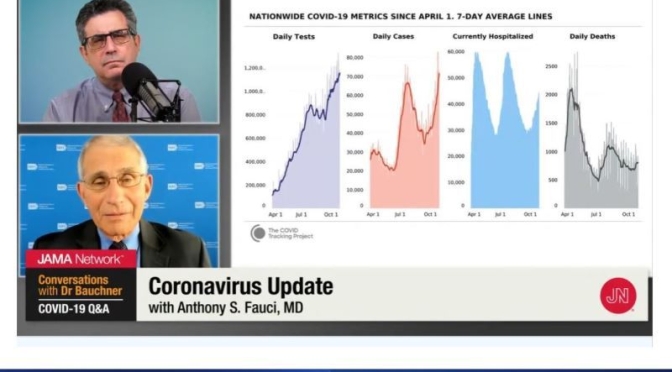
Anthony S. Fauci, MD returns to JAMA’s Q&A series to discuss the latest developments in the COVID-19 pandemic, including the continued importance of nonpharmaceutical interventions (masking, handwashing, physical distancing) for managing rising case numbers in the US and globally.
Recorded October 28, 2020.
Topics discussed in this interview: 0:00 Introduction 0:20 NAM Presidential Citation for Exemplary Leadership 1:19 COVID-19 numbers and excess deaths 4:05 National masking mandate 5:55 How to get people to accept masking 7:07 Herd Immunity and the Great Barrington Declaration 9:51 The holidays and airplane travel 13:44 Therapies update 17:54 Vaccines update 20:08 Vaccine distribution 22:00 Vaccine safety 24:42 How Australia has dealt with COVID-19 spikes 27:00 Acknowledgements and baseball
The 65-year old American chef Thomas Keller discusses his latest book, “The French Laundry, Per Se”. The restaurateur also discusses how his company has fared during the coronavirus pandemic.
Thomas Keller is an American chef, restaurateur, and cookbook writer. He and his landmark Napa Valley restaurant, The French Laundry in Yountville, California, have won multiple awards from the James Beard Foundation, notably the Best California Chef in 1996, and the Best Chef in America in 1997.
As airports and airlines around the world continue to operate in the midst of a global pandemic, not every flight and region has the same Covid-19 protocols. Three WSJ reporters flew to different regions around the world to look at how air travel has changed.
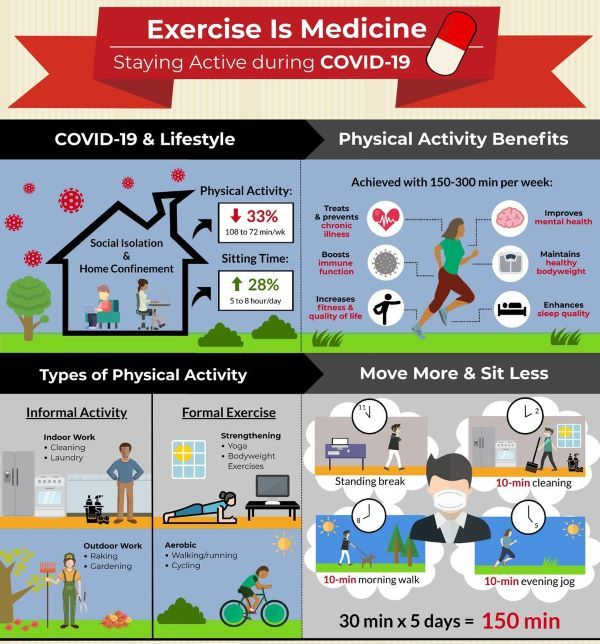
There are over 35,000,000 reported cases of COVID-19 disease and 1 000 000 deaths across more than 200 countries worldwide.1 With cases continuing to rise and a robust vaccine not yet available for safe and widespread delivery, lifestyle adaptations will be needed for the foreseeable future. As we try to contain the spread of the virus, adults are spending more time at home. Recent evidence2 suggests that physical activity levels have decreased by ~30% and sitting time has increased by ~30%. This is a major concern as physical inactivity and sedentary behaviour are risk factors3 for cardiovascular disease, obesity, cancer, diabetes, hypertension, bone and joint disease, depression and premature death.
To date, more than 130 authors from across the world have provided COVID-19-related commentary on these concerns. Many experts4 have emphasised the importance of increasing healthy living behaviours and others5 have indicated that we are now simultaneously fighting not one but two pandemics (ie, COVID-19, physical inactivity). Physical inactivity alone results in over 3 million deaths per year5 and a global burden of US$50 billion.6 Immediate action is required to facilitate physical activity during the COVID-19 pandemic because it is an effective form of medicine3 to promote good health, prevent disease and bolster immune function. Accordingly, widespread messaging to keep adults physically active is of paramount importance.
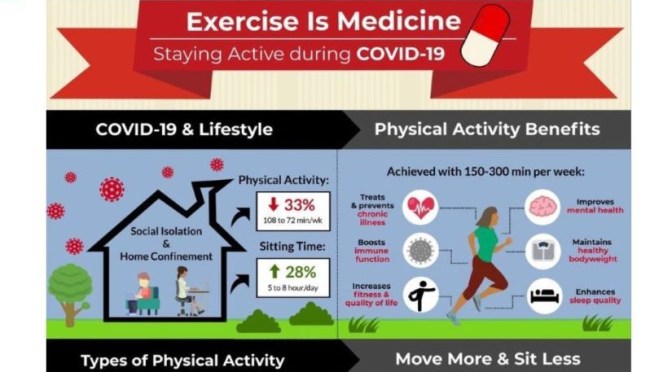
Several organisations including the WHO, American Heart Association and American College of Sports Medicine have offered initial suggestions and resources for engaging in physical activity during the COVID-19 pandemic. Expanding on these resources, our infographic aims to present a comprehensive illustration for promoting daily physical activity to the lay audience during the COVID-19 pandemic (figure 1). As illustrated, adults are spending more time at home, moving less and sitting more. Physical activity provides numerous health benefits, some of which may even help directly combat the effects of COVID-19. For substantial health benefits, adults should engage in 150–300 min of moderate-to-vigorous intensity physical activity each week and limit the time spent sitting. The recommended levels of physical activity are safely attainable even at home. Using a combination of both formal and informal activities, 150 min can be reached during the week with frequent sessions of physical activity spread throughout the day. Sedentary behaviour can be further reduced by breaking up prolonged sitting with short active breaks. In summary, this infographic offers as an evidence-based tool for public health officials, clinicians, educators and policymakers to communicate the importance of engaging in physical activity during the COVID-19 pandemic.










 Boomers Daily