Originating during the Black Death of the Middle Ages, face coverings to protect against the transmission of disease are not just medical requirements; they’re now a fashion statement. Mark Phillips talks with medical historian Mark Honigsbaum (“The Pandemic Century”) about the purpose and style of facemasks.
The Shakespearean actor, most recognized for his performances in the sci-fi franchises “X-Men” and “Star Trek,” recently returned to the role of Captain Jean Luc Picard in the CBS All Access series “Star Trek: Picard.” But as “CBS This Morning” co-host Tony Dokoupil found out, Sir Patrick Stewart is much more down-to-earth than his title might imply.
Sir Patrick StewartOBE (born 13 July 1940) is an English actor, director and producer whose work has included roles on stage, television and film, in a career spanning six decades. He has been nominated for Olivier, Golden Globe, Emmy, Screen Actors Guild, and Saturn Awards.
Beginning his career with a long run with the Royal Shakespeare Company, Stewart received the 1979 Laurence Olivier Award for Best Actor in a Supporting Role for his performance in Antony and Cleopatra in the West End. Stewart’s first major screen roles were in BBC-broadcast television productions during the mid-late 1970s, including Hedda, and the I, Claudius miniseries.
Singer-songwriter Graham Nash had recently embarked on a sold-out tour, until it was cancelled due to coronavirus. Anthony Mason sits down with Nash in New York City to talk with the former member of The Hollies and Crosby, Stills & Nash about how he has maintained his productivity while remaining under lockdown.
The pandemic of H1N1 virus in 1918 infected about one-third of the world’s population, causing at least 50 million deaths, including more than a half-million in the United States. Martha Teichner reports.
In this report first broadcast on August 19, 2007, thirty years after the death of comedian Groucho Marx, “Sunday Morning” host Charles Osgood looks back at the life of the ringleader of the Marx Brothers, who starred in such classics as “Animal Crackers,” “Duck Soup” and “A Night at the Opera.”
Osgood speaks with Marx Brothers fans Elliott Gould, David Steinberg, Frank Ferrante (who played Groucho on stage), Washington Post columnist Harold Meyerson, and Charlotte Chandler, author of the book “Hello, I Must Be Going: Groucho and His Friends.”
At 91, Bob Moore is an unexpected celebrity in the natural and organic foods industry, as the face of the company he founded, Bob’s Red Mill. He talks with correspondent Luke Burbank about his recipe for success.
Bob’s Red Mill is a brand of whole-grain foods marketed by employee-owned American[3] company Bob’s Red Mill Natural Foods of Milwaukie, Oregon. The company was established in 1978 by Bob and Charlee Moore.
Bob’s Red Mill Natural Foods is a producer of natural, certified organic, and gluten-free milled grain products, billing itself as the “nation’s leading miller of diverse whole-grain foods.” Its products are distributed throughout the United States, Canada, and a number of other locations such as the Caribbean. It produces over 400 products, primarily whole grains that are ground with quartz millstones which come from several 120-year-old mills, as well as baking mixes, beans, seeds, nuts, dried fruits, spices, and herbs. They are sold through seventy natural food and specialty grocery distributors in the United States and Canada, their online store, and the company’s factory store and restaurant.
Domestic sales of craft beers have grown to more than $27 billion annually, representing about a quarter of the American beer market. “Sunday Morning” producer Sara Kugel talked with Marcus Doucet, who opened Manchester, N.H.’s Backyard Brewery, one of more than 7,000 craft breweries in the U.S.
The Moulin Rouge, the famous cabaret with a windmill that opened in the Montmartre section of Paris 130 years ago, is still drawing crowds to its spectacular shows featuring a chorus line of often-topless dancers. And it’s now the inspiration for a hit Broadway musical. Correspondent Alina Cho visits the landmark that has inspired artists and writers (and even marriage proposals), and talks with its artistic director and dancers, along with the Tony Award-winning set designer of the new Broadway show, “Moulin Rouge!: The Musical.”
Moulin Rouge (“Red Mill”) is a cabaret in Paris, France.
The original house, which burned down in 1915, was co-founded in 1889 by Charles Zidler and Joseph Oller, who also owned the Paris Olympia. Close to Montmartre in the Paris district of Pigalle on Boulevard de Clichy in the 18th arrondissement, it is marked by the red windmill on its roof. The closest métro station is Blanche.
Moulin Rouge is best known as the birthplace of the modern form of the can-can dance. Originally introduced as a seductive dance by the courtesans who operated from the site, the can-can dance revue evolved into a form of entertainment of its own and led to the introduction of cabarets across Europe. Today, the Moulin Rouge is a tourist attraction, offering musical dance entertainment for visitors from around the world. The club’s decor still contains much of the romance of fin de siècle France.
In this preview of a conversation with correspondent Lee Cowan to be broadcast on “CBS Sunday Morning” on February 16, Harrison Ford, the actor who has played iconic characters in the “Star Wars” and Indiana Jones franchises, talks about returning to familiar roles.
Harrison Ford (born July 13, 1942) is an American actor, aviator, and environmental activist. He gained worldwide fame for his starring role as Han Solo in the original Star Wars Trilogy (1977–1983), eventually reprising the role decades later in the sequel trilogy (2015–2019). Ford is also widely known for his portrayal of Indiana Jones in the Indiana Jones film franchise and as Tom Clancy’s Jack Ryan in the spy thrillers Patriot Games (1992) and Clear and Present Danger (1994).
Film critic Roger Ebert described Ford as “the great modern movie everyman”. His career spans six decades and includes roles in many highly successful Hollywood films. Some of his most popular films include Apocalypse Now (1979), Witness (1985), Presumed Innocent (1990), The Fugitive (1993), Air Force One (1997), What Lies Beneath (2000), and (2013). Seven of his films have been inducted into the National Film Registry: American Graffiti (1973), The Conversation (1974), Star Wars (1977), Apocalypse Now (1979), The Empire Strikes Back (1980), Raiders of the Lost Ark (1981), and Blade Runner (1982).
As of 2019, the U.S. domestic box-office grosses of Ford’s films total over $5.1billion, with worldwide grosses surpassing $9.3billion, making him the fourth highest-grossing domestic box-office star of all time.
An archaeologist of antiques, Mike Wolfe has taken viewers on a nationwide scavenger hunt for historic finds via his History Channel series, “American Pickers.”
But he’s not just about buying up the past; he’s also helping preserve it, by restoring old Main Street buildings in Le Claire, Iowa, and elsewhere. Lee Cowan talked with Wolfe about his passion for relics of history.
News, Views and Reviews For The Intellectually Curious







 Bob’s Red Mill Natural Foods is a producer of natural, certified organic, and gluten-free milled grain products, billing itself as the “nation’s leading miller of diverse whole-grain foods.” Its products are distributed throughout the United States, Canada, and a number of other locations such as the Caribbean. It produces over 400 products, primarily whole grains that are ground with quartz millstones which come from several 120-year-old mills, as well as baking mixes, beans, seeds, nuts, dried fruits, spices, and herbs. They are sold through seventy natural food and specialty grocery distributors in the United States and Canada, their online store, and the company’s factory store and restaurant.

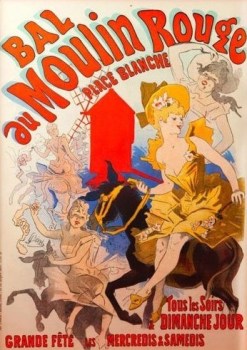 the inspiration for a hit Broadway musical. Correspondent Alina Cho visits the landmark that has inspired artists and writers (and even marriage proposals), and talks with its artistic director and dancers, along with the Tony Award-winning set designer of the new Broadway show, “Moulin Rouge!: The Musical.”

 Boomers Daily