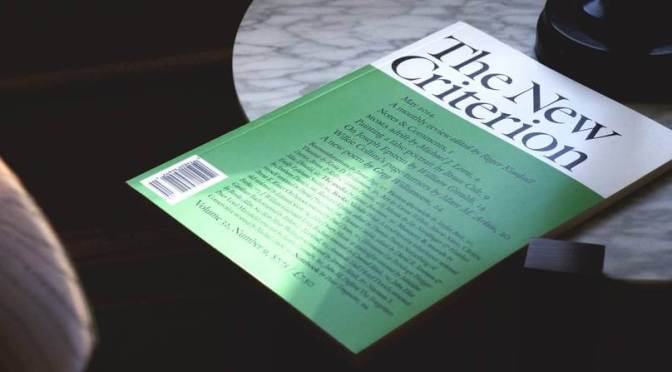
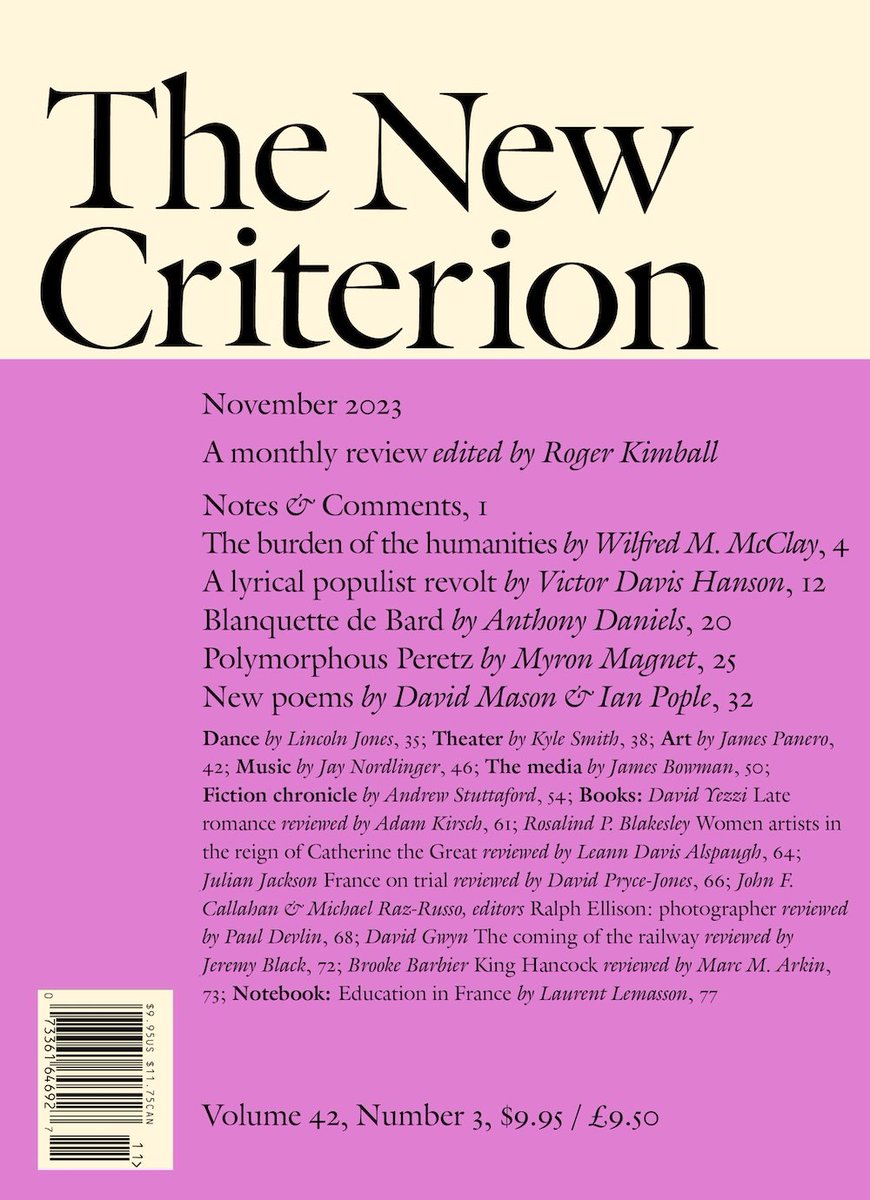
Arts & Culture: The New Criterion — Nov 2023

 The New Criterion – November 2023 issue: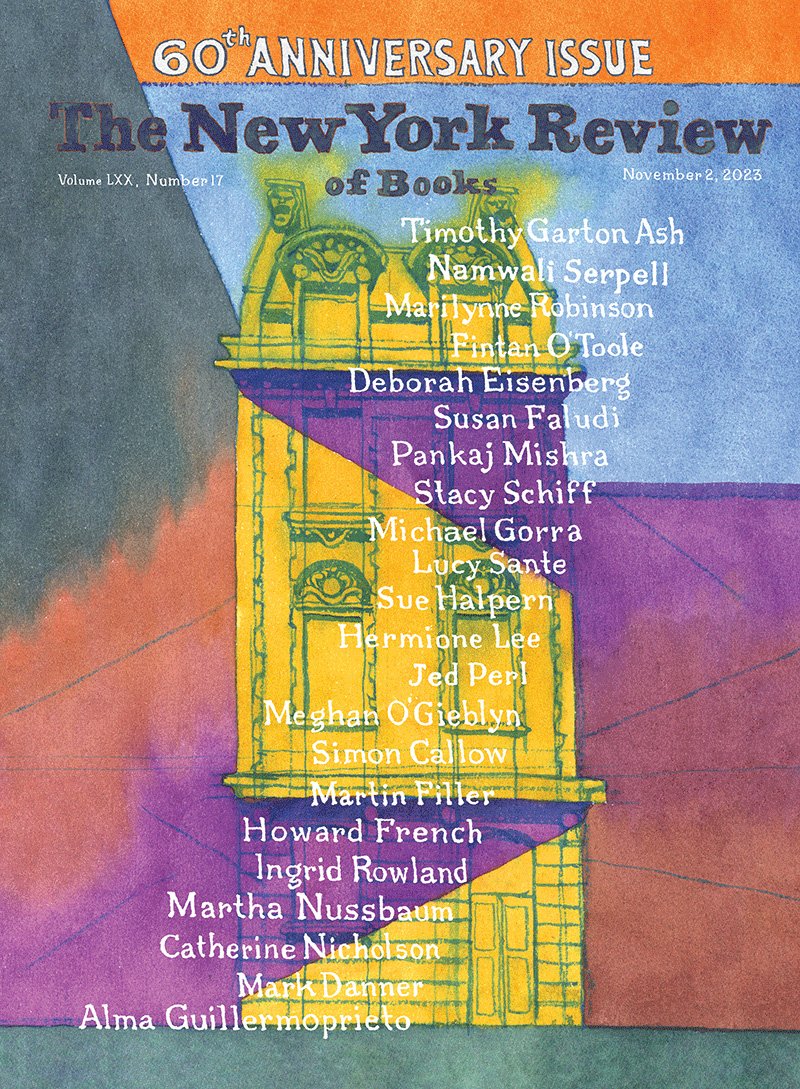


Uwe Wittstock’s new account of writers considering whether to flee or to remain in Germany during Hitler’s rise to power sheds light on the choices faced by many writers in India and Russia today.
by Uwe Wittstock, translated from the German by Daniel Bowles
“It will have become clear to you now,” Joseph Roth wrote to Stefan Zweig in mid-February 1933, “that we are heading for a great catastrophe.” Two weeks previously, on January 30, Germany’s eighty-five-year-old president, Paul von Hindenburg, had appointed as chancellor a man who for more than a decade had spoken and written frankly about his resolve to extirpate democracy and Jews from the country. Roth, who left Berlin the same morning Adolf Hitler came to power and never returned to Germany, was desperate to make his complacent friend recognize the perils before them.
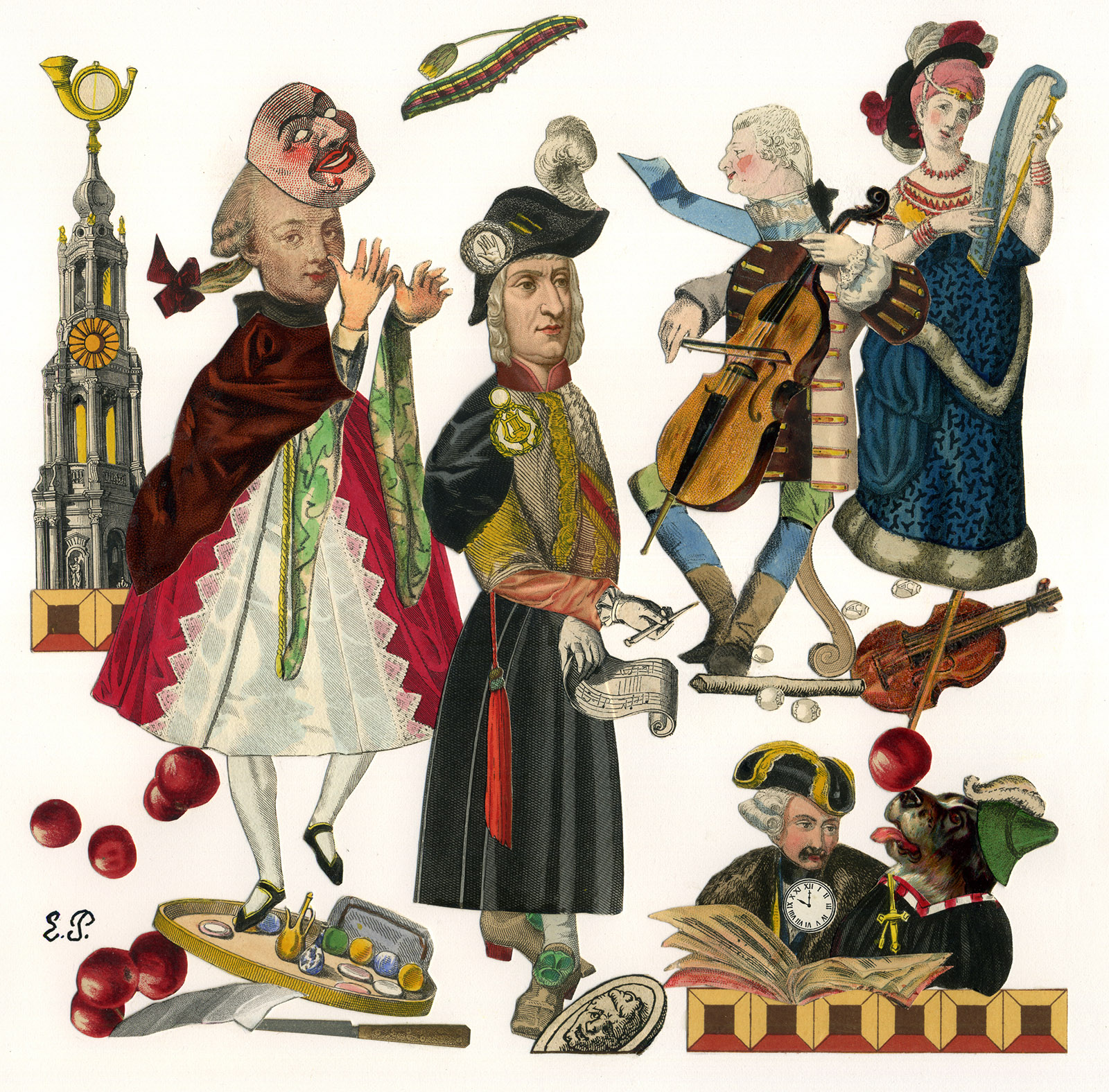
In his new biography, Peter Mackie conjures a vertiginous version of Mozart as the quintessential artist of the modern world.
By Simon Callow
by Patrick Mackie
Biographies of composers are a relatively recent genre; those of Mozart were among the first examples.Though his life was not as sensational as that of Gesualdo, for example, who murdered his wife, Mozart was, from his early years, an international celebrity whose very personality posed questions beyond the eternal riddle of creativity. How could a mere child—he started performing publicly on the clavichord at the age of six—be so astoundingly versatile? As he toured Europe, going from court to court and salon to salon with his father, Leopold, and his older sister, Maria Anna—a talented musician as well—the delightful little boy in his nattily embroidered outfits enchanted his listeners, readily obliging them with requests, however crass: now playing with the keys covered, now with only one finger, to delighted applause.
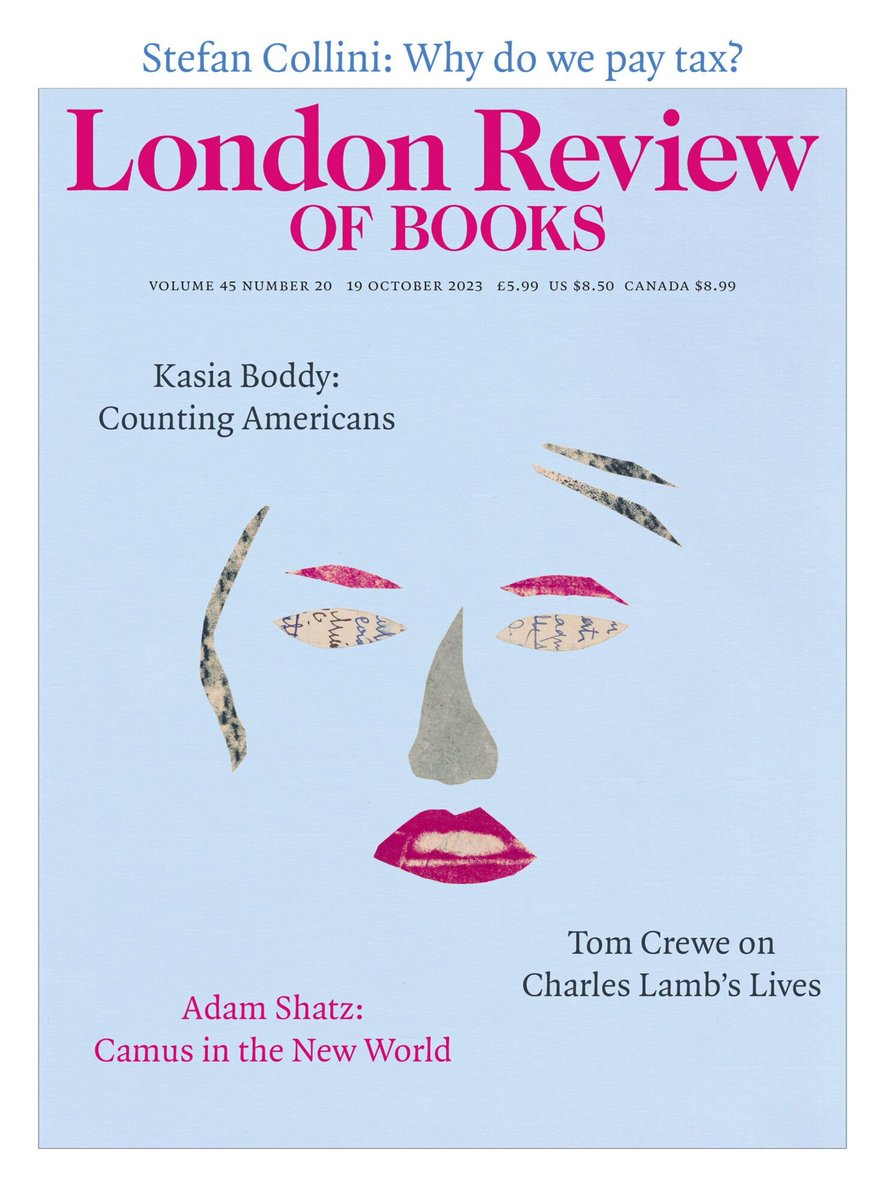



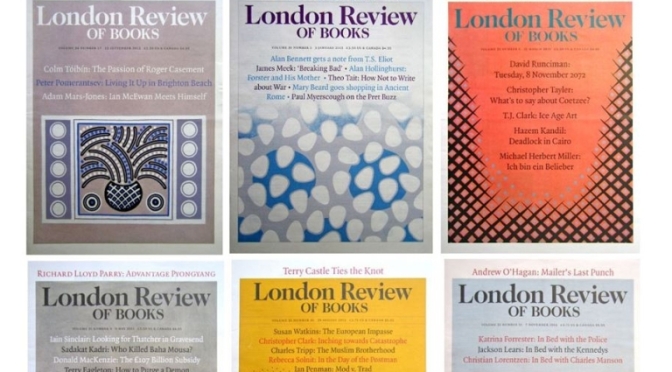
Times Literary Supplement (October13, 2023): The new issue features Deeper Truths – The spiritual quest of the Nobel Laureate Jon Fosse; ‘Woke Wars’ and identity politics; fashion and the Bloomsbury group; Jewish boxers in London; Elsa Morante’s princes and demons and ‘Free Will?’


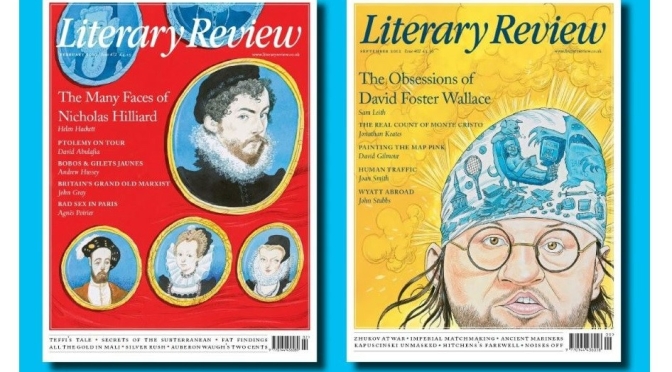
Literary Review – October 2023: The new issue features How Bond Was Born; Impressions of Monet; Inequality through the Ages; Adam Smith the Socialist, and more…

Becoming James Bond By Nicholas Shakespeare
Anthony Powell, two and a half years older than Ian Fleming, remembered him as ‘one of the few persons I have met to announce that he was going to make a lot of money out of writing novels, and actually contrive to do so’.
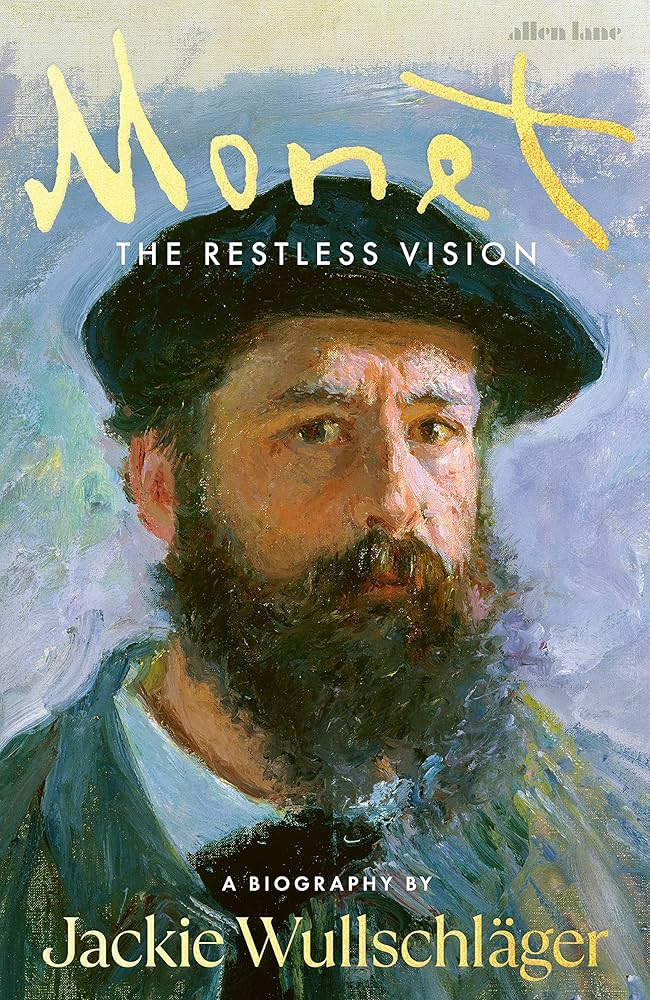
Monet: The Restless Vision By Jackie Wullschläger
You long for sublime artists to be sublime people. Or, if they’re bad, to be magnificently so. Possessing ‘a vanity born of supreme egoism’, Claude Monet ‘believed his art conferred a right to good living’ and that ‘his welfare must be … the immediate concern of others’, writes Jackie Wullschläger, chief art critic of the Financial Times. With great honesty, Wullschläger records her subject’s wearisome scrounging letters and his propensity for petty and often pointless mendacity.
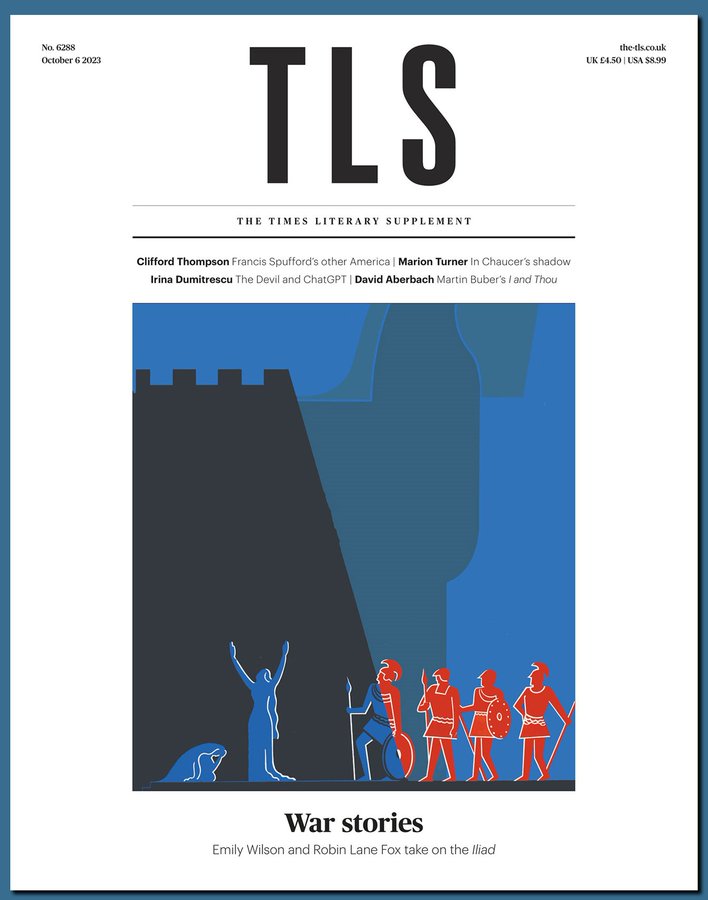
Times Literary Supplement (October 6, 2023): The new issue features War Stories – A review of the Iliad; Frances Sputford’s ‘Other America’; In Chaucer’s Shadow; The devil and ChatGPTand Martin Buber’s ‘I and Thou’…
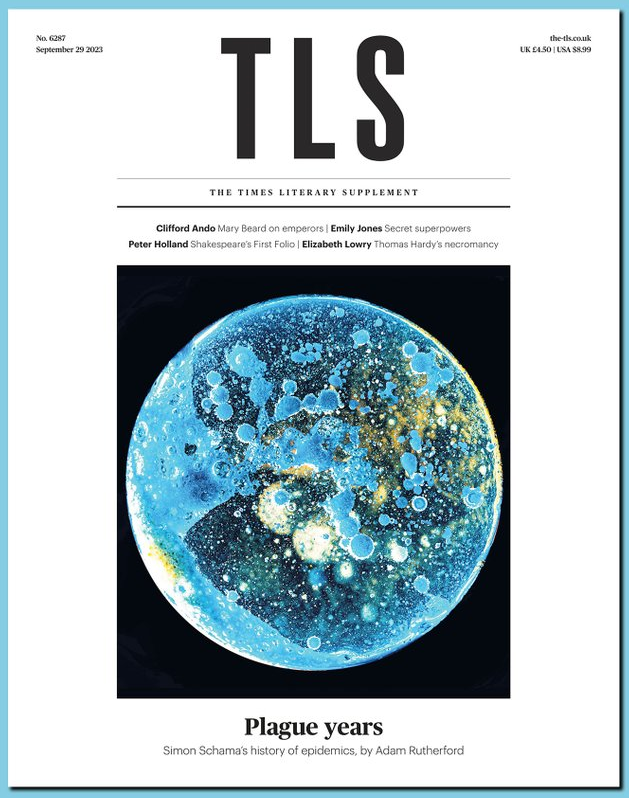
Times Literary Supplement (September 29, 2023): The new issue features The First Folio at 400; how disease shaped global history; novels of queer experience; what Britain laughs at; literary thefts and coincidences – and much more…

How disease has shaped global history
Scientists often make poor historians. Their shortcomings in describing and analysing the past include a failure to shed the whiggish stories that academic history moved away from decades ago. Straight lines are still drawn between Great Men and the impact of their brilliant insights on our view of reality. They also sometimes fail to treat the material of history with the seriousness they bring to their own discipline. Simple questions that are drummed into schoolchildren are frequently ignored in analysing documentary evidence: who wrote this, why, and for whom? The result is context-lite narrative that doesn’t stand up to scrutiny.

Works to commemorate the 400th anniversary of the First Folio
Next year, the Folger Shakespeare Library in Washington DC will reopen after a three-year closure for a large-scale renovation of its building, which dates from 1932. The centrepiece of the new Shakespeare Exhibition Hall, will be, as the press release puts it, something “that only the Folger could produce: all 82 copies of the 1623 First Folio of Shakespeare that were collected by Henry and Emily Folger”. The Folger holds slightly more than a third of all extant copies of the book and now eighty of them will be on permanent show in a “20-foot long visible vault”, while two more will be open in cases as part of an “interactive” visitor experience. Peering into the vault says much about the Folgers’ appetite for cornering the market in Folios but, since nearly all copies differ in some respects, it did make some kind of sense to buy many of them.
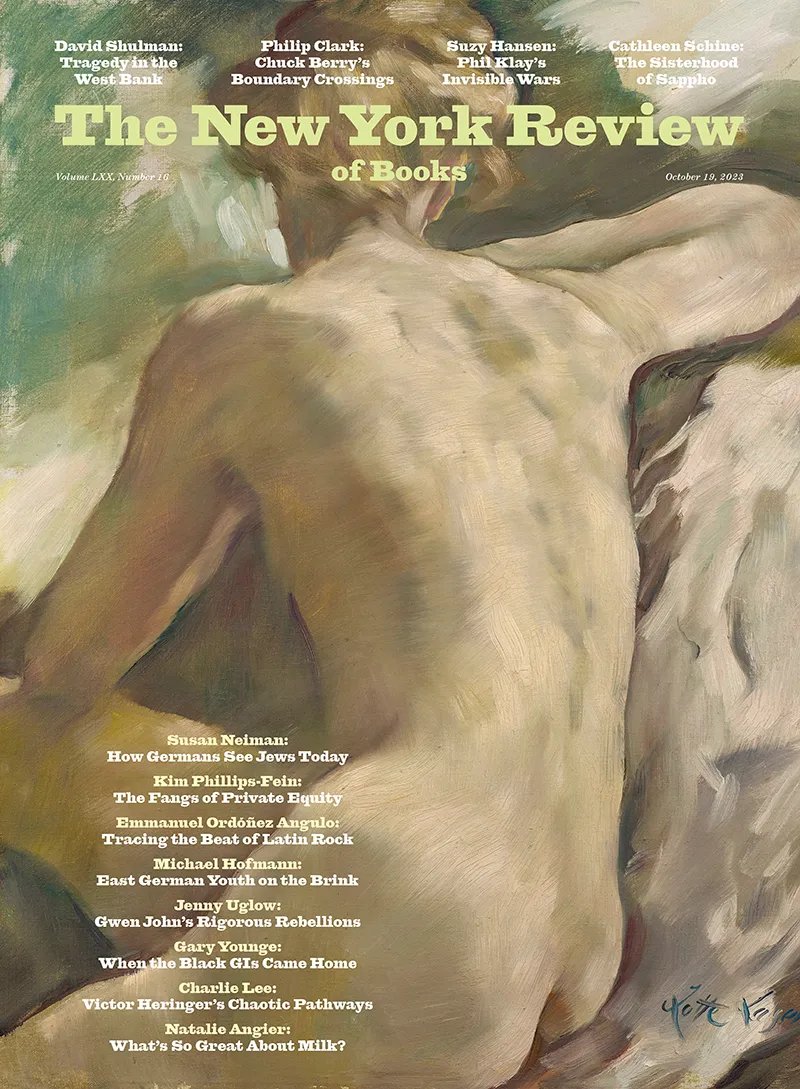

By Gary Younge
Half American: The Epic Story of African Americans Fighting World War II at Home and Abroad by Matthew F. Delmont
The ambivalence many Black soldiers felt toward the United States during World War II was matched only by the ambivalence the United States demonstrated toward the principles on which the war was fought.
Selby Wynn Schwartz’s novel After Sappho is populated by the notable lesbians who helped modernism blossom.
After Sappho by Selby Wynn Schwartz
One of my favorite novels is by Compton Mackenzie, a Scottish writer known today, if he is known at all, for his whimsically comic Whisky Galore (1947) and his ambitious early novel Sinister Street (1913). The one I love, however, is Extraordinary Women: Theme and Variations (1928), a satirical roman à clef about the sapphic adventures of the unorthodox and eccentric inhabitants of an island modeled after Capri during World War I. After Sappho, a novel by Selby Wynn Schwartz that was longlisted for the Booker Prize in 2022, is many things, none of them satirical, but I kept thinking of the title of Mackenzie’s book as I read it.


By Katie Kadue
THE FUNNY THING about misogyny is it’s structured like a joke. Not a very good joke—a groaner, a dad joke. Why are they called “women”? Because they’re a woe to men. Get it? Woman is a container for man; language engenders gender subordination. As Mike Myers recites on stage in his role as a moody slam poet in the thrillingly zany 1993 Hitchcockian send-up So I Married an Axe Murderer, “Woman! Whoa, man. Whoaaaaaa. Man!”
/https%3A%2F%2Fdev.lareviewofbooks.org%2Fwp-content%2Fuploads%2F2023%2F09%2FScarcity.jpg)
Scarcity: A History from the Origins of Capitalism to the Climate Crisis by CARL WENNERLIND
WATER FALLS FROM the sky, literally. It is the most abundant chemical compound on Earth, and yet many people buy it in plastic bottles. Nestlé and other corporations source water cheaply and add labels that depict something other than heavy-industry and fossil-fuel derivatives, as though you’re drinking straight from a pristine spring. By bottling this natural resource and selling it as a commodity, Nestlé creates a form of scarcity.
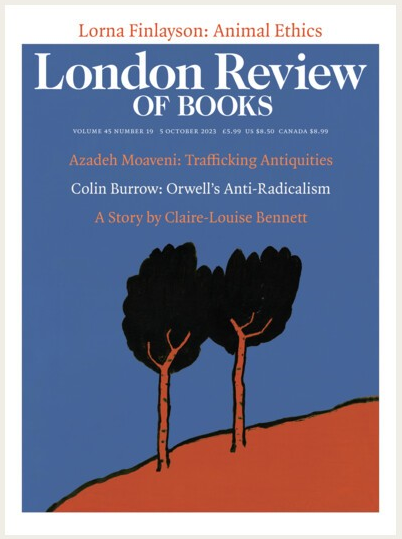
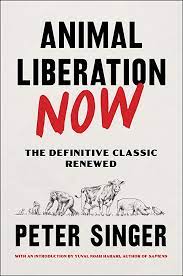
We may be tempted to throw up our hands and say: fuck it, I’m having a burger. Peter Singer would think this illogical: we should endeavour to do the least harm we can. But we might wonder whether something is wrong with the ethical approach that has led us to this point.
Animal Liberation Now
by Peter Singer.
Justice for Animals
by Martha Nussbaum.


 Boomers Daily