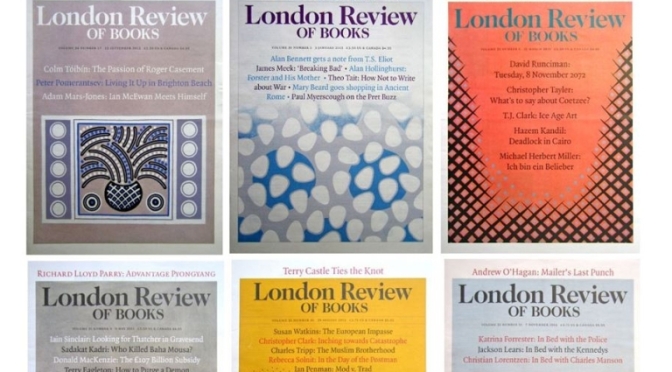
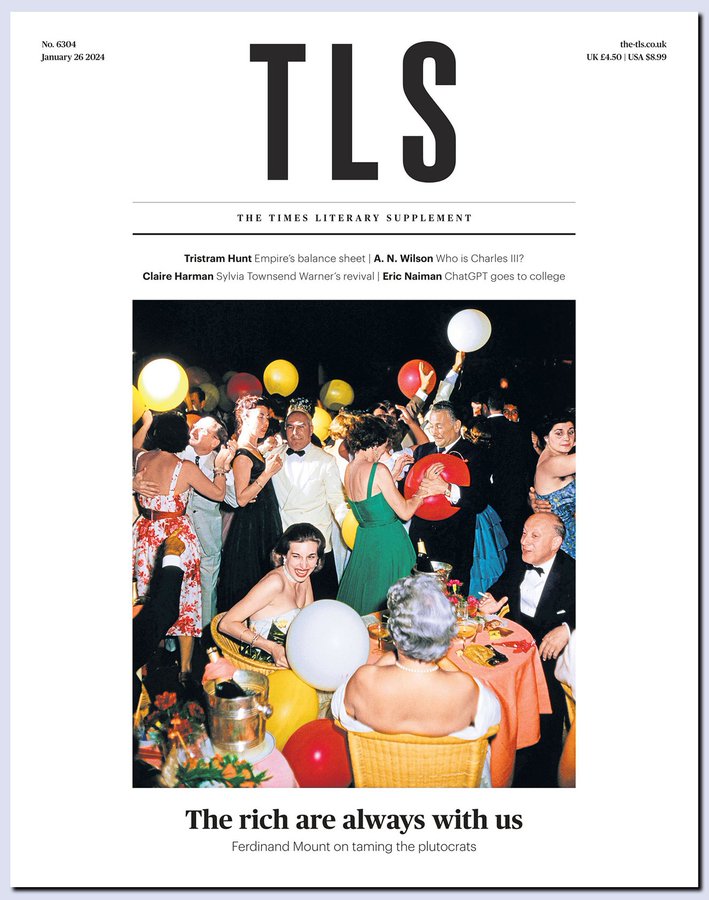
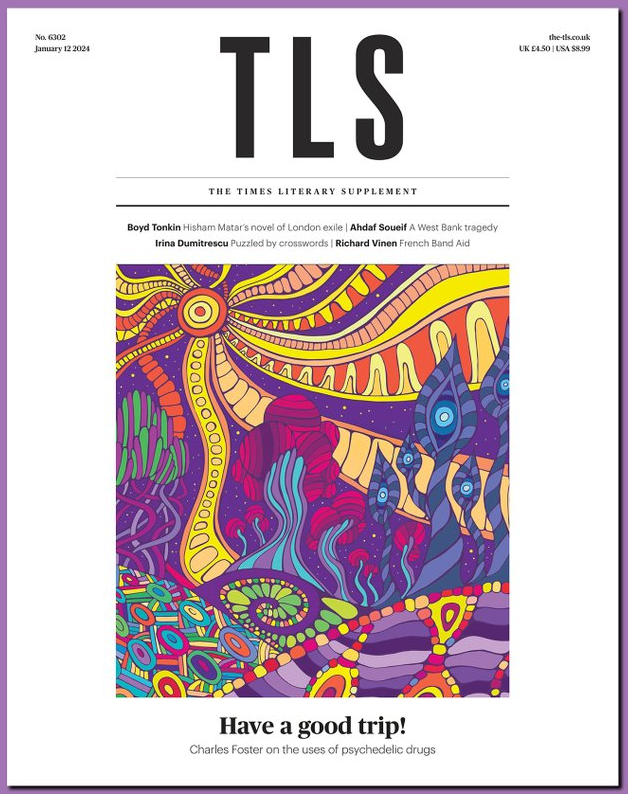
Times Literary Supplement (December 1, 2023): The new issue features Godzilla returns! – Japan’s nuclear nightmare; Fear of flying at 50; Woolf and the Monuments woman; The lure of Vesuvius, Christmas Books and more…

Times Literary Supplement (December 1, 2023): The new issue features Godzilla returns! – Japan’s nuclear nightmare; Fear of flying at 50; Woolf and the Monuments woman; The lure of Vesuvius, Christmas Books and more…
The Times and The Sunday Times (November 24, 2023): Lose yourself among lily pads, potbellied Dutch merchants and Venetian canals. Laura Freeman and Waldemar Januszczak curate the finest of this year’s art books, taking in Monet, Picasso, Gwen John and more

In his eighties, Claude Monet was spotted by a younger artist, “old but still very handsome”, wrapped in a sumptuous fur, sitting on top of a dyke “in a bitter west wind which ruffled his long white beard, mingling it with the foam of the waves”. This transporting biography by the Financial Times’s art critic Jackie Wullschläger paints the impressionist as a man for all seasons, out in the dawn and the dusk and the snow, obsessed, possessed, with capturing the fleeting effects of light, shade and water, calm as millpond or whipped up by a storm. Chocolate box? Jamais! Monet mounted the barricades of modern art, revolutionising the way the world could be seen and painted. A book for art-lovers — and for gardeners too. Art and literature, Monet proclaimed, were all humbug. “There’s nothing but the earth.” Laura Freeman

Who would have thought that the outstanding art book of the year would be written not by a curator or an art historian or even an artist — but by a museum guard? For ten years Patrick Bringley worked at the Metropolitan Museum in New York, directing visitors to the Islamic collections and watching out for angry protestors. It turned out to be a remarkably fruitful experience. Bringley weaves the story of a personal tragedy involving his sick brother with startling insights into museum life and — most impressively — into the great art in the Met’s collection. Waldemar Januszczak

If you have been living under a rock in 2023, you will not have noticed that this year was the 50th anniversary of the death of Picasso. The rest of us couldn’t avoid it. Countless exhibitions, events and books commemorated the occasion, but this was the most useful. Focusing on the art rather than the biography of the man, it’s a generous and sensitive text with brilliant illustrations. WJ

Pauline Boty was “the Wimbledon Bardot”, “an ice-cream of a girl” and by her own mocking, ironic reckoning, “a happy, dumb blonde”. She was so much more than that, as this fizzing biography shows. Meet Boty the Sixties It girl, pop artist, voice-of-a-generation broadcaster and “anti-ugly” campaigner against hideous postwar development. Marc Kristal gives you the crumbling studios of the Royal College of Art, the creative squalor of Notting Hill bedsitters and the thrill of finding your feet (in knee-high boots) in swinging London. Boty died appallingly young, but her life was no tragedy. It was full of mischief, provocation and promise. This book brings Boty to life, painting, protesting and dancing the miniskirted twist. LF

Venice isn’t just the most painted city in the world, it is probably the most written about too. Finding a fresh angle from which to view it is a challenge. Gayford’s answer is to understand the city and its history through the splendid and varied art it has inspired. Packed with potted histories and informed anecdotes, this is a tome to pack on a visit to La Serenissima. WJ

Alberto Giacometti used to claim that really he would have liked to carve and cast voluptuous women such as Marilyn Monroe. “The more I tried to make them broader, the narrower they got.” Giacometti’s beanpole people became icons of 20th-century art and Michael Peppiatt’s compelling portrait cuts to the core of the sculptor’s “strange life and his stranger fame”. Giacometti’s Paris studio is a character in its own right: a filthy lair filled with the most extraordinary figures and fragments, with a leaking roof, a tree growing up through the floor and a local fox given the run of the place. Appalling and fascinating. You’ll never look at a Giacometti the same way. LF

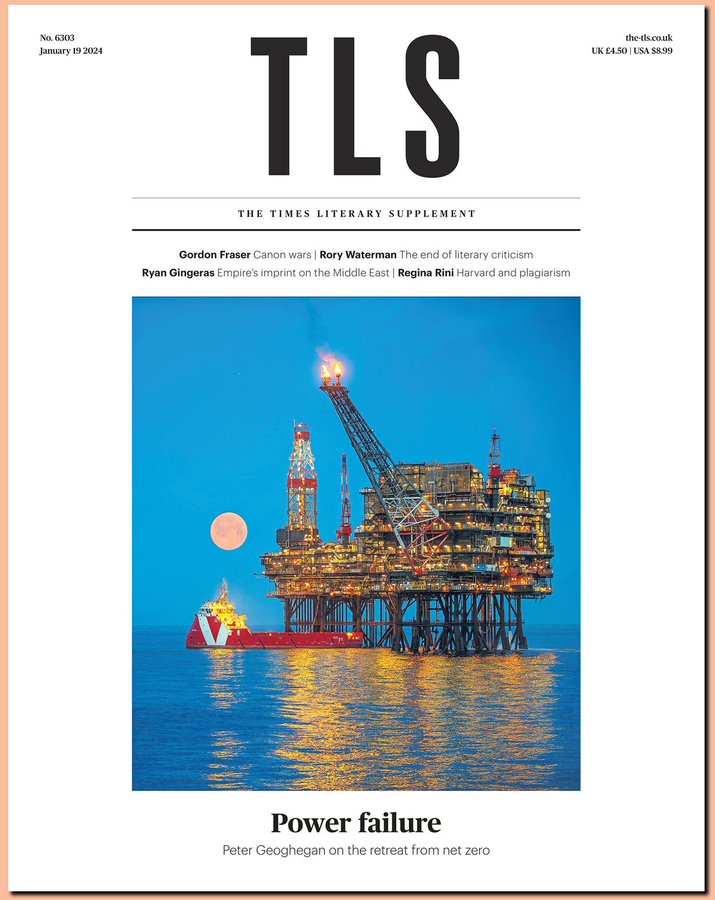
Times Literary Supplement (November 22, 2023): The new issue features Edward Thomas’s journey – The radical turn in English poetry; An AI emergency; Great American history; Magical thinking; Carry On Napoleon, and more…
The New York Times Book Review (November 21, 2023): Each year, we pore over thousands of new books, seeking out the best novels, memoirs, biographies, poetry collections, stories and more. Here are the standouts, selected by the staff of The New York Times Book Review.

Inspired by Sappho’s work, Schwartz’s debut novel offers an alternate history of creativity at the turn of the 20th century, one that centers queer women artists, writers and intellectuals who refused to accept society’s boundaries.

Verghese’s first novel since “Cutting for Stone” follows generations of a family across 77 years in southwestern India as they contend with political strife and other troubles — capped by a shocking discovery made by the matriarch’s granddaughter, a doctor.
A best-selling novelist and prominent anti-Fascist in her native Italy, de Céspedes has lately fallen into unjust obscurity. Translated by Ann Goldstein, this elegant novel from the 1950s tells the story of a married mother, Valeria, whose life is transformed when she begins keeping a secret diary.
Based on a celebrated 19th-century trial in which the defendant was accused of impersonating a nobleman, Smith’s novel offers a vast panoply of London and the English countryside, and successfully locates the social controversies of an era in a handful of characters.
This remarkable debut novel tells the story of an extended Indo-Ugandan family that is displaced, settled and displaced again.
This tale of a torrid, yearslong relationship between a young woman and a much older married man — translated from the German by Michael Hofmann — is both profound and moving.
Inspired by the life of Graver’s maternal grandmother, this exquisitely imagined family saga spans cultures and continents as it traces the migrations of a Sephardic Jewish girl from turn-of-the-20th-century Constantinople to Barcelona, Havana and, finally, Queens, N.Y.
The year is 1915, and the narrator of LaValle’s horror-tinged western has arrived in Montana to cultivate an unforgiving homestead. She’s looking for a fresh start as a single Black woman in a sparsely populated state, but the locked trunk she has in stow holds a terrifying secret.
Mason’s novel looks at the occupants of a single house in Massachusetts over several centuries, from colonial times to present day. An apple farmer, an abolitionist, a wealthy manufacturer: The book follows these lives and many others, with detours into natural history and crime reportage.
An ex-conquistador in Spanish-ruled, 16th-century Mexico is asked to hunt down an Indigenous prophet in this novel by a leading writer in Spain, splendidly translated by Katie Whittemore. The epic search stretches across much of the continent and, as the author bends time and history, lasts centuries.
In his latest novel, inspired by the true story of a devastating 1912 eviction in Maine that displaced an entire mixed-race fishing community, Harding turns that history into a lyrical tale about the fictional Apple Island on the cusp of destruction.
This novel follows three generations across time and place: a young mother trying to create a home for herself and her son in 1980s Philadelphia, and her mother, who is trying to save their Alabama hometown from white supremacists seeking to displace her from her land.
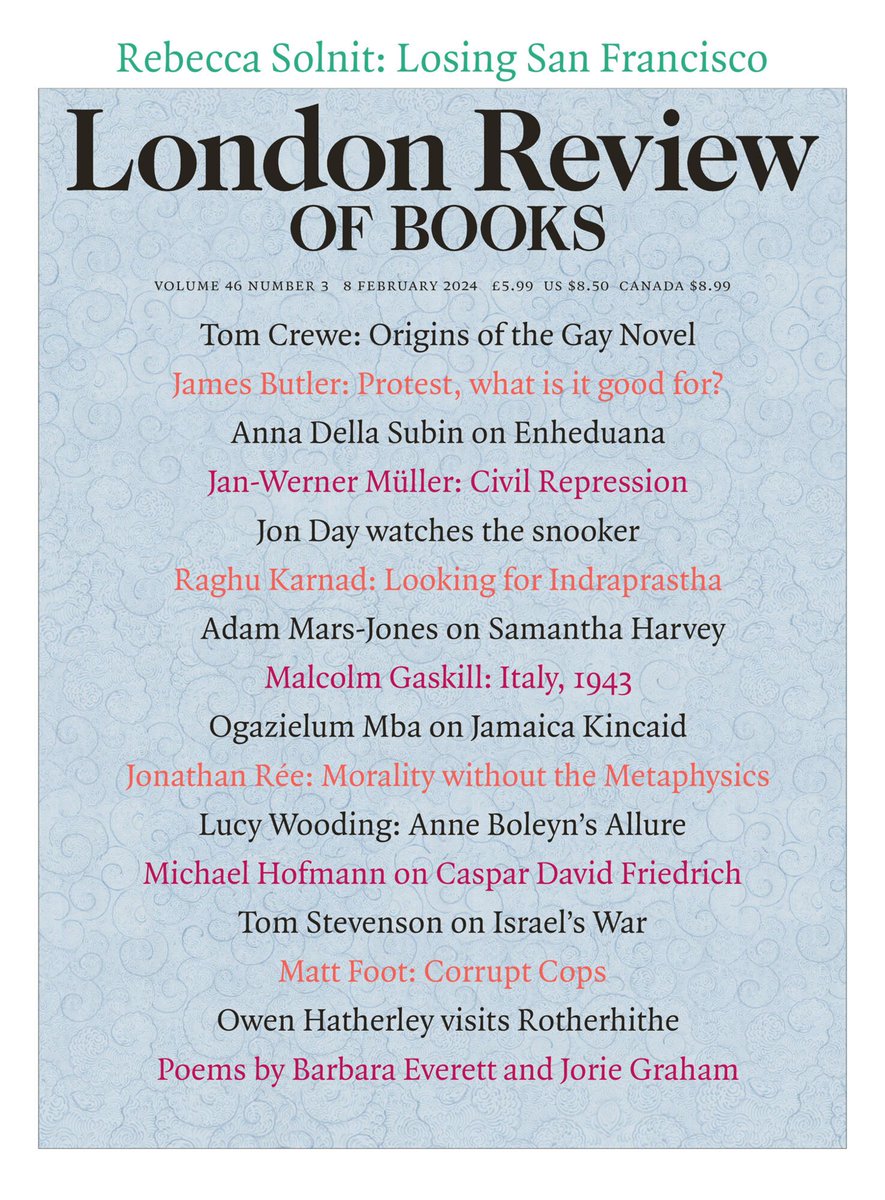
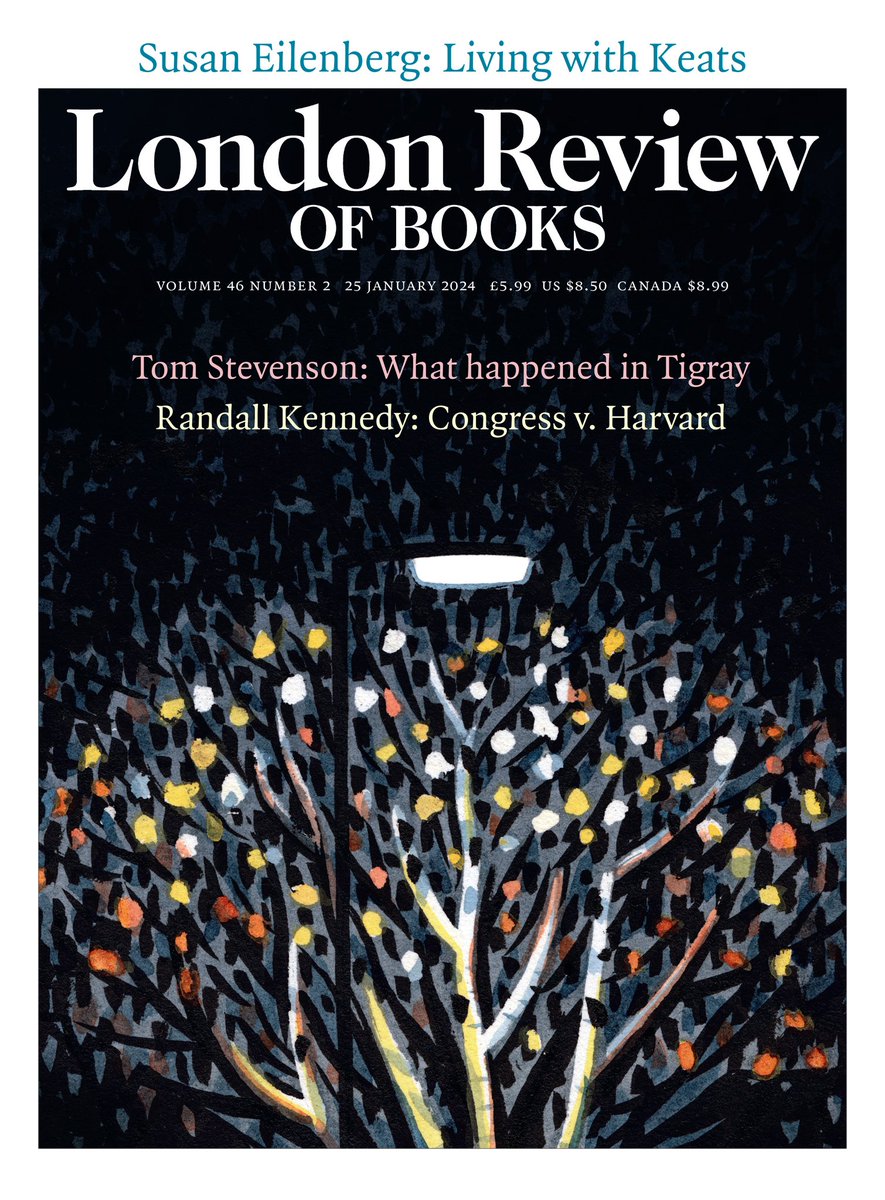
London Review of Books (LRB) – November 30, 2023: The latest issue features Jaqueline Rose on violence and its origins; Zain Samir reporting from Southern Lebanon; Clare Bucknell – Rescuing Lord Byron; David Trotter – Werner Herzog’s Visions, and more….
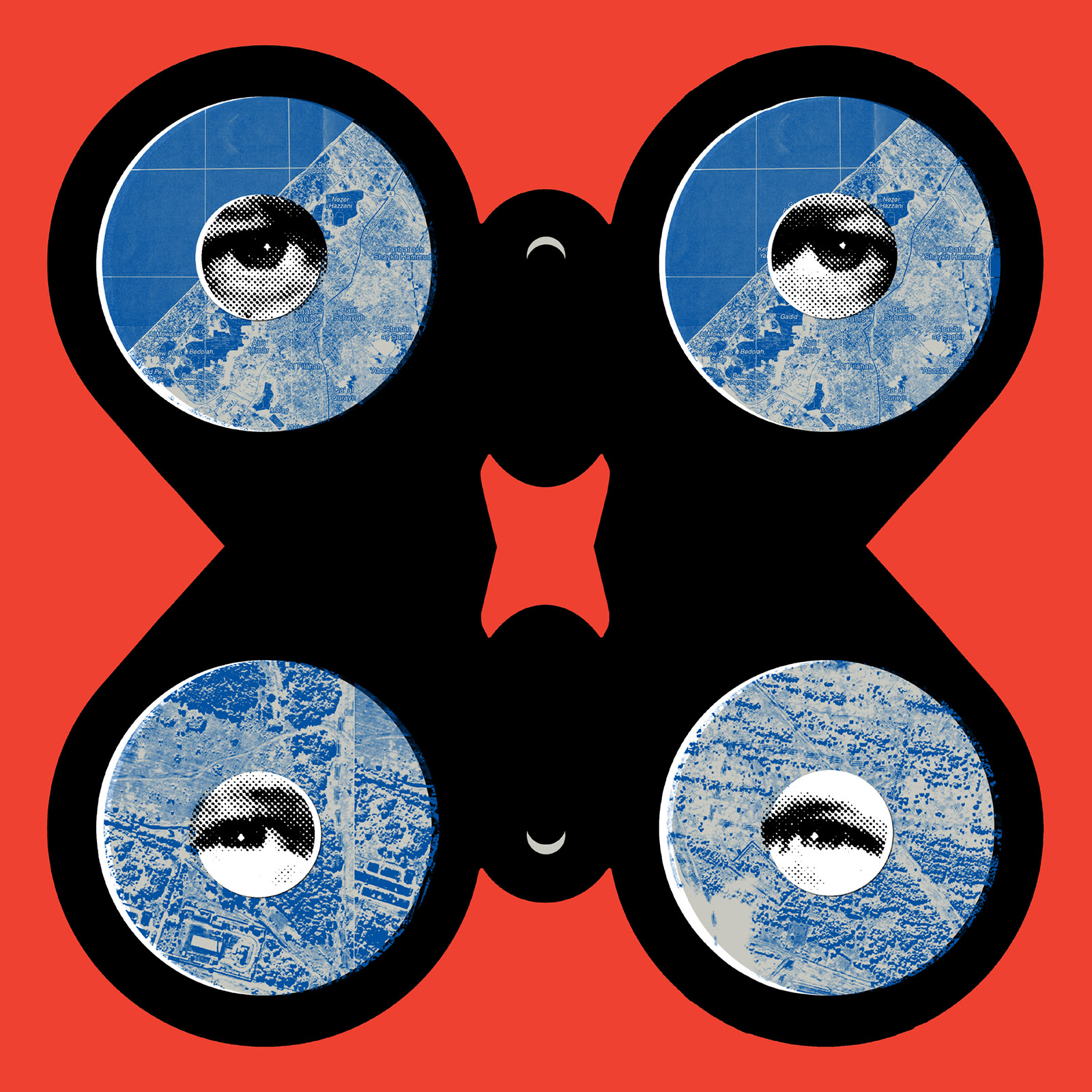
Jacqueline Rose on violence and its origins
In response to the destruction of Gaza, it seems to be becoming almost impossible to lament more than one people at a time. When I signed Artists for Palestine’s statement last month, I looked for mention of the atrocities committed by Hamas against Israeli Jews on 7 October, and then decided to settle for the unambiguous condemnation of ‘every act of violence against civilians and every infringement of international law whoever perpetrates them’.
‘Little Boy’ exploded over Hiroshima at 8.15 a.m. on 6 August 1945, wiping most of the city off the face of the earth and killing eighty thousand people instantly. But the ‘shock’ to the leadership in Tokyo envisaged by the former US secretary of war Henry Stimson failed to materialise.
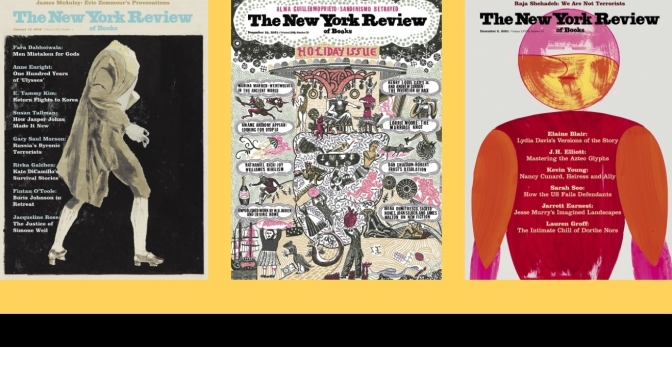
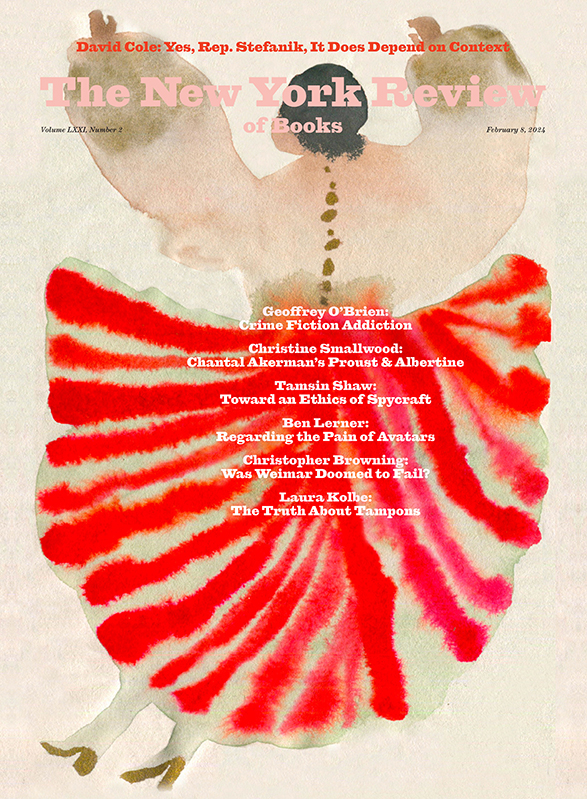
The New York Review of Books (December 7, 2023 Issue) – The latest features A Fallen Artist in Mao’s China – Ha Jin’s The Woman Back from Moscow; Gut Instincts – Recent books about the importance of the microbiome have driven many patients to fixate on the idea of “gut health.” Are they right to do so?; Prelude to Empire – Abdulrazak Gurnah’s novels, whether set in German East Africa or the United Kingdom, never cease to demonstrate how the minutiae of people’s lives have been affected by European colonialism…

Ha Jin’s The Woman Back from Moscow, a fictionalized account of the life of the actress Sun Weishi, depicts the hypocrisy of the Communist elites and the fate of those who embraced new ideals after the revolution.
The Woman Back from Moscow: In Pursuit of Beauty by Ha Jin
This book will be denounced in Beijing. Ha Jin’s The Woman Back from Moscow is a novel based on the life of Sun Weishi, an adopted daughter of Chinese premier Zhou Enlai, whose brilliant mind and intensive study in Moscow of the Stanislavski acting method brought her to the pinnacle of China’s theatrical world during the Mao years. Her beauty and effervescent personality attracted powerful men—not only Zhou, who doted on her, but also Lin Biao, the Chinese Communist Party’s leading general, who divorced his wife in order to propose marriage to her (unsuccessfully), and Mao, who apparently raped her during a long rail trip. She had several other suitors and eventually married the film star Jin Shan.

Recent books about the importance of the microbiome have driven many patients to fixate on the idea of “gut health.” Are they right to do so?
Reviewed:
A Silent Fire: The Story of Inflammation, Diet, and Disease by Shilpa Ravella
Flush: The Remarkable Science of an Unlikely Treasure by Bryn Nelson
The Anti-Viral Gut: Tackling Pathogens from the Inside Out by Robynne Chutkan
Right before their colonoscopies, with the stress of a bowel prep still rumbling in their bellies and a mental image of the procedure beginning to sharpen, some patients will ask me why I chose a career in gastroenterology: “What made you interested in this?” The reason I usually give is that you could go all your life without a heart problem, or a lung problem, or a kidney problem, but not without a bit of nausea, constipation, or abdominal pain. The work of digestion is part of the rhythm of our daily lives, I tell them, which helps my work feel similarly immediate.

Financial Times (November 16, 2023): Best books of 2023 — Literary non-fiction. Carl Wilkinson selects his must-read titles.

by Nicholas Shakespeare (Harvill Secker)
Shakespeare, renowned biographer of Bruce Chatwin, reveals a story worthy of a Bond novel in his life of Ian Fleming. The painstakingly researched yet fast-paced book explores Fleming’s childhood, dramatic war years and complex personal life and reveals how they shaped his hugely successful books.
by Adam Sisman (Profile/Harper)

A follow-up to his 2015 biography of le Carré, who died in 2020, Sisman’s latest book exposes the great spy writer’s duplicitous and deceitful relationships with the women in his life, providing new insights into the secret life of the man behind George Smiley. A fascinating, revelatory appendix to Sisman’s fuller life.
by Ralph Dutli, translated by Ben Fowkes (Verso)
This life of “legendary literary saint”, Osip Mandelstam, provides a timely reminder of both the long history of repression in Russia and the powerful role that literature can play when in the right hands. Dutli’s rounded portrait of the Russian poet unafraid to speak truth to power brings to life the man and his time.
by Anna Funder (Viking/Knopf)
Funder, author of Stasiland, her prizewinning account of the East German secret police, takes six letters written by Eileen O’Shaughnessy, George Orwell’s first wife, as the imaginative springboard for a deep dive into their relationship and her impact on his writing and legacy. A haunting, tragic and revealing book.
by Sarah Ogilvie (Chatto & Windus)
A former editor of the Oxford English Dictionary herself, Ogilvie has written a “people’s history” of the great literary endeavour. Begun in 1879, the OED is an epic, crowdsourced attempt to pin down slippery, evolving language and this book tells the fascinating story of the eclectic and unsung contributors to this living monument to language.
by Nathan Thrall (Allen Lane/Metropolitan Books)
This quietly heartbreaking work of non-fiction reads like a novel. At its centre is a tragic road accident outside Jerusalem in the West Bank from which Thrall, a Jewish American journalist, carefully traces the labyrinthine lives of those involved and the tangled web of politics, history and culture that ensnare them all.

Times Literary Supplement (November 17, 2023): The new issue #TheTLS features Revenge of the grown-ups – The downfall of Sam Bankman-Fried; 2023 Books of the Year; the elusive Shakespeare; Simone Weil; Philosophers and public affairs – and more…

Financial Times (November 12, 2023) – The Best books of 2023 — Travel. Tom Robbins selects his must-read titles

by Michiel Panhuysen (Bloomsbury)
In the mad, masochistic world of ultra-marathons, one bizarre event stands above all others. The Barkley Marathons in Frozen Head State Park, Tennessee, was established in 1986 but to date only 17 people have successfully finished the 100-mile course. Peculiarities include the fact that, rather than using a starting pistol, the race begins when its director lights a cigarette. Participants must collect a page from a book at each checkpoint, and the application process includes writing an essay about why they should be allowed to take part. Panhuysen, who has competed several times (always unsuccessfully) gives an entertaining portrait of a cult competition.
by Sara Wheeler (Abacus)

This entertaining memoir recounts Wheeler’s career as a travel writer, swimming against the tide of her largely upper-class male contemporaries. Despite the dangers and misogyny endured on journeys from Antarctica to Zanzibar, she admits her main fear is the mundane: “The John Lewis curtain department terrifies me most.”
by González Macías (Picador)
For Spanish writer, graphic designer and committed landlubber Macías, remote lighthouses seem to have the appeal of endangered animals. “There is something beautiful and wild in these impossible architectures,” he writes. “Perhaps because we sense these creatures are dying. Their lights are going out, their bodies crumbling . . . ships no longer need to be under their romantic guardianship.” His fascination propels this survey of 34 lighthouses from Cornwall to China, an exploration of the buildings’ histories and particularities and a study of human solitude and survival in the loneliest surroundings.
by Noo Saro-Wiwa (Canongate)
For a follow-up to the award-winning Looking for Transwonderland, the Anglo-Nigerian journalist travels to China and sets out to explore through the eyes of immigrant Africans who can travel and trade easily in the country, unlike in many European and western countries. It’s an impressionistic but revealing account of a journey through “a separate and nebulous universe”.
by Tim Hannigan (Head of Zeus/Apollo)
Cornwall is among England’s most popular tourist destinations and yet remains mysterious, mythologised and misunderstood. It is, according to historian Bernard Deacon, “a kind of halfway house between English county and Celtic nation”. Hannigan attempts to untangle the region’s history, identity and culture — from King Arthur to Poldark — as he hikes from the River Tamar in the east to his family home near Land’s End.