



Times Literary Supplement (December 4, 2024): The latest issue features ‘HIs Other Country’ – The James Baldwin revival continues in the 100th anniversary year of his birth. A trickle of biographies has become a flood, and the causes for which he stood, racial equality and gay rights, speak to the times.

Record-label scouts chase ‘strange compositions’

A video game challenges the history of Argentina
By Mia Levitin


Country Life Magazine (December 3, 2024): The latest issue features ‘The Full English’ – Why our homegrown style is back….
The author selects a portrait that shows the ‘very essence of what it was to be Sicilian’
Carla Carlisle—wife of a farmer and a diversifier extraordinaire— offers an insider’s view on the Government’s ‘Great Betrayal’
Now is not the time to hibernate, suggests John Wright, as he encourages us to appreciate the countryside’s stark, intricate beauty in these colder months

Lucy Denton delves into the remarkable history of Stationers’ Hall, the central London home of the Worshipful Company of Stationers for the past 400 years
Amie Elizabeth White hails Henry Cole, inventor of Christmas cards
John Lewis-Stempel loves to be beside the seaside as he examines the enduring appeal of England’s glorious coastline

Matthew Dennison tips his hat to the rural origins of the bowler as he celebrates its 175th birthday
Beware an ill wind blowing us into 2025, warns Lia Leendertz
Joseph Phelan finds a business on an upslope when he visits the last ski-maker in Scotland
Sleep in art is often drunken, deadly or the stuff of nightmares, but rarely is it peaceful, as Claudia Pritchard discovers
Charles Quest-Ritson cranes his neck to take in the sheer scale of the specimens at West Sussex’s Architectural Plants
 Kitchen garden cook
Melanie Johnson on sprouts

The New York Times Book Review (December 3, 2024): The staff of The New York Times Book Review choose the year’s top fiction and nonfiction.

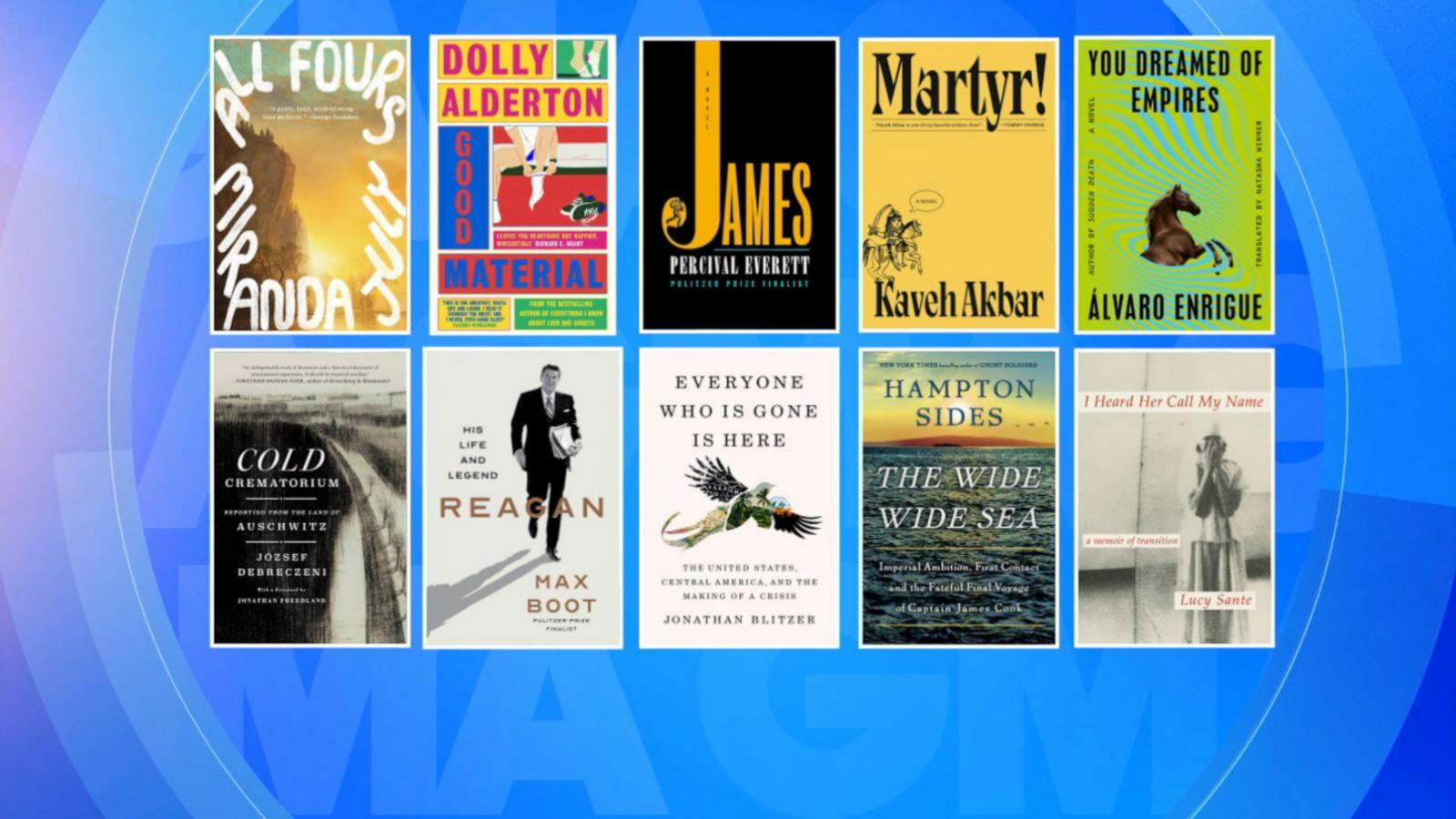
July’s second novel, which follows a married mother and artist who derails a solo cross-country road trip by checking into a motel close to home and starting an affair with a younger rental-car worker, was the year’s literary conversation piece, dubbed “the talk of every group text — at least every group text composed of women over 40” and “the first great perimenopause novel” in just two of many articles that wrestled with its themes. Sexually frank and laced with the novelist’s loopy humor, the book ends up posing that most universal question: What would you risk to change your life? Read our review.
Local bookstores | Barnes and Noble | Amazon | Apple

In Alderton’s brisk, witty novel, a 35-year-old struggling comedian in London tries to make sense of a recent breakup at the same moment when the majority of his friends seem to be pairing off for life. Cue snappy dialogue, awkward first dates and a memorable quest for a new home; toss clichéd gender roles, the traditional marriage plot and a ho-hum happily ever after. Not only does Alderton cement herself as a latter-day Nora Ephron, she also puts her own mark on the classic romantic comedy form. There are no second fiddles in “Good Material”; every character sings. And there is a deeper message, revealed in a surprise twist, having to do with independence, adventure and charting your own course. Read our review.
Local bookstores | Barnes and Noble | Amazon | Apple

It takes a lot of ambition, skill and vision to reinvent one of the most iconic books in American letters, but Everett demonstrates he possesses those virtues in spades in “James.” The novel is a radical reworking of Mark Twain’s “Huckleberry Finn,” telling the story not from Huck’s perspective, but from the point of view of the enslaved man who accompanies Huck down the Mississippi River: Jim (or, as he clarifies, James). From James’s eyes, we see he is no mere sidekick but rather a thinker and a writer who is code-switching as illiterate and fighting desperately for freedom. Everett’s novel is a literary hat trick — a book that highlights the horrors in American history and complicates an American classic, all while also emerging as a work of exquisite originality in its own right. Read our review.
Local bookstores | Barnes and Noble | Amazon | Apple

Cyrus Shams, an Iranian American aspiring poet and recovering drug addict, wallows in a post-college malaise in a fictional Midwestern town. He’s working dead-end jobs and halfheartedly attending A.A., while grieving his parents’ deaths and, increasingly, fantasizing about his own. Cyrus is lost and sad, but this captivating first novel, by an author who is himself a poet, is anything but. As Akbar nudges Cyrus closer to uncovering a secret in his family’s past, he turns his protagonist’s quest for meaning — involving a road trip to New York and a revelatory encounter in the Brooklyn Museum — into an indelible affirmation of life, rife with inventive beauty, vivid characters and surprising twists of plot. Read our review.
Local bookstores | Barnes and Noble | Amazon | Apple

History has long been Enrigue’s playground, and his latest novel takes readers to 16th-century Tenochtitlan, or what is now Mexico City. Hernán Cortés and his men have arrived at Moctezuma’s palace for a diplomatic — if tense and comically imbalanced — meeting of cultures and empires. In this telling, it’s Moctezuma’s people who have the upper hand, though the emperor himself is inconveniently prone to hallucinogenic reveries and domestic threats. The carnage here is devilishly brazen, the humor ample and bone-dry. Read our review.
Local bookstores | Barnes and Noble | Amazon | Apple

Debreczeni, 39 when he was deported from his native Hungary to what he calls “the Land of Auschwitz,” would later memorialize the experience in a book that defies easy classification. First published in 1950, “Cold Crematorium” is a masterpiece of clinical, mordant observation. In a cattle car he watches a fellow deportee whose hand retains the gestures of a chain-smoker; newly arrived at Auschwitz, he encounters the lousy barroom piano player he avoided back home. This is more than gallows humor; it’s a stubborn fight to stay human and place the unimaginable in the context of the known. Look elsewhere for platitudes — Debreczeni witnessed, and reported, the best and worst of mankind and showed it to us to use as we will. Read our review.
Local bookstores | Barnes and Noble | Amazon | Apple

Blitzer, a staff writer at The New Yorker, presents a timely analysis of the situation at America’s southern border, placing the blame for today’s screaming headlines, detainee camps and unaccompanied minors firmly on post-Cold War U.S. policy. His kaleidoscopic narrative moves between the Central American insurgencies that flooded this country with refugees, and the shifting and frequently incoherent policies that worsened the fallout. We meet morally pragmatic domestic politicians, a tireless activist who’s moved from El Salvador to Chicago, Los Angeles teenagers ensnared in gang pipelines. None of it is simple; all of it has a terrible cost. Blitzer handles his vast topic with assurance and grace, never losing sight of the human element behind the global crisis. Read our review.
Local bookstores | Barnes and Noble | Amazon | Apple

When the veteran literary and cultural critic came out as transgender in 2021 at the age of 66, she described in an email to her loved ones the devastating realization that her “parallel life” — the one presented to her by a “gender-swapping” app that showed her how she would have looked as a girl and then a woman at various junctures in her life — had passed her by. “Fifty years were under water, and I’d never get them back.” As she reflects on her upbringing as the “only child of isolated immigrants,” her early adulthood in 1970s New York and her career of seeking truths through writing while hiding an important truth about herself, Sante fearlessly documents a transformation both internal and external, one that is also a kind of homecoming. Read our review.
Local bookstores | Barnes and Noble | Amazon | Apple

This elegant biography of the 40th president stands out for its deep authority and nimble style. Boot, a historian and foreign policy analyst, grew up idolizing Ronald Reagan, but after a decade of interviews and research, he finds himself asking whether his onetime hero paved the way for Donald Trump, the man whose ascent to power led Boot to abandon the right. The book is a landmark work that shows how Reagan emerged from his New Deal roots to become a practiced Red baiter and racist dog whistler before settling into the role of the optimistic all-American elder statesman. “It is no exaggeration,” Boot writes, “to say that you cannot fully comprehend what happened to America in the 20th century without first understanding what happened to Ronald Reagan.” Read our review.
Local bookstores | Barnes and Noble | Amazon | Apple

In this masterly history, Sides tracks the 18th-century English naval officer James Cook’s third and final voyage across the globe, painting a vivid and propulsive portrait that blends generations of scholarship with the firsthand accounts of European seafarers as well as the oral traditions of Indigenous Pacific islanders. The story begins in Britain as the last embers of the Enlightenment are going out, a time when curiosity and empathy gave way to imperial ambition and moral zeal. Between tales of adventure on the open ocean, complex depictions of Polynesian culture and colorful scenes of a subarctic frost littered with animal life, Sides expertly probes the causes of Cook’s growing anger and violence as the journey wears on and the explorer reckons with the fallout of what he and others had wrought in expanding the map of Europe’s power. Read our review.


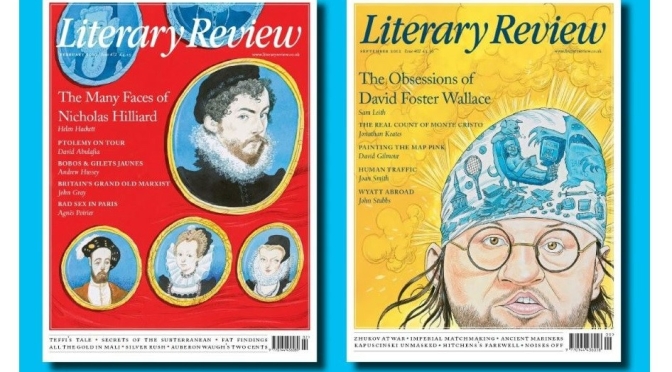
Literary Review – December 2, 2024: The latest issue features ‘Mandeville’s Dangerous Idea’


The scholar of Palestinian history talks about what has and has not surprised him about the world‘s response to Israel‘s assault on Gaza.
A recent exhibition at the Prado showcased artists engaging with the ferment and conflict of turn-of-the-century Spain.
The French director Catherine Breillat has spent her career insisting on women’s agency and reclaiming taboo desires—sometimes with troubling implications.

Now who’s on the wrong side of history? by Charles R. Kesler
Donald Trump and the Republican Party had a triumphant Election Day, gaining ground in all parts of the country and among almost all voting sectors. He won all seven of the ballyhooed swing states, by comfortable margins except in the blue-wall states of Wisconsin (where his margin of victory was 0.9%), Michigan (1.4%), and Pennsylvania (1.8%). Still, he won all three blue-wall states twice—in 2024 as in 2016—something no Republican had managed since Ronald Reagan. Trump regains office alongside a Republican-controlled Senate and House of Representatives, too, the trifecta of what political scientists call “undivided government,” not enjoyed by Republicans since the first two years of his own first term.




Diarmaid MacCulloch
Jessica Olin
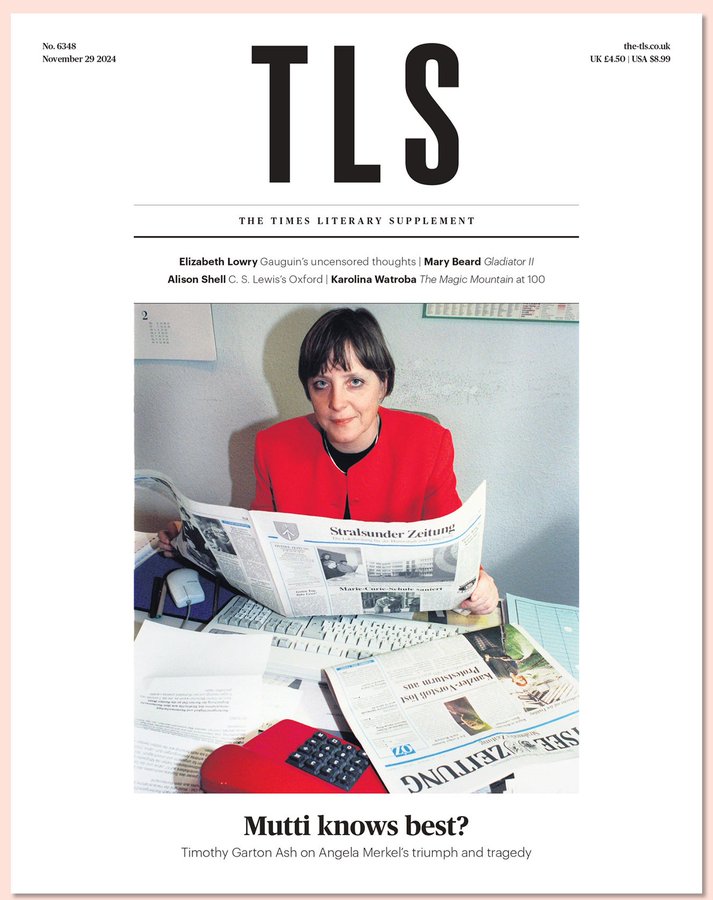
Times Literary Supplement (November 27, 2024): The latest issue features ‘Mutti Knows Best?’ – Angela Merkel’s triumph and tragedy; Gaughin’s uncensored thoughts; Gladiator II; C.S. Lewis’s Oxford and “The Magic Mountain” at 100…

Country Life Magazine (November 26, 2024): The latest issue features ‘Advent Calendar Special’…
Carla Passino is captivated by floral photographs that evoke 17th-century still-life paintings
She may be tiny, but Jenny wren certainly makes her presence felt, declares Mark Cocker
There’s more to myrrh than meets the eye, says Deborah Nicholls-Lee
Lucien de Guise is bowled over by the intoxicating concoctions mixed by Dickens and George IV
Neil Buttery tucks into the tale of the Yorkshire Christmas Pye
Pick out those perfect presents with a helping hand from Hetty Lintell and Amie Elizabeth White

The Royal Ballet dancer selects an inspiring, transformative work
The author’s Wessex is brought to life in Jeremy Musson’s words and Matthew Rice’s drawings
Deborah Nicholls-Lee is fascinated by fractals, the exquisite, ever-repeating patterns in Nature
John Lewis-Stempel urges us to rediscover our love of heathland, now a rarer habitat than rainforest
Andrew Green rounds up the animals in Dickens’s life and work
Jack Watkins explores the folklore and function of the lychgate
Our guide to entertaining in style
From flying a Spitfire to sushi-making, the COUNTRY LIFE team puts gift experiences to the test
Kate Green reveals how Sir David Willcocks changed the sound of Christmas with Carols for Choirs
Hetty Lintell on saunas, socks, silk bows and precious stones
Neil Buttery sorts the pudding prick from the tongue press
Rob Crossan talks Tupperware
Melanie Johnson on cabbage
A black fox illuminates a dreary dawn for John Lewis-Stempel
Victoria Marston looks back at classic film posters
Matthew Dennison explores the tin-novations that made Huntley & Palmers a household name
Sarah Sands shares how choral singing shaped the life of her late brother Kit Hesketh-Harvey
Ian Morton investigates the real meanings of our nursery rhymes
Harry Pearson finds out why this is the year of the Northern Lights



 Boomers Daily