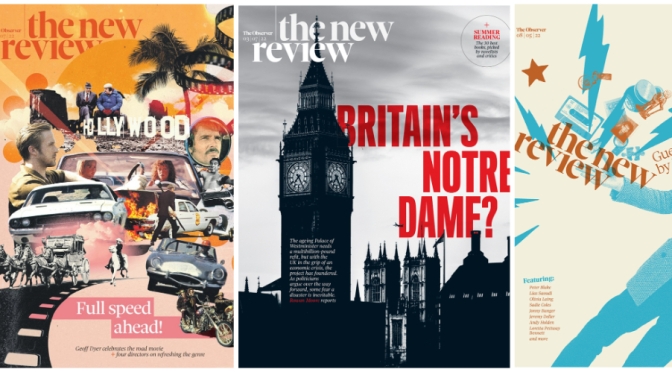
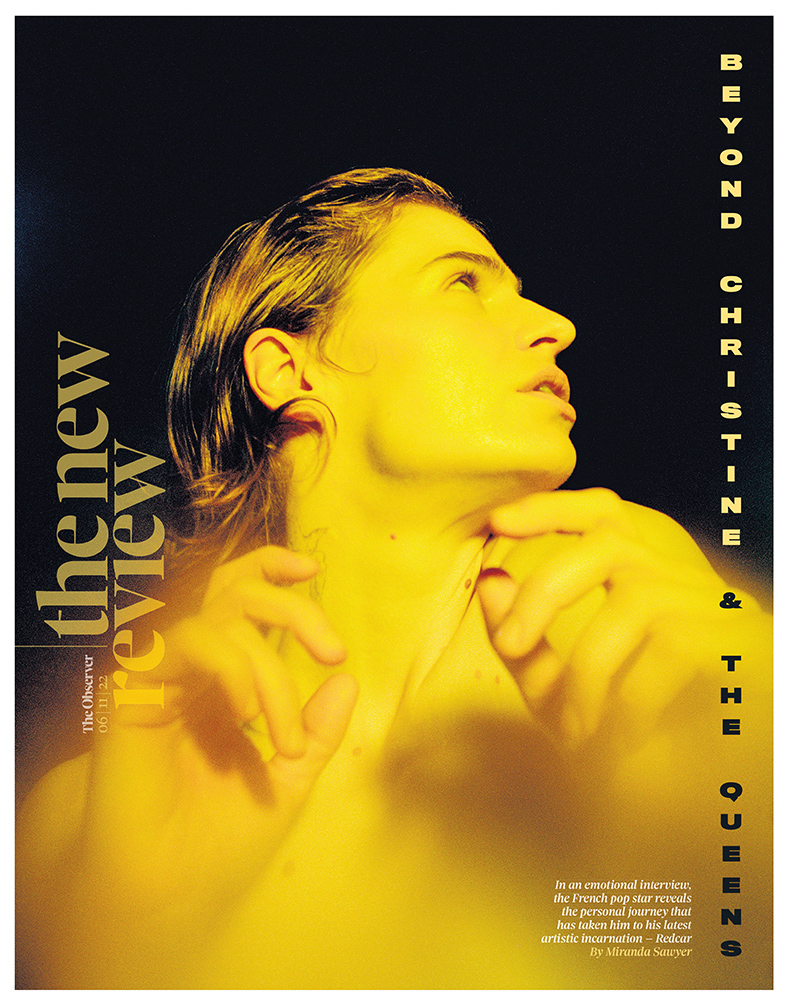

Inside the November 6, 2022 Issue:

Inside the November 6, 2022 Issue:
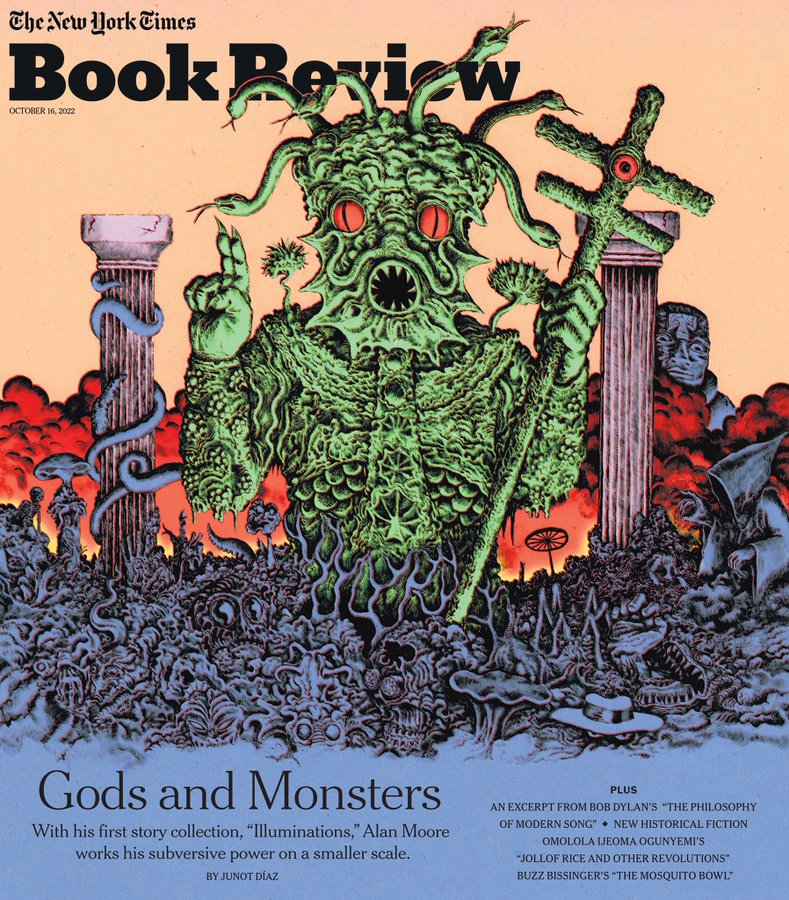
With his first story collection, “Illuminations,” the British writer and comic-book titan works his subversive power on a smaller scale.
| There’s more, of course, including Omolola Ijeoma Ogunyemi’s powerful novel in stories, “Jollof Rice and Other Revolutions”; Maggie Haberman’s “Confidence Man: The Making of Donald Trump and the Breaking of America”; Buzz Bissinger’s “The Mosquito Bowl,” about a game played on Guadalcanal between two Marine regiments in 1944; and Amal El-Mohtar’s latest science fiction and fantasy column. |
| Don’t miss the latest entry in our “Read Your Way Around the World” series, which will whisk you to the brightly hued streets of Reykjavík, or our excerpts from Bob Dylan’s new book, “The Philosophy of Modern Song.” (In 1971, 45 years before he was awarded the Nobel Prize in Literature, the Book Review opined, rather tartly, that “Dylan is not a literary figure. Literature comes in books, and Dylan does not intend his most important work to be read.”) |
Cover for @nytimesbooks Junot Diaz’s review of Alan Moore’s new story collection “Illuminations”.

An important moment in the relationship between pop music and writing occurred in 2017 when the Nobel prize in literature was awarded to Kazuo Ishiguro. The previous year, it had gone to Bob Dylan.
In Long Players, a collection of short pieces by poets, novelists and journalists about the albums that have most affected them, a recurrent suggestion is that you can learn more about writing from songs than you can from books, especially when you’re young. “In my view, David Bowie was a great writer”, says Deborah Levy about The Rise and Fall of Ziggy Stardust and the Spiders from Mars (1972).
The documentary “Once Were Brothers” chronicles the highs and lows of a famous rock group. Lead guitarist and songwriter Robbie Robertson began touring as a teenager and played for Bob Dylan before joining forces with four other musicians to become The Band. Jeffrey Brown reports.
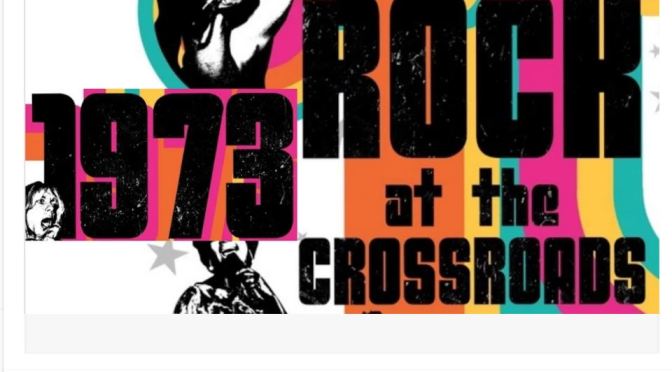
 Led Zep’s Houses of the Holy reflected the rise of funk and reggae. The singer songwriter movement led by Bob Dylan, Neil Young, and Joni Mitchell flourished at the Troubadour and Max’s Kansas City, where Bruce Springsteen and Bob Marley shared bill. Elvis Presley’s Aloha from Hawaii via Satellite was NBC’s top-rated special of the year, while Elton John’s albums dominated the number one spot for two and a half months.
A fascinating account of the music and epic social change of 1973, a defining year for David Bowie, Bruce Springsteen, Pink Floyd, Elton John, the Rolling Stones, Eagles, Elvis Presley, and the former members of The Beatles.
1973 was the year rock hit its peak while splintering―just like the rest of the world. Ziggy Stardust travelled to America in David Bowie’s Aladdin Sane. The Dark Side of the Moon began its epic run on the Billboard charts, inspired by the madness of Pink Floyd’s founder, while all four former Beatles scored top ten albums, two hitting #1.
To read more and purchase: https://www.amazon.com/1973-Crossroads-Andrew-Grant-Jackson/dp/1250299985

 Boomers Daily