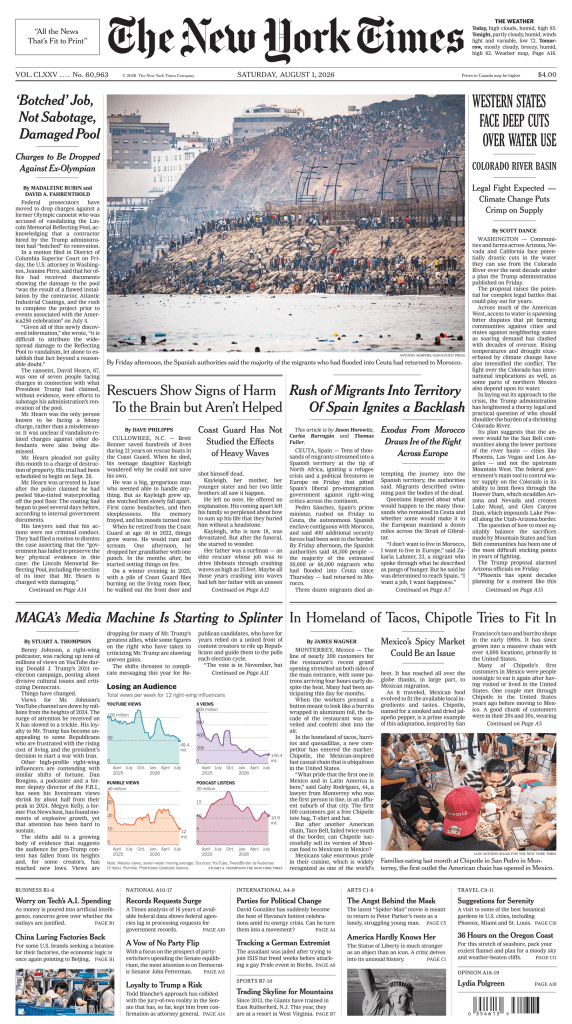
Russian Missiles Kill 9 in Kyiv After Trump Backs Off Air-Defense Pledge
Ukraine’s supply of Patriot missile interceptors is dwindling, and on Friday, President Trump backed away from his promise to let Ukraine make them itself.
Ukraine and its supporters have invested in trying to undo the skepticism of the country’s war effort harbored by President Trump and his MAGA movement.
Facing a long prison sentence or a forced trip to the front line of a war he opposes, Artyom Vovchenko believed it was worth taking a risk.
Trump’s Fixation on Arctic Ships Led to Billions in No-Bid Contracts
The president decided to buy 11 polar icebreakers after a game of golf with Finland’s president. Experts say it’s far from clear the United States needs so many.
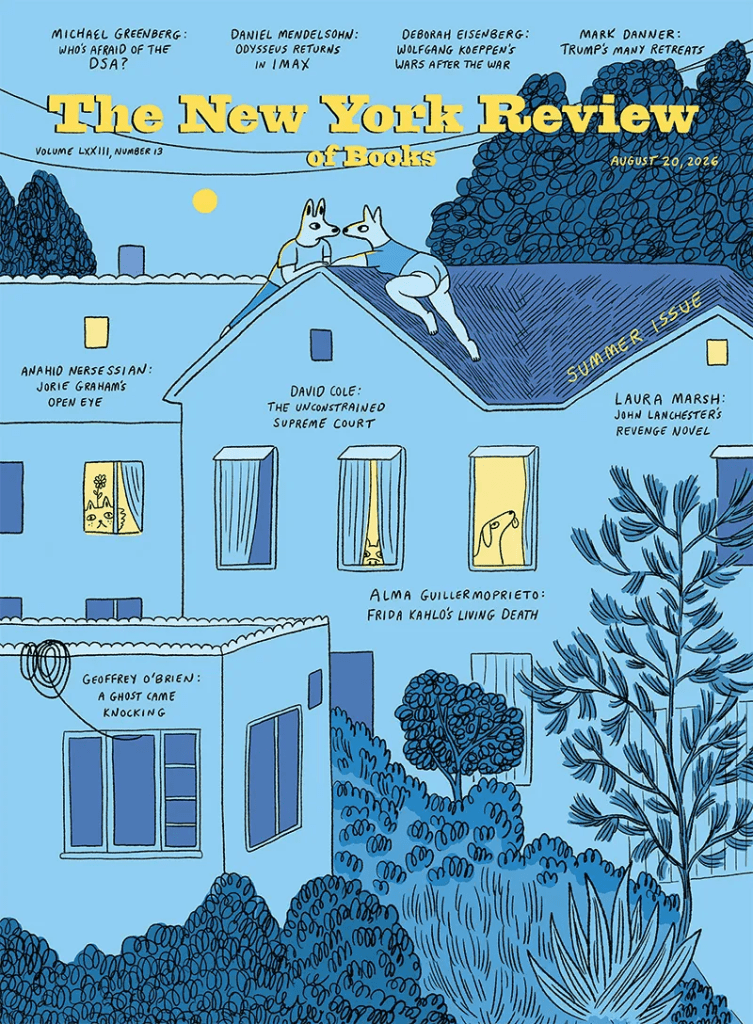
The most authentic thing about Christopher Nolan’s Odyssey is its densely braided narrative, but its tormented hero sounds like the heroes of Christopher Nolan movies.
Maggie Haberman and Jonathan Swan’s inside account of the Trump administration portrays a president with a vast appetite for power but who repeatedly backs down when the costs of his actions become too high.
Regime Change: Inside the Imperial Presidency of Donald Trump by Maggie Haberman and Jonathan Swan
It is the most powerful political party in the world, controlling China’s future as well as its past, but was the young CCP in control of its imperial destiny?
As ancient Rome was divided by civil war Cicero found himself torn. Caesar was his old adversary, but he was also powerful, and it was politically and personally expedient to support him.
Brazil’s first newspaper was published from London by an exiled Freemason on first-name terms with British royalty. Who was Hipólito da Costa and what was his news?
In August 1936 Franklin D. Roosevelt gave a boldly pacifist campaign speech, promising no American would have to go to war. It had seemed a realistic promise.
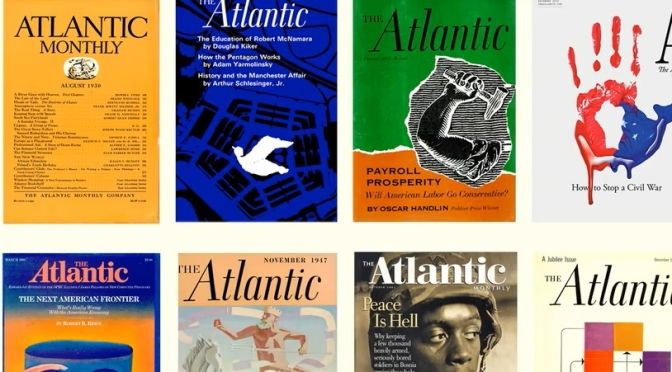
THE ATLANTIC MAGAZINE: The latest issue featuresReading shaped the modern mind. Its decline will reshape it—and transform civilization, Rose Horowitch argues in our August cover story.
The End of Reading Is Here
Optimists once believed that universal literacy was inevitable. Now it seems that the age of reading might be a short anomaly in human history. By Rose Horowitch
The Corner of Hollywood That’s Most Susceptible to AI
Animators are figuring out whether to fight or accept the new technology that’s coming for their jobs. By Shirley Li
Perhaps the Nazi Tattoo Was a Clue
Graham Platner’s unfitness for office was clear long ago. By Mike Nelson
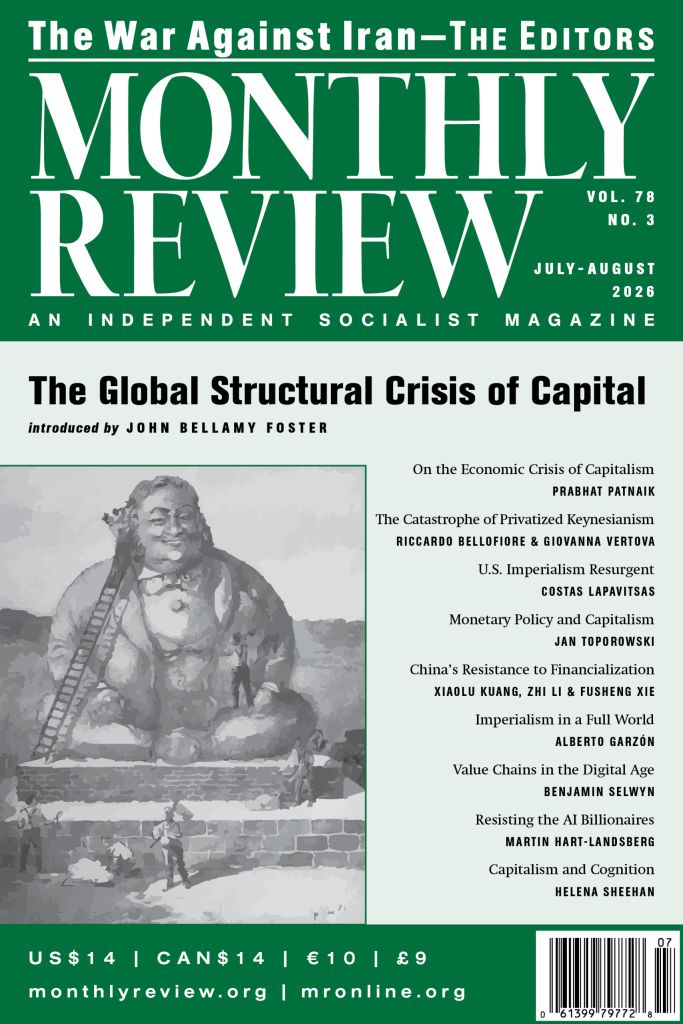
The notion of a “global structural crisis of capital” defining our times was first introduced by István Mészáros in the third edition of his Marx’s Theory of Alienation in 1971, and in his Isaac Deutscher Memorial Lecture, “The Necessity of Social Control” that same year.2 In 1995 in Beyond Capital, Mészáros distinguished the emerging, epochal structural crisis of capital from the cyclical and conjunctural crises that are “capital’s natural mode of existence.”






 Boomers Daily