Tag Archives: Asia

Food & Travel: An Epic Tour Of Remote Thailand

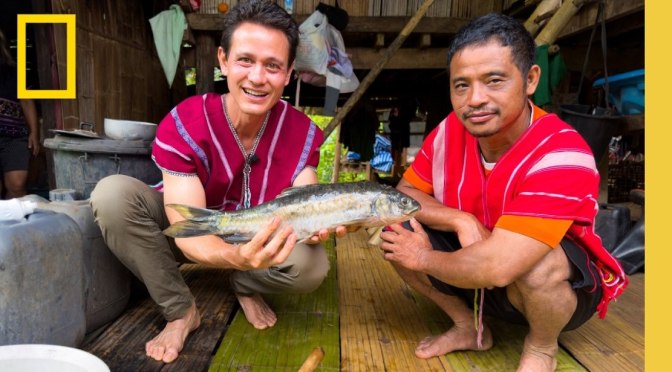
National Geographic (November 7, 2024): Mark Wiens travels to a Karen village in the remote mountains of Mae Hong Son Province, in Northern Thailand, to reunite with his friend Mook. Mark’s challenge is to fish and forage for ingredients to cook a traditional Karen meal.

This will serve as the culminating flavor feast for a wrist tying ceremony, a Karen tradition to mark the planting and harvesting cycle of rice. But first, Mark and Mook must trek through the jungle to collect things like bitter melon leaves and broken bones pods. Once the sun goes down, they will join Mook’s brothers on a nighttime fishing expedition which doesn’t quite go as planned.

EPIC FOOD JOURNEYS WITH MARK WIENS Famed food traveler and flavor enthusiast Mark Wiens embarks on a culinary adventure in search of the most authentic eats. From 24-hour street food marathons in bustling cities to fishing and foraging in idyllic countryside regions for a traditional meal, he is on a mission to unlock the secrets of local cuisines while learning about the culture. Exciting tuk-tuk rides, charming boat cruises, and good old mountain trekking: Wiens will do what it takes to share with you these tasty and unique food journeys around the world.

#NationalGeographic#MarkWiens#EpicFoodJourneysWithMarkWiens

World Economic Forum: Top Stories – Oct. 5, 2024

World Economic Forum (October 5, 2024) – The top stories of the week include:

0:15 What’s next for urgent climate action? – At the Sustainable Development Impact Meetings in New York, leaders discussed how to curb carbon emissions while building an inclusive economy. Regulations can be a lever for systemic change but local innovation is crucial, too.

3:09 Solar stoves reduce air pollution deaths – It cooks food while emitting hardly any smoke. It uses a hybrid system, powered by energy from solar panels and from fuel such as small sticks or crop waste. The ACE One was created by African Clean Energy which is a part of the World Economic Forum’s Equitable Transition Initiative.

5:08 Chief economists’ outlook for the rest of 2024 – Many chief economists polled by the World Economic Forum are optimistic about 2025. In the United States, nearly nine in ten chief economists anticipate moderate or strong growth in the coming year. Similarly, in South Asia, 71% predict strong or very strong growth.

9:33 Earth exceeds 6 of 9 planetary boundaries – In 2009, a team of scientists identified the 9 natural processes that regulate Earth’s biosphere and keep it stable. These include climate change, biodiversity, ocean acidification and freshwater. The team also defined the safe planetary boundary for each process. A safe and sustainable future for humanity lies within these boundaries.

World Economic Forum: Top Stories – Sept. 28, 2024

World Economic Forum (September 28, 2024) – The top stories of the week include:

0:15 How investment advice is changing – ‘The film is a rollercoaster ride into the last few years of how technology is changing our relationship to money’, says Chris Temple, director of This Is Not Financial Advice, a documentary that follows four online investors, including one who made – and lost – millions in crypto.

5:56 New tech reveals the impacts of climate change – Using AI, we can process Earth Observation (EO) data faster. Helping us monitor disaster impact in hours, not days. AI is also improving climate and weather forecast models. Through AR and VR, engineers are transforming these complex datasets into interactive, intuitive experiences that can help leaders make climate decisions.

7:39 This debt plan can save coral reefs – The deal reduces Indonesia’s debt repayments to the US by $35 million over the next 9 years and redirects those payments towards reef conservation instead. Indonesia is home to 16% of the world’s coral reefs and around 60% of the world’s coral species. Its reefs generate around $1.6 billion in value every year through fisheries, coastline protection and tourism. But Indonesia’s reefs face a range of threats.

9:21 Ray Dalio on funding climate action – By 2050, climate damage could cost between $1.7 trillion and $3.1 trillion per year. However, the costs of inaction could be even greater, says Ray Dalio, the founder of the world’s largest hedge fund, Bridgewater Associates. Right now, climate action is hugely under-financed.

World Economic Forum: Top Stories – June 15, 2024

World Economic Forum (June 15, 2024) – The top stories of the week include:

0:15 Mini-factories in space – Space Forge says its technology could revolutionize manufacturing. The satellites contain miniature manufacturing systems. They take advantage of the conditions in low-Earth orbit such as microgravity, extreme temperatures and a contaminant-free environment to forge materials that would be impossible to manufacture here on Earth.

1:53 Biodiversity credits explained – Nature is under unprecedented threat. Around 2 million plant and animal species could go extinct in the next few decades as climate change and habitat loss push ecosystems towards irreversible tipping points. To fight this crisis, experts are coming up with new ways to protect life on Earth by assigning value to the ecosystems around us. These innovations include biodiversity credits.

6:58 Nairobi switches to electric buses – Private minibuses called matatus are the main mode of public transport in Nairobi. Most matatus are old, diesel-powered and inefficient and 60% of the city’s population rely on them to get around. Electric mobility start-up BasiGo has built an all-electric alternative. The first bus rolled off its Nairobi production line in early 2024. Nairobi bus operators have already ordered 500 more. More than 90% of Kenya’s electricity is generated renewably, which means BasiGo’s buses are virtually emission-free.

8:40 How to build healthier cities – This architect designs buildings that bring communities together – Sumayya Vally grew up in post-Apartheid Pretoria, South Africa in what had been an Indian-only township and saw how division kept communities apart. Vally founded the Johannesburg-based architecture practice Counterspace to fight the built legacies of colonization and highlight the peaceful coexistence between communities.

World Economic Forum: Top Stories – May 13, 2024

World Economic Forum (May 13, 2024) – The top stories of the week include:

0:15 Banking uplifts women in Pakistan – Pakistan has a large gender gap in financial inclusion. 47% of men have at least one registered financial account but just 13% of women. Even for those with an account, banking can be prohibitively time-consuming, especially for women who are running a business alongside a household. Now a new kind of digital banking service is helping to close this gap.

2:23 World’s busiest airports revealed – The world’s busiest airports in 2023 were dominated by the United States, with five airports cracking the top 10. Overall, global airports saw a significant rebound in 2023, handling a total of 8.5 billion trips.

4:39 WMO: Asia hardest hit by climate – In 2023, Asia saw a wave of extreme weather events from floods to cyclones. World Economic Forum Head of Climate Adaptation Eric White explains why climate change is making extreme weather more likely.

7:07 Saving Earth with space science – Simonetta Di Pippo says that space is already helping tackle the greatest challenges on Earth. Satellite connectivity is improving our management of disasters and powering digital transformation. Which is revolutionizing sectors from healthcare to education, retail and communication.

Travel: The ‘Treasures Of The Mekong River’ In Laos

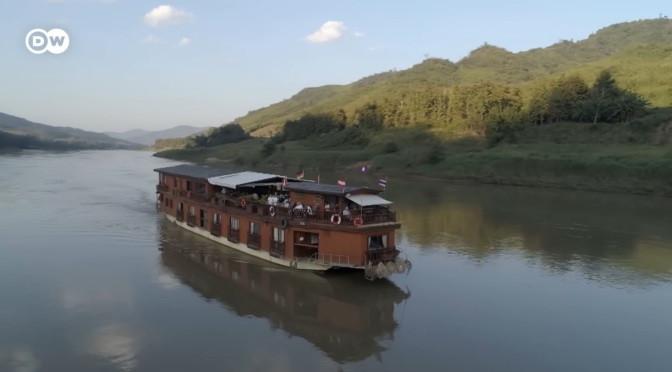
DW Documentary (September 28, 2023) – With its rich biological diversity, the region around the Mekong River is a jewel of Asia. The river is also known as “the mother of waters.

” It’s a transport route, water supply and food source for millions of people. The film sets out in a journey to the former royal city of Luang Prabang in Laos. It’s regarded as one of the most beautiful cities in southeast Asia and to this day, religion determines everyday life: Every morning, hundreds of monks walk through the city’s ancient center to collect their alms.

In the isolated villages, some of which are only accessible by boat, most Laotians live off the land. There are huge rice paddies on the fertile banks on the Mekong; rice is the Laotians’ main staple, eaten three times a day here. The river also provides some welcome dietary variation in the form of fish. Locals – and the odd tourist boat – also use the Mekong as a main transit route; even today, the quickest way to reach the country’s larger cities is still by river.

At some point, several hundred kilometers downstream, we reach the capital Vientiane, the economic heart of Laos and a trading center for the famous Laotian woven textiles, exported from here all over the world.

#documentary #dwdocumentary #laos #mekong

Opinion: Ukraine’s Long War, Asia Trade Evolves, A Disgraced UK Comedian

‘Editor’s Picks’ Podcast (September 25, 2023) A selection of three essential articles read aloud from the latest issue of The Economist. This week, how to win a long war in Ukraine, what Asia’s economic revolution means for the world (11:05) and why a disgraced comedian is the symbol of a cruel, misogynistic and politically vacant era in Britain (18:52).

Documentary: Rise And Fall Of Mongolia’s Empire

DW Documentary (September 10, 2023) – Mongolia. For most of us, a name that brings to mind the powerful empire of Genghis Khan. This film is a journey through Mongolian history and into modern Mongolian culture. It offers fascinating insights into the little-known central Asian nation. Mongolia, a country rich with forests, deserts and steppes, borders Russia to the north and China to the south.

But its chief influences today come from South Korea and the West. Director Robert H. Lieberman and filmmaker Deborah C. Hoard introduce novelists, journalists, politicians, activists, poets, painters and a comedian, all of whom shed light on the young republic – and its young population. Historians, archaeologists and local residents tell the story of the vast empire.

The eastern European and Asian territory captured by a fighting force of united Mongol tribes was the largest contiguous land empire in the history of the world. The film looks the beyond the figure of Genghis Khan, the notorious founder of the Mongol empire, and explores the multi-faceted legacy of the realm. It’s a legacy that still makes itself felt in the present day.

#documentary #dwdocumentary #mongolia

Travel & Culture: The Daily Life Of Nomads In Tibet

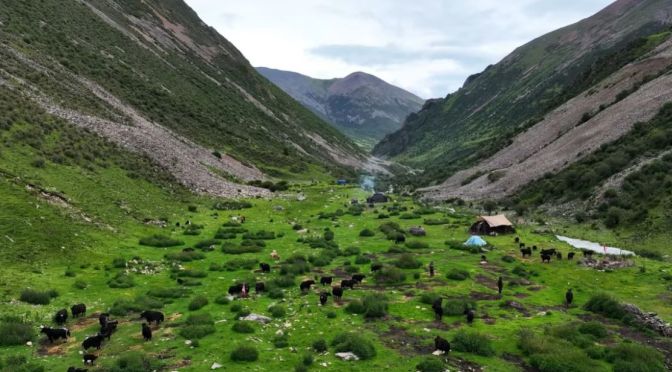
Tibet Travel / Tibet Vista (August 31, 2023) – A view into the daily life of living at the altitude of 4,800 meters for a Tibetan nomad family.

It is believed that Tibetans are derived from the ancient Qiang People, the nomads of ancient China. It is the intermarriage between the Qiang People and local tribes on the edges of the plateau that led to the beginning of the modern Tibetan people. Due to the severe environment, the extreme altitude and the lack of convenient transportation, Tibetans have long relied on pastoralism for survival.

Previews: The Economist Magazine – August 26, 2023

Image

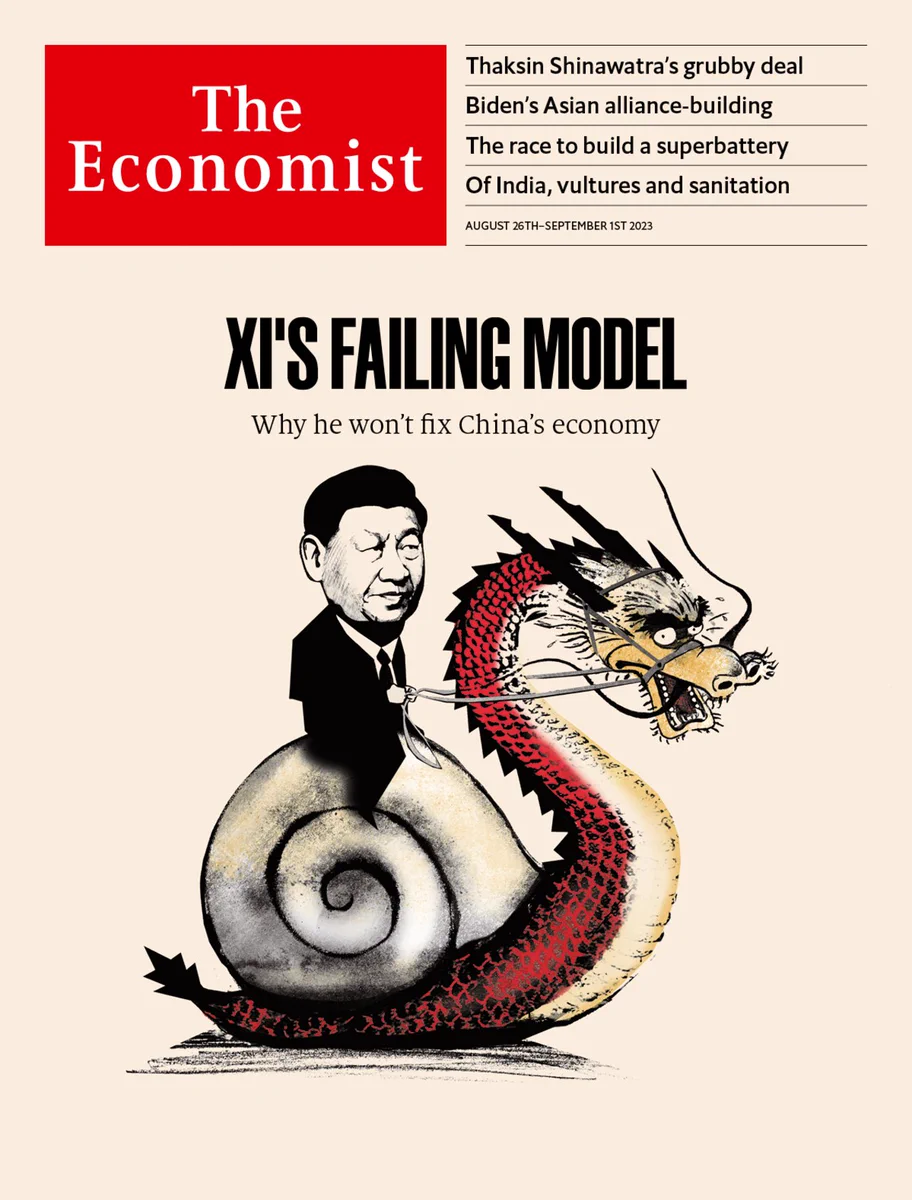
The Economist Magazine (August 26, 2023): This week’s issue features Xi’s failing model: Why he won’t fix China’s economy; Biden’s Asian alliance-building; Prigozhin’s death shows that Russia is a mafia state and more….

Why China’s economy won’t be fixed

An increasingly autocratic government is making bad decisions

Whatever has gone wrong? After China rejoined the world economy in 1978, it became the most spectacular growth story in history. Farm reform, industrialisation and rising incomes lifted nearly 800m people out of extreme poverty. Having produced just a tenth as much as America in 1980, China’s economy is now about three-quarters the size. Yet instead of roaring back after the government abandoned its “zero-covid” policy at the end of 2022, it is lurching from one ditch to the next.

Prigozhin’s death shows that Russia is a mafia state

A healthy country uses justice to restore order. Mr Putin uses violence instead 

Yevgeny Prigozhin gives an address in camouflage and with a weapon in his hands in a desert area

As we published this editorial, it was not certain that Yevgeny Prigozhin’s private jet was shot down by Russian air-defences, or that the mutineer and mercenary boss was on board. But everyone believes that it was and that his death was a punishment of spectacular ruthlessness ordered by Russia’s president, Vladimir Putin. And that is the way Mr Putin likes it.