Tag Archives: Asia

THE CHRYSANTHEMUM PARADOX

Japan’s first female prime minister promises history, but her ascent may only deepen the old order.

By Michael Cummins, Editor, October 4, 2025

Sanae Takaichi has become Japan’s first female prime minister—a milestone that might look like progress but carries a paradox at its core. Takaichi, sixty-four, rose not by challenging her party’s patriarchal order but by embracing it more fiercely than her male rivals. Her vow to “work as hard as a carriage horse” captured the spirit of her leadership: endurance without freedom, strength yoked to duty. In a nation where women hold less than sixteen percent of parliamentary seats and most are confined to low-paid, “non-regular” work, Takaichi’s ascension is less rupture than reinforcement. She inherits the ghost of Shinzo Abe, with whom she shared nationalist loyalties, and she confronts a fragile coalition, an aging electorate, and a looming Trump visit. Her “first” is both historic and hollow: the chrysanthemum blooms, but its shadow may reveal that Japan’s old order has merely found a new face.

Under the humming fluorescent lights of the Liberal Democratic Party’s headquarters in Tokyo, the old men in gray suits shifted in their seats. The air was thick with the stale perfume of cigarettes and the accumulated dust of seventy years in power. The moment came suddenly, almost anticlimactically: after two rounds of voting, Sanae Takaichi was named leader. The room stirred, applause pattered weakly. She stepped to the podium, bowed with a precision that was neither humble nor triumphant, and delivered the line that will echo through history: “I will work as hard as a carriage horse.”

Why that image? Why not the fox of Japanese cunning, or the crane of elegance, or the swift mare of legend? A carriage horse is strength without freedom. It pulls because it must. Its labor is endurance, not glory. In that metaphor lay the unsettling heart of the moment: Japan’s first woman prime minister announcing herself not as a breaker of chains but as the most dutiful beast of burden. Ushi mo aru kedo, hito mo aru—“Even cattle have their place, but so do people.” Here, in this paradoxical victory, the human became the horse.

In Japan, the ideal of gaman—stoic endurance in the face of suffering—is praised as virtue. The samurai ethos of bushidō elevated loyalty above will. Women, in particular, have long been praised for endurance in silence. Takaichi’s metaphor was no slip. It was a signal: not rebellion, but readiness to shoulder a system that has never bent for women, only asked them to carry it. In the West, the “first woman” often suggests liberation; in Japan, Takaichi presented herself as a woman who could wear the harness more tightly than any man.

The horse metaphor might also be personal. Takaichi was not a scion of a dynasty like her rival, Koizumi. Her mother served as a police officer; her father worked for a car company. Her strength was forged in the simple, demanding work of postwar Japan—the kind of tireless labor she was now vowing to revive for the nation.

For the newspapers, the word hajimete—first—was enough. But scratch the lacquer, and the wood beneath showed a different grain. The election was not of the people; it was an internal ballot, a performance of consensus by a wounded party. Less than one percent of Japan had any say. The glass ceiling had not been lifted by collective will but punctured by a carefully aimed projectile. The celebration was muted, as if everyone sensed that this “first” was also a kind of last, a gesture of desperation dressed in history’s robes.

Deru kugi wa utareru—“The nail that sticks out gets hammered down.” Takaichi did not stick out. She was chosen precisely because she could wield the hammer.

Her rise was born of collapse. The LDP, which had dominated Japanese politics like Mount Fuji dominates the horizon, was eroded, its slopes scarred by landslides. In the 2024 Lower House election alone, it lost sixty-eight seats, a catastrophic erosion. After another defeat in 2025, it found itself, for the first time in memory, a minority in both houses of the Diet. Populist formations shouting Nippon daiichi!—Japan First—had seized the public imagination, promising to protect shrines from outsiders and deer in Nara from the kicks of tourists. Stagnant wages, rising prices, and the heavy breath of globalization made their slogans ring like temple bells.

Faced with collapse, the LDP gambled. It rejected the fresh-faced Shinjiro Koizumi, whose cosmopolitan centrism seemed too fragile for the moment, and crowned the hard-line daughter of Nara, the protégé of Shinzo Abe. In choosing Takaichi, the LDP announced that its path back to power would not be through moderation, but through continuity.

The ghost of Abe hovers over every step she takes. His assassination in 2022 froze Japan in a perpetual twilight of mourning. His dream—constitutional revision, economic reflation, nationalist revival—remained unfinished. Takaichi walks in his shadow as if she carries his photograph tucked inside her sleeve. She echoes his Abenomics: easy money, big spending. She continues his visits to Yasukuni Shrine, where the souls of Japan’s war dead—among them Class A criminals—are enshrined. Each bow she makes is both devotion and provocation.

Hotoke no kao mo san-do—“Even a Buddha’s face only endures three times.” How many times will China and South Korea endure her visits to Yasukuni?

And yet, for all the historic fanfare, her stance on women is anything but transformative. She has opposed allowing a woman to reign as emperor, resisted reforms to let married couples keep separate surnames, and dismissed same-sex marriage. Mieko Nakabayashi at Waseda calls her bluntly “a roadblock to feminist causes.” Yet she promises to seat a cabinet of Nordic balance, half men and half women. What does equality mean if every woman chosen must genuflect to the same ideology? One can imagine the photograph: a table split evenly by gender, yet every face set in the same conservative mold.

In that official photograph, the symmetry was deceptive. Each woman had been vetted not for vision but for loyalty. One wore a pearl brooch shaped like a torii gate. Another quoted Abe in her opening remarks. Around the table, the talk was of fiscal stimulus and shrine etiquette. Not one mentioned childcare, wage gaps, or succession. The gender balance was perfect. The ideological balance was absolute.

This theater stood in stark opposition to the economic reality she governs. Japan’s gender wage gap is among the widest in the OECD; women earn barely three-quarters of men’s wages. Over half are trapped in precarious “non-regular” work, while fewer than twelve percent hold managerial posts. They are the true carriage horses of Japan—pulling without pause, disposable, unrecognized. Takaichi, having escaped this trap herself, now glorifies it as national virtue. She is the one horse that broke free—only to tell the herd to pull harder.

The global press, hungry for symbols, crowned her with headlines: “Japan Breaks the Glass Ceiling.” But the ceiling had not shattered—it had been painted over. The myth of the female strongman—disciplined, unflinching, ideologically pure—has become a trope. Conservative systems often prefer such women precisely because they prove loyalty by being harsher than the men who trained them. Takaichi did not break the mold; she was cast from it.

Other nations offer their mirrors: Thatcher, the Iron Lady who waged war on unions; Park Geun-hye, whose scandal-shattered rule rocked South Korea; Indira Gandhi, who suspended civil liberties during India’s Emergency. Each became a vessel for patriarchal power, proving strength through obedience rather than disruption. Takaichi belongs to this lineage, the chrysanthemum that blooms not in a wild meadow but in a carefully tended imperial garden.

Her campaign rhetoric made plain her instincts. She accused foreigners of kicking sacred deer in Nara, of swinging from shrine gates. The imagery was almost comic, but in Japan symbols are never trivial. The deer, protectors of Shinto shrines, bow to visitors as if performing eternal reverence. To strike them is to wound purity. The torii gates mark thresholds between profane and sacred worlds; to defile them is to profane Japan itself. By weaponizing these cultural symbols, Takaichi sought to steal the thunder of far-right groups like Sanseitō, consolidating the right-wing vote under the LDP’s battered banner.

But the weight of Takaichi’s ideological baggage—the nationalism that served her domestically—was instantly transferred to the fragile carriage of Japan’s foreign policy. To survive, the LDP must keep its coalition with Komeito, the Buddhist-backed party rooted in Soka Gakkai’s pacifism. Already the monks grumble. Nationalist education reform? No. Constitutional militarism? Impossible. Imagine the backroom: tatami mats creaking, voices low, one side invoking the Lotus Sutra, the other brandishing polls. Ni usagi o ou mono wa issai ezu—“He who chases two rabbits catches none.”

Over all this looms America. Donald Trump, swaggering toward a late-October Asia tour, may stop in Tokyo. Takaichi once worked in the U.S.; she speaks the language of its boardrooms. But she campaigned as a renegotiator, a fighter against tariffs. Now reality intrudes. Japan has already promised $550 billion in investment and loan guarantees to secure a reprieve from harsher duties. How she spends it will define her. To appear submissive is to anger voters; to defy Trump is to risk reprisal. Imagine the summit: Trump beaming, Takaichi bowing, their hands clasped in an awkward grip, photographers snapping.

Even her economics carry ghosts. She revives Abenomics when inflation demands restraint. But Abenomics was of another time, when Japan had fiscal breathing room. Reviving it now is less a strategy than nostalgia, an emotional tether to Abe himself.

These contradictions sharpen into paradox. She is the first woman prime minister, yet she blocks women from the throne. She promises parity, yet delivers loyalty. She vows to pull the carriage harder than any man, yet the cart itself has only three wheels.

Imagine the year 2035. A museum exhibit in Tokyo titled The Chrysanthemum Paradox: Japan’s Gendered Turn. Behind glass: her campaign poster, a porcelain deer, a seating chart from her first cabinet. A small screen plays the footage of her victory speech. Visitors lean in, hear the flat voice: “I will work as hard as a carriage horse.”

A child tugged at her mother’s sleeve. “Why is the horse sad?” she asked, pointing to the animated screen where a cartoon carriage horse trudged endlessly. The mother hesitated. “She worked very hard,” she said. “That’s what leaders do.” The child frowned. “But where was she going?”

Outside, chrysanthemums bloom in autumn, petals delicate yet precise, the imperial crest stamped on passports and coins. The carriage horse keeps pulling, hooves clattering against cobblestones, sweat darkening its flanks. Will the horse break, or the carriage? And if both break together, what then?

Shōji wa issun saki wa yami—“The future is pitch-dark an inch ahead.” That is the truth of her victory. The chrysanthemum shines, but its shadow deepens. The horse pulls, but no one knows toward what horizon. The first woman had arrived, but the question lingered like incense in an empty hall: Was this history’s forward march, or merely the perfect, tragic culmination of the old order?

THIS ESSAY WAS WRITTEN AND EDITED UTILIZING AI

World Economic Forum: Top Stories – Nov 16, 2024

World Economic Forum (November 16, 2024) – The top stories of the week include:

0:15 AI robot zaps weeds while saving crops – It’s called Concentrated Light Autonomous Weeding and Scouting or CLAWS for short. CLAWS uses AI-powered image processing to identify the crops, then targets weeds around the crop with blasts of concentrated light. This gets rid of unwanted intruders without damaging either crops or soil.

1:52 5 ways bioeconomy affects daily living – The bioeconomy uses renewable resources from land or sea to produce food, energy, and other resources. It focuses on leveraging nature’s processes and products to create sustainable economic outputs. The bioeconomy is already a part of our daily lives, influencing various sectors and industries.

6:08 Iceland sees benefit of a 4-day work week – The Nordic nation of 380,000 is rolling out a new way of working. Between 2020 and 2022, 51% of Iceland’s workers accepted an offer of shorter hours, such as a 4-day week for no loss of pay. The shift has had a positive impact on work-life balance and personal stress, new research shows.

8:17 Restored Amazon ecosystems beat logging – Amazon Sacred Headwaters Alliance is fighting to safeguard 35 million hectares of rainforest through a collaboration between 30 Indigenous nations of the Amazon basin. There’s an economic case for protecting the Amazon, says Atossa Soltani, Director of Global Strategy, Amazon Sacred Headwaters Alliance.

#WorldEconomicForum

World Economic Forum: Top Stories – Nov 9, 2024

World Economic Forum (November 9, 2024) – The top stories of the week include:

0:15 Finfluencer financial advice revolution – A finfluencer is a content creator on social media who shares information on budgeting, saving and financial investments, among other topics. Finfluencers use blogs, podcasts or videos to get their message out. They help widen financial access to groups who didn’t have it before.

3:49 These vegetables grow in-store without soil – Instead of soil, they use plugs of rockwool, irrigated with nutrient-rich water in a method called hydroponics. They come in different sizes producing from 2,000 to 15,000 plants monthly. These farms have a tiny environmental footprint. The largest models can grow as much as a 3-hectare farm.

5:44 Telehealth platform empowers millions – Altibbi offers 24/7 access to online doctors along with accessible, up-to-date medical information. It offers a cheaper, more accessible alternative to in-person consultations but it also aims to ‘change the narrative’ around the patient-doctor relationship.

8:43 ‘Underwater tractors’ replant seagrass – They were created by Reefgen, an UpLink Top Innovator. The robot scoots over the seabed, steadily and carefully restoring the ecosystem. Reefgen’s technology aims to aid conservation efforts by augmenting the efforts of human restorers.

#WorldEconomicForum

Food & Travel: An Epic Tour Of Remote Thailand

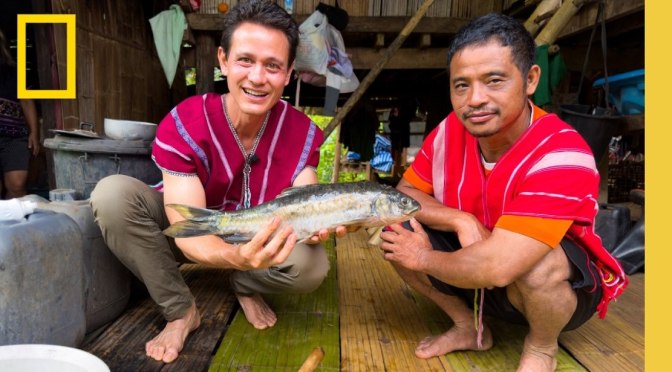
National Geographic (November 7, 2024): Mark Wiens travels to a Karen village in the remote mountains of Mae Hong Son Province, in Northern Thailand, to reunite with his friend Mook. Mark’s challenge is to fish and forage for ingredients to cook a traditional Karen meal.

This will serve as the culminating flavor feast for a wrist tying ceremony, a Karen tradition to mark the planting and harvesting cycle of rice. But first, Mark and Mook must trek through the jungle to collect things like bitter melon leaves and broken bones pods. Once the sun goes down, they will join Mook’s brothers on a nighttime fishing expedition which doesn’t quite go as planned.

EPIC FOOD JOURNEYS WITH MARK WIENS Famed food traveler and flavor enthusiast Mark Wiens embarks on a culinary adventure in search of the most authentic eats. From 24-hour street food marathons in bustling cities to fishing and foraging in idyllic countryside regions for a traditional meal, he is on a mission to unlock the secrets of local cuisines while learning about the culture. Exciting tuk-tuk rides, charming boat cruises, and good old mountain trekking: Wiens will do what it takes to share with you these tasty and unique food journeys around the world.

#NationalGeographic#MarkWiens#EpicFoodJourneysWithMarkWiens

World Economic Forum: Top Stories – Oct. 5, 2024

World Economic Forum (October 5, 2024) – The top stories of the week include:

0:15 What’s next for urgent climate action? – At the Sustainable Development Impact Meetings in New York, leaders discussed how to curb carbon emissions while building an inclusive economy. Regulations can be a lever for systemic change but local innovation is crucial, too.

3:09 Solar stoves reduce air pollution deaths – It cooks food while emitting hardly any smoke. It uses a hybrid system, powered by energy from solar panels and from fuel such as small sticks or crop waste. The ACE One was created by African Clean Energy which is a part of the World Economic Forum’s Equitable Transition Initiative.

5:08 Chief economists’ outlook for the rest of 2024 – Many chief economists polled by the World Economic Forum are optimistic about 2025. In the United States, nearly nine in ten chief economists anticipate moderate or strong growth in the coming year. Similarly, in South Asia, 71% predict strong or very strong growth.

9:33 Earth exceeds 6 of 9 planetary boundaries – In 2009, a team of scientists identified the 9 natural processes that regulate Earth’s biosphere and keep it stable. These include climate change, biodiversity, ocean acidification and freshwater. The team also defined the safe planetary boundary for each process. A safe and sustainable future for humanity lies within these boundaries.

World Economic Forum: Top Stories – Sept. 28, 2024

World Economic Forum (September 28, 2024) – The top stories of the week include:

0:15 How investment advice is changing – ‘The film is a rollercoaster ride into the last few years of how technology is changing our relationship to money’, says Chris Temple, director of This Is Not Financial Advice, a documentary that follows four online investors, including one who made – and lost – millions in crypto.

5:56 New tech reveals the impacts of climate change – Using AI, we can process Earth Observation (EO) data faster. Helping us monitor disaster impact in hours, not days. AI is also improving climate and weather forecast models. Through AR and VR, engineers are transforming these complex datasets into interactive, intuitive experiences that can help leaders make climate decisions.

7:39 This debt plan can save coral reefs – The deal reduces Indonesia’s debt repayments to the US by $35 million over the next 9 years and redirects those payments towards reef conservation instead. Indonesia is home to 16% of the world’s coral reefs and around 60% of the world’s coral species. Its reefs generate around $1.6 billion in value every year through fisheries, coastline protection and tourism. But Indonesia’s reefs face a range of threats.

9:21 Ray Dalio on funding climate action – By 2050, climate damage could cost between $1.7 trillion and $3.1 trillion per year. However, the costs of inaction could be even greater, says Ray Dalio, the founder of the world’s largest hedge fund, Bridgewater Associates. Right now, climate action is hugely under-financed.

World Economic Forum: Top Stories – June 15, 2024

World Economic Forum (June 15, 2024) – The top stories of the week include:

0:15 Mini-factories in space – Space Forge says its technology could revolutionize manufacturing. The satellites contain miniature manufacturing systems. They take advantage of the conditions in low-Earth orbit such as microgravity, extreme temperatures and a contaminant-free environment to forge materials that would be impossible to manufacture here on Earth.

1:53 Biodiversity credits explained – Nature is under unprecedented threat. Around 2 million plant and animal species could go extinct in the next few decades as climate change and habitat loss push ecosystems towards irreversible tipping points. To fight this crisis, experts are coming up with new ways to protect life on Earth by assigning value to the ecosystems around us. These innovations include biodiversity credits.

6:58 Nairobi switches to electric buses – Private minibuses called matatus are the main mode of public transport in Nairobi. Most matatus are old, diesel-powered and inefficient and 60% of the city’s population rely on them to get around. Electric mobility start-up BasiGo has built an all-electric alternative. The first bus rolled off its Nairobi production line in early 2024. Nairobi bus operators have already ordered 500 more. More than 90% of Kenya’s electricity is generated renewably, which means BasiGo’s buses are virtually emission-free.

8:40 How to build healthier cities – This architect designs buildings that bring communities together – Sumayya Vally grew up in post-Apartheid Pretoria, South Africa in what had been an Indian-only township and saw how division kept communities apart. Vally founded the Johannesburg-based architecture practice Counterspace to fight the built legacies of colonization and highlight the peaceful coexistence between communities.

World Economic Forum: Top Stories – May 13, 2024

World Economic Forum (May 13, 2024) – The top stories of the week include:

0:15 Banking uplifts women in Pakistan – Pakistan has a large gender gap in financial inclusion. 47% of men have at least one registered financial account but just 13% of women. Even for those with an account, banking can be prohibitively time-consuming, especially for women who are running a business alongside a household. Now a new kind of digital banking service is helping to close this gap.

2:23 World’s busiest airports revealed – The world’s busiest airports in 2023 were dominated by the United States, with five airports cracking the top 10. Overall, global airports saw a significant rebound in 2023, handling a total of 8.5 billion trips.

4:39 WMO: Asia hardest hit by climate – In 2023, Asia saw a wave of extreme weather events from floods to cyclones. World Economic Forum Head of Climate Adaptation Eric White explains why climate change is making extreme weather more likely.

7:07 Saving Earth with space science – Simonetta Di Pippo says that space is already helping tackle the greatest challenges on Earth. Satellite connectivity is improving our management of disasters and powering digital transformation. Which is revolutionizing sectors from healthcare to education, retail and communication.

Travel: The ‘Treasures Of The Mekong River’ In Laos

DW Documentary (September 28, 2023) – With its rich biological diversity, the region around the Mekong River is a jewel of Asia. The river is also known as “the mother of waters.

” It’s a transport route, water supply and food source for millions of people. The film sets out in a journey to the former royal city of Luang Prabang in Laos. It’s regarded as one of the most beautiful cities in southeast Asia and to this day, religion determines everyday life: Every morning, hundreds of monks walk through the city’s ancient center to collect their alms.

In the isolated villages, some of which are only accessible by boat, most Laotians live off the land. There are huge rice paddies on the fertile banks on the Mekong; rice is the Laotians’ main staple, eaten three times a day here. The river also provides some welcome dietary variation in the form of fish. Locals – and the odd tourist boat – also use the Mekong as a main transit route; even today, the quickest way to reach the country’s larger cities is still by river.

At some point, several hundred kilometers downstream, we reach the capital Vientiane, the economic heart of Laos and a trading center for the famous Laotian woven textiles, exported from here all over the world.

#documentary #dwdocumentary #laos #mekong

Opinion: Ukraine’s Long War, Asia Trade Evolves, A Disgraced UK Comedian

‘Editor’s Picks’ Podcast (September 25, 2023) A selection of three essential articles read aloud from the latest issue of The Economist. This week, how to win a long war in Ukraine, what Asia’s economic revolution means for the world (11:05) and why a disgraced comedian is the symbol of a cruel, misogynistic and politically vacant era in Britain (18:52).