This small device may change how doctors identify and manage patients with atrial fibrillation, an irregular heart rhythm that increases risk of stroke.

And the past. The device uses artificial intelligence, or AI, to not only determine if a person is in the midst of an episode of atrial fibrillation, but also it can reveal if they’ve had the irregular rhythm before or will have it in the future.
Dr. Paul Friedman and his team trained the device to detect subtle changes in the heart’s electrical signals. Then in a study, they found it can identify patients with episodic atrial fibrillation. Even when they record the heart while the rhythm is normal – something no current wearable heart monitor can do.
That’s because a heart monitor won’t detect atrial fibrillation unless you have an episode while wearing it. But in a matter of moments, the AI device can identify people with atrial fibrillation, even if their heart is in normal rhythm. Then they can get on the right treatment to help prevent life-threatening strokes from happening.
From a Wall Street Journal online article (Feb 13, 2020):
Beaming Solar Power – Wall Street Journal
To meet the surge in demand projected by 2050, innovative engineers, utility operators and grid architects are planning for a future that blurs the distinctions between energy consumers and producers. Homeowners, businesses and other traditional utility customers are beginning to take on a new role as energy producers, through small-scale solar arrays, wind turbines and other new affordable technologies.
To coordinate so many different power sources and demands, the future power grid will depend on artificial intelligence, automated two-way communications and computer control systems to continuously collect and synthesize data from millions of smart sensors.
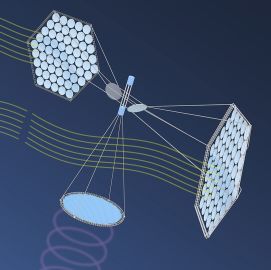
Beaming Solar Power – Scientists and engineers are working on spacecraft to capture sunlight and transform it into electricity that is wirelessly beamed to Earth. A prototype from the California Institute of Technology transmits power in a steerable beam. Japan’s space agency JAXA demonstrated a unit that converted 1.8 kilowatts of electricity into microwaves and then beamed it about 100 yards. China is planning an orbital solar power station.
Living Solar Cells – Researchers are exploring how to exploit the ability of many microorganisms to generate electric current through photosynthesis. Solar cells using microbes would be cleaner and cheaper than those based on conventional semiconductors. So far, the current is only about enough to drive a small fan. By using two kinds of microbes instead of one, scientists in China recently found a way to boost the electrical energy.
The Power of Brine – Scientists in Norway, the Netherlands, Japan and the U.S. are generating electricity by harnessing the difference in salt concentration between seawater and freshwater. In one experiment, a semipermeable membrane allows seawater ions to pass into the fresh water. The movement of the ions generates an electric current.
Doing good is increasingly about more than giving away money. Living kidney donations are rising and a new movement is pushing altruistically minded people to choose careers in fields, such as AI, that will shape the world’s future.
Original music was done by electronic music duo Gramatik & Luxas.
“We are wanderers Exploring our world As travelers without a map.
And our artificial intelligences Have long gazed deep into our world.”
Two A.I.’s — one older generation and one newer — wander through a looking-glass of a limbo world, gazing at humanity’s past and present in search of humans who might carry the torch into humanity’s future — and give what knowledge they can, in hopes that we may one day solve the problems we’ll face in the future.
This is a branded short film for the Japanese technologies company, HITACHI, where the company was seeking to find a way to tell an emotional story about the many crises we face as a human race, and our relationship to artificial intelligence. It was a unique situation where a technologies company sought to craft an abstract, art-driven and hypothetical film as a vessel to spread an important message to anybody developing artificial intelligence: that we must do so quickly and with a moral compass, in hopes that one day AI will be advanced enough and driven by empathy to help human beings solve potential crises together… as AI, being one of our greatest creations, may be the essential factor in ensuring the survival of the human race.
Production Company: SIOUXX
Executive Producers: Andreas Neumann, Khadija Donatelli
Creative Directors: Ken Hanada, Andreas Neumann
Producer: Michael Rodriguez Dueñas
Copywriter: Benjamin McAllister
Futurist: Julian Scaff
Production Supervisor: Jake Brown
Production Coordinator: Pure Brisbon
First Assistant Director: Adam Zimmer
Second Assistant Director: Luther Sartor
Director of Photography: Nico Aguilar
First Assistant Camera: Connor Lambert
Second Assistant Camera: Nick Vannatta
DIT: John Goodner
Two new smart systems use cameras, artificial intelligence and an assortment of sensors to keep watch over you—Patscan looks for threats in public spaces, while Eyeris monitors the driver and passengers in a car. WSJ’s Katherine Bindley visits CES to explores their advantages, as well as their privacy costs.
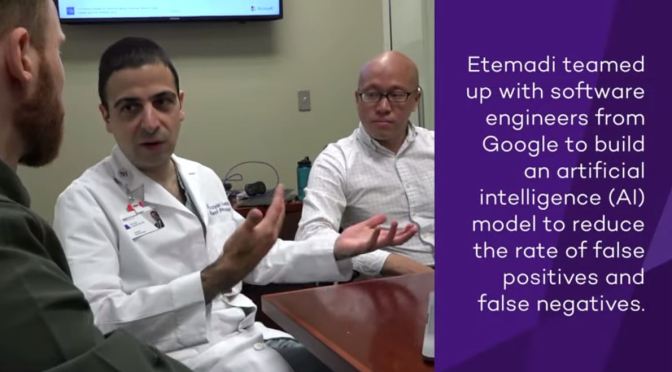
A new Artificial Intelligence (AI) model predicts breast cancer in mammograms more accurately than radiologists, reducing false positives and false negatives, reports a large international study from Google, Northwestern Medicine and two screening centers in the United Kingdom (U.K.).
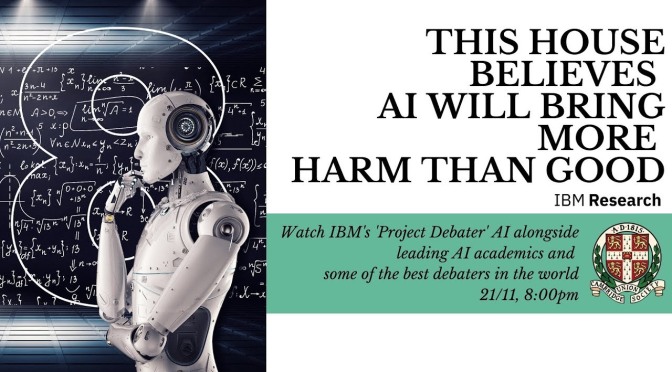
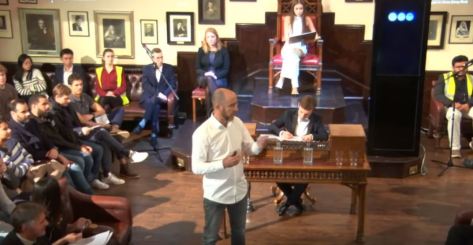
“This House Believes AI Will Bring More Harm Than Good”
This debate was run in association with IBM Research.
Proposition:
Project Debater Project Debater is designed by IBM research. It will deliver a speech based on over 1,100 arguments collected from Union members and others over the past week. It will not be taking points of information.
Sharmila Parmanand
Sharmila Parmanand is a PhD Candidate in Gender Studies at the University of Cambridge and a Gates Scholar. She has served as a debate trainer or chief judge in debating events in 45 countries. She served as a chief judge for most major global debating competitions (World Universities, World Schools, European Universities, Asian Universities, Austral-Asian Universities, North American Universities, and PanAmerican Universities).
Professor Neil Lawrence
Neil Lawrence is the DeepMind Professor of Machine Learning at the University of Cambridge and the co-host of Talking Machines. Neil’s main research interest is machine learning through probabilistic models. He focuses on both the algorithmic side of these models and their application. His recent focus has been on the deployment of machine learning technology in practice, particularly under the banner of data science.
Opposition
Project Debater
Project Debater is designed by IBM research. It will deliver a speech based on over 1,100 arguments collected from Union members and others over the past week. It will not be taking points of information.
Harish Natarajan
Harish Natarajan is a graduate of the University of Oxford and the University of Cambridge. He was a grand fnalist and 2nd best speaker at the 2016 World Debating Championships and won the European Debating Championship in 2012. Harish holds the record for most competition victories. He currently works as the Head of Economic Risk Analysis at AKE International in London.
Professor Sylvie Delacroix
Sylvie Delacroix is professor in Law and Ethics at the University of Birmingham. Her work has notably been funded by the Wellcome Trust, the NHS and the Leverhulme Trust, from whom she received the Leverhulme Prize. She has recently been appointed to the Public Policy Commission on the use of algorithms in the justice system.
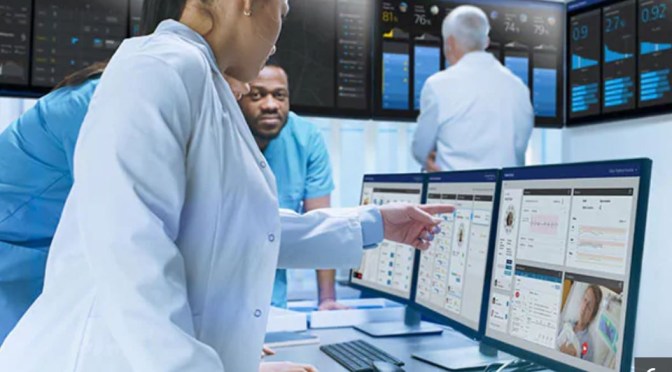
The prototype revealed that using artificial intelligence and machine learning to examine certain combinations of vital signs and other biomarkers could strongly predict the likelihood of infection up to 48 hours in advance of clinical suspicion, including observable symptoms.
Royal Philips, in collaboration with the Defense Threat Reduction Agency (DTRA) and Defense Innovation Unit (DIU) of the US Department of Defense (DoD), are building a machine learning algorithm that will be able to detect an infection before a patient shows signs or symptoms.
The partnering organizations recently announced results from an 18-month project, called Rapid Analysis of Threat Exposure (RATE), the first large-scale exploration of pre-symptomatic infection in humans. The project aims to develop an early warning system that accelerates diagnosis and treatment of infection, containing the spread of communicable disease.