The author of ‘A Chance Meeting’ talks to Apollo about the reissue of her dazzlingly original account of more than a century of artistic endeavour in the United States
The designer’s wallpaper patterns are so familiar that they’re in danger of being taken for granted – but there’s still plenty to discover if we look more closely
“When you invent the ship, you must also invent the shipwreck; when you invent the plane, you must also invent the plane crash; and when you invent electricity, you invent electrocution… Every technology carries its own negativity, which is invented at the same time as technical progress.” –Paul Virilio
“The human spirit must prevail over technology.” –Albert Einstein
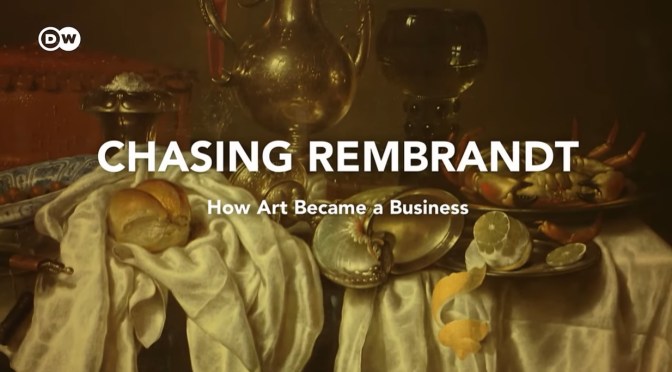
DW Documentary (November 15, 2024): The 17th century was the zenith of painting, in the Netherlands. In no other era were artists so productive. Never before had so many painters tried to make a living from their art. Demand was huge.
People from all walks of life began to enthusiastically collect paintings. New genres were born. And both the art market and the profession of art dealer emerged. Exceptional artists such as Rembrandt van Rijn, Jan Vermeer and Frans Hals created masterpieces that still inspire us today.
One reason for the cultural heyday and its glut of paintings was an enormous surplus of capital, generated by speculative money transactions and trade, which was also based on the exploitation of the colonies and the ideal conditions that shipping found in the Netherlands. The film traces a period in which art, too, became an economic factor. In a way, the 17th century can be seen as the origin of our current art system.
After all, this was when auction houses were first established, leading to emergence of professional art dealers and wealthy collectors. Art was democratized. This documentary film explores an era when business and art entered into a marriage for the first time. How did such an artistic flourishing come about? What art-historical innovations do we owe to this period? And what significance does it have for our view of art and our approach to art today?
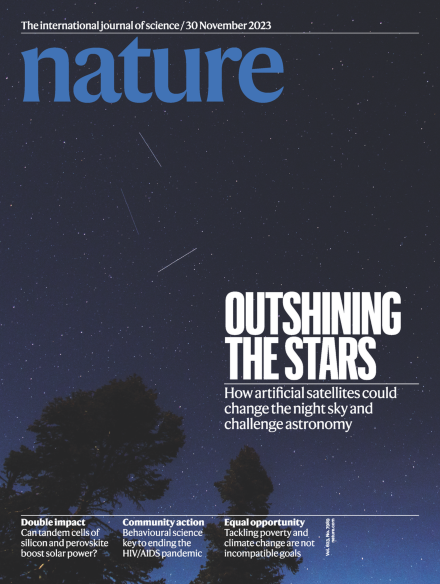
Nature Magazine – November 29, 2023:The latest issue cover features trails left by satellites, including BlueWalker 3, a prototype communications satellite, as they pass across the sky.
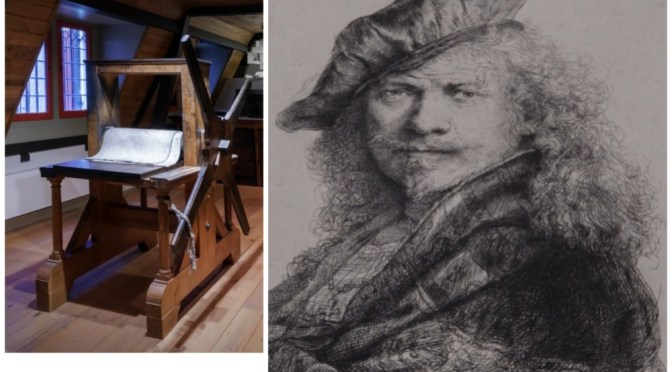
Christie’s (November 26, 2023) – Rembrandt House Museum Specialist Tim Schmelcher and Head of Collections, Epco Runia, discover more about Rembrandt’s life in Amsterdam, in particular his printmaking.
Then a more detailed look at the Sam Josefowitz Collection of Rembrandt prints – the most comprehensive and impressive in private hands – as we examine some of the highlights of these graphic masterpieces.
On 7 December 2023, Christie’s will be offering a selection of these prints across two sales in London: Old Masters Part I and The Sam Josefowitz Collection: Graphic Masterpieces by Rembrandt van Rijn.
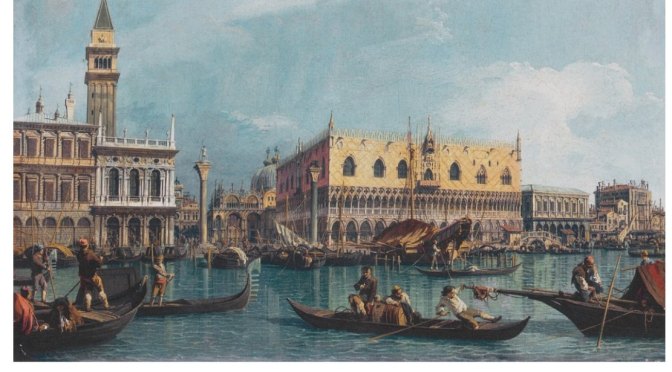
Christie’s (November 23, 2023) – Immerse yourself in a dreamlike vision of Canaletto’s Venice where the floating city of the 1700s appears strikingly unchanged centuries later. Giovanni Antonio Canal, better known as Canaletto (1697-1768), was born and died in Venice.
Did Canaletto paint these paired views of Venice for the Countess of Essex?
Home for most of his life, the city was also the artistic subject that dominated his career. Canaletto helped establish the veduta — or topographical view — as one of the chief genres of Venetian painting in the 18th century, as well as a prime export. A pair of vedute by Canaletto, unknown to scholars until now, will lead the Old Masters Part I sale at Christie’s in London on 7 December 2023, as part of Classic Week.
Coming from a private collection, these masterpieces were painted around 1734, when Canaletto was at the peak of his powers, almost certainly for an English patron.
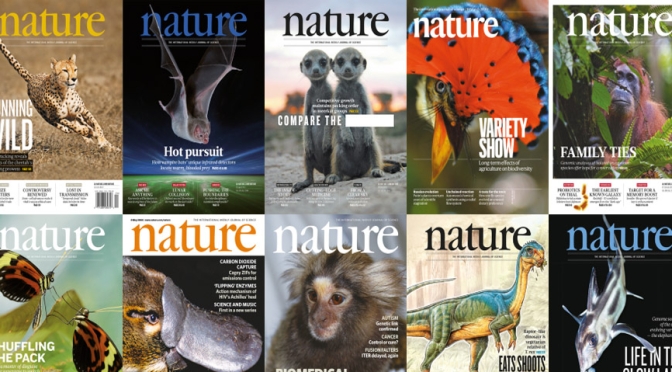
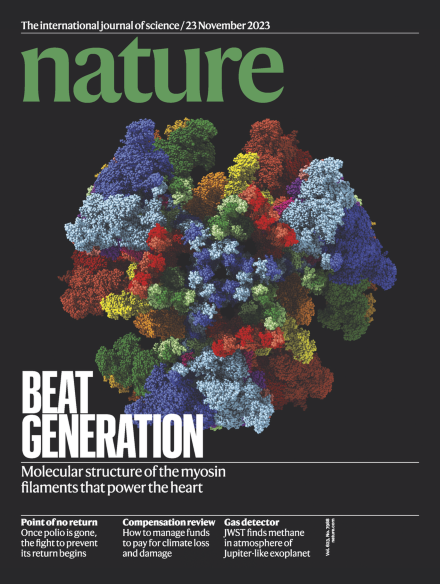
Nature Magazine – November 23, 2023: The latest issue cover features how cryo-electron microscopy can reveal the structure of motor protein myosin filaments, which power the heart via muscle contraction.
The Morgan Library & Museum (August 23, 2023) – Isabelle Dervaux, curator of “Ferdinand Hodler: Drawings—Selections from the Musée Jenisch Vevey”, discusses the artist’s legacy and his impact on modernism.
A modern art pioneer, renowned Swiss painter Ferdinand Hodler (1853–1918) created works that range from vast symbolist compositions to intimate, realist portraits and nearly abstract landscape paintings. This exhibition of approximately sixty works, primarily on paper, will focus on the role of drawing in his practice, from quick compositional sketches to elaborate oil studies.
Most of the drawings Hodler produced were preparatory studies for his large-scale figure compositions; these offer a fascinating account of his working process, which involved technical experiments with imprints, tracing, and collages. A few of his portrait drawings will also be featured, including a poignant series in which he recorded the illness and death of his lover Valentine Godé-Darel.
These rarely seen drawings offer a compelling survey of Hodler’s singular contribution to early modernism.
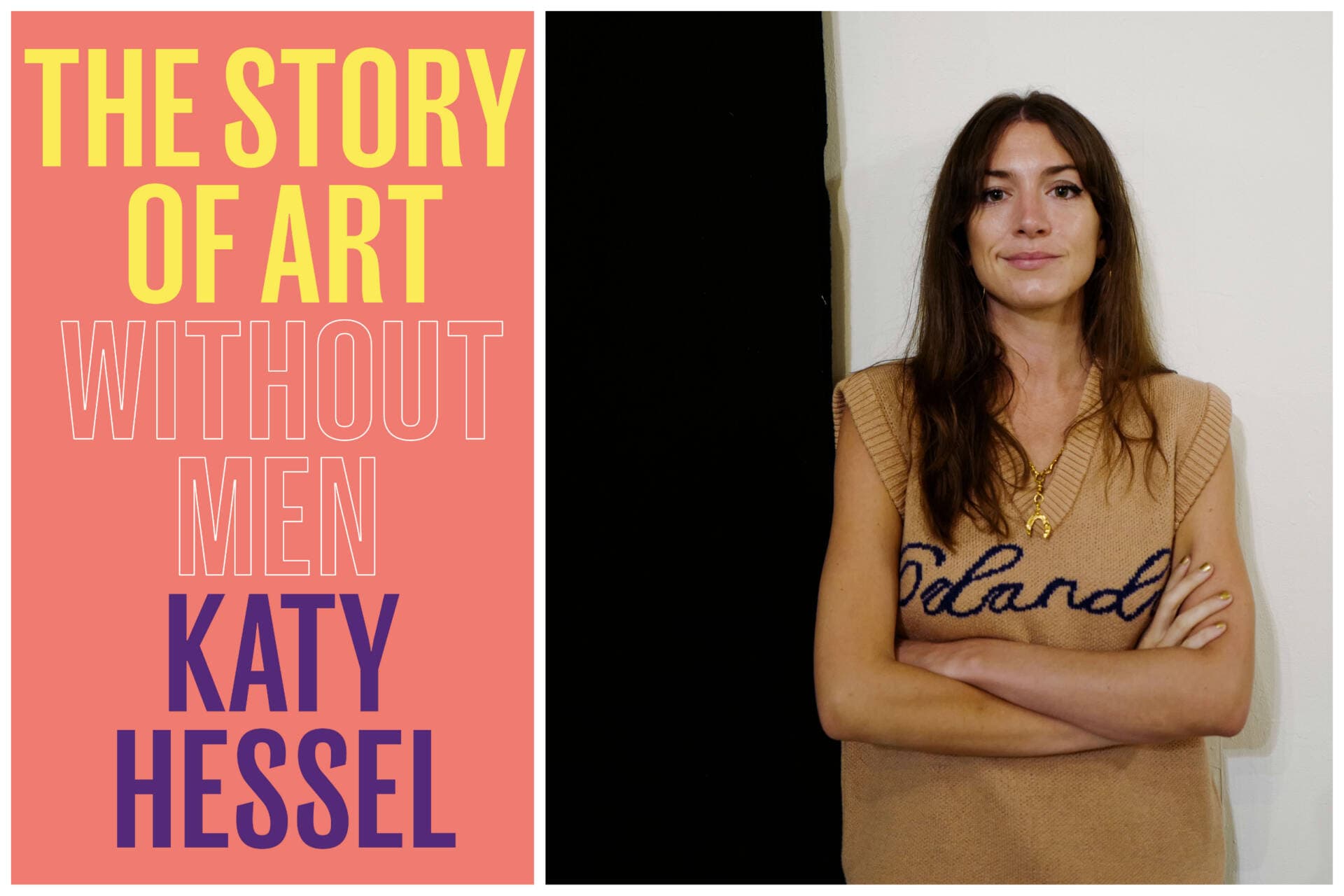
PBS NewsHour (May 3, 2023) -How many women artists can you name? That was a question Katy Hessel, then a 21-year-old art history major, asked herself. The results were disappointing. And so she set about learning and teaching herself and then others.
Art historian, author and presenter Katy Hessel
That resulted in her new book, “The Story of Art Without Men.” Jeffrey Brown discussed the book with Hessel for our arts and culture series, CANVAS.
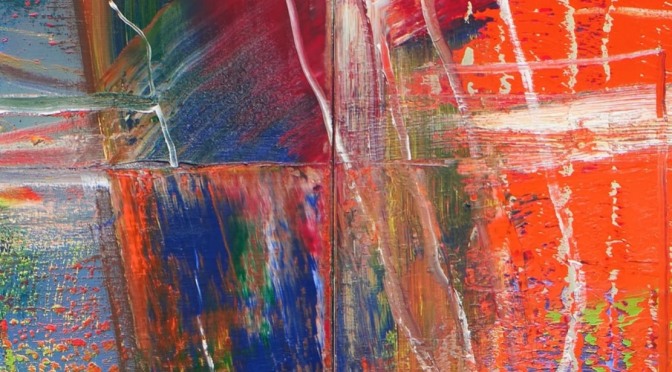
Sotheby’s (February 3, 2023) – Reminiscent of a landscape, or the strata of a Monet waterlily painting, the horizontal swathes of paint migrate across Abstraktes Bild in wave like-motion across the breadth of the canvas. Texture, colour and structure are here deployed with spectacular force, with the gliding scrape of the squeegee revealing the kaleidoscopic architectural structure of the artist’s underpainting.
It is a masterpiece created during the critical year of 1986, which saw the artist’s first large-scale touring retrospective and was also the year in which Richter first took up the squeegee as his principal compositional tool. He has only ever produced 24 Abstraktes Bild of this magnitude (with a width greater than 380 cm), of which half of these reside in museum collections across the globe.
Gerhard Richter was born in 1932 in Dresden, Germany. Throughout his career, Richter has negotiated the frontier between photography and painting, captivated by the way in which these two seemingly opposing practices speak to and challenge one another. From exuberant canvases rendered with a squeegee and acerbic color charts to paintings of photographic detail and close-ups of a single brushstroke, Richter moves effortlessly between the two mediums, reveling in the complexity of their relationship, while never asserting one above the other.
News, Views and Reviews For The Intellectually Curious






 The Morgan Library & Museum


 Boomers Daily