Tag Archives: Architecture

Architecture: Poet Alfred Lord Tennyson’s Isle Of Wight Home ‘Farringford’

After nearly 60 years as a hotel, this former home of the poet Alfred, Lord Tennyson has been triumphantly restored as a house museum. John Goodall reports; photography by Paul Highnam.
Image

On January 21, 1884, the poet laureate Alfred Tennyson was elevated to the peerage as Baron of Aldworth, Surrey, and of Freshwater on the Isle of Wight. As the editor of The Complete Peerage (1896) primly commented when recording this exceptional accolade, ‘the assumption of two places in different counties (more especially when the estate possessed is inconsiderable), cannot be commended’. Tennyson, however, would not have cared. Indeed, he had refused the offer of baronetcy four times and was only finally persuaded to accept it by his friend, the then Prime Minister, William Gladstone.

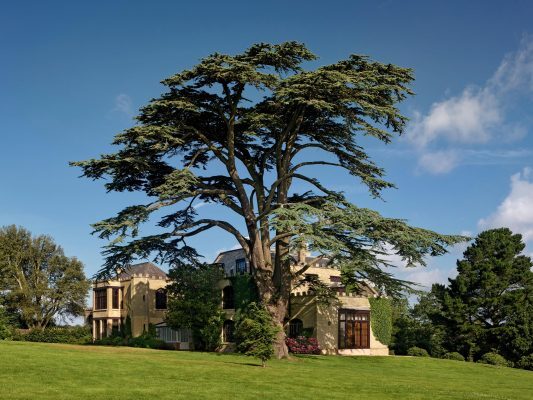
Tennyson chose this unusual title because — unconventionally for the period — he had houses in both places that he considered to be homes. Aldworth, which he generally occupied in the summer months, was a retreat from his house at Freshwater. This latter building, known as Farringford, was sold by the family in the 1940s and thereafter became a hotel. Returned back into private ownership in 2007, it has now undergone a renaissance at the hands of a Tennyson scholar, who has turned it into both a home and a house museum to the poet.

Fig 1: The library, which was added to the house in 1871 and has been fully restored. Farringford, Isle of Wight. ©Paul Highnam for Country Life

In the years immediately following his marriage in 1850, Tennyson and his wife, Emily, actively searched for a place to live. They heard from friends about a family house at Freshwater, on the north-western extreme of the Isle of Wight. Following a slightly depressing first viewing by Tennyson — then aged 44 — the couple came back together. An account of their visit in November 1853 is given in Emily’s journal. Travelling by train to Brockenhurst — where the railway line then ended — they caught an omnibus to Lymington and crossed on a still evening from the mainland in a rowing boat.

Emily was delighted by the house, which enjoyed an expansive prospect along almost the whole Hampshire coastline, and ‘looking from the drawing-room window, thought “I must have that view”, and so I said to him when alone. So accordingly we agreed… to take the place furnished for a time on trial with the option of purchasing’.

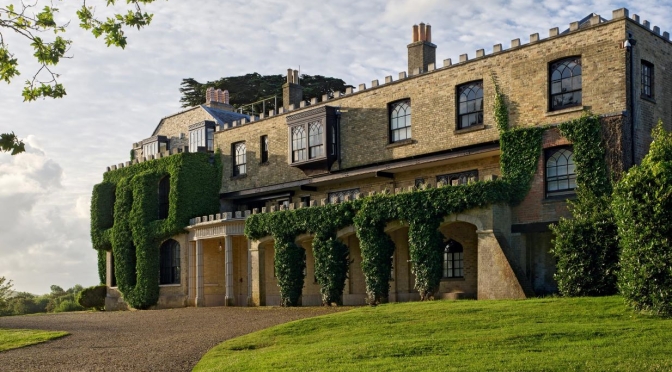
Fig 2: The north front of the house, with its Gothic porch. Farringford, Isle of Wight. ©Paul Highnam for Country Life

Read more at Country Life Magazine: https://ift.tt/l9zibWL
Australian Architecture: Rose Park House, Adelaide

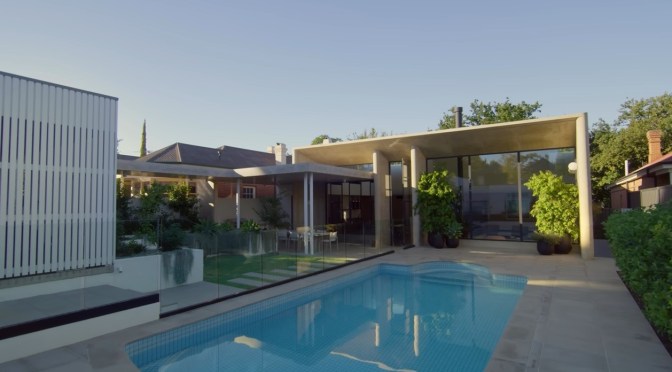
Rose Park House is a luxury house designed to create a journey of discovery. Carefully crafted by studio gram, the robust residence represents a legacy project for the clients; a home to last a lifetime and house generations to come.

Video timeline: 00:00 – The Local Project Print Publication 00:16 – Introduction to Rose Park House 00:40 – A Legacy Project 01:06 – The History of The Queen Anne Villa 01:29 – Materials and Architecture That Leave a Legacy 02:26 – A Wine Room for the Ages 03:02 – Key Components of The Extension 03:40 – Practical and Fully Accessible 04:14 – Longevity & Long Lasting Relationships 04:53

Sitting at the fringe of the Adelaide Park Lands, Rose Park House is the final architectural project to be initiated by the clients. The design brief for the luxury house entailed a structure that could stand the test of time and was a reimagination of the existing residence which was originally built in the 1900s.

Studio gram selects durable materials for Rose Park House. Dark-toned limestone and American walnut speak to a sense of longevity and visually contrast the bright natural light that fills the internal spaces. An investigation of the pre-existing home revealed architecture comprised of off-form concrete. The modern extension of the luxury house continues the materiality of the original dwelling.

Rose Park House is also designed with a focus on accessibility. Accessible ramps, flush thresholds and wide apertures are featured in consideration of occupants who use wheelchairs. Smoothly integrated into the overall scheme, the features demonstrate that in a luxury house, form and function are not necessarily conceived as competing interests.

As a luxury house, Rose Park House is imbued with a feeling that is almost ineffable; a feeling of permeating goodness and rightful being. Achieving longevity and timelessness, studio gram crafts a luxury house with a growing legacy.

Architecture: ‘Plateau Residence’ By Michael Hennessey Architects

MICHAEL HENNESSEY ARCHITECTURE

Plateau Residence

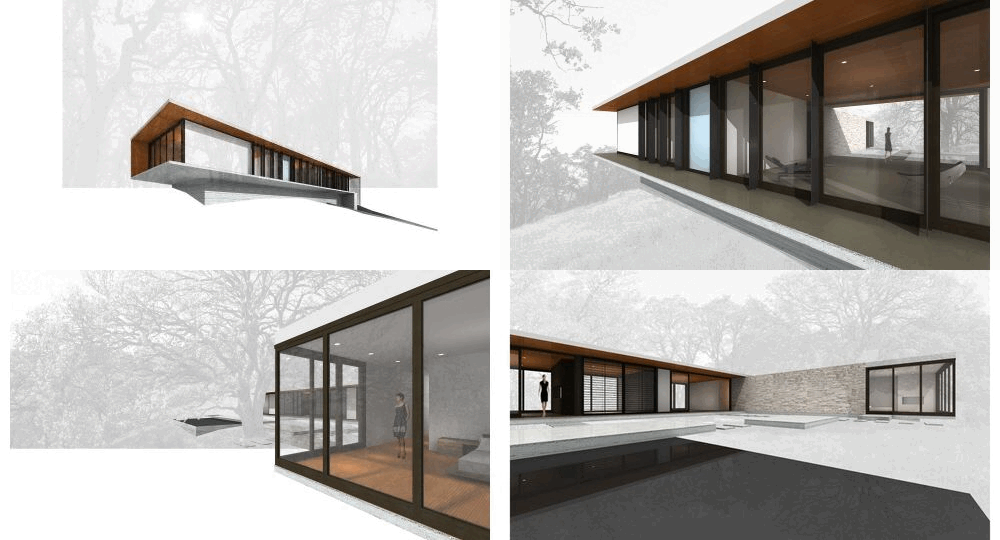
The severe topography and the intense climatic conditions at the site are the two primary factors that influence the design of this single-family residence. The building is situated on a plateau located above a steep, ambitious climb. The massing of the building is kept low to the ground to respect the existing topography below the plateau and to create a direct connection between the interior spaces and the surrounding landscape.

The site experiences relatively severe temperature swings from winter to summer. As a means to mediate a proper climatic response, a strategy is developed to relate the massing and fenestration specifically to the function of the public and private spaces of the residence. The public living spaces are defined with an abundance of glazing that is shaded with deep overhangs, horizontal slats, and vertical fins. Conversely, the private bedroom and bathroom spaces are shielded from the hot afternoon sun by stone walls.

Architecture Tour: Light Scoop House In Australia

Situated on a site measuring only 6 metres wide, Light Scoop House required a compelling architectural response. As is necessary when an architect designs a narrow home, Molecule Studio enables function in a compact space, crafting a serene residence well-suited to the lifestyle of the client. Understandably, when an architect designs a narrow home, access to natural sunlight is given high priority.

00:00 – The Local Project Print Publication 00:18 – Introduction to a Narrow Home That is Only 6 Meters Wide 00:47 – The Clients Original Goal 01:06 – The Architects Pre-Design Process 01:25 – Zen Vibes and Interconnected Design 02:05 – Behind the Narrowness of The Home 02:39 – Landscape Courtyards and Garden Connection 03:06 – Architectural Elements within The Home 03:37 – Central Materials and Their Links to Light 04:46 – Achievements of The Original Brief 05:54 – Subscribe to The Local Project Print Publication

Located in the bay-side suburb of Brighton, Light Scoop House is named in reference to its tapered-edge pavilion roofs which pull natural light into the home and lift the gaze upwards. If an architect designs a narrow home without considering the lifestyle of the occupant, the design will not succeed. Molecule Studio thoroughly examines the personal likes, dislikes and daily habits of the client, producing a tranquil home that captures sunlight across its textural surfaces. Molecule Studio punctuates the spatial plan of Light Scoop House with landscaped courtyards. In doing so, the architect designs a narrow home that fosters a distinct feeling of retreat, effortlessly connecting the occupant to nature. Light Scoop House demonstrates that when an architect designs a narrow home, the outcome can exceed expectations. Using a limited materiality, Molecule Studio creates a sense of calm and careful construction that extends far beyond the demands of the brief. 00:00 – The Local Project Print Publication 00:18 – Introduction to a Narrow Home That is Only 6 Meters Wide 00:47 – The Clients Original Goal 01:06 – The Architects Pre-Design Process 01:25 – Zen Vibes and Interconnected Design 02:05 – Behind the Narrowness of The Home 02:39 – Landscape Courtyards and Garden Connection 03:06 – Architectural Elements within The Home 03:37 – Central Materials and Their Links to Light 04:46 – Achievements of The Original Brief 05:54 – Subscribe to The Local Project Print Publication

Views: The Two Worlds Of Casablanca, Morocco

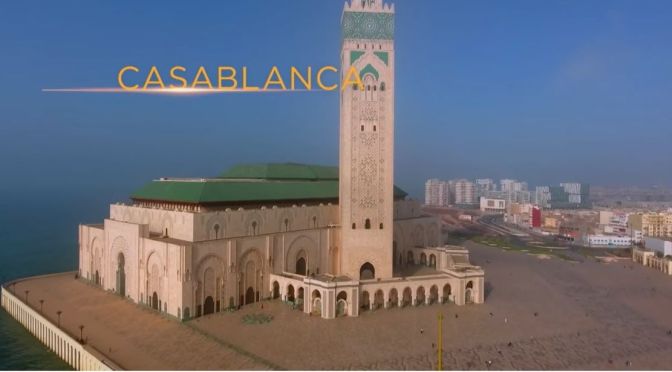
Famous from the 1940’s award winning movie, Casablanca is a city of love, drama, and passion. A city just like the Hollywood film, even though not a single scene was shot there. Today, two worlds clash, tradition, and globalisation. An old port city and commercial hub in western Morocco, which at one time was ruled by the French, can be seen through its downtown architectural style.

Casablanca is a port city and commercial hub in western Morocco, fronting the Atlantic Ocean. The city’s French colonial legacy is seen in its downtown Mauresque architecture, a blend of Moorish style and European art deco. Standing partly over the water, the enormous Hassan II Mosque, completed in 1993, has a 210m minaret topped with lasers directed toward Mecca. 

Home Renovations: May House, Malvern, Australia

When an architect designs a house with consideration and care, dwellings such as May House emerge. Taking a playful approach to colour and materiality, Neil Architecture reimagines a 1980s home as a relaxed, modern family residence.

Video timeline: 00:00 – The Local Project’s Print Publication 00:10 – Introduction to the House 00:45 – Complementary Design 01:01 – Exterior Renovations 02:03 – 1980s Materiality 03:12 – Landscape Architecture 04:09 – A House Made for Entertaining 04:42 – Timeliness Rejuvenation 05:17 – Subscribe to The Local Project’s Print Publication

When an architect designs a house, the design brief can often stipulate a complete renovation. However, Neil Architecture recognised the value of the original 1980s construction – settled into the leafy suburb of Malvern – and decided instead to complement the home with architectural additions.

To maintain the strong and simple form of the original structure, Neil Architecture covers the pre-existing truss with a perforated screen. Off-form concrete is used to create the carport, whilst a roughcast concrete render is applied to the fence – in doing so, the architect designs a house that interacts with the local built environment. As an architect designs a house, the intent can be expressed through the finer details of the scheme.

In May House, rusty red and green tones appear in the material palette, paying homage to the colours present in 1980s interior design. May House sees a 1980s residence both celebrated and reimagined, embraced and rejuvenated. Managing the external architecture and interior detail, the architect designs a house that is imbued with a sense of warmth and continuity; a house for the future that is inspired by the past.

Preview: Architectural Review – July/August 2022

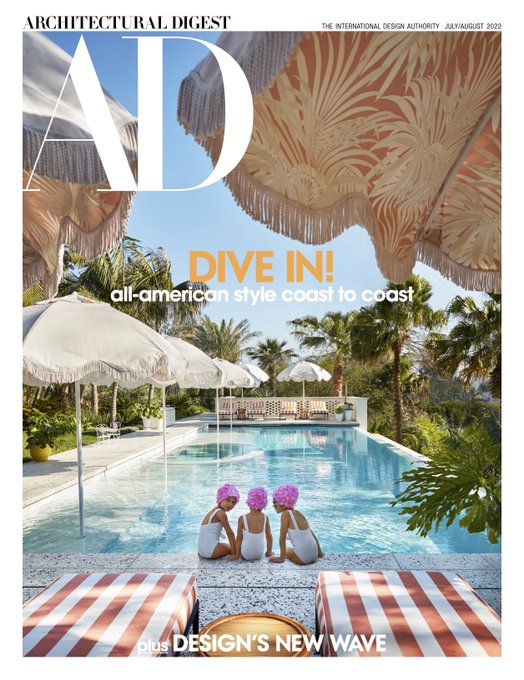
AR July/August 2022

For two and a half years, risks of contagion have justified restrictions on public life around the world, at times tipping towards punitive control and attacks on civil liberty. The essays in this issue examine some of the forces that encroach upon public spaces, whether they be the economic imperatives that govern late capitalist cities or anti‑democratic political regimes that grab common land. The affordances of public spaces are never singular and neither are their publics. The voices in this issue question assumptions about who – or what – the monolithic ‘public’ is, advocating spaces that make room for difference. Also featured are the commended projects of the inaugural AR Public awards, which take us from Paris, Dhaka, and Guiyuan Village in China, to Singapore, London and Bangkok. Public spaces are complex and often imperfect – a ‘versatile, if unevenly distributed, resourcescape’, to use Álvaro Sevilla-Buitrago’s phrase – but as the pandemic continues, it is crucial that designers and publics continue to negotiate them.

For two and a half years, risks of contagion have justified restrictions on public life around the world, at times tipping towards punitive control and attacks on civil liberty. The essays in this issue examine some of the forces that encroach upon public spaces, whether they be the economic imperatives that govern late capitalist cities or anti‑democratic political regimes that grab common land. The affordances of public spaces are never singular and neither are their publics. The voices in this issue question assumptions about who – or what – the monolithic ‘public’ is, advocating spaces that make room for difference. Also featured are the commended projects of the inaugural AR Public awards, which take us from Paris, Dhaka, and Guiyuan Village in China, to Singapore, London and Bangkok. Public spaces are complex and often imperfect – a ‘versatile, if unevenly distributed, resourcescape’, to use Álvaro Sevilla-Buitrago’s phrase – but as the pandemic continues, it is crucial that designers and publics continue to negotiate them.

Public

Keynote: Publicity, Álvaro Sevilla-Buitrago
Reputations: Michael Sorkin, Kate Wagner
Unceded land, unpublic use, Timmah Ball
Reclaiming Asunción, Laurence Blair
Pockets of promise in Gugulethu, Kathryn Ewing
Outrage: Legacies of Covid-19 in Shanghai, Flora Ng

Design Tour: Queens Park House In Sydney, Australia

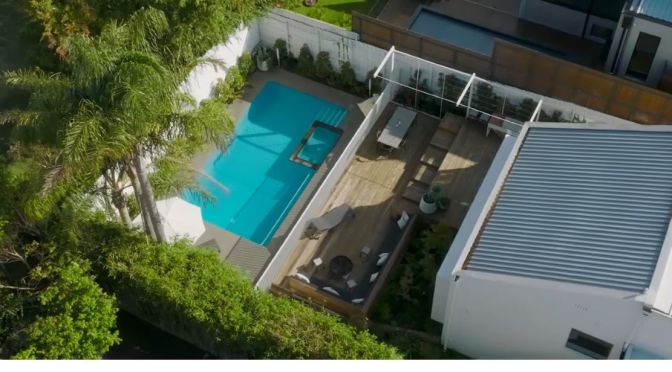
Queens Park House is an architect’s own minimalist oasis. Designed by Kyra Thomas Architects, the calming suburban home strongly contrasts its previous iteration as a storage warehouse.

Video timeline: 00:00 – The Local Project’s Print Publication 00:10 – Introduction to the Architect’s Own Home 00:49 – Warehouse Conversion 01:23 – The Brief 02:41 – Green Spaces 03:05 – Lighting 03:31 – Materiality 04:15 – The Architect’s Favourite Room 04:43 – The Finished Project 05:06 – Subscribe to The Local Project’s Print Publication

Located in Sydney, Queens Park House was originally a storage warehouse with brick walls built to the boundary of its site. Converting the commercial property into an architect’s own minimalist oasis required opening up the building and rewriting its internal character.

Structurally, turning the warehouse into an architect’s own minimalist oasis involved removing the pre-existing roof and inserting walls into the interior of the building. The brick boundary walls are retained, enabling a sense of privacy within the suburban setting and paying homage to the history of the building. As an architect’s own minimalist oasis, Queens Park House embraces natural light and fresh air.

Four courtyards punctate the spatial plan, creating green space for different aspects of the house to relate to, as well as facilitating internal lighting and ventilation. Responding to the residential needs of the client, Queens Park House stands as an architect’s own minimalist oasis. Custom and considered, the home testifies to the skill of Kyra Thomas Architects in transforming a commercial space.

Architecture: La Casa Rosa, Randwick, Australia

A modern house designed by Luigi Rosselli Architects, La Casa Rosa is the romantic reimagination of a heritage property. Combining architecture from the late 19th century with contemporary additions, the renovated home forms a considered and contemporary home.

Video timeline: 00:00 – The Local Project Print Publication 00:10 – Introduction to the Modern House 00:58 – Entering the House 01:57 – Maintaining the Existing Home 02:53 – Utilising Fluid Lines 03:25 – The Pool 04:18 – Selecting the House Colour 05:02 – What the Architect is Most Proud Of 05:41 – The Local Project Print Publication Subscription

Settled on an escarpment overlooking the Pacific Ocean, La Casa Rosa is accompanied by many other Victorian buildings. The steep roof of the modern house testifies to its roots, obviously referring to the architecture of its time. In materiality, La Casa Rosa pays homage to its past. Bricks, timber and sandstone reference the palette of the built surrounds, whilst some of the original roof tiles are used to make a tile screen.

To the rear, the tile screen breaks the western sun, but is also used in connected the original and modern roof structures. Entering through the front of the modern house, the small, original rooms are immediately revealed as the children’s bedrooms. The back of the modern house represents the contemporary addition. An open-plan living space encapsulates the kitchen, dining and sitting area, with a staircase that leads to the first floor.

Outdoors, Luigi Rosselli Architects also retains the pre-existing pool, a peanut-shaped feature that complements the landscaping concept. Incorporating the fluid lines that have become synonymous with the work of Luigi Rosselli Architects, La Casa Rosa is undoubtedly a modern house. However, the completed project sees historic architectural elements subtly blended with the latest features, establishing a cohesive dwelling that proudly represents its past.