Tag Archives: Architecture & Design

Architecture: The Jervois Apartments In Auckland

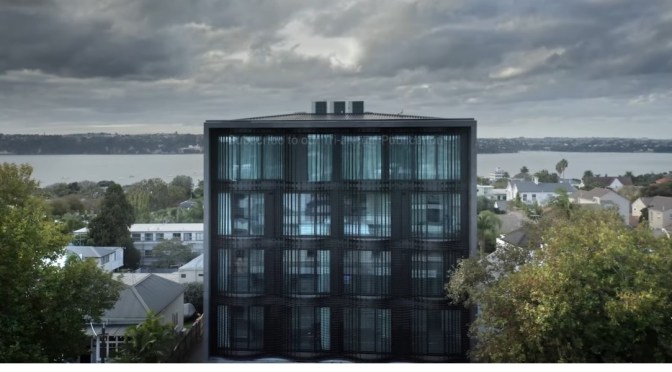
The Local Project – With breathtaking views across Herne Bay, the architect designs a modern apartment that takes elements of suburban life and introduces them into apartment living. Allowing for an evolving brief, Artifact Property approached Monk Mackenzie to collaborate on a mixed-use development that positively contributed to Auckland’s built environment.

Video timeline: 00:00 – Introduction to the Modern Apartment 01:05 – The Brief 01:28 – Similarities of a Jigsaw Puzzle 01:44 – Contributing in a Positive Way Through Architecture 01:58 – The 8 Apartments 02:20 – The Layout of the Building 02:45 – Separation of Functions 03:45 – The Site Itself 04:16 – The Material Palette 05:06 – The Kitchen Design and Appliances 05:28 – Minimalistic Features of Fisher & Paykel 06:01 – Proud Moments

Encompassing eight units in total – one commercial space, six apartments and a penthouse – Jervois Apartments is simple, elegant and timeless. Due to the location of the site, the architect designs a modern apartment to fit a 33-metre length block that rises 15 metres above. Taking advantage of as much space as possible, the project uses the length of the site to its benefit and, in turn, offers occupants the opportunity to live spaciously.

Sitting high on the ridgeline and facing north, each apartment has been cleverly planned out. From the façade, a winter garden deck with views of nature greets those who enter and sets the scene for what is to come. From this, a long view of the apartment imbues a similarity to the openness that suburban homes offer. Positioned at the southern end of the apartment, the street-facing bedrooms and private spaces offer a unique placement that defers from other apartment designs.

Monk Mackenzie and Artifact Property employed an interface between private and public domains with metalwork screens. By employing the screening on the façade, the exterior design offers varying degrees of transparency and opacity. Through this unique use of materials, the architect designs a modern apartment that offers a different experience from opposite sides of the building. From the bedroom, a direct sightline of the surrounding landscape is offered to the occupants through the screens, whilst from the street below, the façade strikes a wave-like form that seamlessly blends into the built environment.

At the north end of the apartments are the living and dining spaces, kitchen and enclosed deck where the occupants can sit outside during winter whilst being sheltered from the elements. Though Jervois Apartments sits on a narrow site, the architect designs a modern apartment that optimises space to create a spacious interior environment. In the kitchens, the incorporation of natural stone, oak and metal work into the material palette has been seamlessly styled together with Fisher & Paykel appliances – such as the vertical column fridge-freezer, wine fridge and ovens.

With the insertion of minimal and clean appliances, Fisher & Paykel products blend into the kitchen without taking away from other elements of the apartments. Contributing to Auckland’s built environment, an architect designs a modern apartment that allows the occupants to live a city life whilst being surrounded by suburban comfort.

Architecture 2022: ‘Dune House’ In New Zealand

herbst architects dune house

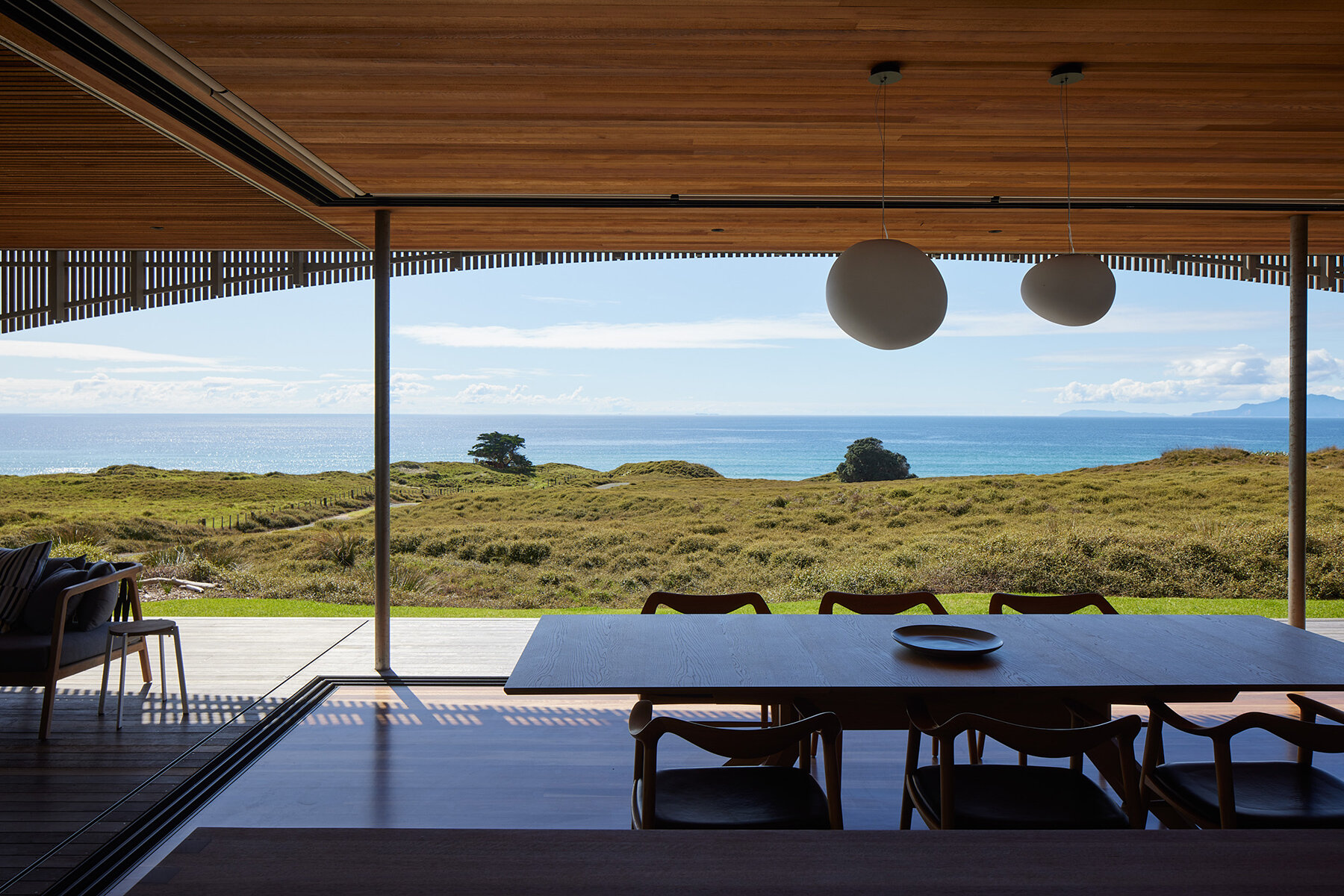
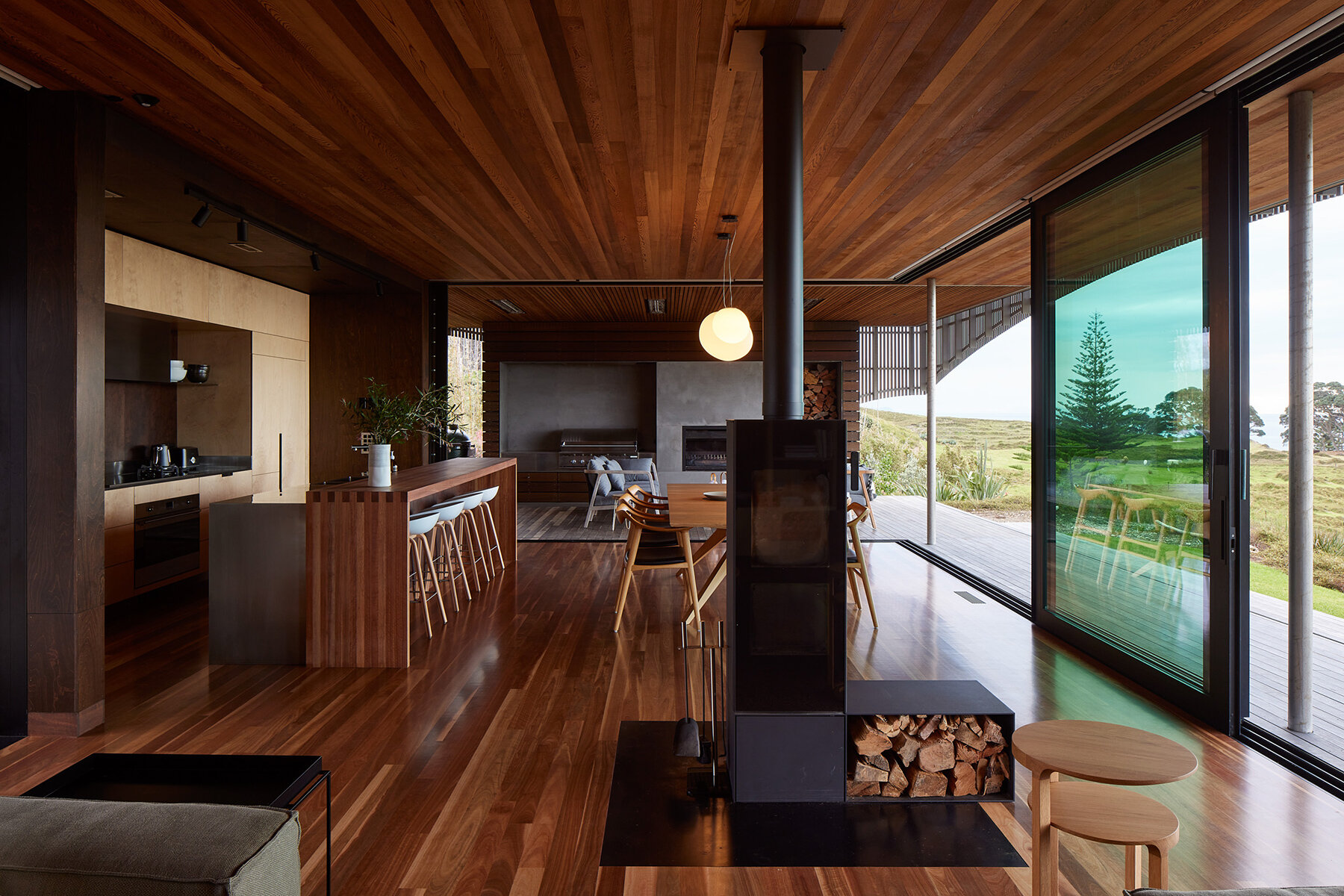
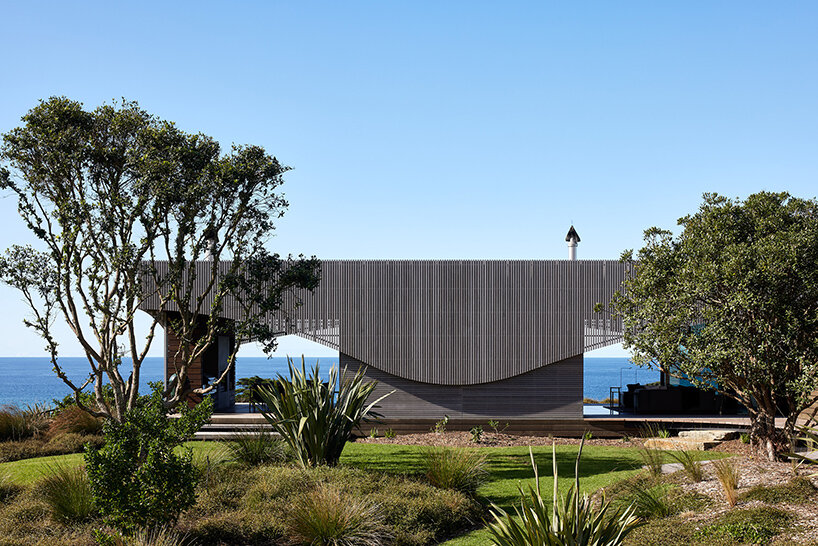
Auckland-based studio Herbst Architects takes to an expansive dunescape along the eastern coast of New Zealand to construct its Dune House.

herbst-architects-dune-house-new-zealand-designboom-07a

The dwelling is designed in celebration of its undulating site, which is covered with a native flowering plant known as Muehlenbeckia to create a lush, green landscape rolling downward to the beach.

herbst-architects-dune-house-new-zealand-designboom-05a

The project comprises a main house with two bedrooms and two smaller ‘sleepout’ structures, following the needs of the client, while it is perched two hundred meters from the high-water mark — following local regulations. Thus, the home is safe from flooding and enjoys sweeping views of the sparkling horizon.

Read article at Designboom

Design: Northside House In Clifton Hill, Australia

The Local Project – Through warm and inviting additions, Northside House becomes a dream house for the clients of Wellard Architects. In partnership with Artedomus, Wellard Architects have carefully considered the owners’ personalities with the selection of colours, tones and materials.

Video timeline: 00:00 – Introduction to Dream House 00:39 – An Alterations and Additions Project 00:51 – The History Behind Northside House 01:10 – Layout of the Dream House 02:01 – The Overarching Theme of Compression and Release 02:50 – Joining Forces with Artedomus 03:17 – The Main Materials Utilised Throughout The Home 05:02 – Artedomus’ Involvement 05:37 – The Architect’s and Artedomus’ Favourite Aspects 06:13 – Proud Moments from the Architect’s

Located on a corner site of Clifton Hill, Northside House is an existing heritage home that once housed an Italian plasterer and showrooms. However, with carefully considered alterations and additions, the dream house becomes a space for private family dwelling that also opens to the surrounding community. From the front of the Federation-era home, the house tour leads guests past the principal bedrooms and bathrooms of the original home.

Wellard Architect’s alterations and additions become evident with the double-height hallway that marks the transition between the old and new. Located upstairs is a lounge and study, which offer a warm and light-filled retreat where one can find some privacy in a busy household. On the ground floor, the living and dining spaces have been subtly zoned so no space feels too cavernous. From the blonde timber walls and ceiling to the terrazzo flooring, the dream house encompasses a natural form of living.

Desiring a cosy interior, the clients and Wellard Architects worked closely in the selection of decor, furniture, finishes and fixtures for the interior space. During these project development stages, Artedomus was approached for its robust materials that would fit the brief of a busy family’s dream house. In the ensuite bathroom, porcelain tiles from Portugal infuse warm tones, while the vanity and basins use Travertine Zena and INAX tiles to establish calmness throughout.

Additionally, the main bathroom uses Verde Bardini granite and Fiandre Maximum porcelain tiles which meld with the selected Agape Vieques steel bath that sits sculpturally in the centre of the bathroom. Flowing throughout the rest of the dream house, Artedomus products can also be appreciated in the generously-sized kitchen, where Nerofino Brushed Quartz has been employed for the splashback.

Alongside the creation of a cosy atmosphere, the kitchen further instils the clients desire to have a home that can be used for entertaining – with space for intimate family cooking or a gathering of friends and neighbours. Opening up to the back garden courtyard, the orange-bricked façade of the garage seamlessly balances the terracotta shingles of the dream home and merges the heritage home with the modern additions.

Architecture & Design: The 2022 House Awards

House 101 in Vietnam by Atelier tho.A

House 101 by Atelier tho.A. Photograph: Anh Chuong

The Architectural ReviewThe 15 shortlisted projects include houses from all over the world, from the UK, Ireland and Spain, to Mexico, Vietnam, New Zealand and The Bahamas.

Casa Ter by Mesura

Casa Ter by Mesura. Photograph: Salva-López

The private house occupies a unique position in both the history of architecture and human imagination. Beyond its core function of shelter, it is an object of fantasy, a source of delight, a talisman and a testing ground. 

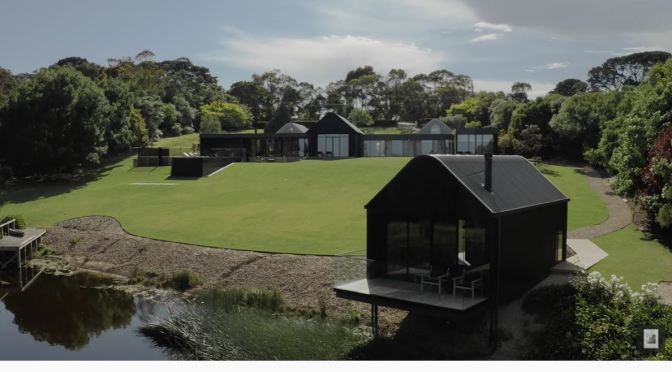
Bass Coast Farmhouse by John Wardle Architects

Bass Coast Farmhouse by John Wardle Architects. Photograph: Trevor Mein

Blockmakers Arms by Erbar Mattes

Blockmakers Arms by Erbar Mattes. Photograph: Ståle Eriksen

Brillhut by Brillhart

Brillhut by Brillhart Architecture. Photograph: Bill Abranowicz

Casa Eva by Fernanda Canales Arquitectura

Casa Eva by Fernanda Canales Arquitectura. Photograph: Rafael Gamo

Read more

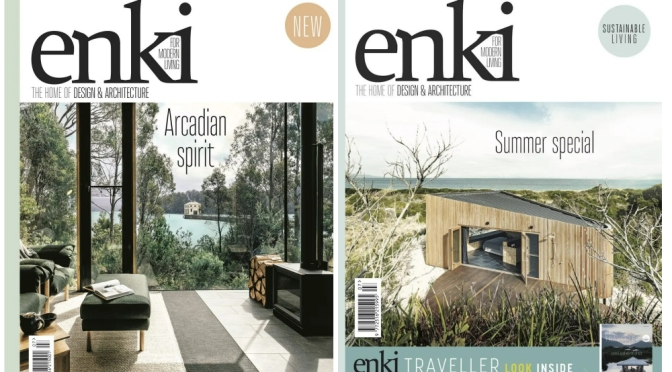
Architecture/Design: enki Magazine – November 2022

enki Magazine – Novemver 2022

Treehotel adds Biosphere retreat | Enclosed in 350 birdhouses

Treehotel has revealed its eighth experimental retreat called Biosphere, which is suspended between two trees and wrapped in a façade of 350 birdhouses. 

Designed by BIG in collaboration with Swedish ornithologist Ulf Öhman, the boutique hotel room is designed to immerse guests in nature and to help facilitate the conservation of the local bird population. The 34-square-metre glazed cube is surrounded by a metal grid that supports the timber-made birdhouses of various sizes, and creates its spherical form. 

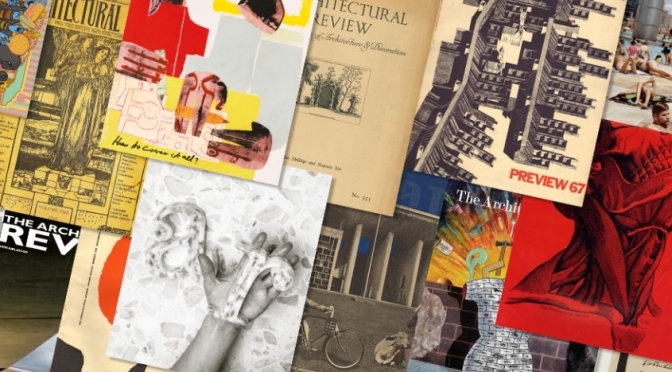
Cover: The Architectural Review – October 2022

xindex-magazines-1495-1600x1066.jpg

AR October 2022 – The Energy Issue

In the beginning, there was energy. Everything since then, has been an exercise in transforming energy from one state into another – food becomes labour, gas becomes electricity, fossil fuels become architecture.

In this month’s keynote essay, Barnabas Calder writes: ‘In the millennia before fossil fuels, the circular economy was the only economically viable way to operate’. Recognising that architecture is formed from the fuel we extract to create and sustain it could be a transformative way of thinking about our built environment.

This issue seeks to make visible the often obscured links between buildings and the energy sources they are built from, and around.

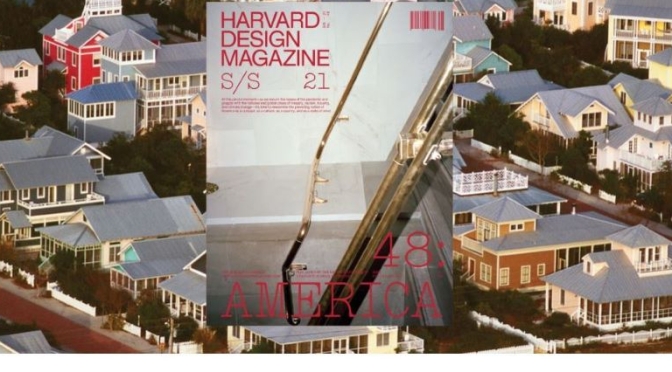
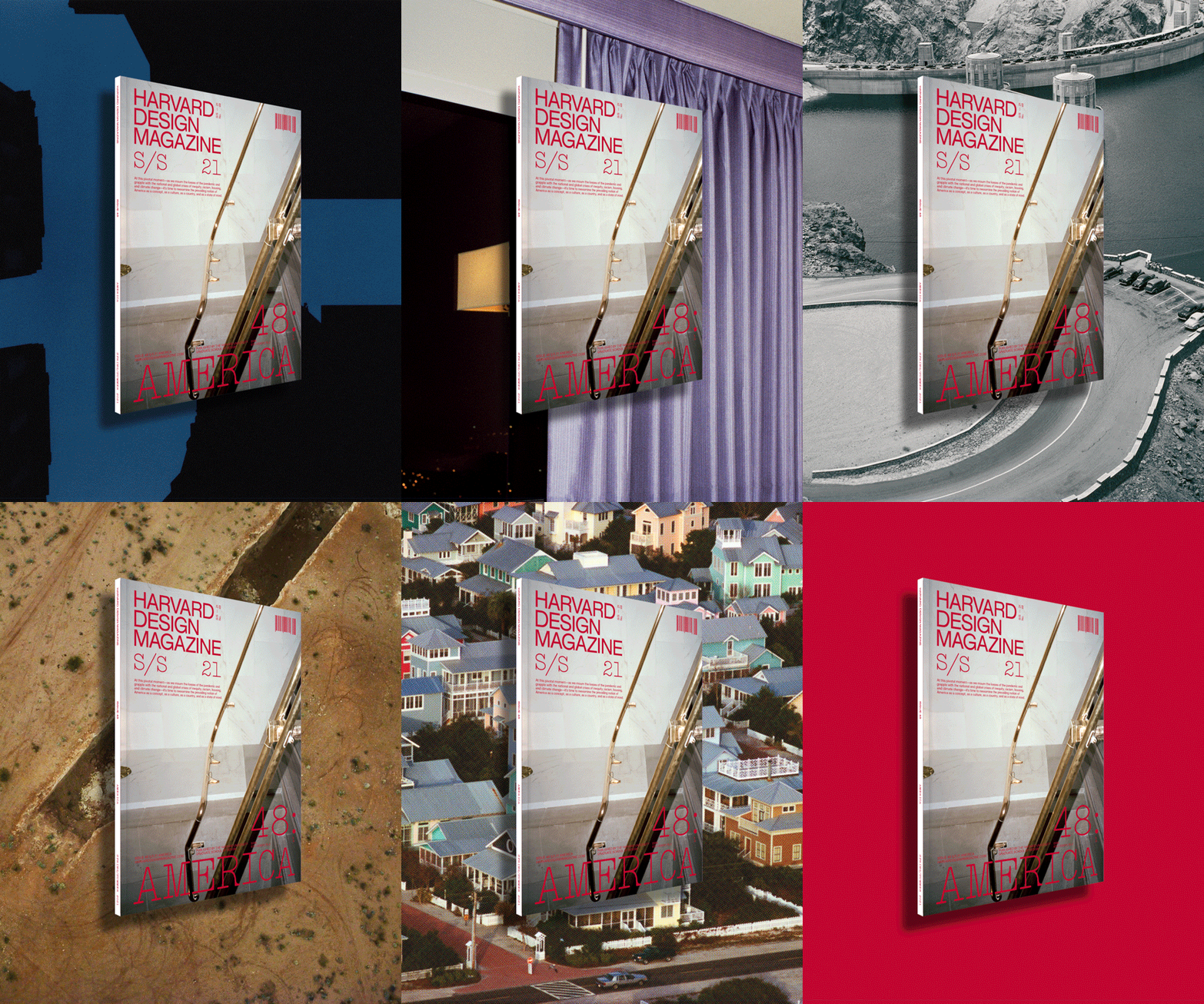
Architecture & Culture: Harvard Design Magazine ‘American Paradigm’ (2021)

The latest issue of Harvard Design Magazine reveals full redesign and new editorial model as it assesses the establishment, and reconsideration, of the paradigm of “America”.

Harvard Design Magazine 48: America marks a turning point for the magazine as the first issue under new editorial director Julie Cirelli, featuring Mark Lee and Florencia Rodriguez as guest editors. This issue also debuts a full redesign by Alexis Mark, the Copenhagen-based graphic design firm. Publishing this month, the issue gathers contributions from leading figures across the fields of architecture, design, urban planning, fashion, art, and governance, including Maurice Cox, Shaun Donovan, Michèle Lamy, Sylvia Lavin, and Marc Norman. Join Lee, Rodriguez, and Norman, alongside contributors Paul Andersen, Neeraj Bhatia, and Maite Borjabad Lòpez-Pastor, for a virtual launch event next Tuesday, March 23, 7:30pm ET.

Harvard Design Magazine 48: America reflects on the theme and definition of “America” through lenses of cultural production, racial justice, and architectural and design practice. In the 20th century, a paradigm of America characterized by progress, openness, and democracy was perpetuated—but with an ominous underbelly of exclusion, racism, and inequity left unexamined. While viewpoints on America’s story and history differ, if not reject one other, what is widely shared is a sense of 2020 as a breaking point—or, “a consciousness of an imminent existential threshold,” as write Lee and Rodriguez.

Read more

Architecture & Design: ‘Ruum Model’ – Australia

The Ruum model proudly represents a new pathway to architect designed living. Through considered partnerships with industry leading companies such as Chamberlain Architects and Fisher & Paykel, Ruum is making architectural designs accessible to more people.

Captured in a recently completed home designed by Chamberlain Architects, Ruum founder Elliot McLaren and Chamberlain director Glen Chamberlain explain what this new pathway to architect designed living represents, and how Ruum is able to maximise value for the home-owner. As Elliot explains, “having spent over 15 years in the residential building industry, I became acutely aware of a chasm in the marketplace where traditional project building will stop and one off bespoke architecture starts.”

In practice this has seen Ruum partnering with Chamberlain Architects on the first series of Ruum architect designed homes – five different configurations that can only be commissioned ten times per state before they are retired. Within this program, there exists the potential for customisation of each template to maximise the living and lifestyle benefits of Ruum’s offering. It allows home-owners a degree of customisation to their layout, whilst achieving efficiencies in the appointments and appliances throughout their home.

For Glen Chamberlain, this meant that “the attention to the plan” and choosing to partner with “companies that have a passion and commitment to design” were of utmost importance in elevating this new pathway to architect designed living. The decision to align Ruum with Fisher & Paykel was therefore a logical choice, with all Ruum homes enjoying integrated Fisher & Paykel kitchens that become extensions of the main living space. Elliot elaborates that “what is a common theme with all the partnerships that we have curated within the Ruum model is a common belief around quality” and this is nowhere more apparent than in the Ruum kitchens.

Demonstrating a new path for architect designed living, Ruum allows clients to create beautiful and architectural spaces without the rigours of the traditional model. Presented in Partnership with Ruum. Architecture by Chamberlain Architects. Kitchen Appliances by Fisher & Paykel. Filmed by Cheer Squad Film Co. Production by The Local Project.

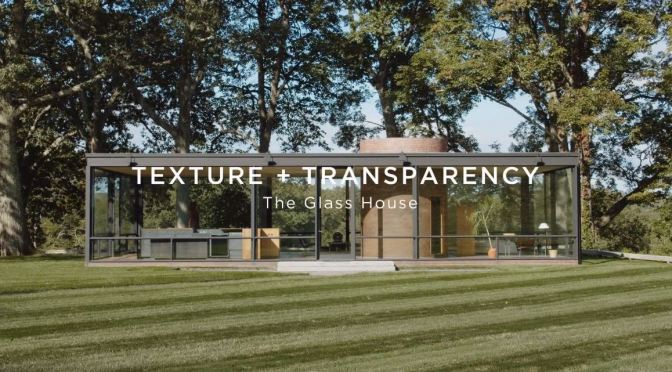
Architecture & Design: “Texture + Transparency – The Glass House” (2020)

https://vimeo.com/434020908

Produced and Directed by: Michael Biondo, Dallas Bennett, and Michael Robison

Edited by: Dallas Bennett
Cinematography by: Michael Biondo

Architectural photographer and filmmaker Michael Biondo and creative reality capture duo Michael Robison and Dallas Bennett (aka MYND Workshop) have collaborated to create an episodic series of short visual tours of the Glass House, a site of the National Trust for Historic Preservation.

This video series seeks to create an ambient and intimate tour of Philip Johnson’s Glass House property in New Canaan, CT. These films are unique in the sense that they combine film and the use of point cloud technology to allow for a tectonic and artistic examination of the buildings in order to better understand the architecture and site design.

“Point clouds are an exceptional visual tool for understanding a space in ways which the human eye doesn’t typically allow,” said Michael Robison, co-founder and CEO of MYND Workshop. “The Glass House site could not be a more perfect subject to be experienced as a point cloud, providing insight into the complex relationships between the various structures and their careful placement throughout the dramatic landscape which defines the Glass House property.”

These films focus on a dialogue between Biondo’s carefully composed videography and MYND’s spectral point cloud visuals. Each video presents one of the different structures which comprise the Glass House property.

Biondo’s breathtaking video manages to capture those visceral experiences which one may come across when visiting the 49-acre property. These scenes offer the textures and light which define the sensual and emotional nature of Johnson’s work. In contrast, MYND Workshop’s animations speak to the layers and transparencies which Johnson often referred to when speaking about the design of the various buildings on the site, allowing for a design perspective that has never been seen before.

MYND Workshop’s medium of choice, the Point Cloud, may be best described as a 3D photograph which adds a spatial dimension to an otherwise 2D scene. The Brooklyn-based studio recognized early on the inherent beauty of the point clouds, exploring their creative potential by using them to create ethereal animations like those in the series.

This project was made possible by the generosity of Joanne and Stanley Marder.

About MYND Workshop
MYND Workshop is a Brooklyn based reality capture studio founded by Michael Robison and Dallas Bennett. Since 2015, they continue to implement a combination of 3D laser scanning and photogrammetry processes to document architecture, historic sites, film sets and artwork. MYND pushes the boundaries of these technologies by merging utility and creativity. Past projects have included Waldorf Astoria Hotel New York, Trinity Church Wall Street, World Trade Center Plaza, 9/11 Museum & Memorial, New York Stock Exchange, The Ford Foundation, The Brooklyn Navy Yard among many others.

About Michael Biondo
Michael Biondo is a New York and Connecticut-based photographer / filmmaker specializing in architecture and design. He studied Photography, Graphic Design, and Art History at the Pratt Institute where he earned a BFA. Recently Biondo contributed photographs to Rizzoli’s 2014 monograph, Allan Greenberg: Classical Architect; Design Book’s 50 U.S. Architects, published in 2015; and Inventive Minimalism, Monacelli Press, 2017. He co-authored and photographed Mid-Century Houses Today, Monacelli, 2015. His photographs have appeared in Architectural Digest, the Wall Street Journal, Architizer, Dwell, a+u Magazine and other publications.

Website