
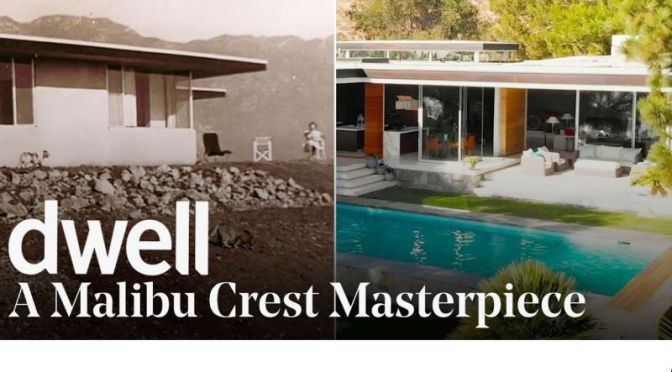
Studio Bracket Architects turn a 1949 International-style home into the perfect escape for a Malibu couple who collect pre-war American cars. Featuring water features, a flat roof, clean lines, broad overhangs, and plenty of glass elements, Sam and Emily Mann’s Malibu Crest house takes advantage of stunning views and its stunning natural environment.
Tag Archives: Architects
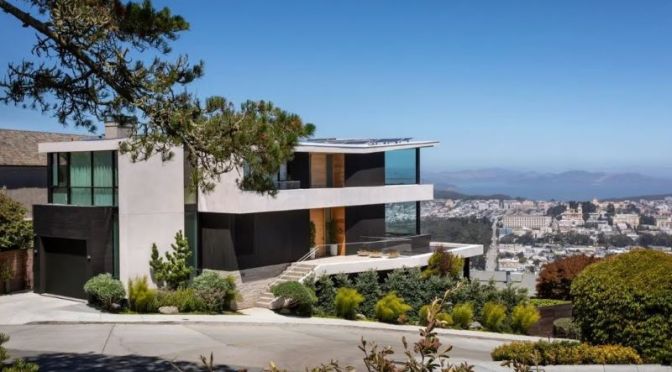
Architectural Tours: San Francisco Contemporary Atop Mount Sutro (Video)
Commanding panoramic views from an advantageous point on Mount Sutro, 150 Glenbrook Avenue holds the iconic and singular position of San Francisco’s highest residence above sea level.
Atop one of the city’s famed seven hills can be found an alchemy of site and design from the groundbreaking studio of John Maniscalco Architecture. A gently sloping, corner lot with panoramic views from the Salesforce Tower crowned skyline to the distant hills of the East Bay and Marin Headlands. Major visual landmarks include Alcatraz Island, Golden Gate Bridge, and San Francisco City Hall.
An interplay of hand selected materials and ever-changing natural light creates an enchanting series of visual moments throughout the day and into the evening twilight.
Signaling the work of a creative master and a confident step forward in the historic lineage of Bay Area modernist architects, 150 Glenbrook captures a moment in time of contemporary San Francisco architectural design. 150 Glenbrook presents a rare opportunity to join a select group of homeowners who, through their passion for design and craft, are creating a historic architectural moment to be valued for decades to come. visual focal point in the main living room. Each room is a wonderful discovery of its own and a singular experience of light, texture, and passion.
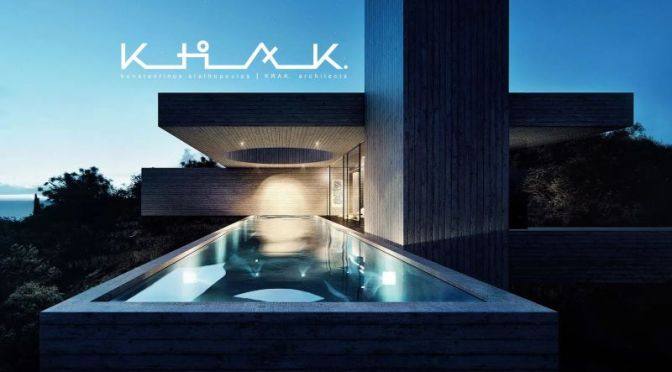
Top Architecture: ‘Casa Odyssia’, Island Of Corfu By KRAK. Architects (2020)
The architectural office konstantinos stathopoulos KRAK. architects,
participated in the 10th Biennale of Young Architects, with an impressive holiday home, named Casa Odyssia, located in the northeastern part of the island of Corfu, in a lush landscape, with intense relief and at an altitude of 250 meters, where the user as a modern Odysseus.
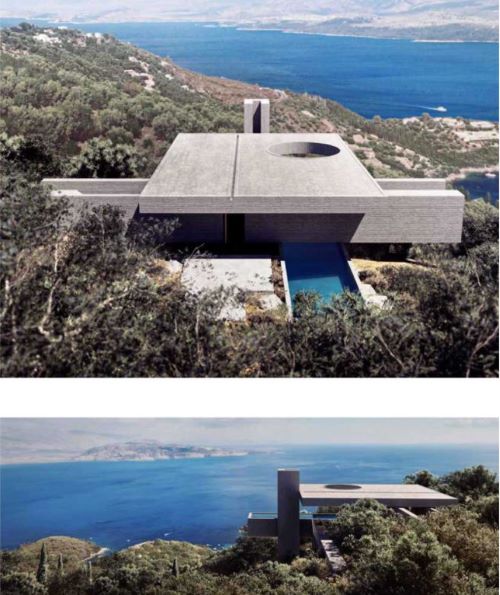
In search of Ithaca; the mythical Odysseus, washed naked on the island of Phaeacus, today’s Corfu. There, Nafsika, the king’s daughter, surrounded him and led him to her father’s palace, where he received the hospitality and supplies to return to Ithaca.
The house, like a seed in the ground, grows, finding space, among the other forces of the place, the trees, the rocks; in search of the best view, the sun, the good orientation.


Architectural Home Tour: Tranquil ‘Jungle Home’ In Llanogrande, Columbia
PAIMED 2.0 ‘Jungle House’ in LLANOGRANDE – COLOMBIA by 5 SOLIDS Architects.

Tours: ‘Lew House’ – A 1958 Mid-Century Modern In Los Angeles By Architect Richard Neutra (Video)
Richard Neutra designed the Lew House in 1958 to suit his clients’ entertaining lifestyle with an open floor plan, wall-to-wall glazing, and a gleaming glass carport. High up and overlooking Downtown Los Angeles, this legendary home features stunning views, an innovative floor plan, and a minimalist, but warm interior. Dwell’s own executive editor Jenny Xie gives us a tour.
The Lew House is an exquisite, four-bedroom luxury residence in Hollywood about a mile from Sunset Strip. Designed by Richard Neutra, renowned pioneer of midcentury modern architecture, the villa is practically a museum of modernist design and contemporary art, while welcoming deluxe relaxation and festive entertainment in its stunning indoor and outdoor living areas.
The tri-level villa overlooks gorgeous views of the Hollywood Hills from multiple balconies and terraces. Savor luxurious days bathing in the swimming pool, soaking in the lovely hot tub, and sipping refreshing drinks in the Southern California sun. Fire up the grill for a delicious barbeque as the kids play in the yard and playground below; then gather for an alfresco lunch. In the late afternoon, savor a delicious cocktail on the veranda.
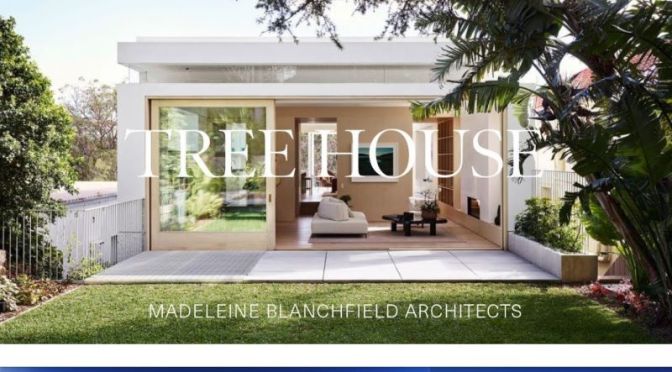
Home Tours: ‘Tree House’ In Bronte Beach, Sydney, Australia’ By Madeleine Blanchfield Architects

Tree House by Madeleine Blanchfield Architects is a light-filled family home near Bronte Beach in Sydney. As the architect’s own home, the project exemplifies the studio’s experiential design approach, which sees light, form and materiality coalesce to create an experience of place.
The architecture and interiors evoke mood and respond to the changes in light over the course of the day, while the elevated position within the treetops that gives Tree House its name creates a calming atmosphere. With the living space located at the top floor of the architect’s own home, a journey is created through the architecture via a sculptural staircase.
The sculptural forms created by the spiral staircase are balanced by the more pared back interiors, which take their cues from the natural setting. Pale timber, concrete and terracotta tiles, along with the careful approach to both natural and artificial light, reflect the design’s connection to the garden that surrounds it and the nearby beach. This use of few materials detailed to create a highly refined architectural response is characteristic of an architect’s own home.
It highlights how Madeleine Blanchfield Architects has created an experiential home in which simple elements such as materials, details, and changes in light can enhance the mood of a space, resulting in a family home whose architecture, interiors and garden work together to create a sense of lightness and calm.
For More from The Local Project: Website – https://thelocalproject.com.au/
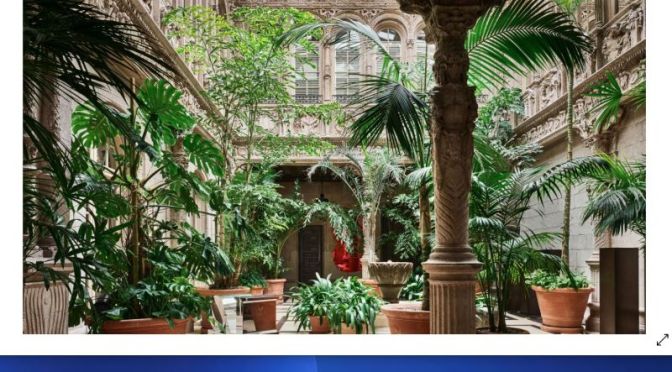
Tours: “Stunning” Spanish Renaissance Revival Home In San Francisco, CA (AD)

“You just sort of gulp,” Marino explains of projects like the sprawling 1916 San Francisco mansion that he labored on for more than three years, overhauling its nearly two dozen rooms for effervescent East Coast transplants with three teenagers, two French bulldogs, and a passion for pedigreed real estate.


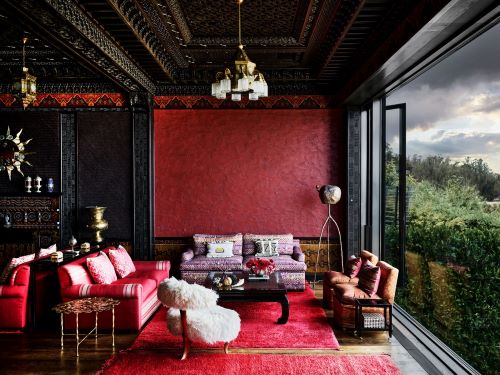
“It was a Herculean task,” Marino continues. “There was no roof, the exterior walls were under boarding, and there were no floor slabs. It all looks so pretty now, but it was painful.” And, he quips with a laugh, “if there’s an earthquake anywhere in North America, from Vancouver to Teotihuacán, for God’s sake run here.”

Not only is the house in the city’s Pacific Heights enclave, one of the most theatrical residences ever conceived by the genius society architect Willis Polk, the Spanish Renaissance Revival palacio—wrapped around a two-story courtyard crowned with a vast glass roof—had long been home to one of Marino’s friends, Georgette “Dodie” Rosekrans.
The husband and wife also possessed phenomenal sangfroid, accepting with barely a blink the seismic requirements that demanded gutting the house and driving concrete pilings 30 feet into the ground.
She was a tiny, couture-clad movie-theater heiress, while her husband, John, was a Spreckels sugar–fortune scion who also manufactured, of all things, Hula Hoops and Frisbees. As for the four-story house where they lived from 1979 until their respective deaths (his in 2001, hers in 2010), it’s been described, with good reason, as the most beautiful house in America.
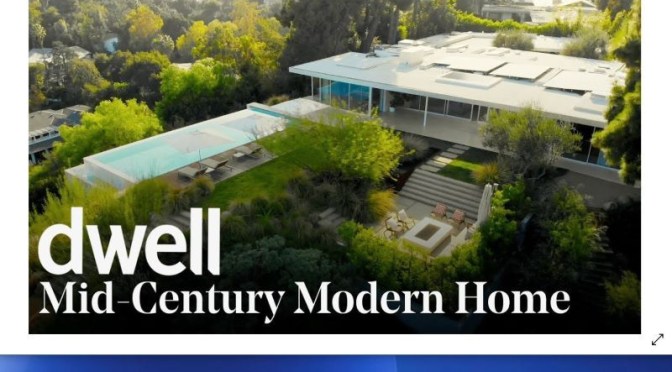
Top Home Remodel Tours: A ‘Mid-Century Modern’ In Los Angeles (Video)
Robert Galishoff originally hired architects Brett Woods and Joe Dangaran to bring his single story mid-century modern home back to life. But what began as a simple renovation turned into a major architectural passion, and through a successful partnership, they created a reverent sanctuary in the sky.
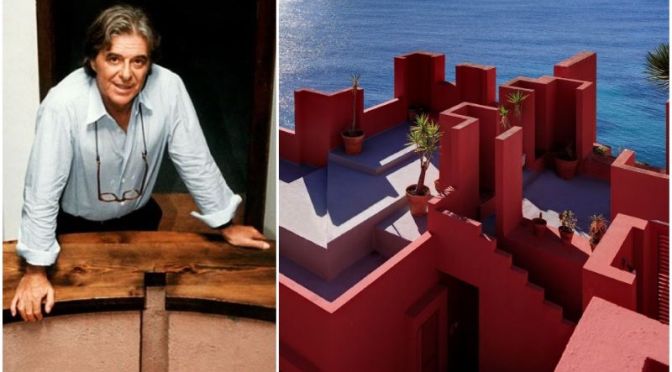
Profile: Spanish Architect & Designer Ricardo Bofill – ‘Dreamer Of Modernity’

What Bofill creates with exceptional mastery are spaces or the sense of space. He describes this ability, probably jokingly, as being an escape from the claustrophobia of his childhood in Barcelona, living in bourgeois apartments crammed floor to ceiling with decorative objects.
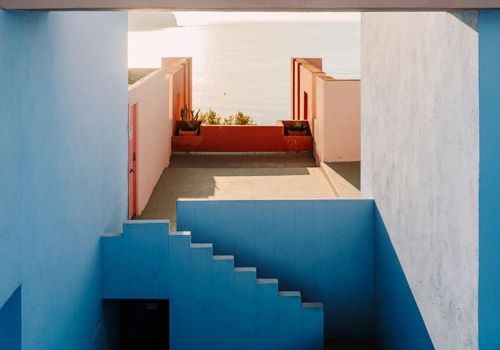
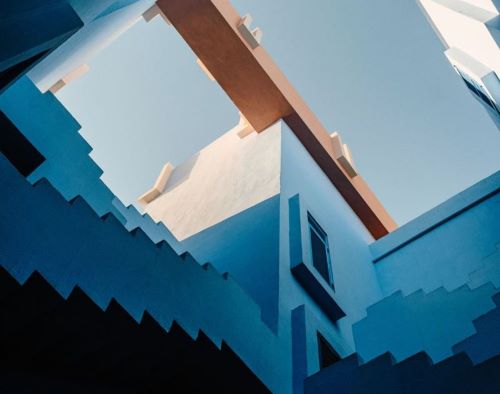
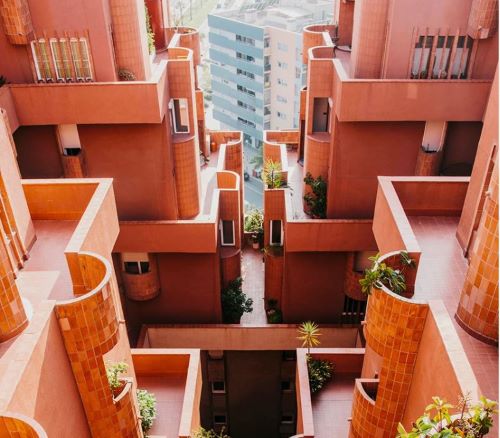
Postmodernity in the work of Bofill does not have to be the abolishing of rules or the death of history. In his own words, postmodernity “breaks with cultural hegemony to adapt models to different cultures, considering the place and its history.” It is more of a reaction against the uniformity of modern architecture.
Ricardo Bofill was born on December 5, 1939, in Barcelona. The son of a contractor, in the dullest hours of the Franco regime. As he explains himself, the feeling of being, not in the middle of the world but the outskirts, in a periphery—a Catalonia that was not just physically isolated from the cultural capitals but also far from national, political decision-making—sparked dreams of freedom and faraway lands, and was probably what later inspired his nomadic lifestyle. The importance of the vernacular, it’s engagement with classicism, Bofill’s sense of atemporal elegance—all find their roots in this early period.
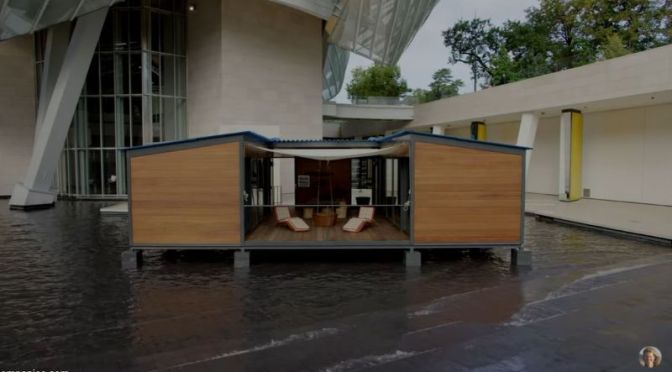
Video Profiles: French Architect & Designer Charlotte Perriand
In 1938 architect and designer Charlotte Perriand (1903-1999) designed a mountain shelter able to withstand the harsh elements of any mountaintop yet still light enough to be carried by hand.
The “Refuge Tonneau” (“barrel shelter”), her piece of nomadic architecture designed with Pierre Jeanneret, consists of just 12 main prefabricated panels light enough to be manually transported. Once on location, the panels lock together to resist wind, snow, and cold. The tiny barrel-shaped structure sleeps up to 10 people and while it was never constructed in Perriand’s lifetime it was just one of her many designs created for the masses.
In 1934, after 7 years working with Le Corbusier, Perriand began a five-year study of minimal shelters, like the prefab aluminum Bivouac refuge and the affordable, elegant prefab “House at the Water’s Edge”. Hoping to improve upon her easily-transportable, aluminum Bivouac shelter she found inspiration in the merry-go-round. Counting on the dodecagon shape’s ability to withstand strong centrifugal loads (and high winds), she made it the basis for her Refuge Tonneau.
All her tiny shelters were works of studied elimination. “Her mission was to eliminate anything unnecessary,” explains her daughter Pernette Perriand-Barsac, “but always to concentrate on the flow of light and air. Then you can live in the smallest of spaces.” Sébastien Cherruet gave us a tour of Perriand’s minimal structures and apartment design at the Louis Vuitton Foundation’s exhibit he curated: “Charlotte Perriand: Inventing a New World”.
 Boomers Daily